Doin' What Comes Natur'lly Lyrics — Annie Get Your Gun
Doin' What Comes Natur'lly Lyrics
Folks are dumb where I come from,
They ain't had any learning.
Still they're happy as can be
Doin' what comes naturally (doin' what comes naturally).
Folks like us could never fuss
With schools and books and learning.
Still we've gone from A to Z,
Doin' what comes naturally (doin' what comes naturally)
You don't have to know how to read or write
When you're out with a feller in the pale moonlight.
You don't have to look in a book to find out
What he thinks of the moon and what is on his mind.
That comes naturally (that comes naturally).
My uncle out in Texas can't even write his name.
He signs his checks with "x's"
But they cash them just the same.
If you saw my pa and ma,
You'd know they had no learning,
Still they've raised a family
Doin' what comes naturally (doin' what comes naturally)
Cousin Jack has never read an almanac on drinking
Still he's always on the spree
Doin' what comes naturally (doin' what comes naturally).
Sister Sal who's musical has never had a lesson,
Still she's learned to sing off-key
Doin' what comes naturally (doin' what comes naturally).
You don't have to go a private school
Not to pick up a penny near a stubborn mule,
You don't have to have a professor's dome
Not to go for the honey when the bee's not home.
That comes naturally (that comes naturally).
My tiny baby brother, who's never read a book,
Knows one sex from the other,
All he had to do was look,
Grandpa Bill is on the hill
With someone he just married.
There he is at ninety-three,
Doin' what comes naturally (doin' what comes naturally).
Song Overview

"Doin' What Comes Natur'lly" is Annie Oakley barging into the musical with her sleeves rolled up. It is written as a defense and a sales pitch at once: Annie explains her backwoods logic, mocks the city folk who judge it, and turns plain survival into a kind of philosophy. Berlin gives her a tune that can move like conversation but still lands like a Broadway number, with punch lines built to carry over ensemble bustle.
Review and Highlights
Quick summary
- Work: Annie Get Your Gun (opened on Broadway May 16, 1946) - stage musical
- Where it appears: Act I, Annie explains her upbringing to Foster Wilson, aided by her siblings
- Usual singer: Annie Oakley with siblings (and sometimes additional stage support in later editions)
- What it sets up: Annie as both comic force and underestimated talent, right before the contest plot tightens

Annie Get Your Gun (1946) - stage musical - diegetic-adjacent. Annie is not putting on a formal act inside Buffalo Bill's show yet, but she is performing herself in public, with Wilson as the skeptical audience. The siblings function like a chorus of lived experience, making the scene feel like a family demonstration rather than a solo confession.
The number is a masterclass in character exposition that does not feel like exposition. Berlin turns social difference into a running gag, then slips in something sharper: Annie is defending a whole way of life, and she is doing it while a city man decides whether she is useful. The song keeps its pep, but the stakes are real. I hear it as Annie insisting, politely and not-so-politely, that she will not be educated out of herself.
Key takeaways
- Character engine: Annie leads with humor to avoid being patronized, then uses that humor as a shield.
- Stage craft: fast diction moments are balanced with clear, singable hooks so the crowd never loses the thread.
- Story function: it makes Annie legible before the rivalry and romance ask her to change.
Creation History
Berlin reportedly hesitated to take the assignment, then came back quickly with several core numbers, including this one, once he understood the book's shape. The piece sits exactly where a composer wants it: early enough to define the heroine, specific enough to anchor her voice, and flexible enough for revivals to play it as brash, cute, or defiant depending on the leading lady. According to a University of Maryland musical-theatre study, the song helps Annie "define and defend" her culture, and that academic phrasing lands neatly on what the scene does in performance.
Song Meaning and Annotations

Plot
Buffalo Bill's Wild West show hits Cincinnati. Frank Butler issues a challenge, Annie appears and reveals her aim, and then she explains her plain-spoken upbringing while Wilson weighs the situation. The number is the bridge between "who is this young woman?" and "why should the show bet on her?"
Song Meaning
The song argues that instinct can be smarter than refinement. Annie is not rejecting learning. She is rejecting the idea that dignity comes only from polish. Each comic example is a small protest against urban condescension, delivered with a grin so the room laughs before it realizes it is being corrected.
Annotations
Annie uses humor to frame her background as practical, not shameful, while the adults around her try to categorize her.Scene function, rewritten
That is the clever move: the number does not beg approval. It reroutes the terms of approval. Annie makes the city listener adapt to her, not the other way around.
Academic commentary describes the number as Annie defining and defending her "hillbilly" culture in her first song.Critical framing, rewritten
Taken on stage, this is less sociology lecture and more survival strategy. Annie makes jokes because jokes travel fast. The defense lands before the insult can.
Genre and rhythm
The style is classic Berlin musical-comedy writing: bright melody, tight rhyme, and a rhythmic gait that supports clean consonants. The driving feel lets Annie talk-sing without losing pitch center, which is why so many performers can shape it as swagger or sweetness without rewriting the musical line.
Images, idioms, and subtext
The repeated idea of doing what comes naturally is a slogan, but it is also a boundary. Annie is drawing a circle around her family logic, then daring outsiders to step inside and keep up. The siblings add a second meaning: nature is not only instinct, it is household training, the kind you get when you are responsible for younger mouths before you are old enough to leave home.
Technical Information (Quick Facts)
- Song: Doin' What Comes Natur'lly
- Artist: stage and cast recordings vary (example recording: 1999 Broadway revival cast)
- Featured: Annie Oakley with siblings (original staging)
- Composer: Irving Berlin
- Producer: varies by recording/label
- Release Date: written for the 1946 stage premiere; notable recorded release date: February 2, 1999 (new Broadway cast recording track issue)
- Genre: musical theater
- Instruments: voice and orchestra
- Label: varies (1999 cast recording issued by Angel Records on major platforms)
- Mood: comic, grounded, defiant
- Length: about 2 minutes 14 seconds on the 1999 cast recording
- Track #: commonly early Act I track (often track 2 on the 1999 cast album)
- Language: English
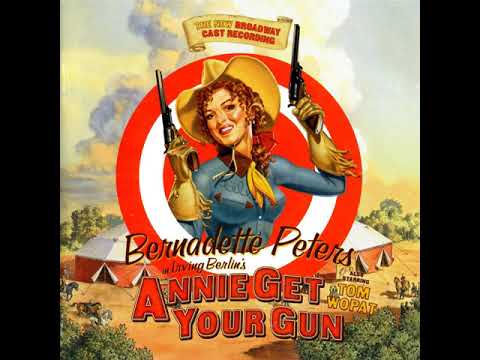
- Album (if any): Annie Get Your Gun (The 1999 New Broadway Cast Recording)
- Music style: character comedy with brisk diction and singable hooks
- Poetic meter: accentual, speech-driven (comic stresses over strict classical meter)
Frequently Asked Questions
- Who sings the number in the original stage version?
- Annie Oakley, with her siblings supporting the scene and sound.
- What is the dramatic point of giving Annie this number so early?
- It lets the audience understand her values and humor before the romance and rivalry start demanding compromises.
- Is this an in-show performance for paying customers?
- Not yet. It plays as a public explanation inside the story, aimed at Wilson and the town's skepticism.
- Why does the song lean on comic examples?
- Comedy keeps power in Annie's hands. She controls the framing, so outsiders cannot turn her background into a pity story.
- What does the title phrase mean in context?
- It is a slogan for self-trust and a refusal to accept city manners as the only measure of worth.
- How do different leading ladies shift the number?
- Some play it as brash confidence, others as charming candor, but the spine stays the same: Annie defines the rules of the room.
- Did the 1999 revival keep the song?
- Yes, and it appears early on the cast recording as one of the signature introductions.
- Is it considered one of the show standards?
- Yes. It is frequently named alongside other major titles from the score as a durable hit from the musical.
- Why do revivals sometimes reshape surrounding material but keep this?
- Because it is an identity anchor for Annie. Remove it, and later choices can feel less earned.
- What is a useful listening cue?
- Track how the song alternates talk-like lines with rounded phrases. That alternation is the character: quick mind, open heart, guarded pride.
Awards and Chart Positions
The number is usually consumed as part of cast and soundtrack albums rather than as a modern chart single. The larger chart story that keeps showing up in reference histories is the 1946 original Broadway cast album, which reached a peak of number 2 on Billboard's Best-Selling Popular Record Albums chart. The show has also carried major revival recognition: the 1999 Broadway revival won the Tony Award for Best Revival of a Musical, and its leading lady won for Best Leading Actress in a Musical.
| Item | Metric | Result |
|---|---|---|
| Annie Get Your Gun original Broadway cast recording (1946) | US Billboard Best-Selling Popular Record Albums | Peak: 2 |
| Annie Get Your Gun Broadway revival | Tony Awards | Best Revival of a Musical (1999) |
| Bernadette Peters | Tony Awards | Best Leading Actress in a Musical (1999) |
Additional Info
If you want a quick lesson in how interpretation changes text, compare recordings across decades. Ethel Merman tends to treat the number like a trumpet, broad and unapologetic, while later Annies often lean into the character's wit and vulnerability, letting the jokes land with a little self-awareness. A Washington Post critic once noted that a revival Annie could banish thoughts of Merman within bars of her first pass at the number, which is less a competition and more a reminder: Berlin wrote something sturdy enough to hold different acting choices.
The number also has a shadow life outside the stage, thanks to the 1950 film soundtrack and studio recordings that cast other vocal stars as Annie. Those versions are useful not because they are "truer," but because they expose what the material needs: clear diction, playful attack, and enough breath to keep the talky sections buoyant.
Key Contributors
| Entity | Type | Relation (S-V-O) |
|---|---|---|
| Irving Berlin | Person | Berlin wrote the music and words for the number and the show. |
| Annie Oakley | Person | Oakley explains her upbringing and values through the number. |
| Foster Wilson | Person | Wilson becomes the scene's skeptical listener inside the story. |
| Ethel Merman | Person | Merman popularized the number through the original Broadway context and recordings. |
| Bernadette Peters | Person | Peters recorded the number for the 1999 Broadway revival cast album. |
| Angel Records | Organization | Angel Records issued the 1999 cast recording on major platforms. |
| Decca Records | Organization | Decca released the 1946 original Broadway cast recording album. |
How to Sing Doin' What Comes Natur'lly
The singing trick is that the number wants to feel casual while staying rhythmically exact. Published sheet-music listings commonly place it in C major with a brisk marking around quarter note equals 170, and one mainstream digital arrangement lists a vocal line spanning C4 to D5. In auditions and casting notes, Annie is typically described as a strong belter with range, which fits the way the song toggles between speech-like patter and lifted, ringing phrases.
- Tempo first: set a metronome near 170 and speak the text in time. If the jokes rush, you lose clarity. If they lag, you lose authority.
- Diction next: aim consonants forward, especially on clustered words. Think of the lyric as a story you are selling, not a tune you are floating.
- Breath plan: mark quick refills between phrases. The goal is never to sound winded, even when the phrasing is busy.
- Flow and rhythm: keep the patter on the rail. When the melodic line opens up, let it bloom, but do not change character. Annie is still driving.
- Accent and color: choose a dialect flavor carefully. Suggest it rather than overdoing it. The point is perspective, not parody.
- Ensemble awareness: if siblings or chorus are present, treat them as a living backdrop. Give them room to react, but keep the narrative steering wheel.
- Mic and projection: in a theater, keep brightness in the mask for intelligibility. On mic, reduce bark and keep articulation crisp without spitting consonants.
- Pitfalls: do not punch every joke the same way. Vary the attack. Also, avoid pushing high notes too early; save the full belt for moments that read as triumph, not effort.
Sources
Sources: IBDB production and musical-number listing, Wikipedia musical overview and plot, Apple Music album metadata for the 1999 cast recording, Universal Music Group label-provided YouTube audio metadata, Musicnotes sheet music listing, University of Maryland DRUM thesis excerpt, Tony Awards archive summary, Wikipedia page for the 1946 original cast recording
Music video
Annie Get Your Gun Lyrics: Song List
- Act 1
- Overture
- Colonel Buffalo Bill
- I'm a Bad, Bad Man
- Doin' What Comes Natur'lly
- Girl That I Marry
- You Can't Get a Man With a Gun
- There's No Business Like Show Business
- They Say It's Wonderful
- Moonshine Lullaby
- I'll Share It All With You
- There's No Business Like Show Business (Reprise)
- My Defenses Are Down
- I'm an Indian, Too
- Act 2
- I Got Lost in His Arms
- Who Do You Love, I Hope
- I Got the Sun in the Morning
- Old Fashioned Wedding
- Anything You Can Do
- Finale