Colonel Buffalo Bill Lyrics — Annie Get Your Gun
Colonel Buffalo Bill Lyrics
Who's got the stuff that made the Wild West wild?
Who pleases every woman, man, and child?
Who does his best to give the customers a thrill?
(Company)
Who?
(Davenport)
Colonel Buffalo Bill!
Who's got the show that gets the most applause?
Five-hundred Indians and fifty Squas!
Ten featured acts and there's a special feature still?
(Company)
Who?
(Davenport)
Colonel Buffalo Bill!
(Dolly)
Have you ever seen a cowboy rope a steer?
(Company)
No, we haven't
(Dolly)
Or an Indian with feathers throw a spear?
(Company)
No, we haven't
(Dolly)
Have you ever seen a hold up?
(Company)
No sir
(Dolly)
Then gather closer
and let me give you some of the atmosphere
(Davenport, spoken)
Introducing the world's greatest sharpshooter, Mister! Frank! Butler!
(Butler, singing)
The hour is midnight and all is still
We see the stage coach climbing up the hill,
Moving along the mountain trail, carrying passengers and mail,
never suspecting there is something really wrong
The watchful driver is in his seat,
His trusty rifle lying at his feet
Some of the passengers inside
seem to be dozing as they ride,
never suspecting danger as they roll along
Suddenly there's a shout!
(Company)
What is it all about?
(Butler)
"What is it all about?" you ask
It's Indians!
(Company)
Indians?!
(Butler)
Very notable, cut-your-throatable Indians!
(Company)
Indians?!
(Butler, Dolly, and Davenport)
Just when they've taken everyone by force,
Who makes an entrance on a big, white horse?
Who starts a-shootin' 'till there's noone left to kill?
(Company)
General Grant?
(Butler, Dolly, and Davenport)
No! Colonel Buffalo Bill!
(All)
Who's got the show that made the Wild West wild?
Who pleases every woman, man, and child?
Who does his best to give the customers a thrill?
Colonel! Buffalo! Bill!
Song Overview
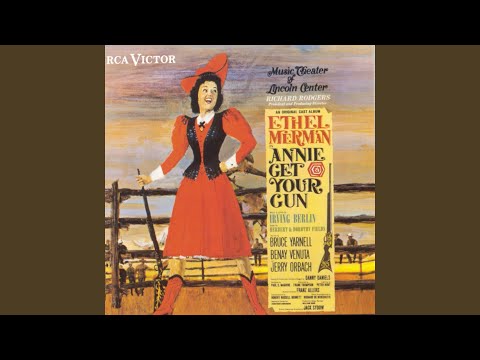
"Colonel Buffalo Bill" arrives early in Annie Get Your Gun, and it does the job a good first chorus should: roll out the canvas, introduce the troupe, and sell the audience on the spectacle before the plot asks for anything tender. Irving Berlin writes it like a barker with perfect diction. The tune is brisk, the lines are built for a crowd response, and the lyric trades in show-poster exaggeration that is half sales pitch, half tribal chant.
Review and Highlights
Quick summary
- Work: Annie Get Your Gun (opened on Broadway May 16, 1946) - stage musical
- Where it appears: Act I opening sequence, when the Wild West show hits town
- Primary voices: usually Charlie Davenport and Dolly Tate with ensemble, depending on edition
- What it sets up: the show-business frame that makes later romance and rivalry land harder
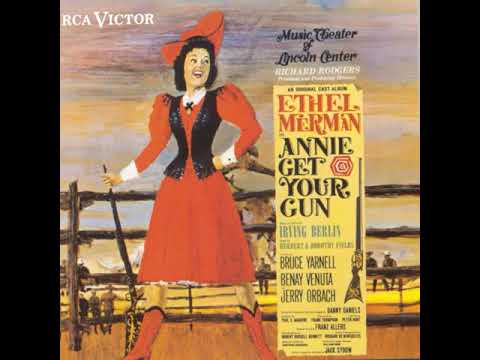
Annie Get Your Gun (1946) - stage musical - diegetic. It plays as part of the Wild West show arrival, a number that belongs to the onstage entertainers inside the story. The placement matters: before we meet Annie in full, the audience is asked to buy the brand. That brand is noise, scale, and promise.
Berlin writes the lyric as a sequence of boasts with built-in rhythm. The questions and answers are not subtle, and that is the point. This is theatrical commerce: "Who is the attraction?" "This is the attraction." When the ensemble joins, the harmony feels like a crowd that has already decided it is entertained. I hear it as Berlin doing what he did better than almost anyone: making a sales pitch sound like a party.
Key takeaways
- Function: establishes a world where performance is currency and identity is a costume you can put on and take off.
- Sound: quick, march-adjacent propulsion with call-and-response shapes that read clearly from the balcony.
- Dramaturgy: by making the show a product, the musical sets up Annie as both talent and commodity.
Creation History
The song comes from Berlin's 1946 score, written for a book by Herbert and Dorothy Fields. Later revivals and recordings document how these numbers can shift hands in performance, but the core remains a Berlin specialty: direct rhyme, crisp consonants, and a melodic line that stays friendly even while it barks. According to Playbill magazine's retrospective coverage of the show, the work has traveled widely in different editions, which helps explain why track credits and timings vary across albums.
Song Meaning and Annotations
Plot
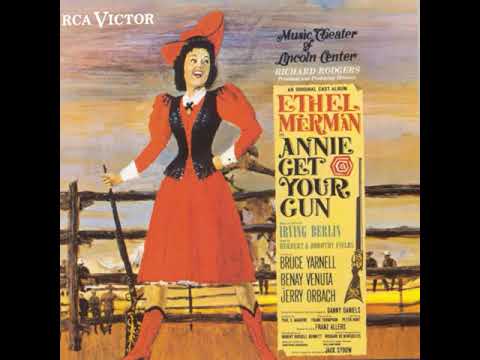
The Wild West show rolls into Cincinnati, and the troupe announces itself with the kind of razzle that turns a public square into a ticket line. The song introduces the world of Buffalo Bill's enterprise and positions the audience inside the story as potential customers. From there, the musical can spring the shooting challenge that brings Annie Oakley into focus.
Song Meaning
On the surface, it is a hype number. Underneath, it is a quiet thesis statement: in this story, fame is manufactured in front of your eyes, and the manufacture is part of the entertainment. The lyric inflates the Wild West into a catalog of attractions, and the music keeps everything moving so you do not linger on the seams. That is the trick, and it is also the comment.
Annotations
"Who" questions get answered immediately by the company, locking the crowd into the chant.Lyric structure observation
This structure is theatrical shorthand. It tells the audience how to listen, and it tells the performers how to aim. In a house, you can feel the rhythm of attention snap into place.
The number is credited to Charlie Davenport and Dolly Tate with the ensemble in standard listings.Typical cast assignment
That casting tells you what kind of scene it is: not an intimate confession, but a managed presentation. Charlie is the promoter energy, Dolly is the theatrical sparkle, and the ensemble turns commerce into a chorus line.
Genre and rhythm
The style is Broadway Americana with a patter-friendly spine. The driving rhythm is practical: it supports group diction and makes the lyric read even when the staging is busy. Berlin's phrasing keeps the stresses where singers want them, which is why the song plays well in both full-tilt productions and simpler concert presentations.
Images and symbols
The Wild West here is not geography. It is a product. The list of "acts" and "thrills" functions like a poster that can sing, and the audience is asked to enjoy the selling as much as the thing being sold.
Technical Information (Quick Facts)
- Song: Colonel Buffalo Bill
- Artist: cast and ensemble (varies by recording)
- Featured: typically Charlie Davenport and Dolly Tate with ensemble
- Composer: Irving Berlin
- Producer: varies by recording/label
- Release Date: written for the 1946 stage premiere; widely issued on later cast and studio albums
- Genre: musical theater
- Instruments: voice and orchestra
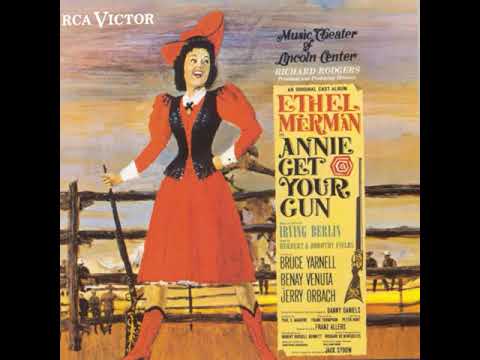
- Label: varies (example: Masterworks Broadway for the 1966 Lincoln Center cast album release)
- Mood: celebratory, promotional, fast-moving
- Length: often about 2 minutes on common cast recordings (varies by edition)
- Track #: commonly early Act I track
- Language: English
- Album (if any): appears on major cast recordings including the 1966 Lincoln Center edition
- Music style: call-and-response ensemble show opener
- Poetic meter: accentual, performance-driven (not a strict classical meter)
Frequently Asked Questions
- Where does the number sit in the story?
- It opens Act I as the traveling Wild West show arrives, placing the audience inside the story as spectators.
- Is it meant to be performed as part of the show-within-the-show?
- Yes. It is staged as a public performance that advertises Buffalo Bill's enterprise.
- Who usually sings it?
- Standard listings credit Charlie Davenport and Dolly Tate with the ensemble, though album credits can vary by edition.
- What is the lyric doing structurally?
- It uses repeated questions and immediate answers, a call-and-response pattern that turns sales talk into crowd ritual.
- What does it tell us about the musical's world?
- That show business is the engine: reputation is curated, spectacle is packaged, and the public pays to believe.
- Why does it feel so fast?
- The pace helps group diction and keeps attention moving, which is handy when staging includes entrances, banners, and busy crowd pictures.
- Is the song important even though it is not a solo showcase?
- Yes. It establishes the commercial frame that makes Annie's transformation legible and thematically sharp.
- Do recordings differ much?
- Timing and orchestral color vary across cast, studio, and soundtrack editions, especially between stage revivals and film-related releases.
- Does the film version match the stage version?
- The 1950 film uses Berlin's lyric while film music credits and arrangements reflect screen scoring practice and can differ from stage orchestrations.
- What should a listener focus on?
- The consonants and the handoffs: the song lives on crisp articulation and on how the ensemble locks the responses together.
Awards and Chart Positions
The song itself is not a standalone chart single in the modern sense, but it has lived a long recorded life through cast albums and film soundtrack editions. The 1946 original Broadway cast album reached a peak of number 2 on Billboard's Best-Selling Popular Record Albums chart, a reminder that mid-century cast records could behave like pop events.
| Item | Metric | Result |
|---|---|---|
| Annie Get Your Gun original Broadway cast album (1946) | US Billboard Best-Selling Popular Record Albums | Peak: 2 |
One historical footnote from the Tony Awards archive is a Special Tony Award listing in 1948 that names Mary Martin alongside Annie Get Your Gun. The entry is not about this song, but it shows how the early Tonys sometimes read like a scrapbook of the season rather than the category grid we are used to now.
Additional Info
The number is also a neat way to spot edition differences. Some releases treat it as an essential Act I marker, while certain reissues and compilations shift it into bonus-track territory to accommodate older album formats. That kind of reshuffling changes how the story feels in audio-only listening, because the musical loses its first blast of "public spectacle" before it introduces Annie's private wants.
Key Contributors
| Entity | Type | Relation (S-V-O) |
|---|---|---|
| Irving Berlin | Person | Berlin composed and wrote lyrics for Annie Get Your Gun. |
| Herbert Fields | Person | Fields co-wrote the book for Annie Get Your Gun. |
| Dorothy Fields | Person | Fields co-wrote the book for Annie Get Your Gun. |
| Jerry Orbach | Person | Orbach is credited vocalist on the 1966 Lincoln Center cast recording track. |
| Benay Venuta | Person | Venuta is credited vocalist on the 1966 Lincoln Center cast recording track. |
| Franz Allers | Person | Allers conducted the 1966 Lincoln Center cast recording. |
| Masterworks Broadway | Organization | Masterworks Broadway issued the 1966 Lincoln Center cast recording in modern distribution. |
| Imperial Theatre | Venue | The original Broadway production opened at the Imperial Theatre in 1946. |
Sources
Sources: IBDB production record, Masterworks Broadway recording pages, Tony Awards winners archive, Apple Music album metadata, Wikipedia production and song listing, Decca release notes for original cast album, Smithsonian show artifact entry
Music video
Annie Get Your Gun Lyrics: Song List
- Act 1
- Overture
- Colonel Buffalo Bill
- I'm a Bad, Bad Man
- Doin' What Comes Natur'lly
- Girl That I Marry
- You Can't Get a Man With a Gun
- There's No Business Like Show Business
- They Say It's Wonderful
- Moonshine Lullaby
- I'll Share It All With You
- There's No Business Like Show Business (Reprise)
- My Defenses Are Down
- I'm an Indian, Too
- Act 2
- I Got Lost in His Arms
- Who Do You Love, I Hope
- I Got the Sun in the Morning
- Old Fashioned Wedding
- Anything You Can Do
- Finale