There's Always Me Lyrics — All Shook Up
There's Always Me Lyrics
And you're wond'ring who to call
For a little company
There's always me
Or if your great romance should end,
And you're lonesome for a friend
Darling, you need never be
There's always me
I don't seem to mind somehow
Playing second fiddle now
Someday you'll want me, dear,
and when that day is here,
Within my arms you'll come to know
Other loves may come and go
But my love for you will be eternally
Look around and you will see
There's always me.
Song Overview
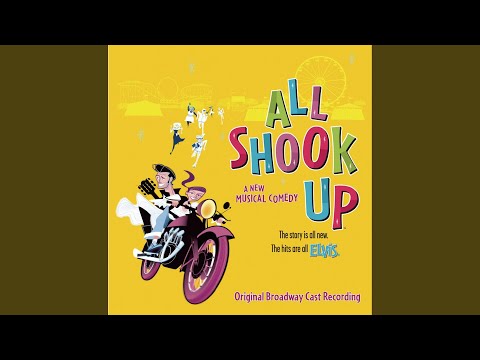
Review and Highlights
Quick summary
- Work: All Shook Up (jukebox musical, book by Joe DiPietro), using songs associated with Elvis Presley.
- Where it appears: Act Two, after the fairgrounds confusion peaks and the plot lets two adults speak plainly.
- Who sings it: Sylvia, addressed to Jim, when he is convinced Miss Sandra will never choose him.
- What changes from the pop life: the lyric becomes a grounded offer, less serenade and more hand-on-the-table honesty.
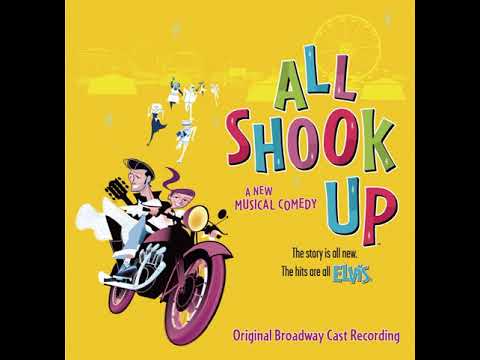
All Shook Up (2005) - stage musical number - non-diegetic. Act Two, abandoned fairgrounds: Jim, bruised by Sandra’s indifference, runs into Sylvia. Sylvia stops the spinning plot long enough to tell him the simplest truth in the show - he is not invisible. The placement matters because it shifts the story from teen-style chase to grown-up accountability, and it gives Sylvia a moment that is not just comic authority, but romantic agency.
This number is a masterclass in what jukebox musicals can do when they stop chasing applause. The melody is unhurried, the phrasing invites breath, and the character work is the whole point: Sylvia does not plead. She offers. That distinction changes everything. According to Talkin' Broadway, the song is sung for "torchy reasons," but the production trick is that the torch is held steady rather than waved around. Sylvia knows what she wants, and the band keeps the room quiet enough for the audience to hear that certainty.
Key takeaways
- Character function: Sylvia steps out of boss-lady shorthand and claims desire without apology.
- Structural function: the show creates calm in the stormy Act Two fairgrounds section.
- Performance function: the lyric plays best as direct address, with minimal movement and maximum intention.
Creation History
The song was written by Don Robertson and recorded by Elvis Presley on March 12, 1961 at RCA Studio B in Nashville, later appearing on the album Something for Everybody. It was also released as a single in 1967, where it had modest chart life. The musical repurposes it as a narrative ballad for Sylvia, and the published show arrangement details commonly used by performers list a tender tempo and a singer-friendly range that supports clear storytelling rather than showboating.
Song Meaning and Annotations
Plot
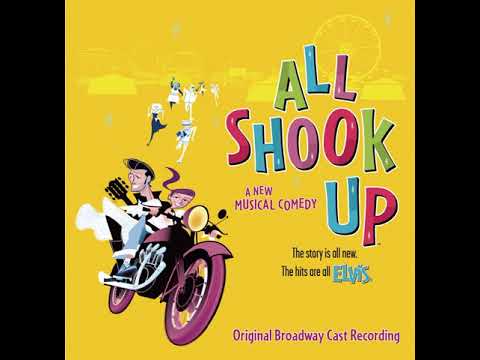
At the abandoned fairgrounds, relationships tangle: Chad is shaken by his feelings for Ed, Jim is caught chasing Sandra, and Sandra is chasing Ed. Jim finally lands in a quiet pocket of the chaos, deflated. Sylvia finds him there. Instead of teasing him or fixing him, she tells him she has been right in front of him, and she is not going anywhere. The song functions like a light turned on in a room the show has kept dim for comic speed.
Song Meaning
In this stage context, the meaning is a refusal to be second choice forever. Sylvia is not asking Jim to forget his past, and she is not competing with Sandra on glamour. She is offering reliability, affection, and an adult kind of presence. The mood is tender, yes, but the spine is firm. The emotional arc moves from observation (you keep looking elsewhere) to invitation (look here) to a final, quiet line that sounds less like a catchphrase and more like a promise.
Annotations
"Jim, heartbroken that Sandra doesn't care for him, comes across Sylvia, who confesses her feelings for him."
The scene is built on timing. Jim needs to be disappointed before he can see what is already available. The song is not a random ballad placement, it is narrative scheduling.
"Tempo: Tenderly, freely. Metronome: q = 92."
That tempo marking is a staging note in disguise. "Freely" gives the singer permission to speak the lyric as thought, not as ornament, which helps Sylvia sound like a person making a choice, not a vocalist making a point.
Style and rhythm
The song sits in a pop ballad lane with a gentle internal pulse. Onstage, it plays like a direct monologue with melody attached: steady enough to hold the audience, flexible enough to let the actor land key words. In other parts of the score, rhythm is chase. Here, rhythm is patience.
Key phrases, subtext, and staging
The repeated idea in the title is not manipulation, it is constancy. Sylvia is saying, with a calm face, that she is not a consolation prize. The best performances treat each repetition as a different tactic: first reassurance, then challenge, then the simplest truth. A chair, a small step closer, and a held pause can do more than any extra choreography.
Technical Information (Quick Facts)
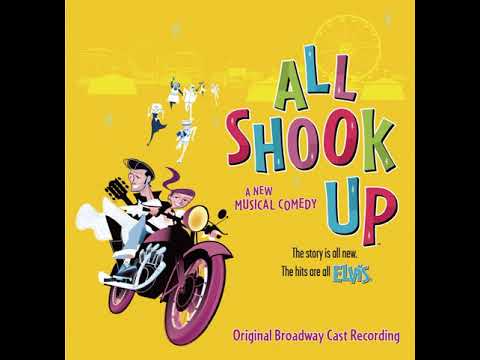
- Song: There's Always Me
- Artist: Sharon Wilkins
- Featured: Sylvia (solo, staged as direct address to Jim)
- Composer: Don Robertson
- Producer: Jay David Saks (cast recording)
- Release Date: May 31, 2005 (Original Broadway Cast Recording)
- Genre: Musical theatre ballad; pop ballad
- Instruments: Voice with pit band (licensed orchestration varies)
- Label: Masterworks Broadway
- Mood: Tender, steady, quietly persuasive
- Length: PT3M02S
- Track #: 23
- Language: English
- Album: All Shook Up - Original Broadway Cast Recording
- Music style: Actor-forward ballad with flexible phrasing
- Poetic meter: Accentual, speech-led phrasing
Frequently Asked Questions
- Who sings the number in the musical?
- Sylvia sings it, usually framed as a direct confession to Jim when he is discouraged by Sandra.
- Where does it land in Act Two?
- It comes after the fairgrounds entanglements and after the Matilda-led sequence "(You're the) Devil in Disguise" in the standard licensed song order.
- Why is this song a good fit for Sylvia?
- The lyric is about constancy, which matches Sylvia’s role as the town’s anchor and the person who sees through everybody’s performance.
- Is it staged as a solo or with ensemble support?
- It is typically a solo, with the pit doing the emotional shading and the staging kept simple so the text reads.
- Who wrote the original composition?
- Don Robertson wrote it, and Elvis Presley recorded it in 1961.
- When was the original single released?
- The recording was released as a single on August 8, 1967, backed with "Judy."
- Did the single chart?
- It is documented as peaking at No. 56 on the Billboard pop singles chart, and it also charted strongly in Australia.
- What key, tempo, and range are common in published sheet music used by performers?
- A common show-associated PVG edition lists G major, "Tenderly, freely," quarter note equals 92, and a printed range of G3 to F5.
- What is the acting trap in performance?
- Singing it like self-pity. The character is offering a choice, not asking for rescue.
Awards and Chart Positions
Musical awards context (Broadway production)
| Award | Category | Nominee | Result |
|---|---|---|---|
| Outer Critics Circle Awards | Outstanding New Broadway Musical | All Shook Up | Nominee |
| Theatre World Awards | Theatre World Award | Cheyenne Jackson | Winner |
Original single chart snapshot
| Release | Market | Chart | Peak | Notes |
|---|---|---|---|---|
| 1967 single | United States | Billboard pop singles | 56 | A-side release in the "By Popular Demand" series |
| 1967 single | Australia | Go-Set | 7 | Documented as a 17-week chart run |
How to Sing There's Always Me
The number rewards calm authority. The show-associated sheet music most singers use lists G major, "Tenderly, freely," quarter note equals 92, and a printed range of G3 to F5. Read that as a character brief: grounded, unhurried, and clear.
- Tempo: set a click to 92 and rehearse speaking the lyric in time. The groove should feel like walking, not floating.
- Diction: treat the title phrase as a simple statement, not a punchline. Clean consonants keep the offer credible.
- Breathing: plan long, quiet breaths before sustained lines. Avoid breathy drama that suggests uncertainty.
- Flow: keep legato through the ends of phrases, then release. That release reads as confidence.
- Dynamics: build only when the thought deepens. Big sound from the start can make Sylvia sound like she is auditioning.
- Range management: protect the top of the printed range by keeping vowels tall and support steady. If the key sits high, transpose early.
- Style: aim for warm, speech-forward tone with restrained vibrato. The scene is intimacy, not spectacle.
- Pitfalls: rushing rubato, over-singing the final line, or playing the moment as consolation. It is choice.
Additional Info
The pop history is unusually well suited to this stage use. Don Robertson remembered Elvis taking special pride in the title-line ending, calling attention to a semi-operatic lift. That little flourish becomes a theatre gift: the final line can sound like a decision rather than a sigh.
Outside the musical, the song has lived a long second life. It has been covered by country artists such as Jim Reeves, Eddy Arnold, and Ray Price, and it has shown up in later Elvis projects, including the Royal Philharmonic Orchestra album era. A 2018 television ad built around Elvis impersonators used the song in a way that highlights its core theme: presence as comfort, performed in public without losing intimacy.
Key Contributors
| Entity | Type | Relationship statement |
|---|---|---|
| Don Robertson | Person | Don Robertson wrote the song and is credited as composer and lyricist. |
| Elvis Presley | Person | Elvis Presley recorded the 1961 studio version later repurposed for the jukebox score. |
| Joe DiPietro | Person | Joe DiPietro wrote the book that assigns the song to Sylvia as a confession to Jim. |
| Sharon Wilkins | Person | Sharon Wilkins originated Sylvia on Broadway and performs the cast recording track. |
| Jay David Saks | Person | Jay David Saks produced the original Broadway cast recording. |
| Masterworks Broadway | Organization | Masterworks Broadway released and distributed the 2005 cast recording and topic-track uploads. |
| RCA Studio B | Organization | RCA Studio B in Nashville hosted the 1961 recording session for the original track. |
Sources
Sources: Masterworks Broadway track list and synopsis, Musicnotes sheet music metadata, Wikipedia entries for All Shook Up and There's Always Me, Talkin' Broadway review archive, Spotify track metadata, Elvis Presley official fan-site lyric and session notes
Music video
All Shook Up Lyrics: Song List
- Act 1
- Overture
- Love Me Tender
- Heartbreak Hotel
- Roustabout
- One Night With You
- C'mon Everybody
- Follow That Dream
- Teddy Bear/Hound Dog
- Teddy Bear Dance
- That's All Right
- You're the Devil in Disguise
- It's Now or Never
- Blue Suede Shoes
- Don't Be Cruel
- Let Yourself Go
- Cant Help Falling in Love
- Act 2
- All Shook Up
- It Hurts Me
- A Little Less Conversation
- Power of My Love
- I Don't Want To
- Jailhouse Rock
- There's Always Me
- If I Can Dream
- Fools Fall in Love
- Burning Love
- C'mon Everybody Encore