Heartbreak Hotel Lyrics — All Shook Up
Heartbreak Hotel Lyrics
down at the end of Lonely Street at Heartbreak Hotel.
I'm so lonely, I'm so lonely,
I'm so lonely that I could die.
And though it's always crowded you can still find some room
for broken hearted lovers to cry there in the gloom
and be so lonely, oh so lonely,
oh so lonely they could die.
The bell hop's tears keep flowing, the desk clerk's dressed in black.
They been so long on Lonely Street they never will go back
and they're so lonely, oh they're so lonely,
they're so lonely they pray to die.
So if your baby leaves and you have a tale to tell
just take a walk down Lonely Street to Heartbreak Hotel
where you'll be lonely and I'll be lonely,
we'll be so lonely that we could die.
Song Overview
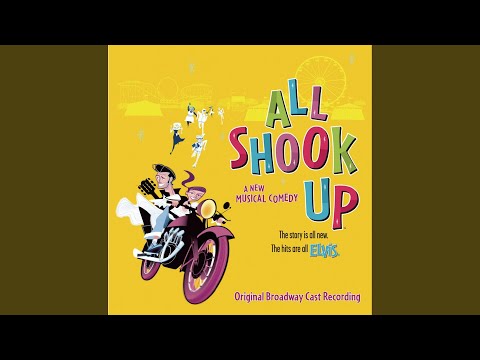
Review and Highlights
Quick summary
- What it is: The first full company lament in Act I, where a "square little town" admits it is lonely before the plot engine arrives on a motorcycle.
- Who sings on the 2005 cast album: John Eric Parker with Mark Price, Sharon Wilkins, Nikki M. James, Jonathan Hadary, and ensemble voices.
- Where it sits: A communal number in Sylvia's Honky-Tonk, just before Chad enters and the evening shifts into motion.
- What changes from the 1956 single: The focus widens from a solitary narrator to a whole room of people, turning the blues into a town portrait.
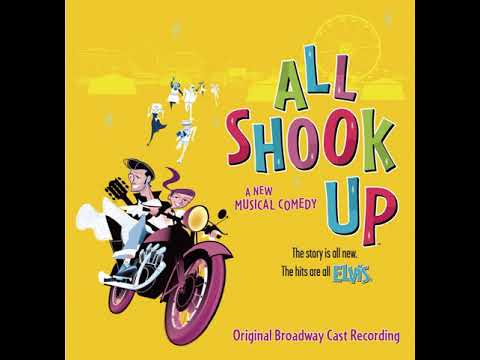
All Shook Up (2005) - musical - non-diegetic. Act I, Sylvia's Honky-Tonk: the townsfolk gather, "black and white," and sing their grayness out loud. The song functions as a weather report for the story: everybody is stalled, everybody is waiting, and then the motorcycle cuts through the air and the plot finally has traction.
This is where the show shows its hand. A jukebox musical can feel like a talent show in costume, but this placement says: no, these songs are going to do dramaturgy. The arrangement leans into the original's blues skeleton, then broadens it with theater chorus logic. The effect is slyly Shakespeare-adjacent: a community announces its condition, not with a speech, but with a hit record repurposed as civic confession.
Key takeaways
- Ensemble storytelling: The number is an establishing scene in musical form, not a detour.
- Style fusion: Blues contour and rock-era attitude filtered through Broadway pacing and clear textual delivery.
- Emotional arc: Isolation to collective acknowledgment, setting up the "outsider fixes the town" machinery.
Creation History
The underlying song was written by Elvis Presley, Mae Boren Axton, and Tommy Durden, recorded in January 1956, and became a signature of early RCA-era Presley mythmaking. Onstage, the musical's book reassigns that lonely narrator role to a whole barroom, and the cast recording preserves the show logic: a town chorus first, the hero's entrance second. According to Masterworks Broadway's published synopsis for the cast album, the number is explicitly tied to the Honky-Tonk gathering and the immediate interruption by Chad's arrival, which explains the arrangement's job: paint the room fast, then make space for the bike.
Song Meaning and Annotations
Plot
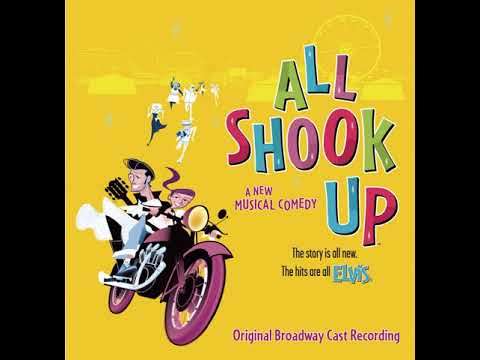
Act I opens on a town that has perfected the art of staying put. Natalie dreams of leaving. Dennis cannot speak his feelings. The locals drift into Sylvia's place to complain about the sameness, and "Heartbreak Hotel" becomes their group therapy session. Then the motorcycle arrives, and the show pivots from stasis to disruption.
Song Meaning
In this setting, the song is not only about romantic loss. It is about a culture that has made loneliness into routine. The "hotel" stops being a single address and becomes a metaphor for the town itself: crowded, rule-bound, and still full of empty rooms. The moment is funny in its bleakness, which is exactly why it works as a launchpad. A show about rock-and-roll rebellion needs a visible target.
Annotations
In the cast-album synopsis, the townsfolk gather to lament the grayness of their lives in Sylvia's Honky-Tonk, and the motorcycle interrupts the number.Placement note
That interruption is a structural cue. The song is written to be cut off by narrative, which keeps the evening from lounging in atmosphere too long. It also frames Chad as an agent of noise who literally breaks in on despair.
The original recording is built on a compact blues progression, with harmony that circles E, A, and B before returning home.Harmony note
That simple loop is the point: it sounds like being stuck. When the musical hands it to an ensemble, the blues becomes communal. Everyone is turning the same corner, seeing the same wallpaper.
UK chart listings show the title peaking at number 2 during its 1956 run.Reception note
That cross-Atlantic success helps explain why the song reads as "public property" to modern audiences. When a tune is that embedded, a stage musical can borrow it as shorthand: you recognize the world instantly, then the book slides in and changes what it means.
Driving rhythm and arc
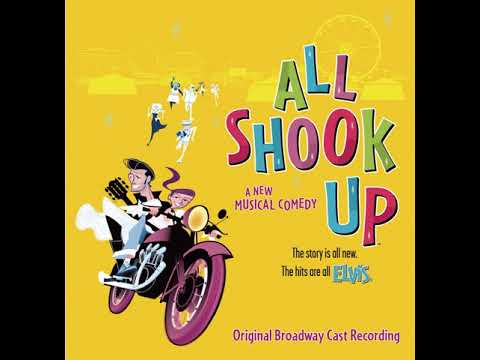
The groove is steady and faintly menacing, the kind of pulse that makes a bar feel like it has been open too long. In the musical, that steadiness becomes a stage tool: the rhythm holds the scene together while different characters confess different shades of loneliness. You can hear the dramaturgy in the entrances and exits of voices, like a director blocking traffic through a crowded room.
Idioms, images, and subtext
"Lonely street" lands as a physical place and a social condition. The line about being "so lonely you could die" can read as melodrama, but in a chorus it becomes something else: a town laughing at itself because it cannot admit how much it hurts. That comic edge is the show buying permission to get serious later.
Technical Information (Quick Facts)
- Song: Heartbreak Hotel
- Artist: John Eric Parker, Mark Price, Sharon Wilkins, Nikki M. James, Jonathan Hadary, All Shook Up Ensemble
- Featured: Ensemble
- Composer: Elvis Presley; Mae Boren Axton; Tommy Durden
- Producer: Jay David Saks (cast recording)
- Release Date: May 31, 2005
- Genre: Musical theatre; blues-based rock and roll
- Instruments: Voice; theatre orchestra and band
- Label: Masterworks Broadway (Sony BMG Music Entertainment)
- Mood: Restless; sardonic; communal
- Length: Listed as a cast album track (time varies by listing)
- Track #: 3
- Language: English
- Album (if any): All Shook Up - Original Broadway Cast Recording (2005)
- Music style: Blues progression and rock-era attitude arranged for Broadway ensemble storytelling
- Poetic meter: Predominantly iambic-leaning stresses in performance, with blues phrasing elasticity
Frequently Asked Questions
- Who leads the number in the musical?
- It is treated as a shared lament, with named characters and ensemble voices trading lines in Sylvia's Honky-Tonk before the story is interrupted by Chad's entrance.
- Why place this song so early in Act I?
- Because the show needs a baseline: a town stuck in routine. Once that is established, Chad's arrival can feel like a genuine rupture instead of a random entrance.
- Is it staged as a performance inside the story world?
- Most productions treat it as scene music rather than a formal "show within the show" turn, even though the setting is a bar.
- How does the arrangement differ from the 1956 single?
- The musical expands it into a chorus portrait, with clearer theatre diction and a structure shaped to hand the scene off quickly to the next plot beat.
- What is the main metaphor in the number?
- The "hotel" becomes a place where loneliness is crowded and routine: lots of people, not much comfort.
- What key center does the classic harmony emphasize?
- Analytical references and many practical charts place the main material around E, with the familiar blues movement through A and B before returning.
- Did the original have major chart impact?
- Yes. It was a breakout hit in 1956, and UK listings show it peaking at number 2 during that period.
- Is the cast recording track a charted single?
- No. It is a theatre album cut, circulated as part of a cast recording release rather than a pop singles campaign.
- Why does the song feel "crowded" even when sung by one person?
- The lyric describes a packed place that still feels empty, and the blues repetition reinforces that trap. The musical makes the implication literal by filling the room with voices.
Awards and Chart Positions
The Broadway track is not a singles-market release, so its measurable "chart life" is theatrical: track listing, licensing afterlife, and the way the number becomes a dependable Act I opener for regional productions. The original 1956 recording, however, is a classic chart monster. UK archival listings from Official Charts Company show the title peaking at number 2, and reference histories note a seven-week stay atop Billboard's Top 100-era listings. In RIAA-certified terms, the "Heartbreak Hotel / I Was the One" single has been listed as multi-platinum in later certification records.
| Version | Release context | Documented milestones |
|---|---|---|
| Elvis Presley single (1956) | RCA-era breakout release | UK peak 2; major US chart run in 1956; later multi-platinum certification listings for the paired single |
| All Shook Up cast recording track (2005) | Original Broadway Cast Recording, track 3 | Album distribution and theatre repertory impact rather than pop-singles charting |
How to Sing Heartbreak Hotel
Most practical references put the classic version in E and near the mid-90s BPM range. A useful vocal-range snapshot from a rehearsal standpoint places the melody comfortably around A2 to E4 for a low-to-mid voice, though keys shift in stage productions to suit casting. Treat the show version as theatre first: text clarity, then style.
- Tempo: Practice at 92 to 96 BPM in 4/4. Lock the backbeat, then slightly relax the phrasing so it does not sound like an exercise.
- Diction: Hit the hard consonants in "lonely street" and "hotel" without barking them. Blues wants bite, theatre wants comprehension.
- Breathing: Plan breaths before the long address lines (the ones that sound like you are giving directions). Keep inhales quiet to preserve the weary atmosphere.
- Flow and rhythm: Keep the triplet feel flexible. Do not over-swing. The song works because the groove is steady while the voice sounds slightly frayed.
- Accents: Stress the nouns that locate you (street, hotel, room) and the verbs that reveal your state (found, cry). That keeps the story concrete.
- Ensemble version: If you are singing the musical arrangement, listen for entrances and handoffs. Treat it like dialogue on pitches, not like a solo showcase.
- Mic technique: If amplified, stay close on spoken-like lines and pull back on high-intensity vowels so the sound does not flatten into shouting.
- Pitfalls: Over-imitating Presley mannerisms, dragging tempo, or turning the number into self-pity. The best performances keep a thin layer of humor on the surface, even when the lyric bites.
Additional Info
The show uses this number as a thesis statement: the town is bored, lonely, and a little proud of its own misery. Once that is onstage, the story can justify why rock-and-roll feels dangerous here. According to a recent Masterworks Broadway blog essay reflecting on the musical's Elvis song choices, "Heartbreak Hotel" carried early television-history weight for Presley, which only deepens the joke: a song that once announced a new star is now announcing a town that cannot change until the star rides in.
One of my favorite hidden mechanics is harmonic. The E-A-B loop is a trap that keeps returning home, and the lyric is a trap that keeps returning to the same address. On the page, it is simple. In performance, that simplicity is what lets actors play subtext: resentment, longing, a little flirtation, a little boredom, all on the same frame.
Key Contributors
| Entity | Type | Relationship (S-V-O) |
|---|---|---|
| Elvis Presley | Person | Presley co-wrote "Heartbreak Hotel" and popularized the signature recording. |
| Mae Boren Axton | Person | Axton co-wrote "Heartbreak Hotel" as credited on the original release. |
| Tommy Durden | Person | Durden co-wrote "Heartbreak Hotel" as credited on the original release. |
| Joe DiPietro | Person | DiPietro wrote the book for All Shook Up and recontextualized the song as an Act I town chorus. |
| Stephen Oremus | Person | Oremus shaped the Broadway production's music direction and orchestrations. |
| John Eric Parker | Person | Parker performs the number on the cast album as part of the featured group. |
| Sharon Wilkins | Person | Wilkins performs the number on the cast album as part of the featured group. |
| Masterworks Broadway | Organization | Masterworks Broadway released and documented the cast recording and synopsis placement. |
| All Shook Up - Original Broadway Cast Recording | Work | The album places "Heartbreak Hotel" as track 3, aligning with Act I's barroom scene. |
| Sylvia's Honky-Tonk | Work | The bar setting hosts the song's Act I lament scene. |
Sources
Sources: Masterworks Broadway album page and synopsis, Official Charts Company archive listings, Billboard historical chart references, Musicnotes sheet music listing, academic slide deck on harmonic material (de Clercq), Singing Carrots vocal range listing, Wikipedia entries for the musical and the song
Music video
All Shook Up Lyrics: Song List
- Act 1
- Overture
- Love Me Tender
- Heartbreak Hotel
- Roustabout
- One Night With You
- C'mon Everybody
- Follow That Dream
- Teddy Bear/Hound Dog
- Teddy Bear Dance
- That's All Right
- You're the Devil in Disguise
- It's Now or Never
- Blue Suede Shoes
- Don't Be Cruel
- Let Yourself Go
- Cant Help Falling in Love
- Act 2
- All Shook Up
- It Hurts Me
- A Little Less Conversation
- Power of My Love
- I Don't Want To
- Jailhouse Rock
- There's Always Me
- If I Can Dream
- Fools Fall in Love
- Burning Love
- C'mon Everybody Encore