That's All Right Lyrics — All Shook Up
That's All Right Lyrics
That's all right for you
That's all right mama, just anyway you do
Well, that's all right, that's all right.
That's all right now mama, anyway you do
Mama she done told me,
Papa done told me too
'Son, that gal your foolin' with,
She ain't no good for you'
But, that's all right, that's all right.
That's all right now mama, anyway you do
I'm leaving town, baby
I'm leaving town for sure
Well, then you won't be bothered with
Me hanging 'round your door
Well, that's all right, that's all right.
That's all right now mama, anyway you do
Song Overview
Review and Highlights
Quick summary
- What it is: Act I permission slip disguised as a barn-burner - Chad pushes two rule-bound lovers to stop waiting.
- Who sings on the 2005 cast album: Cheyenne Jackson, Mark Price, Nikki M. James, Curtis Holbrook, Sharon Wilkins, All Shook Up Ensemble.
- Where it appears: Act I, as Dean and Lorraine chase a forbidden romance and Chad dares them to act.
- How this version behaves theatrically: It is a crowd-backed pep talk, less a solo statement than a town being coached into courage.
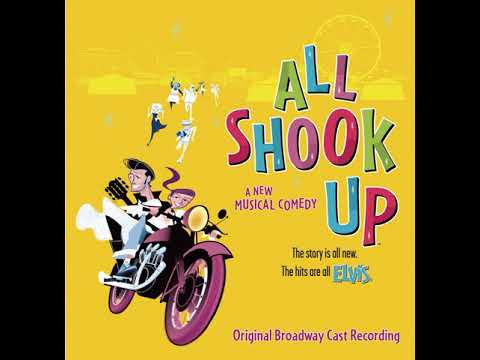
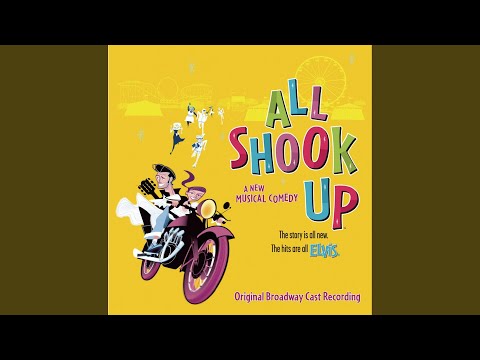
All Shook Up (2005) - musical - non-diegetic. This number arrives at exactly the point where the show has to prove that rock-and-roll is not just decoration. Dean and Lorraine have chemistry and trouble, but chemistry and trouble do not automatically equal action. Chad supplies the shove. The Masterworks Broadway synopsis spells it out: he encourages them to pursue their forbidden love, and the song becomes the public engine for a private decision.
As a theater piece, it is a classic "do it now" cue, with the band acting like a starting pistol. The original Sun-era recording is famous for its stripped-down immediacy, and the musical borrows that urgency even while dressing it up with ensemble texture. If you have ever watched a stage romance stall because the book is waiting for a plot excuse, this is the opposite. The tune is the excuse. The tune is the push.
Key takeaways
- Driving rhythm: Rockabilly snap that reads like motion, not reflection.
- Scene function: A moral and comic hinge: the town is learning new rules in real time.
- Character spotlight: Chad as coach, Dean and Lorraine as students who finally stop being polite about love.
Creation History
Arthur Crudup wrote and first recorded the song in the 1940s, and Elvis Presley's up-tempo Sun Studio version was recorded July 5, 1954 and released July 19, 1954. In the jukebox-musical context, it becomes a book-musical tool: a familiar hook repurposed as a scene argument about what a "decent" town is allowed to feel and do.
Song Meaning and Annotations
Plot
Act I has already introduced Mayor Hyde's control and the town's anxiety about "proper" behavior. Lorraine and Dean are drawn to each other, but their attraction sits under scrutiny: race, class, and parental authority all press down at once. Chad, who treats rules as suggestions, refuses to let them drift into regret. The song is the moment the romance stops being an idea and starts being a fight.
Song Meaning
In this staging, the meaning is straightforward and useful: your love does not need an invitation from power. The lyric itself is built around reassurance, but the show turns reassurance into provocation. It is not about calming someone down. It is about turning their fear into motion.
Annotations
Chad encourages them to pursue their forbidden love ("That's All Right"), but Sylvia does not share the sentiment.Synopsis cue
That last clause is the tell. The number is not only about the young couple. It is also about the town splitting into camps: people who want desire to be governed, and people who are tired of asking.
The licensed numbers list assigns the song to Chad, Dennis, Lorraine, Dean, Sylvia, Natalie, and the ensemble.Staging note
This is a group scene disguised as a song. The musical uses the ensemble like a Greek chorus with better shoes: they make the pressure visible, so Dean and Lorraine are not just flirting, they are defying a crowd.
Presley's Sun recording is widely cited as an early rock-and-roll cornerstone, later honored with a Grammy Hall of Fame induction.Legacy note
That reputation is not trivia in a jukebox show. The song comes with a cultural story about ignition and invention, and the stage version borrows that story to make the characters feel like they are inventing themselves.
Style, arc, and the rockabilly lesson
The song works because it does not over-explain. Rockabilly is built for commitment: short phrases, sharp accents, and a sense that hesitation is a waste of time. Onstage, that becomes an acting instruction. Sing it like advice you believe, not like nostalgia you admire.
Technical Information (Quick Facts)
- Song: That's All Right
- Artist: Cheyenne Jackson; Mark Price; Nikki M. James; Curtis Holbrook; Sharon Wilkins; All Shook Up Ensemble
- Featured: Ensemble
- Composer: Arthur Crudup
- Producer: Jay David Saks (cast recording)
- Release Date: May 31, 2005
- Genre: Musical theatre; rockabilly influenced rock and roll
- Instruments: Voices; theatre orchestra and band
- Label: Masterworks Broadway
- Mood: Urgent; encouraging
- Length: 2:17
- Track #: 10
- Language: English
- Album (if any): All Shook Up - Original Broadway Cast Recording (2005)
- Music style: Ensemble-backed scene song that pushes a forbidden romance forward
- Poetic meter: Accent-driven pop phrasing with conversational stresses
Frequently Asked Questions
- Who leads the number in the musical?
- Chad leads it as encouragement, with Dean, Lorraine, Sylvia, Natalie, Dennis, and the ensemble woven into the scene.
- What is the plot reason the song appears here?
- Dean and Lorraine need a shove to act on their attraction, and Chad provides that shove in public, which raises the stakes.
- Is it staged as a performance inside the world of the show?
- Most productions treat it as scene music rather than a formal show-within-the-show.
- Why does Sylvia resist the sentiment?
- Because she has lived longer with consequences. The show uses her reluctance to keep the town's transformation from feeling cost-free.
- Is this the first rock-and-roll record?
- People argue about that label, but major criticism has long treated Presley's Sun recording as a key candidate for the starting line.
- Did Elvis Presley's 1954 single chart nationally in the United States?
- It sold strongly in Memphis and helped launch his career, but it did not become a national US chart hit on release.
- Why did the song chart in the UK decades later?
- A 2004 reissue campaign brought it back as a single, and it reached the UK Top 5.
- What makes the song useful in a jukebox musical?
- It is short, directive, and built around reassurance, which makes it easy to turn into a character-to-character argument.
Awards and Chart Positions
The Broadway track is a cast-album scene cut, not a single release. The underlying song's public milestones belong to the Presley recording: it was inducted into the Grammy Hall of Fame in 1998, and a 2004 reissue reached a peak position of 3 on the UK Official Singles Chart.
| Release or honor | Year | Marker | Notes |
|---|---|---|---|
| Elvis Presley recording | 1998 | Grammy Hall of Fame induction | Institutional recognition of its historical weight |
| UK reissue single | 2004 | UK Official Singles Chart peak 3 | Re-release chart run beginning July 17, 2004 |
| All Shook Up cast recording track | 2005 | Track 10, 2:17 | Documented placement as Chad urging Dean and Lorraine onward |
How to Sing Thats All Right
Published metrics vary by edition. A Musicnotes piano vocal guitar arrangement lists Eb major with a vocal range of C4 to D5 and a metronome marking around 70, while some tempo and key databases for recorded versions commonly report a faster groove around 104 BPM with keys shifting across releases and takes. For the musical-theatre use, the important choice is not the exact key, it is the attitude: brisk reassurance, no lingering.
- Tempo: Rehearse in two modes. First, a moderate blues feel around 70 as a phrasing drill, then a performance feel closer to a fast rockabilly pulse around 100 to 110 to match the scene's urgency.
- Diction: Keep the reassurance words clean. This lyric works when it sounds like something you would actually tell a frightened friend.
- Breathing: Take short, silent breaths before the repeated reassurance lines, and avoid breathing between the hook fragments, which can make the message feel hesitant.
- Flow and rhythm: Sit on the beat. Rockabilly wants you slightly forward, but not rushed. Let the consonants strike and the vowels travel.
- Accents: Stress the supportive verbs and approvals, not the decoration. Your job is to make the couple believe you.
- Ensemble balance: If you are leading, sing with a focused tone and let the group widen behind you. The scene lands when the town feels like a force.
- Mic technique: If amplified, keep the attack crisp but avoid harsh edges. Intensity comes from rhythm and clarity, not from volume.
- Pitfalls: Turning it sentimental, turning it into an Elvis impression, or playing it like a concert. In the show, it is advice that changes behavior.
Additional Info
The show uses the song as a bridge between two kinds of rebellion. "C'mon Everybody" breaks the town open as a crowd. "That's All Right" makes rebellion personal by insisting that love counts even when authority says it does not. A Masterworks Broadway essay about the score points out that even songs without big chart resumes can be exactly right for the book moments DiPietro needed, and this track is a clear example: it is not about fame, it is about fit.
There is also a neat bit of theatrical irony: the number pushes Dean and Lorraine forward, but it also exposes how far the adults still have to go. Sylvia's resistance is not villainy. It is caution, earned. The show lets that caution exist while still keeping the beat moving, which is harder than it sounds.
Key Contributors
| Entity | Type | Relationship (S-V-O) |
|---|---|---|
| Cheyenne Jackson | Person | Jackson leads the cast recording track as Chad. |
| Nikki M. James | Person | James appears on the track as Lorraine in the Act I scene. |
| Curtis Holbrook | Person | Holbrook appears on the track as Dean in the Act I scene. |
| Sharon Wilkins | Person | Wilkins appears on the track as Sylvia, who resists Chad's encouragement. |
| Mark Price | Person | Price appears on the track as Dennis. |
| Arthur Crudup | Person | Crudup wrote the song that anchors the musical number. |
| Jay David Saks | Person | Saks produced the Original Broadway Cast Recording. |
| Masterworks Broadway | Organization | Masterworks Broadway released the cast album and published the full synopsis and track list. |
| All Shook Up Ensemble | Organization | The ensemble supports the scene as the town's pressure and permission made audible. |
Sources
Sources: All Shook Up - Original Broadway Cast Recording 2005 (Masterworks Broadway album page and synopsis), Thats All Right official audio release (Masterworks Broadway), All Shook Up (musical) song list (licensed version), Thats All Right (song history and honors), Official Charts Company song page for THAT'S ALL RIGHT, Musicnotes sheet music listing for Thats All Right, Masterworks Broadway blog essay Elvis Can Still Be in the Building
Music video
All Shook Up Lyrics: Song List
- Act 1
- Overture
- Love Me Tender
- Heartbreak Hotel
- Roustabout
- One Night With You
- C'mon Everybody
- Follow That Dream
- Teddy Bear/Hound Dog
- Teddy Bear Dance
- That's All Right
- You're the Devil in Disguise
- It's Now or Never
- Blue Suede Shoes
- Don't Be Cruel
- Let Yourself Go
- Cant Help Falling in Love
- Act 2
- All Shook Up
- It Hurts Me
- A Little Less Conversation
- Power of My Love
- I Don't Want To
- Jailhouse Rock
- There's Always Me
- If I Can Dream
- Fools Fall in Love
- Burning Love
- C'mon Everybody Encore