Blue Suede Shoes Lyrics — All Shook Up
Blue Suede Shoes Lyrics
Two for the show,
Three to get ready,
Now go, cat, go.
But don't you step on my blue suede shoes.
You can do anything but lay off of my Blue suede shoes.
Well, you can knock me down,
Step in my face,
Slander my name
All over the place.
Do anything that you want to do, but uh-uh,
Honey, lay off of my shoes
Don't you step on my Blue suede shoes.
You can do anything but lay off of my blue suede shoes.
You can burn my house,
Steal my car,
Drink my liquor
From an old fruitjar.
Do anything that you want to do, but uh-uh,
Honey, lay off of my shoes
Don't you step on my blue suede shoes.
You can do anything but lay off of my blue suede shoes.
Song Overview
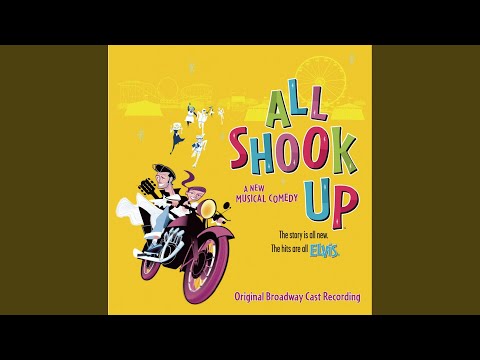
Review and Highlights
Quick summary
- What it is: A rock-and-roll calling card that doubles as a friendship test: who follows Chad, and who stays safe.
- Who sings in the stage story: Ed, Chad, Dennis, and the ensemble (licensed numbers list).
- How it shows up on the 2005 cast album: The official album page lists an orchestral cut, 1:01, used as a compact opener, while official audio uploads circulate with featured vocalists.
- Why it matters: It marks the moment Chad spots a kindred spirit and the sidekick lineup quietly shifts.
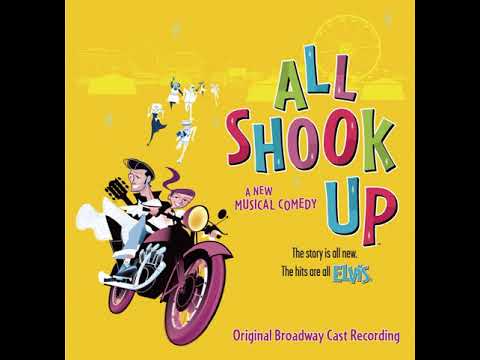
All Shook Up (2005) - musical - non-diegetic. The synopsis on the cast-album page ties the number to a neat plot hinge: Chad recognizes a kindred spirit, and Dennis steps aside so Ed can become Chad's sidekick. That is jukebox dramaturgy doing its job. A familiar hook arrives, and the audience understands the social weather without a speech.
The tune is a swagger lesson. It is not only about footwear, and it is not only about masculinity, either. It is about boundaries, pride, and the thrill of drawing a line in public. In a small town that polices behavior, that kind of line feels like rebellion even when it is delivered with a grin. The song is also theatrical catnip because it can be staged as a parade: bodies crossing, alliances forming, the room agreeing to a new rhythm.
Key takeaways
- Driving rhythm: Rockabilly snap built for entrances, exits, and quick comic business.
- Character function: Chad recruits Ed, and Dennis absorbs the sting of being replaced.
- Scene leverage: The number can make a power shift feel inevitable rather than explained.
Creation History
Carl Perkins wrote and first recorded the song in 1955, with the original single released in early 1956 on Sun. Elvis Presley recorded his version in 1956 and used it as the opening track of his debut album. Broadway borrows the song's built-in cultural recognition and uses it as stage shorthand: when this riff lands, the room knows it is time to move, and someone is about to change teams.
Song Meaning and Annotations
Plot
Act I has been teaching the town how to loosen up, then it begins sorting out who benefits from that loosening. Dennis wants to be close to Chad because Chad is close to Natalie. Ed wants to be close to Chad because Chad represents a version of manhood Ed feels he might finally wear. The synopsis places the number at the moment Chad chooses Ed, and that choice pushes Dennis into a new, more complicated lane.
Song Meaning
Within the show, the meaning is self-definition by demand. The lyric is a warning: respect my boundary, respect my pride. In a romantic comedy score, that boundary becomes theatrical fuel. Ed is learning to take up space. Chad is reminding the town that taking up space can be fun. Dennis is learning that fun can cost you status.
Annotations
Chad realizes a kindred spirit, and Dennis, out of love for Natalie, steps aside to let Ed be Chad's sidekick - "Blue Suede Shoes".Synopsis cue
This is a clean scene engine: friendship as a chain reaction. The number is not just sound, it is a reshuffle of who stands next to whom.
The licensed numbers list assigns the song to Ed, Chad, Dennis, and the ensemble.Staging note
That crediting matters. It tells you the moment is public. The town witnesses the new duo forming, which gives the later misunderstandings sharper stakes.
The Perkins recording was inducted into the Grammy Hall of Fame, and the song later entered the US National Recording Registry.Legacy note
Those honors are not decoration in a jukebox show. They explain why the song feels like a cornerstone: the audience hears history in the riff, even if they cannot name the committees.
Style fusion and stagecraft
Rockabilly is a hybrid by nature, and this one carries blues grit, country bounce, and pop polish in the same two minutes. Onstage, that hybrid quality becomes a directing advantage: it can read as a dance number, a comic warning, or a social flex, depending on who holds the center. According to NPR coverage of the song's history, the story of how it was written and recorded is part of why it has endured as a symbol of early rock-and-roll craft.
Technical Information (Quick Facts)
- Song: Blue Suede Shoes
- Artist: All Shook Up cast (stage version: Ed, Chad, Dennis, ensemble)
- Featured: Ensemble
- Composer: Carl Perkins
- Producer: Jay David Saks (cast recording)
- Release Date: May 31, 2005
- Genre: Musical theatre; rockabilly; rock and roll
- Instruments: Voices; theatre orchestra and band
- Label: Masterworks Broadway
- Mood: Brash; playful; competitive
- Length: 1:01 (cast album track listing for the orchestral cut)
- Track #: 1 (cast album track listing for the orchestral cut)
- Language: English
- Album (if any): All Shook Up - Original Broadway Cast Recording (2005)
- Music style: Rockabilly theater number used as an alliance-and-status scene hinge
- Poetic meter: Accent-driven rock phrasing with chant-like hooks
Frequently Asked Questions
- Who sings Blue Suede Shoes in the musical?
- The licensed numbers list credits Ed, Chad, Dennis, and the ensemble, framing it as a public scene rather than a private confession.
- What is happening in the plot when the number lands?
- The cast-album synopsis ties it to Chad recognizing a kindred spirit and Dennis yielding the sidekick spot to Ed.
- Why is this song useful in a jukebox musical?
- The riff communicates attitude instantly, so the show can stage a social shift without stopping to explain it.
- Is Blue Suede Shoes an Elvis original?
- No. Carl Perkins wrote and first recorded it, and Elvis Presley recorded a famous version in 1956.
- Does the cast album begin with this title?
- Yes. The official album page lists an orchestral cut titled Blue Suede Shoes as Track 1, 1:01, functioning like a compact opener.
- Are there notable legacy honors attached to the song?
- Yes. The Perkins recording was inducted into the Grammy Hall of Fame, and the song later entered the US National Recording Registry.
- Does the song have a fixed key for stage performance?
- Not in practice. Productions often transpose for vocal comfort, but the genre requires crisp consonants and a forward groove regardless of key.
- Is the number more comedy or more swagger?
- Both. Swagger drives the beat, and comedy comes from how seriously characters treat a trivial object as a code of honor.
- What is the main acting action during the hook?
- Claim territory. The singer is not admiring style, the singer is setting a boundary.
Awards and Chart Positions
The cast-recording cut is a theatre track, so its public record is placement rather than pop charts. The underlying song, however, carries landmark status. The Perkins single reached major US chart positions in 1956, while the Elvis Presley single version is documented in UK chart histories as a Top 10 hit. The song later earned institutional recognition, including a Grammy Hall of Fame induction for the Perkins recording and selection for the US National Recording Registry.
| Item | Year | Marker | Notes |
|---|---|---|---|
| Blue Suede Shoes (Carl Perkins) | 1956 | US pop chart peak reported at 2 | Often cited as one of the earliest rockabilly crossovers |
| Blue Suede Shoes (Elvis Presley) | 1956 | UK Top 10 presence documented in chart histories | Part of the early wave of Presley UK hits |
| Blue Suede Shoes (Carl Perkins recording) | 1986 | Grammy Hall of Fame induction | Legacy recognition |
| Blue Suede Shoes | 2006 | US National Recording Registry selection | Cultural and historical preservation |
How to Sing Blue Suede Shoes
Reference databases for recorded versions commonly list a tempo near 95 BPM for the Elvis recording, and published sheet music listings provide a practical vocal range such as C4 to Eb5 for a common arrangement. For theatre, the trick is to sound conversational while staying rhythmically strict.
- Tempo: Practice at 80 BPM to lock diction, then move up toward 95 BPM so the groove feels like a strut, not a jog.
- Diction: Hit the plosives and fricatives cleanly, especially the S sounds and the hard consonants in the hook. The comedy lives in clarity.
- Breathing: Use short breaths before each hook repeat. Do not breathe in the middle of the hook, or the warning loses authority.
- Flow and rhythm: Keep phrases speech-like and on the beat. Rockabilly sounds loose, but it is actually precise.
- Accents: Stress the boundary words. You are not describing shoes, you are setting terms.
- Ensemble and doubles: If multiple singers echo lines, align consonant timing. A clean unison makes the warning feel communal.
- Mic: If amplified, avoid pushing volume. Let articulation and groove supply the punch.
- Pitfalls: Over-crooning, dragging behind the beat, or turning it into an impersonation. The scene needs character intent first.
Additional Info
A fun bit of real-world afterlife: in June 2024, Elvis Presley's blue suede shoes sold at auction for a six-figure sum, a reminder that the song title has become a cultural object as much as a lyric. The musical indirectly benefits from that aura. The audience does not just hear a tune, they hear a symbol.
If you want a clean historical frame, the Wikipedia entry for the song collects the institutional milestones, while NPR's write-up emphasizes the craft story behind its writing and recording. I lean on that combination because it mirrors how the song works in theatre: part myth, part mechanics.
Key Contributors
| Entity | Type | Relationship (S-V-O) |
|---|---|---|
| Carl Perkins | Person | Perkins wrote and first recorded Blue Suede Shoes. |
| Elvis Presley | Person | Presley recorded a major 1956 version that broadened the song's reach. |
| Joe DiPietro | Person | DiPietro places the song as a scene hinge that reshuffles alliances around Chad. |
| Jay David Saks | Person | Saks produced the Original Broadway Cast Recording. |
| Masterworks Broadway | Organization | Masterworks Broadway publishes the synopsis and track listing that link the song to the sidekick shift. |
| All Shook Up cast | Organization | The cast performs the number as a public moment of recruitment and rivalry. |
| Library of Congress | Organization | The National Recording Registry selected Blue Suede Shoes for preservation. |
| The Recording Academy | Organization | The Grammy Hall of Fame honored the Perkins recording. |
Sources
Sources: Masterworks Broadway album page and synopsis, Masterworks Broadway official audio upload, All Shook Up musical numbers list, NPR feature on the song history, Official Charts Company chart listings, Musicnotes sheet music listing, Tunebat key and BPM database listing, The Guardian report on the June 28, 2024 auction
Music video
All Shook Up Lyrics: Song List
- Act 1
- Overture
- Love Me Tender
- Heartbreak Hotel
- Roustabout
- One Night With You
- C'mon Everybody
- Follow That Dream
- Teddy Bear/Hound Dog
- Teddy Bear Dance
- That's All Right
- You're the Devil in Disguise
- It's Now or Never
- Blue Suede Shoes
- Don't Be Cruel
- Let Yourself Go
- Cant Help Falling in Love
- Act 2
- All Shook Up
- It Hurts Me
- A Little Less Conversation
- Power of My Love
- I Don't Want To
- Jailhouse Rock
- There's Always Me
- If I Can Dream
- Fools Fall in Love
- Burning Love
- C'mon Everybody Encore