

Finale Act I: I Know It Can Happen Again/To Have and To Hold/Wish Them Well Lyrics
Finale Act I: I Know It Can Happen Again/To Have and To Hold/Wish Them Well
[ENSEMBLE]To have and to hold
From this day forward
For better, for worse
For richer, for poorer
In sickness and in health
To love and to cherish
'Til death us do part
'Til death us do part
Two more?lovers?were?married today
Wish them?well, wish them?well, wish them well
Brave and happy, they start on their way
Wish them well, wish them well, wish them well
They have faith in the future and joy in their hearts
If you look in their eyes, you can tell
How brav? and happy and hopeful are they
Wish th?m well, wish them well
Wish them well, wish them well, wish them well
Wish them well
Wish them well
Wish them well
Wish them well, wish them well, wish them well, wish them well
Wish them well
Song Overview
Review and Highlights
Quick summary
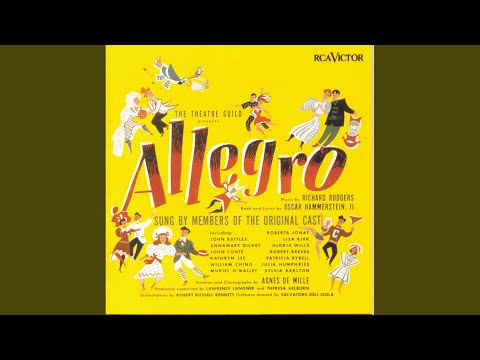
- Work: Allegro (Broadway musical, 1947) by Richard Rodgers (music) and Oscar Hammerstein II (book and lyrics).
- Number: Act I finale medley: "I Know It Can Happen Again" motif into "To Have and To Hold" vow setting, capped by "Wish Them Well."
- Where it appears: End of Act I, immediately after the wedding sequence and Charlie's last-minute sermonizing about Joe.
- What it does: It turns a marriage service into a public chorus statement, while sneaking a private, uneasy footnote under the confetti.
Allegro (1947) - stage musical - non-diegetic. The guests are inside the church, assembled for Joe and Jennie's wedding, and Rodgers does something sly: he gives the vows to the chorus. Masterworks Broadway describes the staging effect with unusual clarity: we hear a choral setting of the marriage vows, and the minister continues silently while the company supplies the good wishes that close the act. It is a Broadway wedding that behaves like civic ritual, not private romance.
The theatrical pleasure is how the piece keeps changing its angle. First, the title phrase from the vow section is literal: a couple repeats words everyone recognizes, and the music treats those words as architecture. Then comes the bigger frame: the company does not simply sing happiness, it sings pressure. You can feel the crowd forming a story around the couple. That is why the return of "I Know It Can Happen Again" belongs here. Allegro is obsessed with cycles - babies become men, men become husbands, husbands become whatever the world can sell them. The finale places that idea under the wedding, like a watermark you only see when the light hits it right.
Key takeaways
- Form: A medley finale that welds personal milestone to community commentary.
- Color: Sacred-adjacent choral writing that still feels like musical theatre, crisp and forward.
- Subtext: The crowd blesses the couple, and the show quietly asks what kind of life the blessing is steering them into.
Creation History
Allegro opened at the Majestic Theatre on October 10, 1947, and the original cast recording was made shortly after the opening, conducted by Salvatore Dell'Isola with orchestrations by Robert Russell Bennett, per the official Rodgers and Hammerstein production page. On the abridged 1947 album, the wedding portion typically appears as a single track combining "To Have and To Hold" and "Wish Them Well," preserving the choral core even when other dialogue and transitions are cut. The 2009 first complete studio recording restores the full Act I finale as a longer continuous track, listed at 5 minutes 58 seconds on major discographies.
Song Meaning and Annotations
Plot
Act I traces Joe's growth, his detours, and his return to Jennie. By the time the wedding arrives, both families have doubts, and the show has already placed loss nearby. The Act I finale gathers the community inside the church and lets the ensemble narrate the wedding as a shared event. In the larger story, the wedding is not the finish line. It is the point where the ordinary-man fable tightens, because Joe has now made a life choice that will be tested by ambition, money, and disappointment.
Song Meaning
The medley treats marriage as two things at once. In the vow setting, it is contract and promise, the public words people use to make private life legible. In "Wish Them Well," it becomes communal projection: the town, the families, the chorus itself, all pouring hopes onto the couple. If you stage it sweetly, it lands as a bright curtain. If you stage it with even a hint of shadow, it becomes a blessing that also feels like a shove. The earlier motif, "I Know It Can Happen Again," sharpens the point: the show is not only celebrating a wedding, it is placing it inside a repeating pattern of expectation.
Annotations
"To have and to hold."
Two plain verbs, and Rodgers makes them structural. The choral writing is not decoration - it is the building itself, the sound of a community insisting that these words mean something because everyone has agreed they do.
"Wish them well."
As a phrase, it is generous. As a dramatic action, it is collective authorship. The company is writing the couple's future out loud. That is comforting, and it is also the kind of comfort that can become a cage if the couple cannot live up to it.
"I know it can happen again."
In its original context, the line is about a baby becoming a man. In the finale, it plays like a reminder that life keeps repeating its ceremonies. The show asks, sotto voce, whether the repetition is wisdom or inertia.
Instrumentation and texture
The wedding music leans on choral blend and forward-moving harmonic rhythm. It is not a showy anthem; it is a staged ritual. The power comes from clarity: clean vowels, firm entrances, and a sense that the music is carrying something bigger than any single character.
Technical Information (Quick Facts)
- Song: Finale Act I: I Know It Can Happen Again - To Have and To Hold - Wish Them Well
- Artist: Allegro Ensemble (original cast recording context)
- Featured: Ensemble; wedding guests; Joe Taylor and Jennie Brinker in scene focus
- Composer: Richard Rodgers
- Release Date: October 10, 1947 (Broadway opening; cast recording made shortly after)
- Genre: Broadway musical; choral sequence; finale medley
- Instruments: Orchestra with chorus
- Label: RCA Victor (original cast album issues); later catalog reissues
- Mood: Ceremonial, exultant, with an undercurrent of caution
- Length: 3 minutes 05 seconds for the wedding track ("To Have and To Hold / Wish Them Well") on the 1947 cast album; 5 minutes 58 seconds for "Finale Act I" on the 2009 complete recording
- Language: English
- Album (if any): Allegro (Original 1947 Broadway Cast Recording); Allegro (First Complete Recording, 2009)
- Music style: Choral vow setting into ensemble benediction
- Poetic meter: Mixed, driven by liturgical phrasing and choral cadence
Frequently Asked Questions
- Is this one song or several?
- It is a continuous Act I finale that stitches together an earlier motif and two wedding sections: the vow setting and the company benediction.
- What is happening onstage during the vow music?
- The scene is inside the church with the guests assembled; the chorus carries the vow text while the minister continues the service silently.
- Why does the finale bring back "I Know It Can Happen Again"?
- It frames the wedding as part of a repeating cycle: growing up, being blessed by the community, and stepping into a life shaped by expectations.
- Why is the wedding written for chorus instead of a romantic duet?
- Because Allegro treats the marriage as a social event with social consequences. The community is not background - it is the narrator and the pressure system.
- Do the families approve of the wedding in the story?
- The synopsis material emphasizes family disapproval and unease around the couple, which makes the choral well-wishing feel brighter and more complicated at the same time.
- Where can I hear a short version?
- The 1947 cast album typically presents the wedding portion as a combined track: "To Have and To Hold / Wish Them Well."
- Where can I hear the full Act I finale?
- The 2009 first complete studio recording includes a single track titled "Finale Act I," running just under six minutes.
- Is "Wish Them Well" used outside Allegro?
- Yes, it has been excerpted in Rodgers and Hammerstein revue contexts, which is a quiet compliment to how self-contained the benediction can sound.
- What is the best staging choice for the ending?
- Let it read as ceremony first. If you want the Allegro bite, allow one small hint of unease - a stillness, a glance, a ghostly presence - and the music does the rest.
Awards and Chart Positions
This finale medley is not a chart item in the pop sense, but its parent show collected real writing recognition. The official Rodgers and Hammerstein production page lists three 1947 Donaldson Award wins for Allegro: Best Book of a Musical, Best Lyrics, and Best Score. As a recorded artifact, the sequence has two prominent release footprints: the abridged 1947 cast album track that preserves the wedding music, and the 2009 first complete studio recording that restores the full Act I finale continuity and length.
| Item | Detail | Date | Notes |
|---|---|---|---|
| Donaldson Awards | Best Book, Best Lyrics, Best Score (Allegro) | 1947 | Show-level recognition cited by the official production page |
| Original cast album footprint | "To Have and To Hold / Wish Them Well" (3:05) | October 10, 1947 listing date | Wedding portion preserved as a combined track |
| Complete recording footprint | "Finale Act I" (5:58) | 2009 | First complete studio recording track listing |
Additional Info
A small dramaturgical note I trust more than any lecture: the minister is silent. That choice, documented in the cast-album notes, turns the wedding into theatre about theatre. The ritual continues, but the music tells the audience what to feel. It is also a neat summary of Allegro as a whole: the story proceeds, and the chorus supplies the commentary that characters cannot always say aloud.
Archival breadcrumbs support how central the wedding sequence was to the creators. The Library of Congress finding aid for the Richard Rodgers collection lists "Wish them well: finale act I" alongside "To have and to hold," indicating the material exists in dedicated piano-vocal manuscript form. That is the kind of evidence that reminds you this was not an afterthought tag, but a shaped ending.
Key Contributors
| Entity | Type | Relationship (S-V-O) |
|---|---|---|
| Richard Rodgers | Person | Rodgers - composed - Finale Act I medley sections |
| Oscar Hammerstein II | Person | Hammerstein - wrote book and lyrics for - Allegro |
| Salvatore Dell'Isola | Person | Dell'Isola - conducted - original cast recording sessions |
| Robert Russell Bennett | Person | Bennett - orchestrated - Allegro recording materials |
| Trude Rittmann | Person | Rittmann - prepared dance arrangements for - Allegro recordings |
| Majestic Theatre | Venue | Majestic Theatre - hosted - Allegro (315 performances) |
| Library of Congress Music Division | Organization | LOC - catalogs manuscripts for - Wish Them Well and related finale materials |
Sources
Sources: Rodgers and Hammerstein official production page for Allegro (1947) and recording credits; Masterworks Broadway cast recording notes for the wedding sequence; Apple Music track listing for Allegro (Original 1947 Broadway Cast Recording); Discogs listing for Allegro (First Complete Recording) track timing; Library of Congress finding aid for the Richard Rodgers collection; Concord Theatricals show page for Allegro; Wikipedia entry for Allegro (musical numbers listing and plot reference).