Raising A Child by Yourself Lyrics — Adventures of Tom Sawyer, The
Raising A Child by Yourself Lyrics
They don't know Tom. He once put my Sunday clothes on a pig
Raising a child by yourself is a lonely life
You can't run to anyone else when you need advice
You want to say yes and let anything go
But you're the one who has to say know
When you're raising a child by yourself
Raising a child by yourself
Raising a child by yourself
[Judge Thatcher]
Raising a child on your own is twice as hard
You never thought you'd be alone
But here you are
There's so many things you just don' know
But you're the one who says it's so
When you're raising a child by yourself
Raising a child by yourself
Raising a child by yourself
[Aunt Polly]
You don't have to tell me that life isn't fair
So many nights I've said so many prayers
[Judge Thatcher]
But either heaven's not list'ning
[Aunt Polly]
Or heaven don't care
But when I see him smiling at me
I don't really mind
[Judge Thatcher]
No matter how hard it might be
It's worth the time
We're new here in town
It's good to have friends
[Aunt Polly]
Maybe sometime we could talk again
[Both]
Raising a child by yourself
Raising a child by yourself
Raising a child by yourself
Song Overview
Review and Highlights
Quick summary
- What it is: A grown-up duet that briefly takes the spotlight away from the kids.
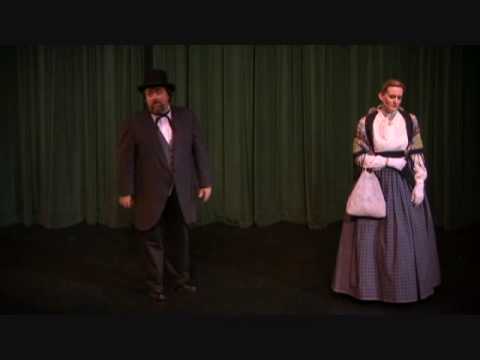
- Who sings it: Aunt Polly and Judge Thatcher, two widowed or single-parent caretakers comparing notes.
- Where it appears: Act I, on the way to church, right after the story has turned dangerous in the graveyard.
- Why it matters: It reminds us that "civilization" has a price tag, and somebody is always paying it at home.
- How it plays: Dryly comic, then quietly sincere - a parental vent session that lands as character shading, not a lecture.
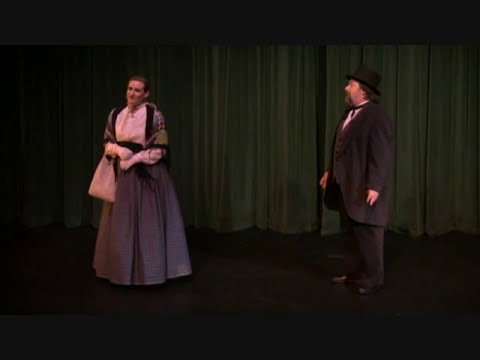
The Adventures of Tom Sawyer (2001) - stage musical - non-diegetic. Act I placement: the next morning, heading to church. Scene function: two adults who spend most of their time reacting to children finally get to speak in their own register. Narrative function: the show briefly enlarges its moral frame - not just what Tom wants, but what it costs Polly to keep the household steady, and what it costs the Judge to raise Becky with a public reputation to maintain.
The musical is full of boy-engine movement, so this duet works best as a pause that still moves. Keep it walking, keep it conversational, and let the humor come from recognition, not mugging. CurtainUp, writing during early development coverage, singled out the single-parent theme as a logical echo between the two characters - and that is exactly why the number earns its spot. It is not plot mechanics. It is social weather.
Creation History
The show was conceived and written by Ken Ludwig, with music and lyrics by Don Schlitz. It premiered in New Haven on February 28, 2001, then opened on Broadway at the Minskoff Theater on April 26, 2001. In the licensed synopsis, the duet is explicitly staged as a shared moment "on the way to church," which is dramaturgically smart: public piety on the outside, private exhaustion on the inside. That contrast is the whole point of the number.
Song Meaning and Annotations
Plot
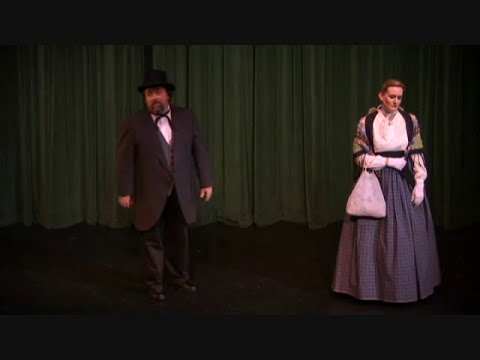
After the graveyard shock, the story pivots back into daylight. Aunt Polly and Judge Thatcher, both raising children alone, meet on the road to church and commiserate. The duet sets up the church sequence that follows, where Tom tries to impress Becky and chase status in the most Tom way possible: by gaming the rules.
Song Meaning
The title is plain talk with a little sting. It frames parenting as work that never clocks out, then admits what respectable towns rarely say out loud: love is real, and fatigue is real, too. Polly and the Judge do not sing because they are sentimental. They sing because they are managing appearances while managing kids, and those are two different jobs.
Annotations
Two caretakers, one refrain: The number is a duet, but it behaves like a mutual agreement.
That shared rhythm matters. When their lines begin to lock together, the scene turns into a small coalition: two adults recognizing they are fighting the same battle with different uniforms.
Church-bound irony: The setting is a walk to church, where the town performs virtue.
Play that irony lightly. A knowing glance, a half-laugh on a hard truth, and the audience understands how "good manners" can be a costume.
Title variants in circulation: Licensed materials often shorten the name to "Raising a Child," while many fans and clips use the longer phrasing.
In rehearsal rooms, that difference is practical rather than philosophical. The longer version plays like a punchline. The shorter version reads like a scene label. Both point to the same beat.
Style and pacing
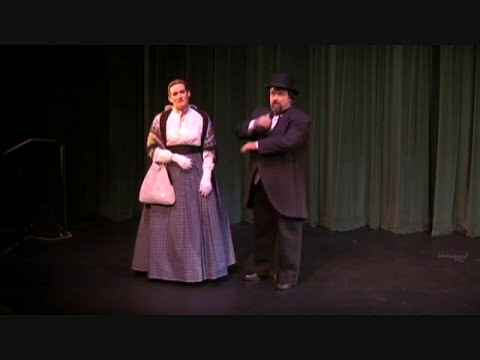
This is not a grand aria. It is closer to a brisk character conversation with melody doing the connective tissue. Keep the diction clean, let the phrasing stay speech-adjacent, and do not over-lean on the laughs. The number is funniest when it feels true.
Technical Information (Quick Facts)
- Song: Raising A Child by Yourself (often listed as "Raising a Child")
- Artist: The Adventures of Tom Sawyer - Original Broadway Cast
- Featured: Aunt Polly; Judge Josiah Thatcher
- Composer: Don Schlitz
- Producer: Not publicly listed for a standard commercial album release
- Release Date: April 26, 2001 (Broadway opening date for the production that defined the score)
- Genre: Musical theatre
- Instruments: Pit orchestra with duet vocals
- Label: Not publicly listed
- Mood: Wry, affectionate, slightly worn-in
- Length: Not reliably published in major public listings
- Track position: Act I, on the way to church
- Language: English
- Album: Licensed show materials; circulating audio uploads exist
- Music style: Character duet with conversational phrasing
- Poetic meter: Mixed (speech-forward theatre lyric setting)
Frequently Asked Questions
- Who sings the number in the licensed synopsis?
- Aunt Polly and Judge Thatcher.
- Where does it happen onstage?
- Act I, on the way to church, the morning after the graveyard events.
- Why does the show give the adults a duet here?
- To show the cost of caretaking and reputation management, right before the church scene puts the town's public manners on display.
- Is the title always written the same way?
- No. Licensed lists often shorten it to "Raising a Child," while many fan references keep the longer phrase.
- What is the dramatic tone?
- Wry and companionable, with sincerity underneath. It should not turn into a sermon.
- What vocal ranges are listed for the roles?
- Aunt Polly is listed from E3 to E5, and Judge Thatcher from A2 to F4.
- Is this song included in the Theatre for Young Audiences version?
- No. MTI notes it as one of the songs cut for that shorter edition.
- Does it have pop chart peaks or certifications?
- No widely used chart archives track it as a standalone commercial single.
Awards and Chart Positions
As a theatre score number, it is not tied to a singles marketplace, so chart peaks and certifications are not the relevant yardsticks. The parent production has the kind of official footprint that matters more here: it premiered in New Haven on February 28, 2001, opened on Broadway on April 26, 2001, and closed on May 13, 2001 after 21 performances and 34 previews. In that brief Broadway life, the show still earned major design nominations (as documented by MTI and Broadway records), which is worth remembering when staging a number like this: it relies on crisp scene transitions and a believable town street more than on vocal fireworks.
Additional Info
One of the sly virtues of the duet is how it lets the Judge stop being only "Becky's father." He becomes a caretaker with skin in the game, which helps later when the town shifts into judgment mode. And Aunt Polly, usually stuck in discipline duty, gets a humane minute where her frustration reads as love, not nagging. As stated in MTI's licensed synopsis, the two explicitly "commiserate" - a small word with a big staging note: this is companionship, not complaint.
Key Contributors
| Entity | Type | Relationship (S-V-O) |
|---|---|---|
| Don Schlitz | Person | Schlitz wrote the music and lyrics for the show. |
| Ken Ludwig | Person | Ludwig conceived and wrote the book. |
| Mark Twain | Person | Twain wrote the source novel used for adaptation. |
| Aunt Polly | Character | Aunt Polly sings the duet while raising Tom and Sid alone. |
| Judge Josiah Thatcher | Character | The Judge sings the duet as a widower raising Becky. |
| Music Theatre International | Organization | MTI licenses the show and publishes synopsis and casting ranges. |
| Minskoff Theater | Venue | The Broadway production opened at this venue on April 26, 2001. |
Sources
Sources: Music Theatre International licensed synopsis (print page), MTI Europe full cast info page, CurtainUp preview coverage, Wikipedia production summary, YouTube circulating clip listing
Music video
Adventures of Tom Sawyer, The Lyrics: Song List
- Act 1
- Overture: Civilization
- Hey, Tom Sawyer
- Here's my Plan
- Smart like That!
- Hands all Clean
- The Vow
- Raising A Child by Yourself
- Old Hundred
- In The Bible
- It Just Ain't Me
- To Hear You Say My Name
- Murrell's Gold
- The Testimony
- Act 2
- Ain't Life Fine
- This Time Tomorrow
- I Can Read
- Murrell's Gold (Reprise)
- Angels Lost
- Light
- Angels Lost (Reprise)
- Light (Reprise)
-
Finale