It Just Ain't Me Lyrics — Adventures of Tom Sawyer, The
It Just Ain't Me Lyrics
Wearin' tight shoes
Sleepin' indoors
Saying "yes ma'am"
Doing my chores
But if I can't smoke my pipe no more
It just ain't me
It just ain't me
Washin' my hands
Gettin' them checked
Button my shirt up to my neck
I don't mean no disrespect
But it just ain't me
It just ain't me
They say you shouldn't tell a lie to anybody else
So it don't make no sense to try to tell one to myself
To tell one to myself
Home-cooked food
Everynight
Feather bed
Tucked in tight
Sounds like something I might like
She could learn me how to read and write!
But what about Pap?
What if he knew?
He'd cut my throat and the widows too!
I guess some folks dreams come true
But it just ain't me
It just ain't me
No matter how much I'd wish I'd be
It just ain't me
Song Overview
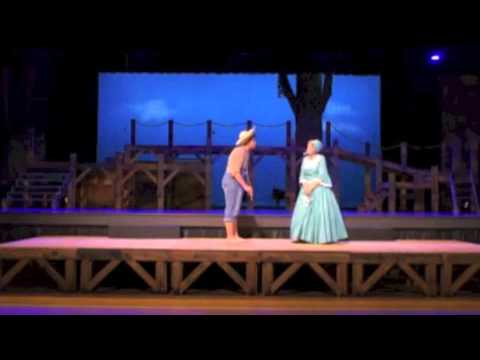
Review and Highlights
Quick summary
- What it is: A Huck Finn character solo that draws a hard line between comfort and freedom.
- Who sings it: Huckleberry Finn.
- Where it appears: Act I, after Widow Douglas offers him a home and literacy lessons.
- What changes: The show stops treating Huck as Tom's sidekick and lets him speak from his own rules.
- Why it matters: It gives the story a second moral center: not a boy learning manners, but a boy deciding what manners cost.
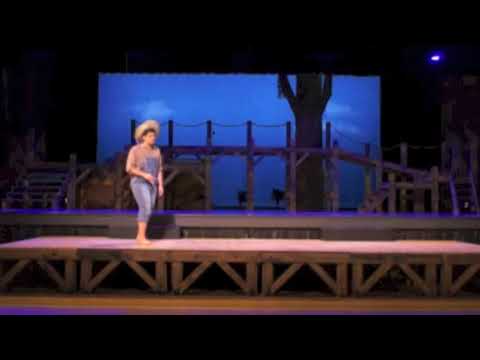
The Adventures of Tom Sawyer (2001) - stage musical - non-diegetic. Act I placement: right after Huck saves Widow Douglas from the town drunk (his father) and she offers to teach him to read and to take him in. The MTI synopsis is blunt about the dramatic action: she offers a bed and cooked meals, and Huck declines, then the song happens. That sequence is the point. Huck has just done something brave, and the reward on the table is "become like us." He is not buying.
In theatre terms, this is a quiet stop-down that still has momentum. Huck is moving away from something, not toward something. If the actor plays the refusal as self-protective pride, the number can feel small. If he plays it as a lived philosophy, it becomes the show saying: the town's idea of rescue is also a kind of trap. As stated in The New York Times (quoted on MTI's production notes), the book keeps the narrative "bobbing along" - this solo is part of that craft, because it makes Huck's later choices legible without slowing the plot.
Creation History
Ken Ludwig conceived and wrote the book, with music and lyrics by Don Schlitz. MTI's show history notes Schlitz wrote dozens of songs during development, and the Broadway production opened April 26, 2001 at the Minskoff Theatre. The placement of this Huck solo is dramaturgically shrewd: it arrives after the church social comedy and before the romantic duet, so the score keeps rotating viewpoints. Tom is the engine, but Huck is the conscience who refuses to be domesticated on schedule.
Song Meaning and Annotations
Plot
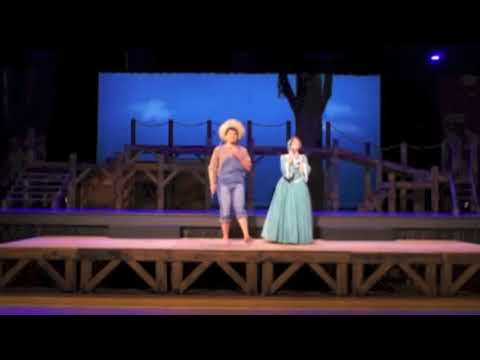
After the church day, Tom tries to coax Huck into reading. Huck resists. Moments later, Huck intervenes to protect Widow Douglas from his father. Grateful, the Widow offers to teach Huck to read and invites him to live in her home. Huck declines, and the solo frames his choice. The plot then pivots back to Tom and Becky, but the audience carries Huck's refusal into every later "civilized" offer the town makes.
Song Meaning
The meaning sits in the title: this kind of life, even when kindly offered, does not fit him. On the surface, Huck is rejecting rules, starch, and a roof. Underneath, he is defending identity. The Widow's home is safety, yes, but it is also surveillance and expectation. Huck has spent his life learning how quickly adults rename a boy once they "help" him. The solo is a boundary drawn in music.
Annotations
Rescue with strings: The offer is generous, but it comes with a new script for Huck to follow.
Stage the Widow with real warmth and the scene becomes sharper. The number is not about rejecting kindness. It is about refusing a deal that erases him.
Freedom as habit: Huck does not argue like a rebel, he argues like someone who has practiced living outside the town.
The delivery should feel matter-of-fact. A little humor can flicker, but the spine of the song is steadiness.
Placement as character math: After the Bible prize scene, the show lets Huck answer the town's public virtue with private truth.
That contrast is the score's rhythm: public rules, private costs. Huck names the costs out loud.
Rhythm, color, and emotional arc
The arc is refusal, explanation, acceptance of solitude. The best performances keep the tempo purposeful, with phrasing that sounds like speech set to melody, not like a recital. The audience should feel Huck choosing the hard road because it is his road, not because he is trying to win an argument.
Technical Information (Quick Facts)
- Song: It Just Ain't Me
- Artist: The Adventures of Tom Sawyer - licensed stage score
- Featured: Huckleberry Finn
- Composer: Don Schlitz
- Producer: Not publicly listed as a standalone commercial single
- Release Date: April 26, 2001 (Broadway opening date for the production that defined the score)
- Genre: Musical theatre
- Instruments: Pit orchestra supporting a youth male solo
- Label: Not publicly listed
- Mood: Plainspoken, resolute, independent
- Length: Not consistently published in major public listings
- Track position: Act I, following Widow Douglas offering Huck a home and reading lessons
- Language: English
- Album (if any): No standard commercial cast album is widely documented; licensed materials and circulating performance clips exist
- Music style: Character ballad with conversational phrasing
- Poetic meter: Mixed (speech-forward theatre lyric setting)
Frequently Asked Questions
- Who sings the song?
- Huckleberry Finn.
- What triggers the solo in the story?
- Widow Douglas offers Huck a home, meals, and reading lessons after he protects her from his father, and Huck refuses.
- Is Huck rejecting kindness?
- No. He is rejecting the expectations that come packaged with the kindness, and the way the town would rename him once it "takes him in."
- Where does it fall in Act I?
- After the church sequence and before Tom and Becky formalize their young romance.
- What is the acting objective for Huck?
- Hold the line without picking a fight. He is explaining a boundary, not auditioning for sympathy.
- How should Widow Douglas be played in the lead-in?
- With real warmth. The scene gets stronger when the offer is truly appealing, because Huck's refusal then has weight.
- What vocal range does MTI list for Huck?
- C3 to A4.
- Does the number have pop chart history?
- No. It is a stage score selection, not a commercial single tracked in the usual chart archives.
- Is it in the Theatre for Young Audiences version?
- Yes. MTI notes that the shorter edition keeps this song among its selections.
Awards and Chart Positions
This stage number is not tied to a singles marketplace, so chart peaks and certifications are not the right yardsticks. The Broadway production has a documented awards footprint in MTI's records, including a Theatre World Award win for Joshua Park and Tony nominations for Scenic Design (Heidi Ettinger) and Lighting Design (Kenneth Posner), plus Drama Desk nominations including Outstanding Orchestrations (Michael Starobin). When you stage a Huck solo like this, those design credits are not trivia: they point to the level of craft supporting quick tonal turns from church comedy to personal confession.
| Award body | Year | Recognition | Named recipient(s) |
|---|---|---|---|
| Theatre World Awards | 2001 | Win | Joshua Park |
| Tony Awards | 2001 | Nominations | Heidi Ettinger; Kenneth Posner |
| Drama Desk Awards | 2001 | Nominations | Michael Starobin; Heidi Ettinger; Anthony Powell; Kenneth Posner |
Additional Info
MTI's synopsis names a detail that helps directors avoid sentimentality: Huck declines even after being offered a safe place to live. That is not stubbornness for its own sake. It is a boy recognizing that "help" can come with ownership. The writers also note an approved option to rename the character known in the novel as Injun Joe to "Ol' Man Joe" because of the derogatory term, and that sensitivity matters here too: this show is constantly negotiating between a classic text and a modern audience. Huck's solo sits inside that negotiation. He wants to be seen, but he refuses to be packaged.
Key Contributors
| Entity | Type | Relationship (S-V-O) |
|---|---|---|
| Don Schlitz | Person | Schlitz wrote the music and lyrics for the musical. |
| Ken Ludwig | Person | Ludwig conceived and wrote the book for the musical. |
| Music Theatre International | Organization | MTI licenses the show and publishes synopsis, casting, and awards notes. |
| Huckleberry Finn | Character | Huck refuses Widow Douglas's offer and sings the solo to explain why. |
| Widow Douglas | Character | The Widow offers Huck a home and literacy lessons after he protects her. |
| Minskoff Theatre | Venue | The Broadway production opened there on April 26, 2001. |
Sources
Sources: Music Theatre International licensed synopsis and casting breakdown, StageAgent song list, Music Theatre International TYA notes, community production performance clip metadata
Music video
Adventures of Tom Sawyer, The Lyrics: Song List
- Act 1
- Overture: Civilization
- Hey, Tom Sawyer
- Here's my Plan
- Smart like That!
- Hands all Clean
- The Vow
- Raising A Child by Yourself
- Old Hundred
- In The Bible
- It Just Ain't Me
- To Hear You Say My Name
- Murrell's Gold
- The Testimony
- Act 2
- Ain't Life Fine
- This Time Tomorrow
- I Can Read
- Murrell's Gold (Reprise)
- Angels Lost
- Light
- Angels Lost (Reprise)
- Light (Reprise)
-
Finale