I Can Read Lyrics — Adventures of Tom Sawyer, The
I Can Read Lyrics
You did it
Huck, you did it!
[Huck]
Give me those words
Watch this:
"Door"
"L...light"
"Table"
"Ah....Ahp...."
[The Widow]
Crunch
[Huck]
Apple!
[Window]
(laughs)
[Huck]
Apple!
They said I couldn't do it
They said I'd neverwould
They told me education wouldn't do me any good
It was like they had some secret
A poor boy weren't allowed
I said I couldn't do it, but I did it anyhow
I can read and I can write and they were wrong
I can tell you what these words are all day long
I can spell 'em and recite 'em
[The Widow]
You can do it infinitum
If there was any any doubt, my boy, it's gone
[Huck]
From mem'ry I can say my ABC's
And print them all as pretty as you please
[The Widow]
You have studied day and night
Now your victory's in sigh
[Huck]
I can read
[The Widow]
And you can write
[Both]
And they were wrong
[Huck]
Did you teach me all the letters?
[The Widow]
Yes, you know all 26
[Huck]
And all the combinations?
[The Widow]
Yes, I taught you all my tricks
[Both]
"I" before "E"
Except after "C"
[Huck]
I do believe I know 'em
[The Widow]
Now get out there and show 'em
[Huck]
I can read
And I can write
And they were wrong
Heck I told 'em I could do it all along
It just took a little practice
[The Widow]
Stuck to it like a cactus
Your life will be so dif'rent from now on
[Huck]
I can read
[The Widow]
And you can write
[Both]
And they were wrong
No nobody's going to say I/you don't belong
[The Widow]
The whole world's a little better
[Huck]
Ol' Huck's done learnt his lettes
[The Widow]
No sword will ever make you half as strong
[Huck]
I can read
[The Widow]
You can read
[Huck]
And I can write
[The Widow]
And you can write
[Both]
And they were wrong
Song Overview
Review and Highlights
Quick summary
- Show: The Adventures of Tom Sawyer (Broadway, 2001).
- Where it lands: Act Two, after weeks of Widow Douglas tutoring Huck.
- Who sings it: Huckleberry Finn and Widow Douglas.
- Dramatic job: a comic "breakthrough" duet that turns literacy into a mini-celebration.
- Why it sticks: it gives Huck a clean win, and it lets the show breathe before the cave plot tightens again.
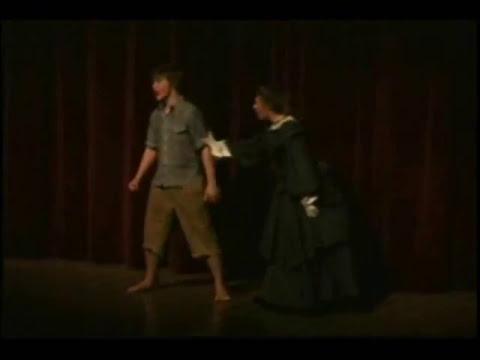
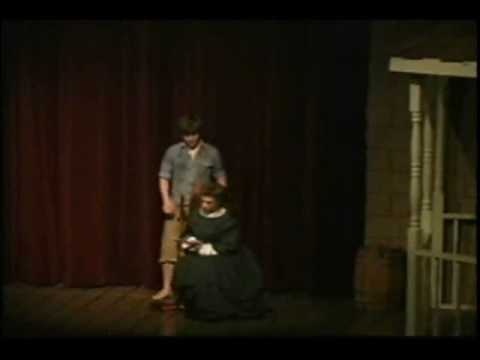
The Adventures of Tom Sawyer (2001) - stage musical number - non-diegetic. Act Two placement: Huck finally reads after secret lessons, and the pair celebrate the victory in-song. Why it matters: it frames education as a humane, practical kind of rescue, not a sermon, and it gives Widow Douglas warmth without sanding down Huck's rough edges.
This is the number critics kept circling because it understands the character assignment. Huck is not suddenly "civilized"; he is still Huck, but with a new tool in his pocket. The scene is built like a theater trick: take something small (sounding out letters) and play it as a big moment, then let the audience enjoy being smart alongside him. Variety singled it out as "great fun," and that sounds right: the duet treats reading like a prize you can hear land in Huck's hands.
Key Takeaways
- Character clarity: Huck earns the moment, not by changing who he is, but by trying.
- Comic craft: the joke is not "illiterate boy," it is the joy of a door opening.
- Tempo of the story: a bright pause between heavier plot turns in Act Two.
Creation History
The musical was conceived and written by Ken Ludwig, with music and lyrics by Don Schlitz, and it opened at the Minskoff Theatre on April 26, 2001. The staging credits around the show included director Scott Ellis and choreographer David Marques, and the Broadway cast listed Jim Poulos as Huck and Jane Connell as Widow Douglas. Long before the Broadway opening, a small promotional recording circulated in 2000, a reminder that the show was being sold and shaped in public view even as it was still settling into its final form.
Song Meaning and Annotations
Plot
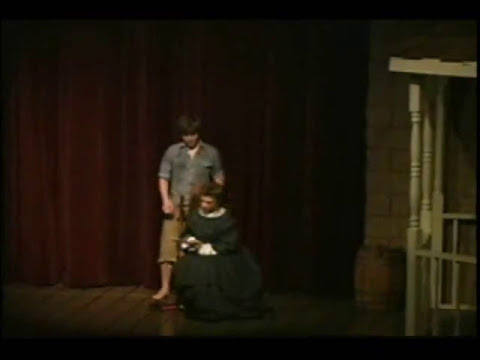
Act Two has a deceptively domestic hinge: Huck has been learning to read in secret with Widow Douglas. When it finally clicks, the two celebrate together. The town's larger adventures keep turning in the background, but this duet spotlights a different sort of escape: not to an island or into a cave, but into words.
Song Meaning
The song treats literacy as a change in power. Huck is used to surviving by instinct and speed; reading offers a slower, steadier kind of control. The number also gives Widow Douglas a point of view: she is not merely "kindly" as a label, she is persistent, strategic, and happy to meet Huck where he is. And yes, it is funny - but the humor does not cancel the stakes. It is a show-business way of saying: this matters.
Annotations
"After weeks of secret tutoring by Widow Douglas, Huck finally learns how to read and they celebrate."
The key word is "secret." In this musical's world, learning is not neutral; it is a quiet rebellion against the role the town has assigned Huck.
"A novelty number... in a scene between Huck Finn and the kindly Widow Douglas."
Call it novelty if you want, but it is a carefully placed novelty. The duet functions like a palate cleanser that still advances character, the sort of theatrical multitasking that keeps a second act from feeling like a long march to the finale.
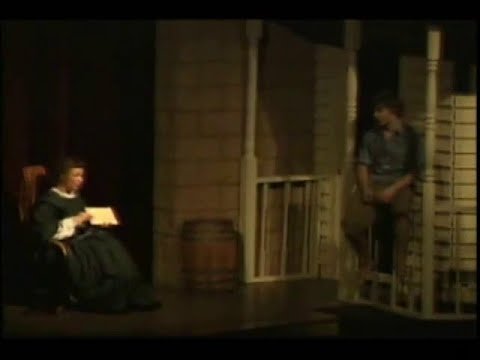
Musically, the scene plays as a buoyant duet built for clarity and timing. That choice matters: the show wants the audience to track the "click" of comprehension in real time. Theater people love a transformation you can stage without smoke or mirrors, and this is one of them. You watch Huck move from guessing to knowing - a clean arc in miniature.
Style and rhythm
Schlitz writes with a pop-country directness, but the theatrical engine is classic: setup, attempt, mistake, breakthrough, and celebration. The rhythm feels conversational because the scene is about learning, not showing off. In other words, the number wins by keeping its feet on the ground.
Symbols and touchpoints
Reading becomes the symbol of belonging without surrender. In the Twain universe, adulthood often means losing your freedom; here, literacy is framed as gaining a new kind of freedom while staying yourself. According to Variety magazine, the duet landed as a standout bit of "fun," and that reception tracks with how the scene is built: it is a crowd-pleaser that still carries a point.
Technical Information (Quick Facts)
- Song: I Can Read
- Artist: Jim Poulos and Jane Connell (as Huckleberry Finn and Widow Douglas)
- Featured: None
- Composer: Don Schlitz
- Producer: Unknown (Broadway production), recording producer not consistently documented in public sources
- Release Date: April 26, 2001 (Broadway premiere context)
- Genre: Musical theatre
- Instruments: Orchestra (standard pit instrumentation, exact parts vary by production materials)
- Label: No commercial original cast album released
- Mood: Celebratory, comic
- Length: Unknown
- Track #: Unknown
- Language: English
- Album (if any): Not on an official original cast recording
- Music style: Pop-country inflected Broadway writing
- Poetic meter: Mixed (speech-driven lyric setting)
Frequently Asked Questions
- Where does the song appear in the story?
- It sits in Act Two, after Widow Douglas has tutored Huck for weeks, right when he finally breaks through and reads successfully.
- Who performs it in the Broadway version?
- Huckleberry Finn and Widow Douglas. The Broadway cast lists Jim Poulos as Huck and Jane Connell as Widow Douglas.
- Is it comedy, character work, or both?
- Both. The laughs come from the structure of learning and the timing of the breakthrough, while the heart comes from Huck earning something real.
- Why does Widow Douglas matter in this number?
- She is the adult who chooses patient action over lectures. The duet lets her kindness register as effort, not a slogan.
- Does the song change Huck, or just add a skill?
- It adds leverage. Huck stays himself, but now he can navigate a world that has been closed to him.
- Why is the tutoring described as secret?
- Because it reframes literacy as a private pact, not a public project. It also tells you Huck expects judgment, even from help.
- Was there an original cast album for the Broadway production?
- Publicly documented sources note there was no commercial cast album, though a limited promotional recording of a few songs circulated in 2000.
- How did critics single it out?
- Some reviews flagged it as a standout "fun" duet, a moment where the show finds an easy theatrical win without losing narrative purpose.
- Is the number tied to Twain, or more to Broadway tradition?
- Both. The situation is Twain, but the shape is classic Broadway: a small personal victory presented like a banner moment.
- Is the song a "lesson" to the audience?
- Not really. It is staged as celebration first, which is why it avoids sounding like homework.
Additional Info
When a short-lived show leaves only a faint paper trail, you learn to value the moments critics bothered to name. This number got named. CurtainUp called it a novelty, but even that label is revealing: novelty numbers are often where a musical admits, with a grin, what it really wants from the audience in that instant. Here, it wants you rooting for Huck without pitying him. Musicals101 framed it as a classic "breakthrough" scene, the sort of set piece audiences instinctively understand because theater has trained us to love a skill finally landing.
Key Contributors
| Entity | Type | Relationship (S-V-O) |
|---|---|---|
| Don Schlitz | Person | Schlitz wrote music and lyrics for The Adventures of Tom Sawyer. |
| Ken Ludwig | Person | Ludwig conceived and wrote the musical's book. |
| Jim Poulos | Person | Poulos performed the role of Huckleberry Finn on Broadway. |
| Jane Connell | Person | Connell performed the role of Widow Douglas on Broadway. |
| Minskoff Theatre | Venue | The Minskoff Theatre hosted the Broadway run in 2001. |
| St. Petersburg, Missouri | Location | The musical sets the story in St. Petersburg, Missouri. |
Sources
Sources: IBDB production record, Music Theatre International show page, Variety review (March 5, 2001), CurtainUp review, Musicals101 show summary
Music video
Adventures of Tom Sawyer, The Lyrics: Song List
- Act 1
- Overture: Civilization
- Hey, Tom Sawyer
- Here's my Plan
- Smart like That!
- Hands all Clean
- The Vow
- Raising A Child by Yourself
- Old Hundred
- In The Bible
- It Just Ain't Me
- To Hear You Say My Name
- Murrell's Gold
- The Testimony
- Act 2
- Ain't Life Fine
- This Time Tomorrow
- I Can Read
- Murrell's Gold (Reprise)
- Angels Lost
- Light
- Angels Lost (Reprise)
- Light (Reprise)
-
Finale