

In A Foreign City Lyrics
In A Foreign City
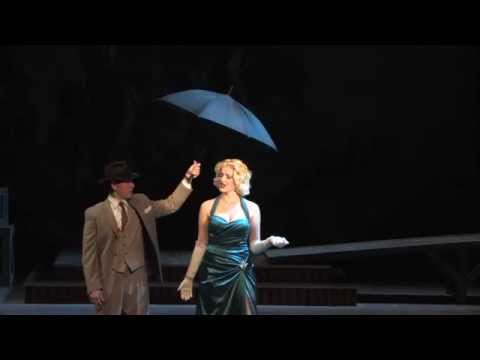
In a foreign cityIn a slinky dress
The weather's looking stormy,
My hair is quite a mess
I lost my lover Billy
Unlucky me, I guess
Now I'm in a foreign city
In a slinky dress
My other clothes are gone now
The hotel kept them all
'Cause Billy took our money
I guess I took a fall
When Billy said to kiss him
Oh why did I say yes?
Now I'm in a foreign city
In a slinky dress
Got bad taste choosing a lover
I sure can't pick 'em
It's simply insane
When it's time to run for cover
I'm like a fool who thinks it's sunny
When it's pouring rain
I'm in a foreign city
In a slinky dress
The rickshaw boys ignore me
So what? I could care less
I need a job tomorrow
I'm scared, I must confess
Scared to be in a foreign city
In a slinky dress
A slinky dress
[Spoken] Slinky dress
Song Overview
Review and Highlights
Quick summary
- An opening number for a film noir spoof set in 1952 Macao, written with a wink and a tight theatrical motor.
- Sung by Lureena, a nightclub singer type who arrives broke but somehow already styled for a close-up.
- Recorded on the 2008 cast album under the shorter title, with an alternate longer title sometimes used in show materials.
- Built to sell character fast: one verse to establish the predicament, one turn to show she can run the room.
- Plays like a curtain-raiser that is also a plot device: it gets her hired, and it sets the show’s rules of comedy.
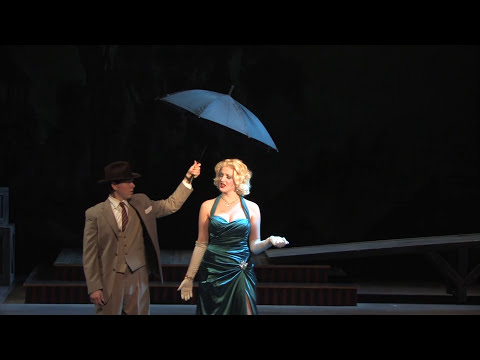
Adrift in Macao (2007) - stage musical - non-diegetic that keeps flirting with diegetic. The number functions as Lureena’s first impression in town, the moment she turns bad luck into a booking. It matters because the show is a parody: this song teaches the audience how seriously to take the romance and how lightly to take the danger.
If you come to this material expecting satire that just tosses jokes, this opener is the pleasant surprise. It is crafted to sound like the kind of old-fashioned star entrance that classic studio pictures adored, while letting the book smuggle in the punchlines. In theatre terms, it is a quick contract with the house: the plot will swerve, but the music will keep its balance.
Creation History
The show’s off-Broadway run in early 2007 helped set the profile, and the cast recording followed in 2008, preserving the score in a compact, track-by-track form. The song is routinely described as the opening number, which is telling: it is written to do the hardest job in musical comedy, introducing a stranger and persuading us to watch her for the next 90 minutes. According to Variety magazine, the setup leans into movie cliches on purpose, treating the genre as a toy box rather than a museum.
Song Meaning and Annotations
Plot
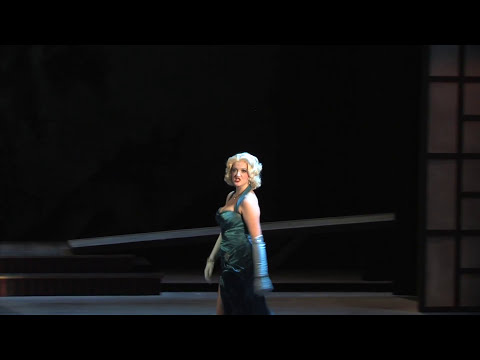
Lureena lands in Macao with no money and no safety net, yet the world she walks into is a cartoon of danger: gamblers, crooks, smoky rooms, and people talking like they learned English from late-night movies. The song is her first self-portrait. She names the predicament, frames it as survivable, then turns it into a sales pitch. By the end, she is not asking permission to belong there. She is taking the job.
Song Meaning
At heart, the number is about improvisation as survival. The lyric stance says: I am stranded, but I will not be small. The comedy is that the style is glamorous even when the situation is not, which fits a noir parody perfectly. The mood reads as bright brass and nightclub swing energy, even when the story beat is anxiety - a deliberate mismatch that makes the audience laugh and also relax.
Annotations
As movie cliches go, it is hard to top the show’s opening number.
That line is doing two jobs. It praises the craft, and it admits the point: the show is not hiding its sources. The song acts like a thesis statement for the score: genre is not the target, genre is the instrument.
Everyone that comes to Macao is waiting for something.
That premise colors the number. Lureena is not just arriving in a new place; she is arriving in a holding pen of desire. The lyric posture can sound bold because the town itself is written as a pressure cooker where nobody is settled.
Rhythm and style fusion
The writing borrows from classic Broadway swing phrasing and nightclub patter, but it keeps the pulse brisk, closer to comedy timing than lounge crooning. The point is clarity: jokes have to land, and plot has to move. When the song is staged well, the rhythm is practically choreography.
Character arc in miniature
The arc is simple and effective: panic enters, poise takes over, and performance becomes a weapon. It is an entrance song that doubles as a survival manual, which is why it holds up even outside the show on the cast album.

Technical Information (Quick Facts)
- Artist: Rachel deBenedet
- Featured: None listed
- Composer: Peter Melnick
- Producer: Not reliably credited in public listings
- Release Date: May 13, 2008
- Genre: Musical theatre, comedy song
- Instruments: Small combo (piano-conductor, reeds, drums, synthesizer, bass)
- Label: Melnikov Music
- Mood: Brisk, flirtatious, self-possessed
- Length: 2:07
- Track #: 2
- Language: English
- Album (if any): Adrift in Macao - The New Musical
- Music style: Classic Broadway pastiche with noir nightclub flavor
- Poetic meter: Predominantly iambic-leaning conversational lines (varies for comic stress)
Frequently Asked Questions
- Who sings this number in the story?
- Lureena, the new arrival who is hired to sing at Rick Shaw's club almost immediately.
- Is the title ever written differently?
- Yes. Some official show descriptions refer to a longer variant, which frames the same idea as a costume-and-attitude entrance.
- Where does it sit in the running order?
- It is the opener on the cast album track list, placed right after the brief prologue.
- What is the song trying to accomplish theatrically?
- It sells character, place, and comic tone in one shot, then turns that setup into a practical plot beat: she gets the gig.
- What musical style does it lean on?
- Classic Broadway pastiche with nightclub swing inflection, written to keep diction and timing crisp.
- Is it difficult to stage?
- Not in scale, but it demands precision. The performer has to land punchlines while still sounding like a star entrance.
- What instrumentation is typical for productions?
- A small combo approach is standard in licensing notes: piano-conductor plus reeds, drums, synthesizer, and bass.
- Is there an official cast recording?
- Yes. The show has a commercial album release credited to the composer as the album artist, with track vocals credited to individual performers.
- Does the show have notable critical notes about the opener?
- Reviews often single out the first number as a smart example of how the piece uses movie language as comedy fuel.
- Is the setting meant to be literal history?
- It borrows a time-and-place silhouette - Macao in 1952 - but uses it as a stylized playground for genre jokes.
Awards and Chart Positions
The show received a 2007 Drama Desk nomination for Best Music. Public discographies and streaming listings do not show mainstream chart placements for the cast album track.
| Item | Year | Result | Notes |
|---|---|---|---|
| Drama Desk Award - Best Music (show level) | 2007 | Nominee | Nomination credited to the score. |
Additional Info
One reason this opener lasts is that it is not just a comic postcard. It is a professional trick: the song makes Lureena look like she can handle the room, then it dares the room to disagree. A good performer can play it as pure showbiz, or as cover for fear, or both at once. That flexibility is a gift in a piece that spoofs noir while still wanting a romantic through-line.
There is also a useful reminder for directors: parody works best when somebody onstage believes the stakes. This number lets the actor commit, while the audience laughs at the form. That is why the tune reads as affectionate pastiche, not a cheap lampoon. As stated in the Concord Theatricals licensing listing, the writing is geared for small forces and accessible vocal demands, which is part of why the show circulates in college and regional settings.
Key Contributors
| Entity | Type | Relationship statement |
|---|---|---|
| Christopher Durang | Person | Durang wrote the book and lyrics for the stage musical. |
| Peter Melnick | Person | Melnick composed the music and is credited as the album artist for the cast recording. |
| Sheryl Kaller | Person | Kaller directed the off-Broadway production cited in licensing history. |
| Fred Lassen | Person | Lassen served as musical director for the off-Broadway staging listed in author notes. |
| Christopher Gattelli | Person | Gattelli is credited with choreography in the production credits list. |
| Michael Starobin | Person | Starobin is credited with orchestrations in the production credits list. |
| Rachel deBenedet | Person | deBenedet performed the track vocal for the cast album listing and originated Lureena in the referenced production lineup. |
| 59E59 Theaters | Venue | The show played off-Broadway there starting January 23, 2007 (per licensing history). |
| Primary Stages | Organization | Primary Stages is cited as the producing context for the 2007 New York premiere in show history notes. |
| Melnikov Music | Organization | Melnikov Music is credited as the label/rights holder on the 2008 album listing. |
Sources
Sources: Concord Theatricals show listing, Playbill notice on cast recording release, Variety review, Christopher Durang official play page, Apple Music album listing, CurtainUp review, YouTube performance upload