

Grumpy Mood Lyrics
Grumpy Mood
In a foreign cityIn a grumpy mood
I've just arrived from somewhere
Need a place, and need some food
Won't carry too much with me
It's okay sleeping nude
But that's too much information
For a grumpy mood
Can't go home so I must wonder
As to the reason, I don't wanna say
Travelin' though here, there, and yonder
Travelin' is fine but gee I'm missin'
The good old U.S.A.
In a foreign city
In a grumpy mood
I need some relaxation
Need to stare a bit and brood
It's raining, I've a headache
and I've got an attitude
'Cause I'm in a foreign city in a slinky dress
I mean a grumpy mood
A grumpy, grouchy, mood!
Song Overview
Review and Highlights
Quick summary
- A compact character spotlight early in the show, written for Mitch, the drifter with a fuse that keeps sparking.
- Placed near the top of the cast album sequence, before the plot turns into full-on chase mechanics.
- Functions as a comic warning label: this guy has charm, but it comes with a glare.
- The song is short by design, closer to a hard-edged aside than a stand-and-sing showcase.
- Cast recording vocals are credited to Alan Campbell for the original off-Broadway lineup.
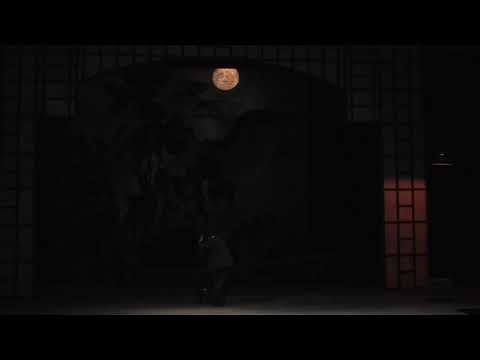
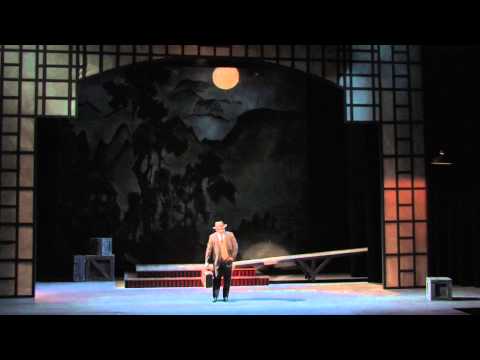
Adrift in Macao (2007) - stage musical - non-diegetic. The number lands as an early character stamp: Mitch gets to announce his temperature before the story asks him to flirt, scheme, and scramble. It matters because the show parodies noir, and noir depends on attitudes as much as actions. This is the moment the audience learns how Mitch processes trouble - he does not brood, he snaps.
Musically, it plays like a fast walk across a busy stage. No lingering, no ornamental detours, no grand finish. The joke is the efficiency. In a spoof that can go broad, this number keeps the comedy pointed, almost dry. I hear it as a director’s ally: the tune gives the actor something rhythmic and exact, so the performance can stay controlled even when the character is not.
Creation History
The score and text were written by Peter Melnick and Christopher Durang, with the off-Broadway run in January 2007 helping lock the piece into its best, tightest shape. The cast recording arrived May 13, 2008, produced by Melnick and Joel Moss, preserving the role assignments and the brisk pacing of the number. According to Playbill, that production detail matters because it explains why the track moves with such clean theatrical timing: it was made by people who know how to keep a show on its feet.
Song Meaning and Annotations
Plot
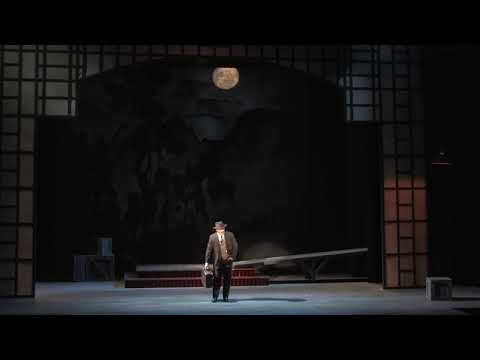
In the early stretch of the story, the audience is still assembling the board: who wants what, who is lying, who is waiting for an opening. Mitch is part romantic lead, part walking hazard sign. This song is his quick self-report. He is not confessing a secret so much as admitting the obvious: he is a man with a short temper, and the situation is not helping. The show uses that admission as a tool - it makes later tenderness funnier and later chaos more believable.
Song Meaning
The meaning is less moral lesson and more stage function: the number frames Mitch as combustible, a guy whose charm is real but conditional. The comic edge comes from how plainspoken the stance is. Noir heroes tend to act mysterious; this one gives you the weather report. That directness fits Durang’s approach: parody works better when the characters commit to their own logic, even when the audience sees the strings.
Annotations
The cast recording is produced by composer Melnick and Grammy and Oscar winner Joel Moss.
This is not trivia for collectors only. It tells you the recording is guided by theatre instincts, which suits a short, timing-driven track. The number depends on pace and articulation more than sheer vocal weight.
Everyone that comes to Macao is waiting for something.
The town is written as a kind of purgatory with neon. Mitch’s mood reads differently inside that frame: it is not random irritation, it is the sound of somebody stuck in a place that keeps delaying the exit.
Rhythm, style, and stagecraft
The writing leans on musical-comedy clarity: quick phrases, forward motion, a sense that the band is nudging the actor toward the next beat. There is a noir tint in the attitude, but the structure is pure theatre utility. The line lands, the scene moves, the audience stays oriented.
Emotional arc without the long runway
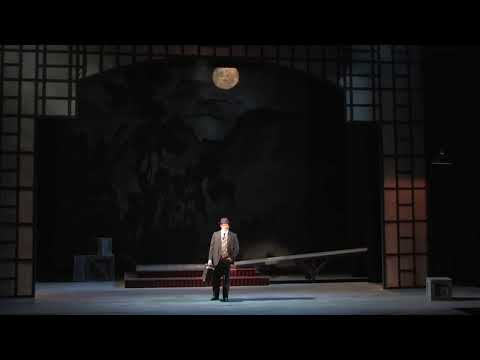
The arc is a snap from irritation to resolve. He is grumpy, he owns it, he pushes on. That compression is the point. The show does not want you to sink into him yet. It wants you to recognize him, then watch what he does when the plot turns the heat up.
Technical Information (Quick Facts)
- Artist: Alan Campbell
- Featured: None listed
- Composer: Peter Melnick
- Producer: Peter Melnick; Joel Moss
- Release Date: May 13, 2008
- Genre: Musical theatre
- Instruments: Small theatre combo (production-dependent)
- Label: LML Music
- Mood: Sardonic, impatient, restless
- Length: 1:37
- Track #: 3
- Language: English
- Album (if any): Adrift in Macao - The New Musical
- Music style: Noir-leaning musical-comedy pastiche
- Poetic meter: Conversational stress patterns (varies for comic emphasis)
Frequently Asked Questions
- Who sings the number in the story?
- Mitch sings it as an early self-portrait.
- Where does it land in the album order?
- It is listed as track 3 on the 2008 cast recording.
- Is the title sometimes written differently online?
- Yes. Some uploads label it "In a Grumpy Mood" while the album track list shortens the title.
- What is the dramatic job of the song?
- It sketches Mitch’s temperament fast, so later romantic beats and later chaos feel earned.
- Is this a solo showcase?
- It is more a quick character stamp than a big feature, which is why pacing and diction matter.
- What style should a performer aim for?
- Think musical-comedy precision with a noir edge: clipped phrases, clear text, controlled heat.
- Does the song depend on knowing the plot?
- Not fully. It plays as a stand-alone mood portrait, but it lands harder once you know what traps Mitch is walking toward.
- Is there an official recording?
- Yes, on the original off-Broadway cast album released in May 2008.
- Was the show recognized for its music?
- It received a Drama Desk nomination for Outstanding Music, credited to the composer.
- Does the show treat noir as mockery or affection?
- Mostly affection. The music takes the genre seriously enough to make the jokes sharper.
Awards and Chart Positions
The track itself is not documented with mainstream chart peaks, but the show earned formal recognition for its score and performances. The composer received a Drama Desk nomination for Outstanding Music, and cast members were nominated in acting categories in the same season. As stated in the New York theatre press coverage of the nominations list, the show’s music was treated as a serious competitor even as the piece stayed firmly in parody mode.
| Item | Year | Result | Notes |
|---|---|---|---|
| Drama Desk Awards - Outstanding Music (show level) | 2007 | Nominee | Nomination credited to Peter Melnick. |
| Drama Desk Awards - Outstanding Featured Actor in a Musical (show level) | 2007 | Nominee | Nomination credited to Orville Mendoza. |
Additional Info
One of the quiet pleasures of this score is how it refuses to let parody get lazy. A number like this could be filler, a quick joke to bridge scenes. Instead, it is shaped like a piece of stage carpentry: short, sturdy, and made to hold weight. Mitch’s cranky posture becomes a practical plot ingredient. You can feel the writers setting up future collisions.
There is also a faint echo of classic musical-theatre craft: keep the scene moving, keep the character specific, and let the audience do the rest. When the song is performed well, the humor is not about telegraphing punchlines. It is about watching a person try to keep control and fail in entertaining ways.
Key Contributors
| Entity | Type | Relationship statement |
|---|---|---|
| Christopher Durang | Person | Durang wrote the book and lyrics for the stage musical. |
| Peter Melnick | Person | Melnick composed the music and produced the cast recording. |
| Joel Moss | Person | Moss co-produced the cast recording. |
| Alan Campbell | Person | Campbell is credited as the cast recording vocalist for this track. |
| Primary Stages | Organization | Primary Stages presented the New York off-Broadway premiere. |
| 59E59 Theaters | Venue | The off-Broadway run opened there on January 23, 2007. |
| LML Music | Organization | LML Music released the cast recording. |
Sources
Sources: Concord Theatricals show listing, Playbill cast recording announcement, Apple Music album track list, Ovrtur musical numbers listing, TheaterMania Drama Desk nominations report, BroadwayWorld awards listing, New York Theatre Guide nominations list, YouTube performance upload