Fiddler on the Roof Lyrics – All Songs from the Musical
Fiddler on the Roof Lyrics: Song List
About the "Fiddler on the Roof" Stage Show
Release date: 1964
Fiddler on the Roof – The Musical Guide & Song Meanings
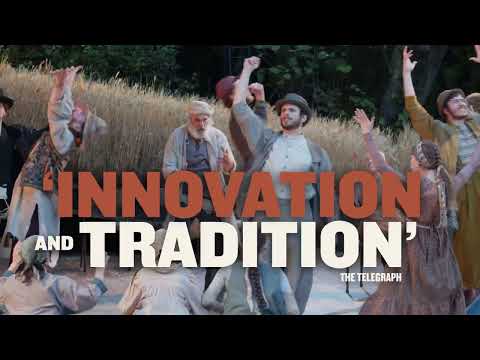
Review
Why does a show with so many rules feel like it’s always in motion? Because the lyrics never let the characters hide. They argue, bargain, pray, and gossip in plain language, then suddenly the words tilt into song and you realize the argument was the plot all along. “Fiddler on the Roof” is built on conversations that keep failing: fathers versus daughters, neighbors versus outsiders, a community versus the state. The score’s genius is that it turns those clashes into singable logic. Tevye’s talk with God is not a poetic fog. It’s a running negotiation where the punchlines are a defense mechanism and the prayers are bargaining chips.
Musically, Bock writes with Broadway clarity but keeps the village in the orchestra. The sound is often communal: patterns that feel like folk dance circles, tavern stomp, wedding procession, candlelit hush. Harnick’s lyrics match that craft with a strictness of their own. The internal rhymes and repeated phrases are often the point: repetition becomes ritual. When the text cracks, it is usually because the ritual is cracking. The best lines are not “pretty,” they are useful. They carry information, status, threat, affection. That practicality is why the show survives reinvention; directors can shift the frame, but the words still do the work.
How It Was Made
The show began as a different obsession. Sheldon Harnick has described falling for Sholem Aleichem through “Wandering Stars,” passing it to Jerry Bock, and sharing it with Joseph Stein, who loved it but warned that it was too sprawling for the stage. That detour mattered: it pushed the writers toward the Tevye stories, and toward a musical that could feel intimate while still carrying the weight of history. Title talk became its own drama. Harnick has recalled a preferred title that honored their fathers, and Harold Prince choosing “Fiddler on the Roof” because it suggested music and, bluntly, helped sell a show that backers might fear was “too Jewish.”
The creation myths around specific songs are unusually concrete. “Tradition” did not even exist early on. In a later account, Prince remembers the turning point as a direct instruction: realize what the show is about, then write it. Another story lands right in the rehearsal room: Robbins resisted staging “Tradition” for weeks, then finally staged it quickly, as if the number had been waiting for the right physical grammar. The lyric writing also has a thriftiness you can hear. In a radio interview, Harnick talks about cut material feeding new material: a Sabbath-related song that didn’t survive, a melody repurposed, the violin line at the top of the show pulled out and given new life. The craft is not mystical. It’s revision with a memory.
Key Tracks & Scenes
“Tradition” (Tevye and Company)
- The Scene:
- A prologue in the village. Bodies arrange themselves into a community diagram: family circles, trades, authority at the edge. Lighting often feels like early morning, a public square waking up while the Fiddler hovers as an omen and a witness.
- Lyrical Meaning:
- The lyric is exposition that refuses to be neutral. It defines “balance” as survival and admits how fragile that balance is. The word “tradition” functions like a legal term: it is both belief and contract, invoked to keep chaos out, then later invoked to justify pain.
“Matchmaker, Matchmaker” (Tzeitel, Hodel, Chava)
- The Scene:
- Three sisters fantasize and bargain with fate. It plays as private comedy with public consequence, often staged in a domestic space that still feels porous, because everyone in Anatevka can hear everything.
- Lyrical Meaning:
- It’s a wish song with a trapdoor. The girls begin with romantic imagery and end by admitting the system controls the outcome. The lyric’s humor is defensive; it keeps dread at a distance until the plot forces the fear into daylight.
“If I Were a Rich Man” (Tevye)
- The Scene:
- Tevye alone, often centered, sometimes speaking to the audience as if they are God’s second opinion. The staging usually isolates him from the village bustle: a single man imagining space, time, and dignity he does not have.
- Lyrical Meaning:
- The lyric is not only about money. It’s about permission. Tevye dreams of social authority, then reveals the real fantasy: time to think, to study, to be taken seriously. The comedy cadence disguises a theological complaint about why devotion is so expensive.
“Sabbath Prayer” (Tevye, Golde, Company)
- The Scene:
- The house shifts into ritual. Candles, table, quiet. The village sound drops and the family becomes the whole world. Lighting often narrows into warm pools, faces lifted, time slowed.
- Lyrical Meaning:
- Harnick writes prayer as plain speech, almost like instructions for blessing. The lyric makes peace feel temporary and earned. It also sets up the cruelty of later ruptures: once you hear the community ask for protection, you hear every later blow as an answer denied.
“To Life” (Tevye, Lazar Wolf, Men)
- The Scene:
- The tavern. Heat, alcohol, bodies in risky patterns. The number becomes a social treaty signed in rhythm. Many productions lean into the circular folk-dance engine, building toward the bottle dance as a dare to gravity.
- Lyrical Meaning:
- The lyric performs diplomacy. Jews and Russians toast the same word and mean different futures. The refrain insists on joy while the plot quietly files evidence that joy is conditional. Celebration becomes an argument for belonging.
“Sunrise, Sunset” (Tevye, Golde, Company)
- The Scene:
- A wedding procession and ceremony. The song often lands in a visual shift: a canopy, a line of candles, dusk falling, parents watching their child become someone else.
- Lyrical Meaning:
- The lyric is grief disguised as a blessing. Its questions are not rhetorical; they are the parents’ panic at how quickly life moves when you are busy surviving. The song turns time into an antagonist without ever naming it.
“Do You Love Me?” (Tevye and Golde)
- The Scene:
- After the shocks of Act II begin, the kitchen becomes a confession booth. Two people who speak in tasks and budgets try to speak in feelings. It is often staged with stillness, as if movement would break the question.
- Lyrical Meaning:
- It’s a love song written as cross-examination. The lyric counts years of labor as evidence, then dares to ask whether evidence is emotion. The point is not romance; it is recognition. The marriage becomes visible, which is rare in a world where women’s work is meant to vanish.
“Anatevka” (Company)
- The Scene:
- Eviction notices become choreography. Packing, selling, choosing routes. The village sings its own obituary while trying to make the loss sound manageable. Lighting often opens into colder air, with distance in every corner.
- Lyrical Meaning:
- The lyric mocks the village to survive the leaving. By calling home “a little bit of this, a little bit of that,” the community tries to shrink the pain into something portable. The trick fails beautifully; the song makes the place larger precisely by pretending it was small.
Live Updates
The most visible current life of “Fiddler” is in the UK and Ireland pipeline built from Jordan Fein’s Regent’s Park Open Air Theatre revival. That production transferred to the Barbican for a summer 2025 run that sold out, then moves into a published tour schedule that includes Dublin (October 2025), Manchester (late October 2025), Eastbourne (November 2025), Canterbury (November 2025), Cardiff (November 2025), Sunderland (late November 2025), and Birmingham running into early January 2026. The tour cast list released by the official site includes Matthew Woodyatt (Tevye), Jodie Jacobs (Golde), and Beverley Klein (Yente), among others. In award terms, Fein’s revival also appeared in the 2025 Olivier Awards conversation and won Best Musical Revival, with additional design wins reported in major coverage.
In the US, “Fiddler” continues to thrive as a director’s laboratory because the book is tight and the musical numbers are plot engines. A recent example is Signature Theatre’s 2025 production in Arlington, Virginia, reviewed as an intimate staging with the audience close enough to turn the bottle dance into a genuine shared risk. That kind of staging does not “update” the lyrics. It exposes them. When Tevye jokes, you hear the fear behind the joke because you are sitting inside the circle with him.
Notes & Trivia
- “Tradition” was not part of the early drafts. A later recollection credits a blunt creative realization that unlocked the whole show, followed by Robbins finally staging it quickly after resisting.
- The bottle dance came from real-world observation. One account traces it to research at a Hasidic wedding, where Robbins saw a single image and built a full theatrical language from it.
- There was once a different opening concept tied to Sabbath preparations. In an interview, Harnick describes how cut material fed the show’s final shape, including melodic reuse.
- “Matchmaker” exists partly because a more difficult song did not fit the performers, forcing a rewrite into something simpler and more playable.
- A title song called “Fiddler on the Roof” existed as sheet-music logic, created so the show could have a sellable title tune, even though it was not ultimately in the stage show.
- One early Act II opening idea involved “Letters From America,” built from comic-emigrant lore. It was replaced as the show’s structure sharpened, making room for a different dramatic focus.
- The original Broadway production opened at the Imperial Theatre in September 1964, and the original run became a historic long-run benchmark for musicals at the time.
Reception
From the start, the show carried a strange risk profile: a “modest” village story with pogrom violence, sold as Broadway entertainment. Some early industry skepticism is now part of the lore. The more interesting arc is how criticism has shifted from “Is this too specific?” to “How did this become universal without sanding off its edges?” Contemporary revivals are often praised for refusing sweetness while still letting the musical numbers land as joy. That balance depends on lyrics that can carry comedy and dread in the same breath.
“By starting Fiddler on the Roof at 7.45pm, Jordan Fein’s revival contrived that Sunrise, Sunset … was sung as darkness fell on Regent’s Park.”
“We’re all waiting for the men to dance with bottles on their heads … one did the night I saw it, proving there’s no Velcro.”
“It perfectly holds the balance of Fiddler on the Roof, neither tilting towards saccharine nor bitterness, towards schmaltz or politics.”
Quick Facts
- Title: Fiddler on the Roof
- Broadway premiere: 1964 (Imperial Theatre)
- Setting: Anatevka, Russia, 1905
- Type: Book musical
- Music: Jerry Bock
- Lyrics: Sheldon Harnick
- Book: Joseph Stein
- Source material: Sholem Aleichem’s Tevye stories (with rights history tied to Arnold Perl)
- Original production leadership: Producer Harold Prince; director-choreographer Jerome Robbins
- Selected notable placements in-story: Prologue “Tradition”; tavern celebration “To Life”; wedding sequence “Sunrise, Sunset”; Act II marital reckoning “Do You Love Me?”
- Cast album context: Original Broadway cast album released in 1964; widely reissued and referenced as a core document of the score
- Current stage status: UK and Ireland tour dates published through early 2026; major revival recognition at the 2025 Olivier Awards
Frequently Asked Questions
- Who wrote the lyrics for “Fiddler on the Roof”?
- Sheldon Harnick wrote the lyrics, working as a long-running team with composer Jerry Bock, with Joseph Stein as book writer.
- What is the show actually “about” in lyrical terms?
- It’s about how people explain their lives to themselves. The lyrics are full of definitions: of duty, marriage, faith, and belonging. When those definitions stop working, characters start singing to renegotiate them.
- Is there a movie version?
- Yes. The best-known film adaptation was released in 1971, directed by Norman Jewison, with the score adapted for film and conducted by John Williams.
- Where do the biggest songs sit in the plot?
- “Tradition” is the prologue; “Matchmaker” arrives early as the daughters measure their options; “To Life” fuels the engagement bargain; “Sunrise, Sunset” frames the wedding; “Do You Love Me?” lands in Act II as the marriage is re-seen; “Anatevka” is the community’s forced departure.
- Why does the bottle dance matter beyond spectacle?
- It’s the show’s physics lesson. Balance is the metaphor, but onstage it becomes literal risk. That risk clarifies why tradition feels necessary, and why it can still fail.
- Is “Fiddler” touring right now?
- A UK and Ireland tour schedule is published with stops running from late 2025 into early 2026, following the Barbican transfer of the Regent’s Park revival.
Key Contributors
| Name | Role | Contribution |
|---|---|---|
| Jerry Bock | Composer | Wrote a score that blends Broadway propulsion with village dance and ritual pacing. |
| Sheldon Harnick | Lyricist | Built character-driven lyrics that function as argument, prayer, and community gossip. |
| Joseph Stein | Book writer | Shaped the Tevye stories into a stage narrative with modern theatrical momentum. |
| Jerome Robbins | Director-choreographer | Created the show’s movement language, including the bottle dance and large ensemble patterns. |
| Harold Prince | Producer | Helped package and position the show for Broadway, including major framing decisions. |
| Jordan Fein | Director (recent UK revival) | Recent revival approach that has powered a Barbican transfer and a UK and Ireland tour schedule. |
| Mark Aspinall | Musical supervision (recent UK revival) | Credited in coverage for shaping the revival’s sound world and orchestral feel. |
Sources: Music Theatre International (MTI), Playbill, PBS American Masters, KCUR (NPR affiliate), Masterworks Broadway, Fiddler on the Roof UK Official Site, The Guardian, The Washington Post, WhatsOnStage, LondonTheatre.co.uk, Reuters, AP News.