Death Note Lyrics – All Songs from the Musical
Death Note Lyrics: Song List
- Act 1
- Overture
- Where is the Justice?
- They're Only Human
- Change the World
- Hurricane
- Kira
- I'm Ready
- We All Need a Hero
- The Game Begins
- There Are Lines
- Secrets and Lies
- Hurricane (Reprise)
- Change the World (Reprise)
- Where is the Justice? (Reprise)
- Act 2
- Where is the Justice? (Reprise 2)
- Mortals and Fools
- Stalemate
- I'll Only Love You More
- The Way Things Are
- Mortals and Fools (Reprise)
- Honor Bound
- Playing His Game
- Playing His Game (Reprise)
- Borrowed Time
- When Love Comes
- The Way Things Are (Reprise)
- The Way It Ends
- Hurricane (Reprise 2)
- Requiem
About the "Death Note" Stage Show
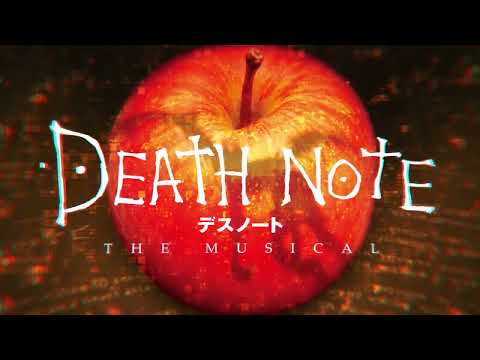
Death Note: The Musical is a musical based on the Japanese manga series of the same name by Tsugumi Ohba and Takeshi Obata. The score is by Frank Wildhorn, with lyrics by Jack Murphy and book by Ivan Menchell.Release date: 2014
"Death Note: The Musical" – The Musical Guide & Song Meanings
Review
“Death Note: The Musical” asks a blunt question, then refuses to let you answer it comfortably: if you could erase evil with a pen, would you? The lyric writing treats justice like a slogan that slowly rots. Light begins as a clean-line idealist. He ends as a brand manager for his own cruelty. That shift is not just plot. It is language. The text tightens, simplifies, repeats, and starts sounding like propaganda.
Frank Wildhorn’s score sits in that familiar sweet spot of pop-rock urgency and theatrical architecture. The hooks are direct. The harmonic choices often signal moral pressure rather than moral clarity. Jack Murphy’s lyrics keep the rhythm punchy, often using short, declarative phrases that feel like rules someone would write on the inside cover of a notebook. The book compresses a massive mythos into a two-act chase, so the songs carry extra weight. They do explanation work, mood work, and character work all at once.
The show’s sharpest move is how it assigns music to belief systems. Light sings like certainty. L sings like suspicion. Misa sings like devotion trying to impersonate agency. Ryuk and Rem hover above it all, and their material often sounds like commentary, the way a chorus in Greek drama watches humans sprint toward the cliff and still calls it entertainment.
How It Was Made
Development was announced in late 2013, and the English-language creative team took shape quickly: music by Frank Wildhorn, lyrics by Jack Murphy, and a book by Ivan Menchell. A New York workshop reading followed in April 2014, a key moment because it proved the show’s English text could function as theatre, not just as fandom curiosity.
That same year became the project’s “audio first” era. A 2014 demo and concept material circulated, and the English concept album sessions in December 2014 created a parallel life for the show, one that travelled online long before most audiences could buy a ticket. It is a rare case where the recording did not simply document the musical. It helped build demand for it.
The world premiere arrived in Tokyo in April 2015. From there, the musical kept moving, especially through Korea, where repeated revivals turned it into a modern genre staple: manga thriller meets stadium-voice musical theatre. Then London entered the story in 2023 with a concert staging that looked and moved like a full production, and the show’s “English return” finally felt official, not hypothetical.
Key Tracks & Scenes
"Where Is the Justice?" (Light)
- The Scene:
- Act I, early. A classroom that feels too bright, too normal. Light argues with a teacher while students form a quick chorus of agreement and doubt. The lighting plays “daytime reality” on purpose, so the later darkness hits harder.
- Lyrical Meaning:
- This is Light’s origin, not the notebook. The lyric frames justice as something missing from the world, so he can justify “supplying” it. It plants the show’s central trick: idealism that already contains violence.
"They're Only Human" (Ryuk, Rem)
- The Scene:
- Act I, before the plot truly ignites. Two Shinigami watch from a higher plane. The stage often empties around them. Shadows widen. The air feels colder.
- Lyrical Meaning:
- The lyric makes contempt sound playful. Humans are fragile, so their suffering can be “fun.” It is the show’s moral baseline. Everyone else argues above it.
"Change the World" (Light)
- The Scene:
- Act I, the first real use of the notebook. Light writes a name, then waits. The pause becomes theatre. A tight spotlight makes the pen look heavier than a weapon.
- Lyrical Meaning:
- Power arrives as a promise, not a threat. The lyric is seduction by certainty. It is also the moment Light starts talking like history already agrees with him.
"The Game Begins" (L)
- The Scene:
- Act I, after Light’s first public move. Screens, broadcasts, and a staged provocation. L appears with a calm that reads as arrogance, but functions as strategy.
- Lyrical Meaning:
- L sings analysis like it is a faith. The lyric is all inference, all logic, all hunger. It makes detection sound erotic. It also introduces the show’s second obsession: control through knowledge.
"Secrets and Lies" (L, Soichiro, Light)
- The Scene:
- Act I, as the police net tightens. Interrogation energy without an interrogation room. Light and L orbit each other while Soichiro stands between duty and family.
- Lyrical Meaning:
- This is the musical’s core triangle. The lyric treats truth as a weapon that changes hands. Everyone wants the same thing: the right to name the villain.
"Stalemate" (Light, L, Misa)
- The Scene:
- Act II, a three-way collision. L and Light trade verbal feints, while Misa’s pop-star world slides in like a bright billboard. Lighting often splits the stage into separate zones, then collapses them together.
- Lyrical Meaning:
- The lyric is chess talk with blood under it. Nobody sings what they feel. They sing what they can prove. Misa’s lines add a different danger: loyalty that does not require evidence.
"Playing His Game" (L, Light)
- The Scene:
- Late Act II, the chase becomes personal. The staging typically leans into physical rhythm: two minds trying to outrun each other’s next thought. The room feels smaller, even on a big stage.
- Lyrical Meaning:
- This is rivalry as destiny. The lyric frames their conflict as a sport, then exposes the cost of that framing. When everything is “a game,” people become pieces.
"The Way It Ends" (L, Light)
- The Scene:
- The final confrontation. An industrial-feeling space, harsh angles, and a sense that the story has outrun its own ethics. Silence becomes a percussion instrument.
- Lyrical Meaning:
- The lyric is the show’s last argument about power. Light sings like a verdict. L sings like a warning. Neither sounds safe, which is the point.
"Requiem" (Company)
- The Scene:
- Epilogue. The public mourns and mythologizes. The lighting softens but stays uneasy, as if grief is also a cover story.
- Lyrical Meaning:
- The lyric is about legacy, and how quickly a society can turn a murderer into a symbol. It ends the musical on the same question it began with, just louder.
Live Updates
Japan has leaned into anniversary scale. The official HoriPro listing confirms a 10th anniversary Tokyo run from November 24, 2025 through December 14, 2025 at Tokyo Tatemono Brillia HALL, with a published runtime of about 2 hours 55 minutes including intermission and listed ticket tiers (including premium seating). The Japan musical portal listing also outlines tour stops: Osaka (December 20 to 23, 2025), Aichi (January 10 to 12, 2026), Fukuoka (January 17 to 18, 2026), and Okayama (January 24 to 25, 2026).
Korea is currently the longest-running live “home” for the title. Interpark’s global listing posts the 2025 to 2026 Seoul engagement as October 14, 2025 through May 10, 2026 at D-CUBE LINK ARTS CENTER.
London’s next chapter is no longer wishful thinking. WhatsOnStage reported on October 26, 2025 that Trafalgar Entertainment is developing a new English-language stage production in partnership with HoriPro. That is the most concrete signal yet that the Palladium and Lyric concerts were a beginning, not a one-off.
For listeners, the most important soundtrack update is that the “Death Note, The Musical (London Concept Album)” is listed by Playbill as a Ghostlight Records release, with a digital release date of December 6, 2024. It credits Adam Pascal, Joaquin Pedro Valdes, Dean John-Wilson, Aimie Atkinson, Frances Mayli McCann, Rachel Clare Chan, and Christian Ray Marbella among the performers.
Notes & Trivia
- A New York workshop reading took place in April 2014, prior to the Tokyo premiere.
- The 10th anniversary Japanese production is officially billed with a near-three-hour runtime including intermission.
- The Tokyo 2025 run at Tokyo Tatemono Brillia HALL is officially dated November 24 to December 14, 2025, followed by tour dates that extend into late January 2026.
- The Seoul run is publicly listed as October 14, 2025 through May 10, 2026 at D-CUBE LINK ARTS CENTER.
- The London concept album is listed with a digital release date of December 6, 2024 on Ghostlight Records.
- WhatsOnStage reported in October 2025 that new producers are developing an English-language London future for the show, in partnership with HoriPro.
- The show’s song structure repeatedly returns to “Where Is the Justice?” in reprises, a musical way of showing a question turning into ideology.
Reception
Early responses tended to agree on two things at once. The score is built for big voices and big stakes. The narrative is brutally compressed. That friction is part of its identity: a thriller that sings faster than it breathes. In London, critics repeatedly noted that the “concert” label undersold how staged the event felt, and that the pacing sometimes ran ahead of clarity.
“As boisterous and fully blocked as some shows inhabiting the West End right now.”
“A thrill-ride ending that combines fantastical shocks with edge-of-the-seat twists.”
“Never going to be anything less than a rousing crowd-pleaser.”
Quick Facts
- Title: Death Note: The Musical
- Year: 2014 (New York workshop era and demo/concept momentum); world premiere 2015
- Type: Thriller book musical adapted from the manga series
- Book: Ivan Menchell
- Music: Frank Wildhorn
- Lyrics: Jack Murphy
- Based on: Death Note by Tsugumi Ohba and Takeshi Obata
- Notable English-language audio releases: 2014 concept/demos (studio cast); London Concept Album (Ghostlight Records), digital release December 6, 2024
- Selected notable placements in the story: “Where Is the Justice?” (Light’s worldview); “They’re Only Human” (Shinigami philosophy); “Change the World” (first kill); “The Game Begins” (L’s challenge); “Stalemate” (triangle of obsession); “Playing His Game” (rivalry peak); “Requiem” (public mythmaking)
- Japan 10th anniversary run: Tokyo Tatemono Brillia HALL, November 24 to December 14, 2025, with touring dates through January 25, 2026
- Seoul run: October 14, 2025 to May 10, 2026, D-CUBE LINK ARTS CENTER
Frequently Asked Questions
- Is “Death Note: The Musical” originally an English musical?
- Yes. The creative team is English-language, and the show had a New York workshop in April 2014 before premiering in Japan in 2015.
- What is the main lyrical theme of the score?
- Language as justification. The lyrics track how a moral question turns into a slogan, then turns into a system that excuses harm.
- Is there an official London cast recording?
- Yes. The “London Concept Album” is listed by Playbill as a Ghostlight Records release, with a digital release date of December 6, 2024.
- Where can I see the show in 2026?
- Japan’s anniversary tour includes dates through January 25, 2026, and the Seoul production is listed through May 10, 2026. London development for a future English-language run has also been reported by WhatsOnStage.
- Why does the score use reprises of “Where Is the Justice?”
- Because the question becomes an anthem. Repetition is the point: the character stops searching for justice and starts declaring ownership of it.
- What song best captures the Light vs. L rivalry?
- “Playing His Game” concentrates the duel into rhythm and argument, making their logic clash feel like a physical event.
Key Contributors
| Name | Role | Contribution |
|---|---|---|
| Frank Wildhorn | Composer | Wrote a pop-rock theatre score that assigns musical identities to certainty (Light) and suspicion (L). |
| Jack Murphy | Lyricist | Built compact, slogan-ready lyric patterns that reflect ideology forming in real time. |
| Ivan Menchell | Book writer | Compressed a large mythology into a two-act thriller structure built for musical set pieces. |
| HoriPro | Producer (Japan) | Presented the 10th anniversary 2025 run and published official schedule, runtime, and ticket tiers. |
| Ghostlight Records | Label | Released the London Concept Album digitally on December 6, 2024 (per Playbill listing). |
| Trafalgar Entertainment | Producer (UK development) | Reported by WhatsOnStage as developing a future English-language London production with HoriPro. |
Sources: HoriPro Stage (official), WhatsOnStage, Playbill, Interpark Global (NOL), Japan Musical Portal (J25musical), The Reviews Hub, TheaterMania, Wikipedia, Ovrtur.