
Baby Lyrics: Song List
- Act 1
- Opening/We Start Today
- What Could Be Better
- Plaza Song
- Baby, Baby, Baby
- I Want It All
- At Night She Comes Home to Me
- What Could Be Better? (Reprise)
- Fatherhood Blues
- Romance
- I Chose Right
- We Start Today (Reprise)
- Story Goes On
- Act 2
- Ladies Singing Their Song
- Patterns
- Romance (Repise)
- Easier to Love
- Romance III
- The End of Summer
- Two People in Love
- And What If We Had Loved Like That?
- With You
- The Birth
About the "Baby" Stage Show
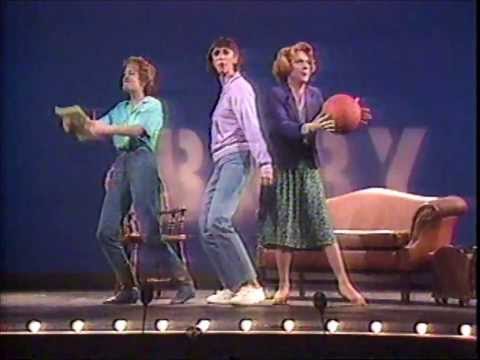
Richard Maltby is Broadway’s director and Wayne Cilento, choreographer, have staged it in December 1983 – exactly 32 years ago – in the theater named Ethel Barrymore. Although very close to many with its emotionality in plot, staging lasted totally 240 performances and 35 previews. Actors are: T. Graff, M. Vidnovic, C. Cox, J. Congdon, B. Fowler & L. Callaway.
Staging in New Jersey lasted also not too long – 2 months with such actors: M. McGill, M. Rupert, C. Carmello, N. Lewis, C. Kimball & L. Chanze. First time in Jersey the play staged in 2004, and the second time – in 2010. And in 2004 and 2011 the international version arose, first in Manila, then in Brazil.
For each new show chosen all the new actors and past team of members weren’t maintained, perhaps for financial reasons or for reasons of geographical remoteness of productions from each other. No awards have been given to this play during its 1 or 2 seasons and it was only good that is was not bad. A book for the play is filled with sentimental moments and jokes and highly accurate representation of how the characters portrayed coitus acts.
Release date of the musical: 1983
"Baby" – The Musical Guide & Song Meanings
Review
Is Baby a plot musical, or a set of emotional lab reports stitched into a semester calendar? The answer is both, and that double identity is the point. Sybille Pearson’s book puts three couples on the same college-campus grid and then lets time do the bruising: surprise pregnancy, late-in-life pregnancy, and infertility. What makes Baby last is not the premise, it’s the lyric strategy. Richard Maltby, Jr. writes as if every number is a private argument you accidentally overhear, with punchlines that land like defense mechanisms. The score by David Shire is pop-leaning, but it behaves like dramatic writing: short motifs, clean harmonic turns, and songs that play like scenes, not “moments.” Maltby has described their output as “acting songs,” and you can feel that philosophy in how frequently a line changes the character’s position mid-verse. The musical keeps asking who gets to narrate pregnancy: the woman whose body is changing, the partner who is trying to help, the older spouse who thought the chapter was closed, the strangers who feel licensed to give advice. Baby’s most biting lyric move is that it refuses to let anyone stay noble for long. Everybody is allowed to be petty. Everybody is also allowed one terrifyingly sincere sentence. That’s the deal.
How It Was Made
Baby opened on Broadway in 1983 at the Ethel Barrymore Theatre, with Maltby directing and Wayne Cilento handling musical staging, and it went on to a 1984 Tony season where it earned major nominations. The show has been rethought and adjusted over time, including workshop-era rewrites and later revisals that tested how the material holds up when the culture moves. A Playbill report on a 1999 Roundabout workshop notes new pages going in and out, with deeper characterization and at least one major story alteration explored in rehearsal, a reminder that Baby has always been treated as living material rather than a museum piece. Maltby and Shire’s longevity as collaborators is part of why Baby’s writing feels unusually “listened to”: in an interview, both describe a partnership built on mutual respect and a refusal to demand “my way,” plus a willingness to throw away work that doesn’t meet the bar. In 2021, Out of the Box Theatrics mounted a site-specific Off-Broadway production that made the show’s updating impulse explicit, including structural and representation choices aligned with the company’s mission, and Playbill notes the production incorporated ASL-interpreted performances and reimagined one couple as a same-sex partnership. In 2023, that production lineage produced a new cast recording and a renewed conversation about what it means for a “present tense” pregnancy musical to stay present tense.
Key Tracks & Scenes
"We Start Today" (Company)
- The Scene:
- Three domestic worlds snap into place like panels in a comic strip: a basement off-campus apartment, a middle-aged couple coming off an anniversary haze, and a couple in their thirties staring down the mechanics of trying to conceive. The lighting wants clean edges, quick shifts, and the sense that time is already pushing them forward.
- Lyrical Meaning:
- This is Baby’s thesis statement. The lyric treats “today” as both promise and trap. It’s a starting gun you didn’t ask for, and the song’s forward motion is the sound of agency colliding with biology.
"What Could Be Better?" (Danny, Lizzie)
- The Scene:
- Two college students process the news by turning it into a creative exercise. The air is bright, a little smug, a little scared. The room feels too small for the future they’re describing.
- Lyrical Meaning:
- It’s comedy built from denial. The lyric frames pregnancy as “our first collaboration,” which is funny until you realize it’s also a plea: if we can co-author this, maybe we won’t lose each other. The number shows Maltby’s gift for character bragging that collapses into vulnerability.
"The Plaza Song" (Arlene, Alan)
- The Scene:
- Jogging outfits, a morning-after reckoning, and the memory of champagne in fragments. The stage picture should feel slightly off-balance, like a carousel slowing down. Arlene’s humor has an edge because the stakes have arrived late.
- Lyrical Meaning:
- The lyric weaponizes specificity: the remembered bottles, the missing recollection, the way a joke becomes evidence. It’s not “I’m scared,” it’s “I can’t even account for how this happened,” and that’s a more corrosive kind of fear.
"I Want It All" (Pam, Lizzie, Arlene)
- The Scene:
- A doctor’s office turns into a confession booth shared by strangers. The lighting can stay clinical, even harsh, because the song is about trying to control the uncontrollable. Three women stand in different relationship to the same door: ambition, dread, and hunger.
- Lyrical Meaning:
- This is Baby’s core argument about modern identity: you’re allowed to want a child and a life, and the wanting itself can be ugly. The lyric isn’t apologetic. It’s a ledger of desires that refuses to be morally ranked.
"At Night She Comes Home to Me" (Nicki, Danny)
- The Scene:
- A late-night conversation between would-be fathers, one giving advice, one spiraling. The world narrows to a few feet of space. You want the sense of a campus sleeping while somebody’s future stays awake.
- Lyrical Meaning:
- The song is counsel disguised as intimacy. The lyric keeps returning to “space,” not as distance but as respect. It’s a male duet that refuses bravado and instead admits the quiet panic of not knowing the rules.
"Fatherhood Blues" (Danny, Alan, Nicki and others)
- The Scene:
- A baseball field, warmups, casual talk that turns into a communal number. Danny arrives in punk costume, trying to turn responsibility into a paycheck. The lighting should feel like late afternoon: ordinary, forgiving, and a little exposing.
- Lyrical Meaning:
- Baby uses this song to puncture the myth that fatherhood is purely supportive background. The lyric admits dread, ego, and confusion, and it does it with jokes that land because they are true.
"I Chose Right" (Danny)
- The Scene:
- A bus stop goodbye. He slips a ring onto her finger as he leaves for a summer tour. The staging wants stillness, the kind that makes the audience hear the air around a decision.
- Lyrical Meaning:
- It’s a commitment song without the usual romantic certainty. The lyric is about choosing when you cannot guarantee outcomes. In Baby, that’s what adulthood sounds like: a vow made in transit.
"The Story Goes On" (Lizzie)
- The Scene:
- Alone in her room, she feels the baby move for the first time, calls out to people who don’t answer, and then stands with the fact of her own solitude. The light can tighten to a single pool. The silence after each unanswered call matters.
- Lyrical Meaning:
- This is the show’s emotional engine. The lyric expands from a single body to generational time, not as sentimentality but as survival logic: if she cannot control her life, she can at least place it inside continuity. It’s the moment Baby stops being clever and starts being brave.
Live Updates
Baby is not “on tour” in the modern commercial sense, but it is alive in a way many 1980s originals are not: through licensing, revision, and recording. Music Theatre International continues to license Baby, including a “Baby (2021 Version)” explicitly updated for contemporary parenthood, noting changes such as revised language and cultural references, and a character change between licensed versions. MTI’s callboard listings show the title continuing to appear in community and regional programming, including documented 2025 bookings. On the performance side, the Out of the Box Theatrics site-specific run in 2021 positioned the piece as intimate, audience-close storytelling, and Playbill reports that the production made representation and accessibility choices central to its staging. In recordings, a new Off-Broadway cast album tied to that revival arrived in 2023, expanding the ways listeners encounter the lyric writing outside a theatre. The result is a musical with two parallel lives: a licensable repertory piece for campuses and local companies, and a cabaret and recording score that keeps generating new “in the room” interpretations.
Notes & Trivia
- Baby opened on Broadway December 4, 1983, and closed July 1, 1984. (IBDB)
- The original Broadway run played 35 previews and 241 performances. (Playbill, IBDB)
- Orchestrations were by Jonathan Tunick, and the score’s orchestral color is part of why the cast album has lasted. (IBDB; retail release notes)
- A library catalog entry notes the original cast recording was recorded at RCA Studios in New York on March 26, 1984. (Free Library of Philadelphia catalog)
- MTI’s show-history notes an onstage, visible orchestra and a minimal, continuous-curtain staging approach in the original production, emphasizing fluid scene changes over heavy scenery. (MTI show history)
- The original production earned Drama Desk Awards for featured performance categories, including wins for Martin Vidnovic and Catherine Cox. (IBDB; BroadwayWorld awards listing)
- Playbill’s 2021 coverage of the Out of the Box Theatrics revisal cites ASL-interpreted performances and a same-sex partnership among the couples as part of the updated staging. (Playbill)
Reception
In 1983, critics tended to frame Baby as “modest” rather than monumental: a professional, actor-friendly Broadway musical that didn’t pretend to be a megamusical. Over time, that modesty has become a feature, not a limitation. In the 2000s and 2020s, reviewers returned to the same qualities with different vocabulary: song-cycle structure, chamber scale, and an emphasis on emotional accuracy. What has shifted most is the cultural lens around fertility, choice, and who gets centered in the storytelling, which is why modern revisions have become part of the show’s public narrative rather than backstage trivia.
The score is described as a “richly textured account” of fears and joys around impending parenthood.
Frank Rich likened Baby to earlier “casual-spirited” Broadway seasons, praising its professionalism and cast-album pull.
A 2021 Off-Broadway review argues the show’s balance of focus across couples can affect its dramatic lift, even when the material is strong.
Technical Info
- Title: Baby
- Year: 1983 (Broadway premiere)
- Type: Book musical with interwoven couple narratives; campus-set “semester calendar” structure
- Book: Sybille Pearson (story developed with Susan Yankowitz)
- Music: David Shire
- Lyrics: Richard Maltby, Jr.
- Original Broadway theatre: Ethel Barrymore Theatre, New York
- Run: Opened Dec 4, 1983; closed Jul 1, 1984; 35 previews and 241 performances
- Orchestrations: Jonathan Tunick
- Selected notable scene placements (scripted): “We Start Today” introduces all three couples; “I Want It All” is staged in the doctor’s office with the three mothers together; “Fatherhood Blues” plays on a baseball field; “I Chose Right” is a bus-stop farewell; “The Story Goes On” is Lizzie alone after feeling the baby move for the first time; Act II includes “The Ladies Singing Their Song” as street encounters and “Patterns” as Arlene’s internal reckoning. (MTI synopsis)
- Album status: Original Broadway cast recording recorded March 1984; widely available on streaming and retail reissues; a new Off-Broadway cast recording tied to the 2021 revisal was released in 2023. (library catalog; Observer; BroadwayWorld)
- Label notes: The original cast album has appeared across releases and reissues, including Polydor/PolyGram-era formats and later reissues. (Discogs release data)
- Current licensing: MTI licenses multiple versions, including a “Baby (2021 Version)” positioned as updated for contemporary parenthood. (MTI)
FAQ
- Who wrote the lyrics to Baby?
- Richard Maltby, Jr. wrote the lyrics, with music by David Shire and a book by Sybille Pearson. (IBDB, Playbill)
- What is Baby actually about?
- Three couples connected by a college-campus world experience pregnancy and the attempt to become parents under very different circumstances: unexpected, late-in-life, and medically assisted. (MTI synopsis)
- Is there a newer version of the show?
- Yes. MTI licenses a “Baby (2021 Version)” that updates language and cultural references, and modern productions have incorporated revised relationship structures and accessibility choices. (MTI; Playbill)
- What is the big solo everyone talks about?
- “The Story Goes On” is often cited as the score’s emotional peak, built around Lizzie’s realization of continuity and purpose after feeling the baby move and reaching no one by phone. (MTI synopsis)
- Is there a cast recording I can stream?
- Yes. The original Broadway cast album is available on major streaming services, and a newer Off-Broadway cast recording connected to the 2021 revisal was released in 2023. (Spotify listings; TheaterMania/Observer/BroadwayWorld coverage)
Key Contributors
| Name | Role | Contribution |
|---|---|---|
| Richard Maltby, Jr. | Lyricist; director (original Broadway) | Character-first lyric writing; shaped original staging and later revisal workstreams |
| David Shire | Composer | Pop-leaning, dramatic scoring built for actor phrasing and emotional pivots |
| Sybille Pearson | Book writer | Interwoven narrative architecture linking three couples across the same campus world |
| Susan Yankowitz | Story development | Early story development support credited in production history and recording notes |
| Wayne Cilento | Musical staging / choreography (original) | Helped define the show’s fluid, scene-to-scene movement language |
| Jonathan Tunick | Orchestrations | Orchestral identity that keeps the score vivid on recordings and in revivals |
| Ethan Paulini | Director-choreographer (2021 Off-Broadway revisal) | Site-specific revival framing; helped modernize the piece for contemporary audiences |
Sources: IBDB, Playbill, Music Theatre International, Variety, Observer, TheaterMania, BroadwayWorld, The New York Theatre Guide, The Christian Science Monitor, Spotify, Discogs, Free Library of Philadelphia catalog.