
Shout! Lyrics: Song List
- England Swings/'Round Every Corner/I Know A Place
- I Only Want To Be With You/Tell The Boys
- How Can You Tell
- Wishin' & Hopin'
- One Two Three
- To Sir With Love
- Don't Sleep In The Subway
- Son Of A Preacher Man
- James Bond Theme / Goldfinger
- You Don't Have To Say To Love Me
- Diamonds Are Forever
- Puppet On A String
- Georgy Girl
- Who Am I?
- Don't Give Up
- I Just Don't Know What To Do With Myself
- These Boots Are Made For Walkin'
- I Couldn't Live Without Your Love
- You're My World
- Those Were The Days
- Shout!
- Goin' Back
- Downtown
- Downtown (Dance Remix)
About the "Shout!" Stage Show
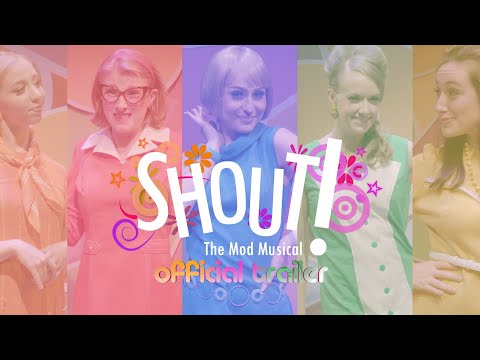
It is an off-Broadway musical, which is a joint product of P. George & D. Lowenstein. One of the main tasks of performance is to surround the audience with atmosphere of 60s, characterized by bright clothes and rock music. The central figures of the play are five singers, who are named according to the color of their attires: Orange, Blue, Green, Yellow and Red. Production is made in atypical for modern time single act.
Play started in 2006. Director's chair has been occupied by already mentioned P. George, choreographer was D. Lowenstein. Producing of the project fell on the shoulders of V. Lang, P. P. Piccoli & M. Schwartz. Starring: E. Crosby, D. Sumerford, J. Evans, M. Arcilla & E. Schroder. Musical quickly won the love of the audience. For obvious reasons, the main bulk of its fans made of women. As for the critics, they praised production restrained, highlighting its atmosphere and interesting narrative style. In particular, columnist of The New York Times B. Brantley called the production a unique musical of Culture of 60s.
Release date of the musical: 2006
"Shout! The Mod Musical" – The Musical Guide & Song Meanings
Information current as of February 2026. This is a lyrics-and-album analysis guide. It does not reproduce full song lyrics.
Review: what the show is trying to do with pop lyrics
“Shout!” is a jukebox revue that keeps picking fights with its own format. It wants the sugary, radio-ready language of 1960s hits, but it also wants an arc: five young women in London, tracked from 1960 to 1970, learning which advice to ignore and which to weaponize. The solution is clever and a little cruel. The show turns the songs into receipts. Every chorus becomes evidence of what these women were told, what they swallowed, and what they finally reject.
The score is “Various” on paper, and that’s the point. Instead of one lyricist steering the evening, the show lets a decade’s worth of commercial songwriting expose its blind spots. When a ballad insists on devotion, “Shout!” asks who benefits from that devotion. When a swagger number brags, “Shout!” asks who has to clean up afterwards. The recurring device is the Shout! magazine advice columnist, Gwendolyn Holmes, whose voiceovers land like a cheerful pressure system: fix your life with lipstick, ignore the structural stuff. The women’s responses, sung through borrowed pop lyrics, gradually turn that voice from comfort into villainy.
Musically, it’s built for momentum, not contemplation. Medleys and fast transitions keep the room buzzing, and the staging usually behaves like a fashion spread that learned to move. That hyperactivity can feel like a dodge, until you notice how often the show slows down only when the women’s inner lives get specific. That’s where the writing earns its keep.
How it was made: the revue that learned to tell a story
“Shout!” was co-created by director Phillip George and choreographer David Lowenstein, with continuity by Peter Charles Morris, the connective tissue that turns a playlist into a timeline. MTI’s licensed version identifies it as a one-act, five-role revue, rated PG, with “hilarious sound bites” and an advice-column frame binding the songs together. That frame matters because it gives the borrowed lyrics a target: culture as narrated to women, then repeated back with side-eye.
The show’s first edition appeared at the Duplex in New York in 2000, then transferred to London’s Jermyn Street Theatre, where it picked up a WhatsOnStage nomination. That early life explains why “Shout!” feels like a party with engineering under the floorboards. It was built in rooms where a revue has to grab you fast, then hold you with pace and personality, not scenic spectacle.
Its U.S. breakthrough moment was the 2006 Off-Broadway run at the Julia Miles Theatre. Playbill’s announcement is explicit about the show’s structure: letters to an advice columnist, quizzes, advertisements, and “true confessions” as the organizing spine, with George directing and Lowenstein choreographing. That’s the “why” of the soundtrack album, too. The recording isn’t trying to preserve a book musical’s scene-to-song logic. It’s trying to bottle a decade-hopping night out, with the voiceovers and transitions implied by how the medleys are stitched.
Key tracks & scenes: 8 moments where the words matter
"England Swings / 'Round Every Corner / I Know a Place" (Ensemble)
- The Scene:
- Lights up on five young women in swinging-’60s London. The stage reads like a magazine layout: bold colors, quick poses, and a city that feels like it’s selling them a future.
- Lyrical Meaning:
- This opening is advertising as anthem. The lyric language is pure promise: excitement is everywhere, so disappointment must be your fault. The show spends the next hour challenging that premise.
"I Only Want to Be with You / Tell the Boys" (Orange)
- The Scene:
- Orange writes to Gwendolyn Holmes about rushing into marriage. The advice comes back sunny and absolute. Orange responds the only way pop has taught her to respond: devotion turned up to maximum volume.
- Lyrical Meaning:
- On its face, it’s romantic certainty. In context, it’s compliance. The lyric becomes a portrait of how a young woman is coached to announce attachment as proof of maturity.
"How Can You Tell / Wishin' & Hopin'" (Company)
- The Scene:
- The 1964 Shout! issue drops with new fashion and new rules. The women compare notes, strategize, and treat romance like a group project under fluorescent boutique lighting.
- Lyrical Meaning:
- These songs are dating instructions disguised as charm. The brilliance is how the show lets the lyric logic incriminate itself: so much work for so little honesty.
"One Two Three / Paul McCartney's Comb / To Sir With Love" (Yellow)
- The Scene:
- Yellow, the American, camps outside Paul McCartney’s house, hiding in bushes with other fans. The moment flips from comedy to a strange sincerity as the sequence lands on “To Sir With Love,” sung with a schoolgirl clarity.
- Lyrical Meaning:
- The lyric shift is the point: fandom as fantasy, then longing as something purer. It’s a reminder that the decade’s pop language can hold real tenderness, not just pose.
"Wives and Lovers – My Handsome Prince" (Orange)
- The Scene:
- Orange waits for her husband on their anniversary, rehearsing gratitude while the clock keeps winning. Warm light fades toward something cooler. Memory fills the gaps.
- Lyrical Meaning:
- This is the show’s quiet indictment of “good wife” mythology. The lyric teaches patience as virtue, and “Shout!” asks what patience costs when it becomes your whole personality.
"Son of a Preacher Man" (Yellow)
- The Scene:
- Yellow steps forward to describe the one man who “could ever reach” her. The staging often turns spotlight-simple here: less fashion spread, more confession.
- Lyrical Meaning:
- In this context, the lyric is about agency. Yellow names desire without apology, which is exactly what the advice-column world keeps trying to sand down.
"These Boots Are Made for Walking" (Company)
- The Scene:
- After horoscopes and style pivots, the women snap into a new posture. The boots hit the floor like punctuation. Lighting pops. Movement turns declarative.
- Lyrical Meaning:
- It’s a break-up song as emancipation memo. The lyric’s bluntness is restorative because so much of the show has been coded, coy, and indirect.
"Shout!" (Company)
- The Scene:
- 1970 arrives in a rush of new clothes and sharper opinions. Orange finally tells Gwendolyn Holmes her advice is poison, the column collapses, and the women celebrate like they’ve been waiting all decade for permission.
- Lyrical Meaning:
- The title number is victory and revenge in the same key. The lyric becomes communal release: a roomful of women turning noise into autonomy.
Live updates (2025/2026): where it’s playing now
In 2025 and early 2026, “Shout!” behaves like a healthy licensing title rather than a single, centralized tour. The evidence is scattered and steady: colleges, regionals, and local companies treating it as a compact, high-energy, five-performer crowd-pleaser that can sell as a “girls’ night” event.
In the U.K., “Shout! The Mod Musical” was announced for Upstairs at the Gatehouse with dates running 25 June through 20 July 2025, and it drew contemporary review coverage from British theatre outlets. In the U.S., Southwest Minnesota State University staged it as a Spring 2025 mainstage production (April 10-13, 2025), and Florida Rep’s 2025 run generated press emphasizing the show’s period look and pop-song familiarity.
If you’re programming it now, one practical detail from MTI’s full synopsis matters for modern staging: the authors provide alternate scenes to replace “The Pill” and “Smoking” material for more age-appropriate school productions. That flexibility is a major reason the show keeps resurfacing.
Notes & trivia
- MTI lists “Shout! The Mod Musical” as a one-act, five-role show (PG), with a licensed version labeled 2009.
- The Off-Broadway New York City debut began July 11, 2006 at the Julia Miles Theatre, with an opening date reported as July 27, 2006.
- The show’s framing device is the fictional Shout! magazine and its advice columnist, Gwendolyn Holmes, whose voiceovers connect letters, ads, quizzes, and confessions.
- According to MTI’s full synopsis, the story tracks five women from 1960 to 1970 and ends with Orange confronting the columnist and the women celebrating their freedom.
- MTI’s synopsis includes author-provided alternate scenes that replace “The Pill” and “Smoking” moments for schools.
- The official site notes an early iteration at the Duplex (New York, 2000) and a London transfer to Jermyn Street Theatre, plus subsequent touring and international productions.
- The soundtrack album is widely listed as a 2006 release with 24 tracks and includes a bonus “Downtown (Dance Remix).”
Reception: critics, boosters, and the honest middle
“Shout!” has always drawn two kinds of responses: people who want narrative sophistication, and people who want an expertly paced night of pop performance with a wink. The first group can find it “cheesy.” The second group hears the craft in the arrangements and the precision of the framing, especially when the production leans into the satire of the advice-column voice.
It also helps that the show has a built-in argument for itself. The decade it portrays was full of messaging that sounded helpful until you read the fine print. “Shout!” takes that messaging, sets it to hits, and lets the women answer back.
“Irresistible songs, great voices and a horribly cheesy show.”
“The songs of London in the ’60s … bring the energy, verve and style that made the music so memorable.”
“SHOUT! rivals Jersey Boys for sheer fun.”
Quick facts: show + soundtrack metadata
- Title: Shout! The Mod Musical
- Year (your reference): 2006 (Off-Broadway NYC run; soundtrack release year)
- Type: Jukebox revue with continuity and voiceover advice-column framing
- Creators: Phillip George; David Lowenstein
- Continuity by: Peter Charles Morris
- Music & lyrics: Various (1960s pop catalogue)
- Show essentials (MTI): 1 act; 5 roles; rated PG; licensed version labeled 2009
- Notable story placements (MTI synopsis): “England Swings” opening; “To Sir With Love” in the Paul McCartney sequence; “These Boots Are Made for Walking” as a turn toward empowerment; “Shout!” as the 1970 liberation payoff; “Downtown” as epilogue reflection
- Off-Broadway venue (2006): Julia Miles Theatre (The Women’s Project), with previews reported from July 11 and an opening date reported as July 27
- Soundtrack album: Shout! (Original Cast Recording) [The Mod Musical Soundtrack] (listed as a 2006 release with 24 tracks)
- Label / rights note: Apple Music lists the 2006 album under Shout Partners, LP via Rhino Entertainment Company
- Availability: The album is listed on major streaming platforms (Spotify, Apple Music) and major retailers
Frequently asked questions
- Is “Shout!” a book musical with characters, or a concert-style revue?
- It’s a revue with a story frame. MTI’s synopsis describes letters to an advice columnist, ads, quizzes, and confessions tying the songs together into a 1960-to-1970 timeline.
- Who is Gwendolyn Holmes?
- She’s the fictional Shout! magazine advice columnist whose voiceovers connect the scenes. Dramatically, she functions as the decade’s “approved” voice for what women are supposed to want.
- Does the show work for schools?
- Yes, and MTI’s licensed materials explicitly include alternate scenes to replace content about “The Pill” and “Smoking” for more age-appropriate productions.
- What should I start with on the soundtrack if I want the plot beats fast?
- Try the opening medley, then “I Only Want to Be with You / Tell the Boys,” “Wives and Lovers – My Handsome Prince,” “These Boots Are Made for Walking,” and “Shout!” That path captures the show’s shift from rules to rebellion.
- Is it touring in 2025/2026?
- There’s no single, branded tour acting as the show’s center of gravity right now. Its current life is visible through licensed runs and regional programming, including a 2025 U.K. engagement at Upstairs at the Gatehouse and multiple U.S. university and regional productions.
Key contributors
| Name | Role | Contribution |
|---|---|---|
| Phillip George | Co-creator; director | Co-conceived the show’s revue structure and directed the licensed staging approach |
| David Lowenstein | Co-creator; choreographer | Choreography language that turns medleys into story momentum |
| Peter Charles Morris | Continuity | Wrote the connective framework that links songs through magazine voiceovers, letters, and time jumps |
| Brad Vieth | Arrangements; orchestrations; musical direction (credited on official materials) | Reworked 1960s hits into theatre-ready transitions and medleys |
| Victoria Lang | Producer (credited in press materials) | Produced the commercial life of the title and supported touring/licensing visibility |
| David Gallo | Scenic design (credited in press materials) | Visual identity aligned with pop-art magazine styling |
| Phillip Heckman | Costume design (credited in press materials) | Color-coded character logic and period fashion signifiers |
| Jason Lyons | Lighting design (credited in press materials) | Fast, editorial lighting that supports decade-jumps and confession moments |
| Tony Meola | Sound design (credited in press materials) | Soundscape support for voiceovers and period “sound bite” transitions |
Sources: Music Theatre International (show page + full synopsis + critical reaction); Playbill; official show site (ShoutTheModMusical.com); Apple Music; Spotify; Houston Press; Theatre In Chicago; British Theatre Guide; SMSU Today; Gulf Coast News Now.