Pippin Lyrics – All Songs from the Musical
Pippin Lyrics: Song List
About the "Pippin" Stage Show
The musical’s premiere on Broadway was in October 1972. Until June 1977, were played 1944 performances. Choreography was by B. Fosse. The main roles played in the production by: J. Rubinstein, C. Chadman, B. Vereen, E. Berry, L. Palmer, I. Ryan & J. Clayburgh.With the start of performance, in the press periodically appeared reviews from critics, particularly in The New York Times, where an article was published that called rock music in this piece as invertebrate and not connected with the action. However, it was marked that a few rock ballads would remain in people's minds for a long time.
On television was launched a 60-second ad of this histrionics, which had cast of members of the troupe – B. Vereen, C. Brown & P. Sousa. In 1996, the theater critic S. Miller noted that director B. Fosse conceived his offspring as a surreal work, but in practice, it turned out that ‘Pippin’ was somewhat similar to an amateur performance, earning a reputation of cute & mischievous play. Over the years, the main roles were played by N. J. Calloway, S. E. Wright, B. Harney, M. Rupert, B. Buckley, D. Pitchford, P. Lopez & D. Stickney.
In addition to Broadway, the show also experienced the success in London (in Her Majesty's Theatre), LA, Kansas city. In 2013, on Broadway started rehearsals with the new composition of the acting troupe, and try-out in Music Box Theatre has collected a full house. In the same year, the musical was nominated for 10 Tony Awards, of which 4 brought victory: for best revival, for Best Actress, best Actor, and Best Director.
Release date: 1972
"Pippin" – The Musical Guide & Song Meanings
Review: what the lyrics are really selling
“Pippin” opens by making a promise it immediately sabotages. You are told, with a grin, that you are about to see something special. Then the lyric logic starts eating its own tail: every time the score offers a clean life lesson, the Leading Player reframes it as a sales pitch, a demo, a limited-time offer. That is the show’s central trick. The characters are not just living in a story; they are being marketed to, in real time, and the language keeps slipping between confession and copywriting.
Stephen Schwartz’s lyrics are deceptively plainspoken, which is why they land. Pippin’s “I want” material is built from simple natural images and blunt verbs, but it is engineered for escalation. The words keep reaching for absolutes (all, never, completely) and those absolutes become the problem. The show is not arguing that ambition is silly. It is arguing that the desire for a single, final answer is exploitable, especially when an audience applauds the search itself.
Musically, the score sits in that early-1970s sweet spot: pop rhythms inside a book-musical frame. That matters because pop tends to feel “immediate,” even when the setting is pseudo-medieval. It lets the characters speak in contemporary craving, not museum diction. When the music turns percussive and pattern-driven in the war sequences, it does not simply illustrate violence. It turns violence into choreography, which is the point. The score keeps asking whether we are watching a person become enlightened or watching a troupe refine a routine.
How it was made: Schwartz, Hirson, and the Fosse effect
The origin story is unusually concrete. Schwartz traces “Pippin” back to a college-era project at Carnegie Mellon, sparked when a friend spotted a textbook paragraph about Charlemagne’s son and started drafting a musical from the idea. Schwartz and the friend collaborated, then the piece evolved through years of rewrites, producers, and structural advice before it became the version Broadway knows.
Schwartz’s own account also clarifies a common misconception: there is not a cleanly separable “Fosse version” sitting on a shelf, waiting to be swapped in wholesale. He describes the differences as subtler, more about emphasis, centrality, and how far the production leans into tawdry show-business menace. In other words, the big shift is not a different script. It is what the staging encourages the audience to enjoy.
One more crucial behind-the-scenes point: the ending problem was always an ending problem. Schwartz says nobody could quite land it at first, then he later saw a production that introduced what became the widely used “Theo ending,” a final twist that turns the search into a repeating loop. It is one of those fixes that feels obvious only after you have seen it work, and it changes how you hear the earlier lyrics. Suddenly, the longing is not just youthful. It is hereditary.
Key tracks & scenes: 8 lyrical moments that do the heavy lifting
"Magic to Do" (Leading Player & Players)
- The Scene:
- A grey, opaque curtain seals off the stage. A single light blooms behind it, throwing a shadow that makes the first performer look larger than life. The troupe emerges as if the theatre itself is turning on. The vibe is invitation with teeth.
- Lyrical Meaning:
- This is not a welcome; it is a contract. The lyric is a direct-to-audience pitch for spectacle, and it teaches you how the show will operate: promise wonder, imply exclusivity, then demand your attention as payment.
"Corner of the Sky" (Pippin)
- The Scene:
- Early on, Pippin plants his flag: he will not settle. The staging frequently treats him like a presented specimen, a “lead” escorted into position and then left to sing his own diagnosis. It plays like a diary entry performed under surveillance.
- Lyrical Meaning:
- The lyric’s nature metaphors are doing strategy, not decoration. Rivers belong, eagles belong, and therefore Pippin concludes he must “belong” too. The problem is that he defines belonging as a location he has to conquer, not a life he has to build.
"War Is a Science" (Charlemagne & Company)
- The Scene:
- A drum roll intensifies as Charlemagne enters, calls for a map, and the troupe turns logistics into a gag. A large cloth map becomes a prop, the “GLORY” sign turns up like a label, and the war room becomes a demonstration booth.
- Lyrical Meaning:
- The lyric is bureaucratic cruelty set to a grin. It replaces moral language with metrics and “statistical analyses,” which is why it is chilling. It shows how power justifies itself by sounding practical.
"Glory" (Leading Player & Soldiers)
- The Scene:
- The Leading Player literally costumes herself mid-number, hat and cane arriving as if thrown from the wings. A dance unfolds while killings happen in limbo. Then the battle “truly erupts,” bodies drop, and the stage picture includes blood, a head on a pike, and a punchline “Ta-da!” that lands like a slap.
- Lyrical Meaning:
- “Glory” is the show’s thesis in a single routine: violence becomes entertainment when you give it rhythm, repetition, and applause cues. The lyric’s chant-like structure is not just catchy; it is coercive.
"No Time at All" (Berthe)
- The Scene:
- Berthe sells time as a commodity you are allowed to spend. Many productions stage it as a warm interruption, but it can also read as a hustle: she is the one character who tells the truth and still gets a spotlight for it.
- Lyrical Meaning:
- The lyric’s genius is how it makes acceptance sound active. It is not resignation. It is triage. Berthe is telling Pippin to stop trying to purchase meaning with intensity.
"With You" (Catherine)
- The Scene:
- Catherine arrives in “ordinary life” territory, where the show’s gloss gets intentionally scuffed. The lyric is offered without fireworks: a woman describing stability in sentences that do not beg for approval.
- Lyrical Meaning:
- This is the score’s moral counterweight. The words refuse the show’s obsession with “completely fulfilling.” Catherine’s language is conditional, imperfect, and therefore believable.
"Morning Glow" (Company)
- The Scene:
- The number surges like an anthem and risks becoming propaganda. Then Pippin, in the afterglow, realizes the “finale” feeling can be manufactured. The troupe swats away the idea that this is the ending and pivots to the next escalation.
- Lyrical Meaning:
- The lyric is hope written in broad strokes. That is the danger. “Morning Glow” can sound like a new era, but the show uses it to expose how easily optimism becomes branding for a regime.
"I Guess I’ll Miss the Man" (Catherine)
- The Scene:
- Pippin exits, and Catherine tries to keep talking as the lights literally cut her off. She has to ask, out loud, for the light back. She then sings anyway, while the Leading Player objects that she “doesn’t have a song here,” and Catherine calmly insists that she does now.
- Lyrical Meaning:
- This lyric is surgical: it refuses romantic revisionism while admitting attachment. Catherine lists the man’s flaws with comic precision, then lands on a quiet emotional fact. It is also the show’s best argument against the troupe. A real person insists on her own number, and the machinery has to accommodate her.
"Finale" (Company)
- The Scene:
- The troupe returns with torches and a ritual tone. The Leading Player sells Pippin the “perfect act,” frames him with fire, and tries to push him into a literal climax. The show makes the coercion visible: encouragement becomes goading, spectacle becomes a trap, and Pippin has to choose whether to be a good ending.
- Lyrical Meaning:
- The lyric mechanics of the finale are about consent. The show asks who controls the “meaning” of Pippin’s life: Pippin, the troupe, or the audience that wants a clean payoff. The later “Theo ending” sharpens this by hinting the hunger for a finale never dies, it just changes hosts.
Live updates: 2025–2026 productions, streaming, and what “current” looks like
Information current as of January 2026.
There is no single monolithic “Pippin tour” dominating 2025–2026. What exists is a healthy ecosystem: licensed productions, fringe reimaginings, and at least one notable London run that critics treated as a real event. In practical terms, “Pippin” is behaving like a durable mid-size classic: easy to cast interestingly, hard to solve completely, and still capable of surprising an audience that thinks it already knows the score.
In London, Upstairs at the Gatehouse mounted “Pippin” from December 2025 into January 2026, with a cast including Lewis Edgar (Pippin) and Emily Friberg (Leading Player). Reviews noted how well Schwartz’s songs still play, even when staging choices soften some of the original bite. If you care about lyric clarity, this kind of smaller-scale production can actually help: fewer distractions, more text.
In the U.S., the clearest “what’s on” signal is the licensing pipeline. MTI’s production listings show “Pippin” continuing to appear in regional and project-based runs (one example: Sarasota, June 2025). Ticket pricing in these contexts varies widely, from donor-tier VIP packages to low-cost community pricing, depending on the producing organization.
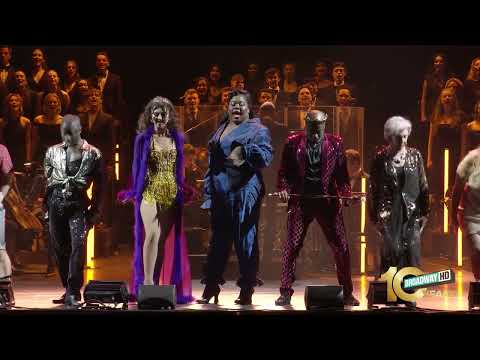
For watching rather than attending: the 50th Anniversary Concert filmed at Theatre Royal Drury Lane began streaming on BroadwayHD in March 2025. If your goal is lyrics-first listening, concert presentation can be ideal. It strips away some narrative connective tissue, but it spotlights the rhyme-and-intent of the score and lets you hear how different voices handle Schwartz’s conversational lines.
Version-spotter’s cheat sheet (useful before you buy tickets)
| What changes | Why it matters for lyrics | What to look for in the program |
|---|---|---|
| Ending: “classic” vs “Theo ending” | The “Theo ending” reframes the longing lyrics as cyclical, not solved. | Mention of “Theo ending” in licensing notes, or a final reprise aimed at Theo. |
| Fosse-forward staging vs text-forward staging | More stylized choreography can turn irony into seduction, which changes how lines read. | Choreography credit “in the style of Bob Fosse,” or heavy emphasis on dance concept. |
| Scale: spectacle vs stripped-back | Smaller scale usually boosts diction and makes the meta-theatre sharper. | Venue size, cast size, and whether “circus” is a selling point. |
Listener tips (lyrics edition)
- If you are new to the show, listen to “Magic to Do,” “Corner of the Sky,” and “I Guess I’ll Miss the Man” first. You will understand the show’s three competing value systems: spectacle, craving, and reality.
- If you are seeing a live production, sit where you can watch faces, not just formations. The Leading Player’s lyric intent often lives in timing, not volume.
- If a production advertises “family-friendly,” double-check how it handles the war and finale. Those scenes are where the show’s moral pressure is highest.
Notes & trivia: specifics for the musically nosy
- Schwartz describes the project beginning in a college club context at Carnegie Mellon, years before Broadway, with the Charlemagne hook sparked by a friend’s textbook find.
- The “Theo ending” concept was developed in 1998 (commonly credited to Mitch Sebastian) and is now widely used; Schwartz has spoken positively about it.
- “I Guess I’ll Miss the Man” is sometimes targeted for cuts in shorter versions, but Schwartz has argued strongly against cutting it, because it reveals Catherine’s agency and the show’s emotional spine.
- The original Broadway production opened in 1972 at the Imperial Theatre and became a long-run hit, helped by its director-choreographer’s ability to make irony look like a party.
- The 50th anniversary concert performance was filmed at Theatre Royal Drury Lane and later released for streaming, functioning as a modern entry point for the score.
- The show’s war material is built to look like “numbers,” not scenes. That is deliberate. The lyric design turns brutality into repeatable form, then asks whether you clap.
- MTI licensing materials and listings show the title continuing to cycle through regional, educational, and project-based productions, which is often where “Pippin” stays healthiest.
Reception: praise, pushback, and why it keeps returning
“Pippin” has always attracted a specific type of compliment: people love the craft, then argue about the soul. That split is baked into the writing. The show is suspicious of its own pleasures, so it makes critics suspicious of them too.
“Stephen Schwartz’s wondrous songs still cast a spell.”
“A meta musical which continually breaks down how it tells its story.”
“Pippin follows a young man’s journey for meaning and fulfillment in his life, as told by a mysterious troupe of performers.”
Read together, these responses sketch the show’s longevity: the score keeps its charm, the structure keeps its edge, and contemporary performers keep finding new ways to make the Leading Player feel like a live wire rather than a museum piece.
Quick facts: album, credits, placements, availability
- Title: Pippin
- Year: 1972 (original Broadway opening)
- Type: Musical comedy with meta-theatrical framing
- Book: Roger O. Hirson
- Music & Lyrics: Stephen Schwartz
- Original Broadway director-choreographer: Bob Fosse
- Broadway production baseline: Imperial Theatre opening (1972); major Broadway revival opened 2013
- Selected notable scene placements: “Magic to Do” as a direct-to-audience opening; “War Is a Science” as a war-room demo; “Glory” as battle-as-routine; “I Guess I’ll Miss the Man” as Catherine’s reclamation of spotlight; “Finale” as spectacle coercion
- Cast album snapshot: Original Broadway cast recording released in 1972; major revival recording released in the 2010s (recording sessions and producers publicly reported at the time)
- Availability: Licensed performances via MTI; filmed concert release available for streaming (platform availability varies by region)
Frequently asked questions
- Is there a movie or pro-shot of “Pippin”?
- Yes. A filmed stage production exists (often circulated as “Pippin: His Life and Times”), and the 50th anniversary concert performance was released for streaming in 2025. Availability depends on region and platform.
- Who wrote the lyrics to “Pippin”?
- Stephen Schwartz wrote the music and lyrics, with the book credited to Roger O. Hirson.
- What is the “Theo ending,” and will I see it?
- It is a later ending concept in which Theo, not Pippin, becomes the next target of the troupe’s promise of “something completely fulfilling.” Many contemporary productions use it, but not all.
- Why does the Leading Player sound charming and threatening at the same time?
- Because the character’s job is to sell you the show while steering Pippin toward a pre-designed climax. The lyrics often function like persuasion: confident phrasing, repeated hooks, and emotional leverage.
- What should I listen to first if I only have 15 minutes?
- “Magic to Do,” “Corner of the Sky,” and “I Guess I’ll Miss the Man.” Those three songs define the show’s engine: spectacle, craving, and human-scale truth.
- Is “Pippin” historically accurate?
- No. It borrows names and a vague medieval atmosphere, but it is fundamentally a parable about ambition, performance, and the hunger for a perfect life.
Key contributors
| Name | Role | Contribution |
|---|---|---|
| Stephen Schwartz | Composer & Lyricist | Wrote the score and lyrics; documented the show’s development and later-ending preferences. |
| Roger O. Hirson | Book writer | Wrote the book that frames the parable and its meta-theatrical mechanics. |
| Bob Fosse | Director-Choreographer (original Broadway) | Defined the show’s original stage language and the seductive menace of the troupe. |
| Stuart Ostrow | Original producer | Produced the Broadway original and helped shepherd the show to its defining form. |
| Diane Paulus | Director (2013 Broadway revival) | Led the major modern revival that reframed the show with contemporary theatrical spectacle choices. |
| Kurt Deutsch | Cast recording producer (revival era) | Co-produced a widely circulated modern cast recording release with Schwartz, per industry reporting. |
Sources: StephenSchwartz.com (forum archive PDFs), MTI (full synopsis and listings), IBDB, Playbill, The Guardian, People, Upstairs at the Gatehouse, BroadwayHD trailer.