
Notebook Lyrics: Song List
About the "Notebook" Stage Show
Release date of the musical: 2024
"The Notebook" – The Musical Guide & Song Meanings
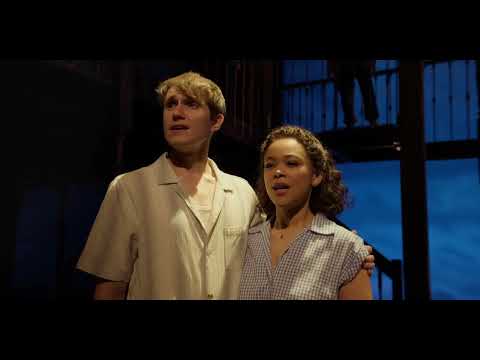
Review: a tearjerker that keeps checking its own pulse
The risk with The Notebook as a musical is obvious: you already know the ending, and pop-ballad sincerity can turn into wallpaper. Ingrid Michaelson’s lyrics answer that risk by making the show less about plot than perception. The language returns to the same ideas again and again, time, home, loneliness, the stubborn fact of love, because the characters are not reliving a story; they are reliving a memory. Repetition is the dramaturgy.
Bekah Brunstetter’s structural choice, triple-casting Noah and Allie at three ages, forces the lyric writing to do two jobs at once. First, it must land a moment cleanly for the “young” romance. Second, it must ricochet forward, so the “middle” and “older” selves can hear the same moment like an echo they cannot shut off. When it works, the simplest lines feel like a cognitive loop: what you say at 17 becomes what haunts you at 70.
Michaelson’s writing often favors internal rhyme and conversational phrasing over Broadway punchlines. That is a feature, not a bug, until the show needs a blade and gets a butter knife. Critics were split on whether the lyrics reveal character or merely label emotion. The audience reaction tells a different story: the album has become a repeat-listen object, especially once you know which scenes the songs are carrying.
Practical listening tip: treat the cast album like a scrapbook, not a playlist. The opening and late-act songs are doing structural labor, setting the memory frame and then tightening it. Out of order, the score can sound pleasantly uniform. In order, it becomes a map.
How it was made
The headline fact is also the most useful one: this is a stage adaptation of Nicholas Sparks’ novel with a book by Brunstetter and music and lyrics by Michaelson. The deeper origin story lives in what the team chose to emphasize. Interviews around the Broadway opening stress that the musical was built to give the older Noah and Allie equal narrative weight, not just a framing device that points you toward the “young and hot” part of the story.
Michaelson has described her first musical impulse as landing on a specific beat: Older Allie remembering. That is an unusually telling starting point for a romance property famous for rain and reunion. If you begin with memory, the lyric approach becomes inevitable: themes return, phrases recur, and the score behaves like someone turning pages back and forth, trying to find the sentence that explains their life.
On the technical side, early production reporting and reviews highlight orchestration choices that stay intimate, with colors that support close harmony and emotional shading. Scenic and lighting descriptions from critics also point to a stage language built around recall: house imagery that appears and disappears, vertical light elements that signal time periods, and water that catches reflections like half-formed thoughts.
Key tracks & scenes
"Time" (Company)
- The Scene:
- Act I opening at an understaffed nursing home. Older Noah reads from a notebook to a woman with Alzheimer’s, and the stage begins shifting through decades as the younger and middle selves appear in the same space. The design vocabulary is clear early: institutional walls, then the outline of a home intruding like a remembered photograph.
- Lyrical Meaning:
- This is the show’s operating system. The lyric is not asking “what happened?” but “what does remembering do to you?” The chorus-like structure makes time feel collective, not personal, as if the whole company is trapped inside one couple’s recall.
"Dance With Me" (Younger Company)
- The Scene:
- A teenage summer scene that moves like a dare. Younger Noah pulls the room into motion, with friends orbiting and Allie watching, testing whether he is bold or merely loud. The staging plays like an invitation with consequences.
- Lyrical Meaning:
- The lyric sells spontaneity while sneaking in the musical’s larger question: is this freedom, or a first draft of obsession? It defines Young Noah as a romantic who treats willpower like a love language.
"Carry You Home" (Younger Noah, Younger Allie)
- The Scene:
- A private pledge in the early romance, often staged with the stage’s waterline visible, catching light as the couple leans into tenderness. The world feels large, but the moment is close.
- Lyrical Meaning:
- The song turns “home” into a verb. That matters, because the show later reveals how costly it is to keep promising a home you have not built yet.
"Blue Shutters" (Younger Noah)
- The Scene:
- Noah’s perspective narrows to a detail, the kind you remember forever and cannot explain to anyone else. The set’s house imagery becomes less abstract: wood, outline, architecture as desire.
- Lyrical Meaning:
- Michaelson writes memory as specificity. The lyric’s fixation on a single visual element is the point: love is often recalled as objects, not speeches.
"Leave the Light On" (Middle Noah)
- The Scene:
- Middle Noah in the house-building timeline. The stage picture frequently toggles between work and longing: the physical labor of renovation paired with emotional waiting. Lighting bars and shifting set pieces signal we are no longer in the summer glow.
- Lyrical Meaning:
- The lyric treats devotion as routine. It is not grand romance; it is a repeated action that keeps the future possible. It also frames Noah’s love as stubborn patience, which some critics find moving and others find simplistic.
"What Happens" (Middle Allie)
- The Scene:
- Middle Allie hits the crossroads: fiancé, family expectations, and the gravitational pull of Noah’s unfinished promise. Reviews point to a focused lighting cue that isolates her decision-making from the noise around her.
- Lyrical Meaning:
- This is the show arguing with itself about choice. The lyric is less interested in romance than agency: what it costs to decide your life in public, under pressure, with your younger self watching.
"My Days" (Middle Allie)
- The Scene:
- Late in the show, the number that lands like an emotional thesis statement. One review describes it as monumental, with physical acting and vocal momentum making the room feel smaller and more attentive. On tour, the song has also emerged as a viral calling card.
- Lyrical Meaning:
- The lyric reframes romance as time management, in the most existential sense. Love is not just what you feel; it is what you do with your finite days. The song’s popularity makes sense: it translates the show’s memory concept into a direct personal question for the listener.
"Forever" (Company)
- The Scene:
- The story folds back toward the nursing home frame. House imagery drops in and out, and water at the stage edge reflects light like a film of recollection. The older couple’s presence turns every “young” romantic moment into a future loss.
- Lyrical Meaning:
- The show’s central bargain becomes explicit: “forever” is not a guarantee, it is a practice. The lyric’s job is to let hope exist without lying about what time takes away.
Live updates (2025–2026)
Information current as of January 29, 2026. The Broadway production opened March 14, 2024 at the Gerald Schoenfeld Theatre and played its final performance on December 15, 2024. The next chapter is the North American tour, officially launched in Cleveland beginning September 6, 2025, with the production continuing through multiple major markets.
For 2026, confirmed presenting organizations list substantial engagements, including Los Angeles in January and San Francisco from February 10 to March 1, 2026 at the Orpheum Theatre. Official tour materials also publish a dedicated tour cast and creative team page, making it easier than usual to track who is playing each age of Noah and Allie in a given week.
Ticketing varies by presenter, but published ranges from major outlets illustrate the typical spread: Broadway-era pricing cited by one critic ran from budget seats into premium tiers, while tour markets list their own on-sale floors and presenter policies. If you are choosing seats for this one, prioritize sightlines over distance: several design elements, water at the stage edge, hanging lights, and the house outline dropping in and out, reward a clean, centered view more than a close-up angle.
Notes & trivia
- The show’s structure uses three pairs of performers for Noah and Allie across time, and directors often keep the timelines visually co-present onstage.
- In early reporting, Michaelson said the first moment she set to music was Older Allie remembering, a choice that makes the score’s obsession with memory feel baked in.
- One critic’s technical note is unusually specific: lyrics lean toward internal rhyme over end-rhyme, and the score avoids big “button” endings designed for applause.
- Design descriptions across reviews emphasize a wooden architectural unit and a house outline that appears and disappears, reinforcing the story as a construction of recall.
- Several reviews mention water at the stage edge and lighting that reflects off it, giving scenes a literal shimmer of memory.
- “My Days” became the breakout track on streaming and social platforms, with Broadway Direct reporting multi-million plays and a wave of fan covers.
- The official tour cast lists separate performers for Older, Middle, and Younger versions of both leads, mirroring the Broadway concept rather than simplifying it for the road.
Reception: then vs. now
At Broadway opening, critics largely agreed on the central concept’s theatrical clarity and disagreed on the score’s lyrical sharpness. The recurring critique: the songs are effective at atmosphere and less decisive at action. The recurring praise: the older timeline adds weight, and the design language gives memory a tangible shape.
On tour, the conversation has become more audience-centered. The show’s most replayed songs are not necessarily the biggest plot engines; they are the numbers that feel usable as personal reflection. That is a meaningful data point for a romance adaptation: the album is not only a souvenir, it is a companion piece that seems to grow after you have seen the staging tricks.
“The music is better suited to mood than action.”
“Her lyrics often shun end-rhyme in favor of internal rhyme.”
“Memory is on the mind.”
Quick facts
- Title: The Notebook
- Year: 2024 (Broadway production)
- Type: New musical adaptation (romance; multi-timeline narrative)
- Book: Bekah Brunstetter
- Music & lyrics: Ingrid Michaelson
- Directors: Michael Greif and Schele Williams
- Choreography: Katie Spelman
- Orchestrations: John Clancy and Carmel Dean
- Broadway venue: Gerald Schoenfeld Theatre
- Broadway run: Opened March 14, 2024; closed December 15, 2024
- Runtime (tour listings): Approximately 2 hours, 20 minutes including one intermission
- Cast album: The Notebook (Original Broadway Cast Recording), released digitally April 19, 2024
- Label: Atlantic Records
- Album availability: Major streaming platforms; physical editions released in 2024 (CD and vinyl listings published by retailers and discography sites)
- Selected notable placements: “Time” (nursing home frame, Act I opening); “Dance With Me” (teenage summer ignition); “Leave the Light On” (house-building timeline); “My Days” (late-show decision anthem)
- 2025–2026 status: Touring across North America, beginning September 6, 2025 in Cleveland
Frequently asked questions
- Who wrote the lyrics for The Notebook musical?
- Ingrid Michaelson wrote both the music and lyrics, with a book by Bekah Brunstetter.
- Is the musical based on the book or the movie?
- It is based on Nicholas Sparks’ novel, and it also carries audience familiarity from the film, while making major structural choices of its own, especially around the older timeline.
- Why are there multiple Noahs and Allies?
- The show stages memory as overlapping time periods, using three couples to play the characters at different ages so past and present can coexist onstage.
- When did the cast recording come out?
- The Original Broadway Cast Recording was announced for an April 19, 2024 digital release, with “Leave the Light On” released ahead of the album.
- Is The Notebook touring in 2025–2026?
- Yes. The North American tour began September 6, 2025 in Cleveland, with many additional cities listed for 2025 and 2026, including major West Coast stops in early 2026.
- What song should I hear first if I only sample one?
- Try “Time” for the show’s concept in miniature, or “My Days” for the emotional thesis that listeners keep returning to after the curtain.
Key contributors
| Name | Role | Contribution |
|---|---|---|
| Ingrid Michaelson | Composer-lyricist | Wrote the score and lyrics; emphasized memory and repetition as core musical language. |
| Bekah Brunstetter | Book writer | Adapted the novel; built the triple-cast, multi-timeline structure that keeps past and present in view. |
| Michael Greif | Director | Co-shaped the Broadway staging language around overlapping time periods and visual recall. |
| Schele Williams | Director | Co-directed; helped calibrate tone, performance clarity, and emotional pacing across timelines. |
| Katie Spelman | Choreographer | Created movement vocabulary for the teen and ensemble material while preserving intimacy. |
| John Clancy | Orchestrator | Co-orchestrated; supplied color and texture supporting close harmony and emotional shading. |
| Carmel Dean | Orchestrator | Co-orchestrated; supported the score’s pop-folk palette with stage-forward dramatic clarity. |
| Atlantic Records | Label | Released the Original Broadway Cast Recording digitally in April 2024. |
Sources: Playbill; TheaterMania; Time Out; New York Theatre Guide; Broadway News; Broadway Direct; The Hollywood Reporter; The Notebook official site; IBDB; BroadwaySF/ATG Tickets; Apple Music; Spotify; Discogs.