Peace in This House Lyrics — Wild Rose
Peace in This House Lyrics
Hey, kids, turn off the TV
No, I don't wanna watch the evening news
So come on over here and sit down next to me
And let your mama look at you and you and you
And your beautiful faces
That I wanna keep safe as long as I can
And I'm telling you right now
[Chorus]
There's gonna be peace in this house
There's gonna be peace in this house
Gonna be some tender talkin'
And some sweet little nothings
That add up to the somethings we can live without
There's gonna be peace in this house
Some belief in this house
And every good thing that ever happens
Happens from the inside out,
I'm telling you now
There's gonna be peace in this house
[Verse 2]
Did I tell you today that I love you?
You're the reasons for everything I do
And sometimes I think the only hope for this world
Is the love in you, and you and you
So let's try to be patient
And let's all play nice
'Cause everybody's gonna get,
Get a little slice of this pie
[Chorus]
There's gonna be peace in this house
There's gonna be peace in this house
Gonna be some tender talkin'
And some sweet little nothings
That add up to the somethings
We can live without
There's gonna be peace in this house
Some belief in this house
And every good thing that ever happens
Starts from the inside out,
I'm telling you now, mm
There's gonna be peace in this house
[Post-Chorus]
Are you listening?
Sweet peace, mm
And every good thing that ever happens
Starts from the inside out,
I'm telling you now
There's gonna be peace in this house
Song Overview
Review and Highlights
Quick summary
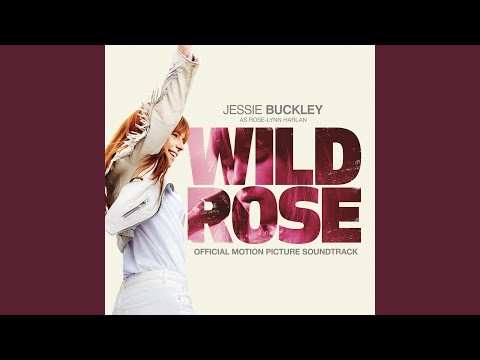
- Original artist: Wynonna Judd, with a later film performance popularized by Jessie Buckley.
- Songwriters: Angela Kaset and Doug Gill.
- Stage use: featured as an Act 1 family number in Wild Rose (jukebox musical, Edinburgh 2025).
- On screen: used in Wild Rose (film, 2018) during a key turning-point performance sequence.
This song opens like a parent hitting the mute button on the world. No news. No noise. Just the small, stubborn act of looking at your kids and choosing a different temperature for the room. It is written in plain talk, the kind you would hear at the kitchen counter when someone is trying to keep it together without making a speech about it.
The chorus is built from repetition, but not laziness. The phrase keeps coming back like a promise you have to practice out loud until you believe it. The lyric about "tender talkin'" and "sweet little nothings" is the clever hinge: those tiny, throwaway moments are framed as the real infrastructure of a family. I have heard plenty of songs chase big gestures. This one argues for the smaller ones, and it wins.
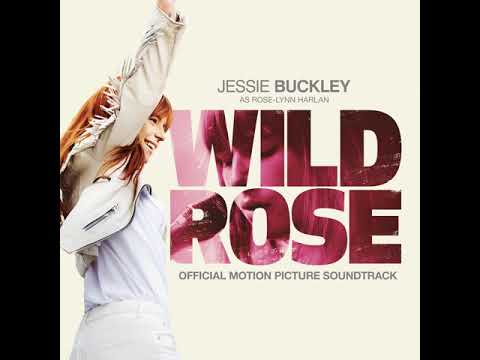
Wild Rose (2018) - film - diegetic. Performed as a spotlight scene that shifts how the audience reads Rose-Lynn, moving from bravado to something more exposed. The musical director for the film has described the staging as starting observationally, then pulling us into her inner world as instruments join in.
Wild Rose (2025) - stage musical - diegetic. Presented as a family-focused moment in Act 1, singled out by reviewers as one of the production's most moving numbers, with the children and family dynamics placed front and center.
- Key takeaway: the song treats peace as a decision, not a mood.
- Key takeaway: the hook lands because it is domestic, not abstract - TV off, kids close, breath steady.
- Key takeaway: in Wild Rose, the number functions as a character reveal, not a detour.
Creation History
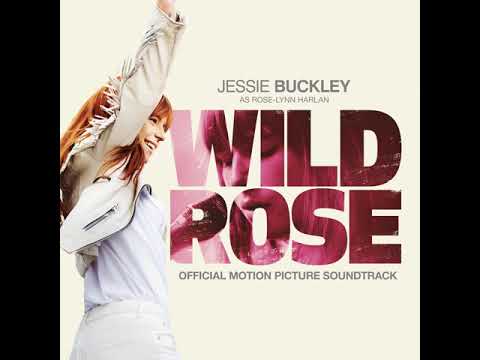
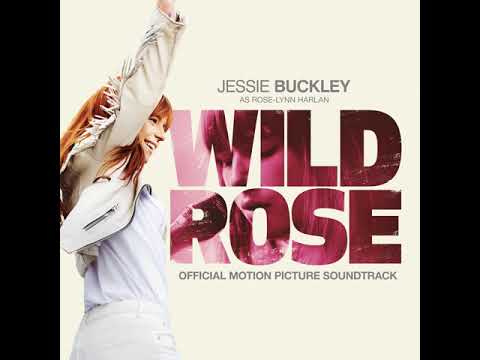
"Peace in This House" was first recorded and released by Wynonna in 2005, appearing on Her Story: Scenes from a Lifetime. The song later found a second life in Wild Rose, where Jessie Buckley performs it on the official motion picture soundtrack (2019), and where the performance is treated as a pivotal scene in the film's arc. In 2025, the track crossed into theatre as part of the Wild Rose jukebox musical that premiered at the Royal Lyceum Theatre in Edinburgh, directed by John Tiffany with a book by Nicole Taylor, weaving country selections into Rose-Lynn Harlan's story.
Lyricist Analysis
Kaset and Gill write like they are speaking to a real room. The verse lines lean on conversational stress patterns, with short commands and soft reassurance doing most of the work. That first line is a stage direction masquerading as lyric, and it sets the visual instantly.
The chorus uses repetition as a structural beam. Each return of the central promise resets the emotional stakes, and the internal rhyme and consonance in "tender talkin'" and "sweet little nothings" gives the hook a gentle swing without needing fancy wordplay.
There is also a subtle rhetorical trick: the lyric addresses "you and you and you," widening the embrace. It is not just one child, not just one person. It is a whole household being counted and protected, one by one.
Song Meaning and Annotations
Plot
A parent calls the children closer and turns away from the day's fear. The speaker names love directly, asks for patience and good behavior, and frames family peace as a shared project. The promise is repeated until it feels like a boundary drawn in chalk across the floor: whatever is outside, the household will try to stay kind inside.
Song Meaning
The core idea is protection through intimacy. The speaker cannot fix the world, but can control the tone of the home: less noise, more listening, more gentle speech. The lyric treats kindness as causality, insisting that "every good thing" starts inward and then radiates outward. According to Variety magazine's year-end piece on film music moments, the Wild Rose use of the track stands out as an especially affecting sequence, which fits the song's strength as a character window rather than background sentiment.
Annotations
Hey, kids, turn off the TV
No, I don't wanna watch the evening news
The opening is a refusal, but it is not ignorance. It is triage. The speaker is choosing the child's face over the broadcast, and the line implicitly admits how easily fear can be imported into a living room.
And let your mama look at you and you and you
And your beautiful faces
The repetition works like a headcount. Each "you" is a touch on the shoulder. The phrase "beautiful faces" is plain, almost old-fashioned, and that is why it hits. It is what a tired parent says when the room finally goes quiet.
Gonna be some tender talkin'
And some sweet little nothings
That add up to the somethings we can live without
This is the song's thesis in miniature. The "nothings" are the glue, and the "somethings" are the clutter. In other words: affection matters, and the rest can wait.
Style and emotional arc
Musically, the writing favors a steady, hymn-adjacent flow, built for phrasing and breath rather than vocal fireworks. The emotional arc moves from protective urgency to calm authority. It starts with the door bolted, and ends with the family sitting at the table again.
Technical Information (Quick Facts)
- Song: Peace in This House
- Artist: Wynonna Judd
- Featured: None
- Composer: Angela Kaset, Doug Gill
- Producer: Live and compilation release credits vary by edition
- Release Date: September 27, 2005
- Genre: Country
- Instruments: Lead vocal, acoustic guitar, keys, bass, drums, supporting strings and country-band textures (varies by version)
- Label: Major-label release for Her Story: Scenes from a Lifetime
- Mood: Protective, warm, resolute
- Length: 7:29 (noted for the compilation performance)
- Track #: Appears on Disc 2 of the compilation
- Language: English
- Album: Her Story: Scenes from a Lifetime
- Music style: Country ballad with gospel-leaning reassurance
- Poetic meter: Speech-rhythm with regular stress pulses in the chorus
Frequently Asked Questions
- Who wrote the song?
- It was written by Angela Kaset and Doug Gill.
- Which version is best known outside Wynonna's catalog?
- Many listeners know it through Jessie Buckley's performance tied to Wild Rose, where the number plays as a defining character moment.
- Why does the lyric start with turning off the TV?
- It establishes a boundary. The speaker chooses presence over panic, and that choice becomes the song's engine.
- What does "inside out" mean in the chorus?
- It frames goodness as something practiced at home first, then carried outward. The song treats private kindness as the seedbed for public decency.
- Is the song religious?
- It is spiritual in posture, but the text is practical. The faith on offer is belief in family habits: patience, listening, gentleness.
- How is it used in the 2025 stage musical?
- It appears as an Act 1 family-centered number in the Edinburgh premiere, singled out by reviewers for its impact.
- What is the central image?
- A parent taking a quiet inventory of what matters: faces, safety, and the tone of the room.
- Why does the chorus repeat so much?
- Because repetition turns hope into a practiced vow. It is the kind of line you say again when you are trying to mean it.
- Does the song have a message beyond family life?
- Yes. It implies that the quickest way to change a day is to change the way people speak to each other when nobody is watching.
Awards and Chart Positions
The song's most visible milestones are tied to Wynonna's broader release and to the film and stage contexts rather than to a standalone singles chart run. Wynonna's Her Story: Scenes from a Lifetime reached the upper tier of country album charts and received a Gold certification in the United States, which keeps the track in circulation for listeners discovering deep cuts through the compilation format.
| Item | Chart or certification | Peak / status | Notes |
|---|---|---|---|
| Her Story: Scenes from a Lifetime | US Billboard Top Country Albums | 2 | Compilation album containing the track |
| Her Story: Scenes from a Lifetime | US Billboard 200 | 25 | Broad chart peak for the set |
| Her Story: Scenes from a Lifetime | RIAA certification | Gold | US certification for the album |
Additional Info
- A music supervisor interview about Wild Rose describes how the film performance was staged to move from a simple, observed start into a fuller, more intimate sound world as instruments join the vocal.
- In a 2025 theatre review, the song is framed as a family number that sharpens the emotional core of the stage adaptation.
- Cover histories and discography databases list the writers consistently, which matters because the song is often associated with different performers across film and stage.
Key Contributors
| Entity | Role | Relationship (S-V-O) |
|---|---|---|
| Wynonna Judd | Recording artist | Wynonna recorded and released the song on a 2005 compilation. |
| Angela Kaset | Songwriter | Kaset co-wrote the song. |
| Doug Gill | Songwriter | Gill co-wrote the song. |
| Jessie Buckley | Film performer | Buckley performed the song for the Wild Rose motion picture soundtrack. |
| Nicole Taylor | Book writer | Taylor adapted the Wild Rose story for the stage. |
| John Tiffany | Director | Tiffany directed the 2025 Edinburgh premiere of the stage musical. |
| Royal Lyceum Theatre, Edinburgh | Venue | The Lyceum hosted the world premiere production in 2025. |
Sources
- Data verified via theatre coverage and production listings for the Edinburgh premiere of Wild Rose.
- Release and writer credits cross-checked using discography references and a covers database.
- Film-scene context referenced from a music supervisor interview and film-music criticism, including a Variety magazine roundup.