He'll Be Back Lyrics — Wild Rose
He'll Be Back Lyrics
It's not like it seems
Yeah, he left this morning
Tonight I've got my dreams and memories
He'll be back
He'll be back
If he's anything like his memory
He'll be back
Early morning kisses
Deep down hidden wishes
Old friends come to visit
That's how I remember him to be
He'll be back
He'll be back
If he's anything like his memory
He'll be back
He'll be back
He'll be back
If he's anything like his memory
He'll be back
Song Overview
Review and Highlights
Quick summary
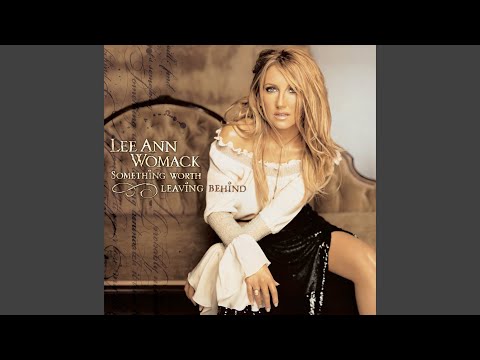
- Where it lives: Track 9 on Something Worth Leaving Behind (2002), a record aimed at country-pop radio without sanding down her voice.
- Who made it: Written by Hank Cochran, Red Lane, and Dale Dodson, recorded by Lee Ann Womack with Mark Wright listed among the track producers.
- What it does: A short, slow-burn denial ballad that keeps repeating the same promise until you start hearing the crack in it.
- Listening tip: Pay attention to how the chorus does not change the story - it just tightens the grip.
There are breakup songs that sprint to anger. This one chooses a different vice: calm certainty. The narrator is not begging, not bargaining, not even pleading with the room. She is simply telling you the story as if it is already solved. He left this morning. Tonight she has dreams and memories. Therefore, he will return. End of conversation.
That is the trick. The hook is a loop, and the loop is the character. Each repeat of the title line sounds like she is building a little wall out of syllables. It is a soft song, but it is not gentle. The melody sits low and steady, like somebody refusing to flinch.
One of the best outside takes on its emotional mechanics comes from the Los Angeles Times, which described the track as a respectable stab at capturing denial when a relationship collapses. That reads right: denial here is not loud. It is neat. It is almost polite.
Key takeaways
- Minimal story, maximum subtext: A few concrete images do the heavy lifting: morning departure, night-time memories, old friends visiting.
- Repetition as character writing: The chorus repeats because she cannot let the thought drift.
- Country craft in a pop frame: Plain-spoken lines, slow tempo, and a chorus built for recall.
Creation History
The recording appears on Lee Ann Womack's 2002 album Something Worth Leaving Behind, released on August 20, 2002. The track credits commonly list Hank Cochran, Red Lane, and Dale Dodson as the writers, with Mark Wright and Lee Ann Womack among the producers across the album's core tracks, including this one. The official audio upload distributed via Universal Music Group keeps the presentation straightforward: no storyline video, just the song doing what it was built to do - sit in the room and insist on its own version of the truth.
Lyricist Analysis
Metric and scansion: The lyric runs on conversational stress, not strict feet. Most lines land as short, breath-friendly statements, which fits the narrator's controlled tone. The chorus has a chant-like cadence where the repeated title line acts as its own downbeat, creating a locked-in feeling. You can also hear light anacrusis when the verse leans into "Yeah, he left this morning" - a small push that mimics a thought trying to sound casual.
Rhyme scheme and quality: The verses mostly avoid end-rhyme and rely on internal pairing (dreams-memories, kisses-wishes, visit-remember) rather than a tidy ABAB. The chorus uses identical rhyme by design: the same line repeats, then the conditional clause ("If he's anything like his memory") gives a thin rationale. That choice makes the hook believable as self-talk, not as a crafted punchline.
Phonetic texture and sound devices: Soft consonants dominate, which helps the denial feel smooth instead of jagged. Listen to the sibilants in "sorry", "seems", "dreams" and the breathy h sounds in "he", "hidden". The language is airy, like she is trying not to wake up the reality she is avoiding.
Prosodic match: The phrasing is economical. Lines end cleanly, leaving space after statements, which makes the narrator sound composed. The chorus sits comfortably on the pulse, so the repeated claim feels steady even when you suspect it is shaky underneath.
Structural function: There is no bridge to provide a new argument. The song refuses a twist. That lack of development is the point: denial does not progress, it circles.
Song Meaning and Annotations
Plot
A partner leaves in the morning. The narrator insists she is fine, leaning on dreams and memories as her night-time company. The chorus repeats a promise that he will return, supported by one fragile condition: if he is anything like the version she remembers. The second verse adds soft flashbulb images - kisses, wishes, old friends - and then the chorus returns unchanged, as if repeating it can make it true.
Song Meaning
The core idea is denial dressed up as faith. The narrator is not describing the man as he is. She is describing him as memory has preserved him, then using that preserved version as evidence that he will come back. The song becomes a portrait of how people rewrite uncertainty into certainty when they cannot bear the waiting.
Annotations
Don't feel sorry for me / It's not like it seems
Two quick lines that sound confident, but they also pre-empt judgment. She is controlling the narrative before anyone else can.
Yeah, he left this morning / Tonight I've got my dreams and memories
The timeline is stark: departure in daylight, coping at night. "Dreams and memories" are not replacements. They are placeholders she can hold without being contradicted.
He'll be back / If he's anything like his memory
This is the emotional hinge. The promise is not based on contact, plans, or apology. It is based on a curated mental picture. That conditional clause is a tell: she knows, somewhere in the background, that memory might be the only version she gets.
Early morning kisses / Deep down hidden wishes
These are intimate snapshots, but they are also safe ones. She picks images that cannot argue back. The tenderness becomes a tool to keep doubt out of the room.
Old friends come to visit / That's how I remember him to be
Notice the logic: community approval becomes character proof. If he was the kind of guy surrounded by friends, then surely he will do the right thing. It is a sweet thought, and it is also a dodge.
Driving rhythm and emotional arc
At around the high-60s BPM range, the tempo moves like slow footsteps. No dramatic lift arrives to rescue the narrator from her loop. The emotional arc is a flat line on purpose: she is keeping her voice steady so the story does not fall apart.
Culture and craft
The writing comes from seasoned country pens, and it shows in the restraint. It is not diary confession. It is stage-ready realism: short phrases, clear images, and a chorus that repeats like a nervous habit.
Technical Information (Quick Facts)
- Song: He'll Be Back
- Artist: Lee Ann Womack
- Featured: None
- Composer: Hank Cochran, Red Lane, Dale Dodson
- Producer: Mark Wright, Lee Ann Womack
- Release Date: August 20, 2002
- Genre: Country pop
- Instruments: Lead vocal, acoustic guitar, electric guitar, bass, drums, piano, steel guitar, fiddle, percussion
- Label: MCA Nashville
- Mood: Calm denial, late-night resolve
- Length: 2:47
- Track #: 9
- Language: English
- Album (if any): Something Worth Leaving Behind (2002)
- Music style: Slow country-pop ballad with a looped chorus
- Poetic meter: Speech-rhythm phrasing with a chant-like chorus
Frequently Asked Questions
- Who produced "He'll Be Back"?
- Album production credits list Mark Wright among the producers for the tracks that include this song, with Lee Ann Womack also credited as a producer across the album's main track set.
- When did Lee Ann Womack release the track?
- It was released as part of Something Worth Leaving Behind on August 20, 2002.
- Who wrote the song?
- The writers are credited as Hank Cochran, Red Lane, and Dale Dodson.
- Is it a single?
- It is best documented as an album track rather than a main radio single. The album's promoted singles were different songs.
- What is the main theme?
- Denial that masquerades as certainty. The narrator uses memory as evidence, even though memory cannot make promises.
- Why is the chorus repeated without changes?
- Because the narrator is trying to convince herself. The lack of new information is the emotional point.
- How long is the recording?
- Common listings place it at about 2 minutes and 47 seconds, which makes the repetition feel even more concentrated.
- Are there notable covers?
- Yes. A known rewrite-cover is "She'll Be Back" by Jamey Johnson and Elvis Costello, which flips the perspective while keeping the core idea of return.
- What kind of vocal approach suits the song?
- Under-sung and steady. The narrator sounds most believable when she is composed, as if she is refusing to let the room see her panic.
Additional Info
- Robert Christgau singled out this track as a choice cut in his Consumer Guide notes on the album, a small but telling endorsement for a deep cut.
- Cover activity includes "She'll Be Back" by Jamey Johnson and Elvis Costello, documented in cover-tracking databases.
- The songwriting trio spans eras: Hank Cochran and Red Lane carry classic country lineage, while Dale Dodson connects the song to later Nashville writing circles.
Key Contributors
| Entity | Type | Relationship (S-V-O) |
|---|---|---|
| Lee Ann Womack | Person | Lee Ann Womack recorded the song for her 2002 album. |
| Mark Wright | Person | Mark Wright produced the recording as part of the album's core track set. |
| Hank Cochran | Person | Hank Cochran co-wrote the composition. |
| Red Lane | Person | Red Lane co-wrote the composition. |
| Dale Dodson | Person | Dale Dodson co-wrote the composition. |
| MCA Nashville | Organization | MCA Nashville released the album containing the track. |
| Something Worth Leaving Behind | CreativeWork | The album includes the song as track 9. |
Sources
Data verified via Apple Music track and album listings, Wikipedia album production notes, cover-tracking references (WhoSampled, SecondHandSongs), and a Los Angeles Times critical mention. Video distribution details are reflected in the official audio upload metadata provided by Universal Music Group on YouTube.
How to Sing He'll Be Back
Tempo listings cluster around 68 to 69 BPM in 4/4, and practical practice notes often place it in a comfortable mid-range key for a warm, steady delivery. The song does not ask for fireworks. It asks for control.
- Tempo first: Set a metronome at 68 BPM and speak the lyric in time. Make it sound like conversation, not recital.
- Diction: Keep the t and k sounds clean in phrases like "Don't feel sorry" and "Tonight I've got". Soft does not mean blurry.
- Breathing: Take air before the chorus. The repeated title line needs to sound unforced, like she has said it a hundred times.
- Flow and rhythm: Let the verse sit slightly behind the beat for intimacy, then land the chorus squarely on the pulse to make the promise feel firm.
- Accents: Lean into the conditional line "If he's anything like his memory". That is where the doubt peeks out.
- Ensemble and doubles: If you add backing vocals, keep them light. A thick stack can turn the denial into a singalong, which changes the story.
- Mic technique: Stay close on the verses and ease back on the chorus to avoid overloading. The song works best when it sounds like you are in the room with someone.
- Pitfalls: Do not oversell the sadness. The narrator is trying to look composed. Play that. It will hurt more.