Country Girl Lyrics — Wild Rose
Country Girl Lyrics
Never get too big, never get too heavy
Never get too cool 'cause you stop playin' the tune
Oh yeah, what can a poor boy do?
Better go back to your mama,
She'll take care of you
[Verse 2]
Lost your wife, lost your son
Stay out drinkin' till the mornin' comes
Oh yeah, what can a poor boy do?
Better go back to your mama,
She'll take care of you
[Chorus]
Country girl, take my hand
Lead me through this diseased land
I am tired, I am weak, I am worn
I have stole, I have sinned,
Oh, my soul is unclean
Country girl, got to keep on keepin' on, yeah
[Verse 3]
Crazy women mess your head
Wake up drunk and beaten in some strange bed
Oh yeah, what can a poor boy do?
Better go back to your mama,
She'll take care of you
[Chorus]
Country girl, take my hand
Lead me through this diseased land
I am tired, I am weak, I am worn
I have stole, I have sinned,
Oh, my soul is unclean
Country girl, got to keep on keepin' on, yeah
[Post-Chorus]
Got to keep on keepin' on
Got to keep on, keep strong
Got to keep on keepin' on
When you
Got the riot city blues
[Verse 4]
One thing I have to say before I have to go
Be careful with your seed,
You will reap just what you sow
Oh yeah, what can a poor boy do?
What can I do?
Better go back to your mama,
She'll take care of you
One last time
[Chorus]
Country girl, take my hand
Lead me through this diseased land
I am tired, I am weak, I am worn
I have stole, I have sinned,
Oh, my soul is unclean
Country girl, got to keep on keepin' on
Country girl, take my hand
Lead me through this diseased land
I am tired, I am weak, I am worn
I have stole, I have sinned,
Oh, my soul is unclean
Country girl, got to keep on keepin' on
Country girl, got to keep on keepin' on
Song Overview
Review and Highlights
Quick summary
- What it is: A 2006 single by Primal Scream, produced by Youth, built for loud rooms and rough mornings.
- Where it appears: Reframed as a country-leaning performance in the 2019 film Wild Rose (Jessie Buckley) and carried into the 2025 Edinburgh stage jukebox musical.
- Why people remember it: The chorus is a hand-on-shoulder pep talk that still sounds like a confession.
- Signature move: Verses that wag a finger, then the chorus drops the mask and asks for help.

Wild Rose (2025) - stage jukebox musical - not diegetic. It is used as a barnstorming opening number at the Royal Lyceum Theatre production in Edinburgh, landing like a starter pistol for the story's first act energy. The choice matters because it paints the main character's self-myth as big, loud, and slightly reckless before the consequences start adding up.
This track has always been a little two-faced, and that is the point. The verses sound like an older friend at last call: do not get too proud, do not get too messy, do not mistake a costume for a life. Then the chorus flips into something closer to prayer. The hook is not romantic. It is survival.
I have a soft spot for songs that can be shouted without losing their meaning. This one does that trick. It keeps the guitar and rhythm pushing forward while the narrator admits he is tired, weak, worn, and carrying his own dirt. You can dance to it and still feel like you are being read for your sins. According to Official Charts Company data, the single became one of the band's biggest UK hits, and you can hear why: it is built to travel.
Key takeaways
- Hook with a bruise: The chorus sounds uplifting, but the words are about being compromised and needing a guide.
- Moral ledger in plain clothes: The song keeps listing losses and mistakes without fancy metaphors.
- Forward motion: The post-chorus mantra works like a metronome for endurance.
Creation History
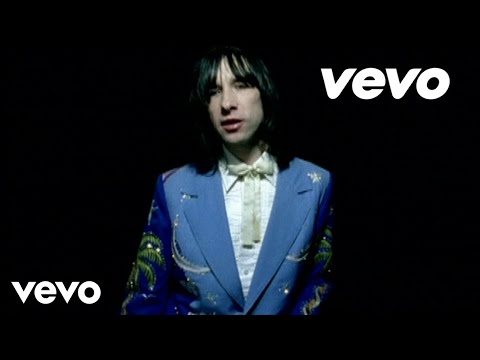
Primal Scream released the song as the lead single from Riot City Blues in May 2006, with Youth producing a version that leans into a tight, driving rock groove while letting the vocal sit right up front. The music video, directed by Jonas Akerlund, leans into trash-glam chaos and pushes the character of the "country girl" into a cinematic, late-night spiral. Years later, the track took on a second life through Jessie Buckley's cover tied to the Wild Rose project, then reached the stage again in the 2025 Edinburgh musical adaptation, where reviews describe it as a big opening jolt that sets the tone fast.
Lyricist Analysis
Metric and scansion: This is speech-rhythm writing with a sturdy pulse underneath it. The verses land like bar-room advice in clipped phrases, with little rushes at the front of lines (anacrusis) when the narrator barrels into the warning. The chorus tightens into more even stresses, so the plea feels steadier than the chaos described.
Rhyme scheme and quality: The verses mostly dodge neat end rhymes and lean on repetition instead: "Oh yeah, what can a poor boy do?" returns like a stamped refrain, then the "mama" line answers it. The chorus uses internal echoes (hand-land, weak-unclean) rather than perfect rhymes, which keeps it gritty. It does not sound like a polished diary. It sounds like somebody trying to talk straight while the band keeps moving.
Phonetic texture: Lots of plosives and hard consonants give the lines punch: "big", "heavy", "cool", "stop", "tune". The repeated "k" and "g" sounds make the warnings feel physical. When the chorus arrives, the vowel shapes open up ("tired", "weak", "worn"), which helps the melody feel like a release valve.
Prosodic match: The chorus aligns stressed words with the musical downbeats in a way that makes the confession land clearly even in a loud mix. The post-chorus mantra is breath-friendly, short, and repeatable, which turns exhaustion into something you can chant through.
Structural function: The verses keep showing different self-inflicted disasters, almost like a highlight reel of bad decisions. The chorus breaks that loop with one consistent ask: take my hand, get me through. That contrast is the whole engine of the song.
Song Meaning and Annotations

Plot
A narrator lists the messes he has made or witnessed: pride, addiction, broken relationships, nights that blur into mornings, and the kind of advice you only give after the damage is done. Each verse ends with the same blunt prescription: go back to your mama, she will take care of you. Then the chorus confesses what the verses circle around: he feels worn down and morally compromised, and he wants a steady hand to lead him through a "diseased land". The post-chorus turns into pure stamina - keep on keeping on - because there is no magic fix, only motion.
Song Meaning
The track reads like a sinner's pep talk that refuses to pretend it is clean. On the surface, it is a rousing singalong about pushing forward. Underneath, it is about accountability: the narrator admits he has stolen and sinned, and he cannot talk his way out of it. The "country girl" is less a specific person than a symbol of grounding - someone (or something) rooted enough to guide him when the city feels rotten and his own judgment is shot. It is why the chorus hits so hard in performance contexts like Wild Rose: it sounds like a crowd-pleaser, but it plays as a confession you can dance to.
Annotations
Never get too big, never get too heavy
This opens with body-and-ego language. "Big" and "heavy" are not just physical - they are the weight of reputation, addiction, and arrogance. The warning feels self-directed, like the narrator has already learned the lesson the worst way.
Never get too cool 'cause you stop playin' the tune
The line mocks the pose. "Too cool" means you stop doing the work. In a band context, it is about losing the groove. In a life context, it is about checking out while pretending you are fine.
Lost your wife, lost your son - stay out drinkin' till the mornin' comes
It is brutally plain. No poetic fog. The song treats grief and avoidance as neighbors: loss happens, then the coping strategy is to disappear into night until the sun forces a reset.
Country girl, take my hand - lead me through this diseased land
The chorus turns outward. "Diseased land" can be read as the city, the culture, or the narrator's own habits. The hand-off is the key: he is asking for guidance because he does not trust himself anymore.
I have stole, I have sinned, oh, my soul is unclean
The confession is old-school language dropped into a modern rock stomp. That contrast makes it sting. It is not a metaphor about feeling bad. It is the narrator naming guilt directly.
Be careful with your seed, you will reap just what you sow
The song closes by leaning on a proverb. It widens the lens from one guy's mistakes to a general warning: consequences are real, and you do not get to opt out.

Genre and groove
It is rock with a country posture: steady 4/4 drive, a riff that keeps the wheels turning, and a chorus designed for group singing. That blend is exactly why it ports so easily into Wild Rose, where the story lives in the overlap between Glasgow grit and Nashville dream-making.
Emotional arc
The verses act tough, almost jokey, like somebody making light of disasters because the truth is too raw. The chorus is where the mask slips. By the post-chorus, the song becomes a marching chant: keep going, even if you are not proud of how you got here.
Cultural touchpoints
The track has a documented history of media use beyond the band context, including UK broadcast spots around major sports coverage in the mid-2000s. It also gained renewed visibility through Jessie Buckley's performance tied to Wild Rose, where critics noted how the film kicks off with that cover energy before moving into harder character territory.
Technical Information (Quick Facts)
- Song: Country Girl
- Artist: Primal Scream
- Featured: None
- Composer: Primal Scream (band credit)
- Producer: Youth
- Release Date: May 22, 2006
- Genre: Alternative rock, rock
- Instruments: Lead vocal, electric guitar, bass, drums
- Label: Columbia
- Mood: Defiant, worn-out, rallying
- Length: 4:30
- Track #: Lead single from Riot City Blues
- Language: English
- Album (if any): Riot City Blues (2006)
- Music style: Driving rock stomp with country attitude
- Poetic meter: Conversational speech-rhythm with repeated refrain hooks
Frequently Asked Questions
- Is this a Primal Scream original or a cover?
- It is a Primal Scream original, credited to the band as songwriters and released as a 2006 single tied to Riot City Blues.
- Why does the chorus feel uplifting if the words are so grim?
- The music pushes forward like a stomp-along, but the lyric is a confession. That clash lets audiences sing it as a rally while still hearing the guilt underneath.
- What does "diseased land" point to?
- It can read as the city, the culture, or the narrator's own habits. The phrase stays broad on purpose so the chorus can fit different scenes and stages.
- Who is the "country girl" supposed to be?
- Less a character with a biography, more a stabilizing force. The narrator wants someone grounded enough to guide him when his judgment is shot.
- Why does the song keep returning to "go back to your mama"?
- It is the bluntest image of care and consequence in the lyric. When everything falls apart, the narrator points to home as the last safety net.
- How did the track connect to Wild Rose?
- Jessie Buckley recorded a cover associated with the film's music campaign and soundtrack, and the Wild Rose stage musical uses the song prominently as an opener in reviews and interviews.
- Was the video meant to be provocative?
- Yes, the Jonas Akerlund-directed clip is staged like a spiraling night out, pushing the "country girl" persona into neon chaos rather than wholesome nostalgia.
- What is the core moral of the final verse?
- Actions have consequences. The proverb about seed and harvest lands as the narrator's last warning before the song loops back into the chorus.
- Why does the post-chorus repeat "keep on keepin' on" so much?
- Repetition turns the line into a tool, not a slogan. It is what you say when you have run out of clever explanations.
- Is the Jessie Buckley version musically different?
- It leans more directly into country phrasing and performance framing, built for narrative context rather than a rock video atmosphere.
Awards and Chart Positions
On the UK charts, the single reached a top-five peak on the main singles listing, and it also charted strongly in Scotland. It later received a Silver certification in the United Kingdom, reflecting sustained sales and streaming.
| Metric | Result | Year |
|---|---|---|
| UK Singles Chart peak | 5 | 2006 |
| Scotland Singles peak | 3 | 2006 |
| Sweden peak | 47 | 2006 |
| UK year-end position | 106 | 2006 |
| UK certification | Silver (BPI) | 2000s |
Additional Info
- The track has documented broadcast usage in UK sports coverage in 2006, which fits its big-chorus, stadium-ready momentum.
- The Wild Rose ecosystem helped reframe the song as character storytelling, not just a rock single, with critics describing it as an early jolt of energy in the film and a big opener on stage.
- Promonews highlighted the Jessie Buckley video as a performance-led piece directed by Libby Burke Wilde, built around screen presence and voice rather than plot-heavy visuals.
Key Contributors
| Entity | Type | Relationship (S-V-O) |
|---|---|---|
| Primal Scream | MusicGroup | Primal Scream wrote and recorded the song. |
| Youth | Person | Youth produced the studio single. |
| Jonas Akerlund | Person | Jonas Akerlund directed the music video. |
| Jessie Buckley | Person | Jessie Buckley recorded a cover tied to Wild Rose. |
| Nicole Taylor | Person | Nicole Taylor wrote the book for the stage musical adaptation. |
| Royal Lyceum Theatre, Edinburgh | Place | The Lyceum hosted the 2025 world premiere production. |
| Wild Rose | CreativeWork | Wild Rose used the song in film and stage contexts. |
Sources
Data verified via Official Charts Company chart pages, reference summaries from Wikipedia, production notes and reviews in The List magazine and theatre review outlets, and music-video industry coverage in Promonews. Arrangement references for tempo and key were cross-checked using public music-database listings (Tunebat and SongBPM). For voice range, an arrangement listing in Musicnotes was used as a practical reference point.
How to Sing Country Girl
The studio single is commonly listed around 124 BPM, often tagged in F minor, with published arrangement listings placing the vocal span roughly from F4 up to A5. That range is not wild on paper, but the song asks for stamina and bite.
- Tempo first: Practice the chorus at 90 BPM, then climb to performance speed. If you start at full pace, you will bark the verses and run out of breath early.
- Diction: Keep consonants sharp on lines like "Never get too big" without over-clipping the vowels. You want edge, not a parody of rock shouting.
- Breathing: Treat each verse as two short bursts. Grab air before the repeated question line so the refrain stays steady, not rushed.
- Flow and rhythm: Verses can sit slightly behind the beat for attitude. The chorus should lock to the pulse so the plea sounds certain.
- Accents: Hit the stressed words in the chorus ("hand", "lead", "tired", "weak", "worn") and let the rest ride. The meaning lives there.
- Ensemble and doubles: If you have backing singers, stack the "keep on keepin' on" line. It turns the mantra into a crowd moment.
- Mic technique: Pull back on the chorus peaks. Stay close on the verses for intimacy, then give the hook air so it opens up.
- Pitfalls: Do not oversing the guilt lines. The power comes from understatement. Say it like you mean it, then let the band do the lifting.