

Welcome, Christmas (Reprise) Lyrics
Welcome, Christmas (Reprise)
Fah who for-aze!Dah who dor-aze!
Welcome Christmas,
Come this way!
Fah who for-aze!
Dah who dor-aze!
Welcome Christmas,
Christmas Day.
Welcome, Welcome
Fah who rah-moose
Welcome, Welcome
Dah who dah-moose
Christmas day is in our grasp
So long as we have hands to clasp
Fah who for-aze!
Dah who for-aze!
Welcome Christmas
Bring your cheer
Fah who for-aze!
Dah who dor-aze!
Welcome all Who's
Far and near
Welcome Christmas, fah who rah-moose
Welcome Christmas, dah who dah-moose
Christmas day will always be
Just so long as we have we
Fah who for-aze
Dah who dor-aze
Welcome Christmas
Bring your light
Welcome Christmas
Fah who rah-moose!
Welcome Christmas
Dah who dah-moose!
Welcome Christmas
While we stand
Heart to heart
And hand in hand
Fah who for-aze
Dah who dor-aze
Welcome welcome
Christmas
Christmas
Day
Song Overview
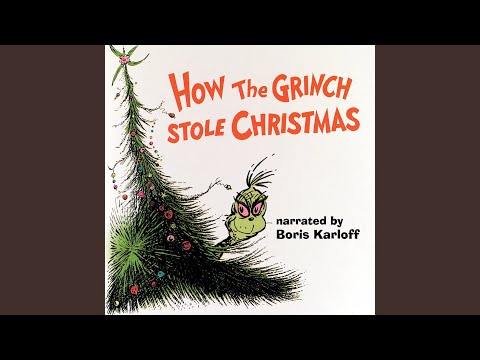
Review and Highlights
Quick summary
- Work: A short, chant-forward reprise from the 1966 animated TV special soundtrack, built to land the story's turning point in under three minutes.
- Credits: Lyrics by Theodore Geisel (Dr. Seuss) with music by Albert Hague, performed on record by Boris Karloff with the MGM Studio Orchestra and MGM Studio Chorus.
- Function: The Whos' communal singing is the trigger that snaps the Grinch out of his plan - the refrain returns like a moral echo.
- Sound: A faux-carol hook ("Fah who foraze") paired with simple, bright harmony and a steady pulse that feels like hands clasping in time.
- Later life: The stage adaptation in the 2010s kept the hook alive, folding it into a longer cast-recording track list.
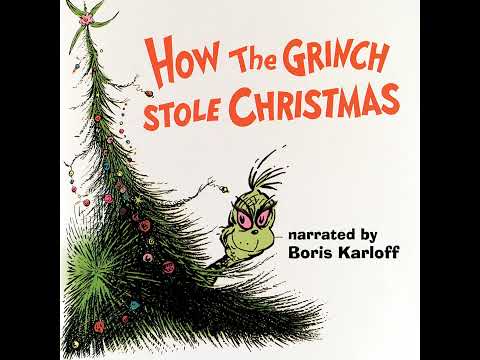
Dr. Seuss' How the Grinch Stole Christmas! (1966) - original TV soundtrack track - mostly diegetic. The Whos gather to sing after the theft, and the reprise rides that moment of public togetherness; it is the sound the Grinch cannot silence. In the broadcast, it lands late in the 24-minute runtime, right as the story shifts from prank to revelation.
As a listening experience, this reprise is a neat trick: it is child-simple on the surface, but architected like a hinge. The nonsense syllables are not a gag so much as a rhythmic tool - they keep the choir moving like a single body. The English lines then slide in with the message: Christmas is not the stuff, it is the people. I have heard plenty of holiday songs try to sell that idea; few deliver it with this much snap.
Key Takeaways: the hook works like a mantra; the chorus-and-orchestra blend keeps the tone ceremonial rather than showy; and the reprise format is story-first, trimming any extra verse that might dilute the punch.
Creation History
The piece comes from the collaboration that powered the 1966 TV special: Geisel supplied the Seussian wordplay, Hague wrote tunes that could sit comfortably inside a half-hour broadcast, and the MGM studio forces gave it a polished, cinematic choral sheen. The special premiered on CBS on December 18, 1966, and the soundtrack framing - narration, chorus, orchestral cues - helped turn a short TV event into something you could replay like a seasonal record.
Song Meaning and Annotations
Plot
The Grinch, irritated by Whoville's annual noise, steals the decorations and gifts to stop the holiday from arriving. He expects silence. Instead, the town gathers anyway - no props, no packages, just voices and closeness. That refusal to break is what flips the narrative: the Grinch hears a community behaving like a community, and his cynicism finally runs out of road.
Song Meaning
The reprise is the story's proof-of-concept. It is not arguing with the Grinch in a courtroom way; it is demonstrating a living alternative. The repeated welcome is both invitation and boundary: the holiday comes "this way" because people choose it, not because commerce delivers it. The chant syllables keep it from sounding preachy, turning the moral into a singable ritual.
Annotations
-
Fah who foraze! Dah who doraze!
Those syllables feel like a children's carol that never existed, and that is the point. They dodge specific theology and land on communal rhythm - a made-up language that still communicates, because everybody is in the same tempo.
-
Christmas Day is in our grasp! So long as we have hands to clasp!
Geisel turns a physical image into a thesis statement. "Grasp" is literal (hands) and social (holding on to each other). It is also a sly bit of staging direction: sing this while linking arms, and the song becomes choreography.
-
Christmas Day will always be! Just as long as we have we!
That last word is the masterstroke. It refuses the singular. No "me," no hero pose. Just a collective pronoun, slightly awkward on purpose, like a child insisting on the right lesson.
Musically, the reprise sits in that mid-century TV sweet spot: light orchestration, choral clarity, and a cadence that resolves cleanly. The genre fusion is subtle but real - part Christmas hymn, part cartoon chorus, part stage-ensemble cue. The driving rhythm is not fast; it is steady, almost processional, and that steadiness is what makes the Grinch's silence feel powerless.
Language and key phrases
"Welcome" is not just hospitality here - it is permission. The Whos are authorizing joy without waiting for the "right" conditions. The nonsense syllables act like a frame drum made of consonants, letting even very young singers participate before they can parse the meaning.
Symbols and emotional arc
The clasped-hands image is the symbol that matters: connection as infrastructure. The arc moves from insistence ("Welcome") to certainty ("will always be") and ends with the picture of bodies aligned - "arm to arm and hand to hand" - a tableau that does more narrative work than a dozen extra lines could. As stated in a Television Academy retrospective on the special, the 1966 broadcast was designed as a musical half-hour with a warm-hearted turn; the reprise is the pivot that earns that turn.
Technical Information
- Artist: Boris Karloff (with MGM Studio Orchestra and MGM Studio Chorus)
- Featured: MGM Studio Chorus
- Composer: Albert Hague
- Producer: Credited producers for the TV special include Chuck Jones and Theodore Geisel (Dr. Seuss)
- Release Date: December 18, 1966
- Genre: Pop (holiday soundtrack tradition)
- Instruments: Studio orchestra, mixed choir, narration-led phrasing
- Label: MGM-related studio soundtrack release (platform listings credit the original TV soundtrack package)
- Mood: Communal, bright, ceremonial
- Length: Short reprise form (varies slightly by release and platform)
- Track #: 5 (Original TV soundtrack sequence)
- Language: English with invented syllables
- Album (if any): Dr. Seuss' How The Grinch Stole Christmas! (Original TV Soundtrack)
- Music style: Choral carol with cartoon-score orchestration
- Poetic meter: Accentual, speech-driven rhymes with chant refrains
Questions and Answers
- Who wrote the song?
- The lyric voice traces to Theodore Geisel (Dr. Seuss), with Albert Hague credited for the music and melodic shaping that makes the Seussian phrasing singable.
- When did it first arrive to audiences?
- The TV special premiered on December 18, 1966, and platform listings for the original soundtrack track use that same date for the recording's release context.
- Who is actually performing on the classic recording?
- Boris Karloff fronts the package as narrator-voice star, with the MGM Studio Chorus carrying the communal singing and the MGM Studio Orchestra supplying the studio gloss.
- Why does it use nonsense words instead of a straight hymn?
- The invented syllables act like a universal hook: easy to sing, hard to argue with, and free of specific doctrine. It turns meaning into rhythm-first participation.
- Is it a standalone pop single?
- Not in the modern sense. It behaves like a soundtrack cue: designed to land inside a scene, then replayed as part of an album package rather than pushed as a chart vehicle.
- What is the dramatic job of the reprise?
- It is the moral hinge. The first statement introduces the ritual; the reprise proves the ritual survives the Grinch's sabotage, which forces his change of heart to feel earned.
- How does the chorus writing help the story?
- The lines are short, repetitive, and built for many voices, so the town sounds unified. That unity is the thing the Grinch cannot steal, and the arrangement makes you hear it.
- Did later adaptations keep this piece?
- Yes. The touring stage musical issued a world premiere cast recording in 2013 that includes "Welcome, Christmas (Reprise)" on its track list, extending the material into a longer theatrical score.
- What is the key phrase that sums up the message?
- "So long as we have hands to clasp" says it cleanly: the holiday is treated as a social practice, not an inventory list.
Awards and Chart Positions
While the track itself was not built for pop charts, the Grinch audio release associated with Boris Karloff earned major industry recognition. According to GRAMMY.com, Karloff received a GRAMMY for Best Recording for Children for "Dr. Seuss: How The Grinch Stole Christmas," tying the soundtrack package to a formal award history.
| Type | Item | Result | Date / Period |
|---|---|---|---|
| Award | GRMMY - Best Recording for Children | Win (Boris Karloff, for the Grinch recording package) | 10th Annual GRAMMY Awards era |
| Broadcast ranking | Nielsen performance of the 1966 TV special | Ranked No. 6 for the early December 1966 period | December 5-18, 1966 window |
| Broadcast ranking | Nielsen performance one year later | Ranked No. 2 for the early December 1967 period | December 4-17, 1967 window |
Additional Info
The reprise has enjoyed an unusual second life: it is short enough to feel like a tag, but distinctive enough to survive format changes. The 2013 stage cast recording marketed as a world premiere release lists "Welcome, Christmas (Reprise)" among its tracks, showing how Hague's melodic DNA was treated as canon even when newer songs were added for theatrical pacing.
One detail I always liked: the lyric "in our grasp" is doing double duty. It is a moral claim, sure, but it is also stagecraft - a reminder to the performers (and to the audience at home) that this is about bodies in a room, not ornaments in a box. According to Playbill coverage of the cast album release, the stage version explicitly positions the familiar songs from the animated special as anchors inside the larger musical.
Key Contributors
| Entity | Type | Relationship (S-V-O) |
|---|---|---|
| Boris Karloff | Person | Boris Karloff performs the vocal-narrative lead on the original TV soundtrack recording. |
| Theodore Geisel (Dr. Seuss) | Person | Theodore Geisel writes the lyrics and co-produces the 1966 TV special. |
| Albert Hague | Person | Albert Hague composes the songs for the 1966 TV special, including this reprise. |
| MGM Studio Chorus | Organization | MGM Studio Chorus performs the communal singing that carries the refrain. |
| MGM Studio Orchestra | Organization | MGM Studio Orchestra provides the orchestral bed that frames the chorus. |
| Chuck Jones | Person | Chuck Jones directs and co-produces the animated TV special that contextualizes the song. |
| How the Grinch Stole Christmas! (TV special) | Work | The TV special uses the song as a diegetic choral moment that triggers the plot turn. |
| Dr. Seuss' How The Grinch Stole Christmas! The Musical (World Premiere Cast Recording) | Work | The stage cast recording includes "Welcome, Christmas (Reprise)" as a later adaptation track. |
Sources: Apple Music track listing for the original TV soundtrack, Wikipedia entry for the 1966 TV special, GRAMMY.com artist and awards database, Playbill report on the 2013 cast album release, PR Newswire announcement of the world premiere cast recording