

Welcome, Christmas Lyrics
Welcome, Christmas
Fah who for-aze!Dah who dor-aze!
Welcome Christmas,
Come this way!
Fah who for-aze!
Dah who dor-aze!
Welcome Christmas,
Christmas Day.
Welcome, Welcome
Fah who rah-moose
Welcome, Welcome
Dah who dah-moose
Christmas day is in our grasp
So long as we have hands to clasp
Fah who for-aze!
Dah who dor-aze!
Welcome, welcome Christmas
Welcome, welcome Christmas
Day
Song Overview
Some holiday songs arrive like a wrapped gift. This one arrives like a circle of hands. First heard in the 1966 animated TV special tied to How the Grinch Stole Christmas, the tune is built to be sung by a town, not a soloist: short lines, choral responses, and a melody that keeps stepping forward as if it is ushering people into the room. I have heard flashier seasonal numbers, but few that work so cleanly as narrative music.
Review and Highlights
Quick summary
- Written for the 1966 Grinch TV special, with lyrics by Dr. Seuss and music by Albert Hague.
- Performed in-story as a communal carol by the Whos, with a studio soundtrack version credited to Boris Karloff alongside orchestra and chorus.
- Heard as an opening welcome and later as a return-point when the Grinch realizes the celebration continues without gifts.
- The song and its theme have resurfaced in later Grinch adaptations and in choir culture through widely used arrangements.
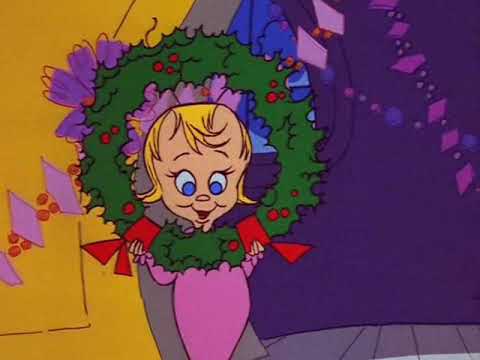
How the Grinch Stole Christmas! (1966) - animated TV special - diegetic. Opening chorus at the start of the shared clip (0:00-1:30) sets Whoville as a place where singing is civic behavior, not decoration. Later, the melody returns as the moral pivot: the town sings anyway, and the Grinch has to listen. In circulating finale clips, the reprise is the hinge that turns mockery into belonging (0:00-2:30). The placement matters because the number does not argue with him - it simply keeps going, like a door left unlocked.
How the Grinch Stole Christmas (2000) - film - diegetic. In a widely shared scene upload, Whoville gathers and sings after the theft (0:00-2:15). On screen, the tune functions as a public test of values: are they still a community if the props vanish?
The Grinch (2018) - animated film - diegetic. The story again stages the town joining in song after the Grinch steals the material trappings, and soundtrack listings document a cue titled with the song name. In this version, the moment is brisk, almost like a quote, but the point lands: the celebration is not a receipt for purchases.
The writing is deceptively tight. Hague keeps the melody in choral-friendly steps, then lets Seuss do the heavy lifting with rhyme that feels like a playground chant. That is not a put-down. It is craft. When the chorus lands on the clasped-hands couplet, the song turns physical. You can picture the staging without seeing it: people closing the distance between them.
There is also a sly piece of musical theater logic here. A villain can ignore dialogue, but it is harder to ignore a town singing in unison. The number is built as a sonic wall. Once you have written that wall, the plot can crash into it, and the character has to change or break.
Creation History
The song was created for the Chuck Jones-led TV special of 1966, with Seuss handling the words and Hague composing the songs, backed by orchestral scoring and choral forces typical of mid-century network animation. The recorded soundtrack LP followed the broadcast era logic: package the story, songs, and narration for the living room turntable, with Karloff prominently billed as the voice guiding the tale. According to the Television Academy, the special is a case study in how a short-format animation could still feel like an event - music doing as much narrative work as the drawings.
Song Meaning and Annotations
Plot
In the Grinch story, Whoville keeps preparing for the holiday while the Grinch plots to stop it. The townspeople gather and sing, and the music reaches the Grinch in his isolation. When he later steals the gifts and decorations, the town sings again. The shock is not that they sing well, but that they sing at all. The song marks the moment the narrative stops treating Christmas as inventory and starts treating it as practice.
Song Meaning
The message is plain, but the delivery is clever: welcome the day by welcoming each other. The tune is less a sermon than a ritual. It insists that the holiday exists as long as the community acts like a community. The mood moves from bright pageantry to something sturdier - a calm, collective insistence that the point is togetherness, not proof of purchase.
Annotations
"The opening nonsense syllables are designed to echo a classic carol texture, borrowing the feel of Latin-liturgical sound without using real Latin."
That trick is pure Seuss: a wink at tradition that still sounds old enough to be taken seriously. It also makes the chorus instantly recognizable, even if you only catch the rhythm of the words.
Listen to how the song fuses childlike sing-song with formal choral shape. That fusion is the engine. It is not a hymn, not a pop single, not strictly a kids tune, but it borrows a little from each. The driving rhythm keeps the phrases marching forward, and the harmony is simple enough for group voices to lock in quickly. The arc is not about a soloist growing in intensity; it is about a crowd finding a shared center.
Key phrases and symbols
The clasped-hands line is the core symbol: physical connection as proof of meaning. Even a tiny lyric fragment like "hands to clasp" functions as staging, not just language. The nonsense syllables act like a bell-ringer: they signal ceremony and memory more than literal semantics.
Historical and cultural touchpoints
Mid-century American TV specials often treated songs as narrative punctuation: short numbers that could be replayed, remembered, and repackaged. This one became a portable scene: stage choirs, school concerts, and later screen versions keep reviving it because the structure is built for ensemble. According to the Recording Academy, the broader Grinch audio package even crossed into awards territory, which tells you how seriously these "kids" recordings were taken when the craft was strong.
Technical Information
- Artist: Boris Karloff, Dr. Seuss
- Featured: MGM Studio Orchestra, MGM Studio Chorus (common digital credits)
- Composer: Albert Hague
- Producer: Dr. Seuss (credited on soundtrack releases)
- Release Date: December 18, 1966
- Genre: Christmas, Children's, Traditional pop
- Instruments: Choir, orchestra, light percussion
- Label: MGM Records (original soundtrack LP); later reissues credited to Mercury and related catalog holders
- Mood: Communal, bright, steady
- Length: 1:41 (common digital soundtrack listing)
- Track #: 2 (on the 1966 soundtrack sequence)
- Language: English
- Album: How the Grinch Stole Christmas (1966)
- Music style: Carol-like chorus with storybook phrasing
- Poetic meter: Seussian bounce that leans anapestic, with neat end-rhymes for group clarity
Questions and Answers
- Who produced "Welcome Christmas"?
- Soundtrack credits commonly list Dr. Seuss as producer for the 1966 audio release tied to the TV special.
- When was the track first released?
- The song is associated with the original broadcast date of the TV special, December 18, 1966, and with the soundtrack released in conjunction with it.
- Who wrote it?
- The lyric credit goes to Dr. Seuss, with music credited to Albert Hague.
- Why do the opening syllables sound like a church carol?
- Seuss uses made-up syllables that imitate the feel of Latin carol diction, giving instant "old carol" atmosphere without quoting scripture.
- Is it meant to be sung by a single character?
- No. The writing is built for a chorus: short phrases, group-friendly range, and a hook that works like a call to gather.
- What role does the song play in the story?
- It functions as the moral trigger. When the town sings after the theft, the Grinch is forced to face the idea that the celebration is not owned by objects.
- Did later screen versions reuse it?
- Yes. Soundtrack documentation for the 2000 and 2018 films includes the title and the Hague-Seuss writing credit, aligning the moment across generations of adaptations.
- Is there a famous TV cover?
- The Glee Cast recorded a version for its holiday episode era, bringing the song into modern pop-TV choir tradition.
- Why do choirs love it?
- Because it behaves like a scene: it is easy to stage, it rewards blended tone, and it carries a clear message without requiring a powerhouse soloist.
- What is the simplest way to describe its theme?
- Welcome the day by welcoming each other - the holiday as shared practice rather than proof of buying.
Awards and Chart Positions
This track is part of a larger audio package that earned major recognition. According to the Recording Academy, the Grinch soundtrack album won Best Recording for Children at the 10th Grammy Awards. Public chart history for the individual track is not commonly documented in standard pop chart archives, which fits its primary life as soundtrack storytelling rather than radio product.
| Award | Work credited | Year | Result |
|---|---|---|---|
| Grammy Awards - Best Recording for Children | How the Grinch Stole Christmas (soundtrack album) | 1968 | Won |
Additional Info
The song has had an unusual second life: not as a nostalgia-only clip, but as a working choral number. Publishers keep it in print in multiple voicings, and its refrain has become a kind of shorthand for "Whoville unity" in holiday programming. When a contemporary TV choir show reaches for it, the choice is rarely about novelty. It is about signaling that a group is ready to sing as one character.
On screen, later Grinch adaptations reuse the number because it is economical storytelling. In under two minutes, it establishes culture, tests values, and gives the antagonist a mirror. In a season crowded with loud jingles, this one wins by being stubbornly simple.
Key Contributors
| Entity | Type | Relation | S-V-O statement |
|---|---|---|---|
| Dr. Seuss (Theodor S. Geisel) | Person | Lyricist, producer credit | Geisel wrote the lyrics and helped shape the soundtrack presentation. |
| Albert Hague | Person | Composer | Hague composed the melody to function as a choral scene. |
| Boris Karloff | Person | Narrator, billed performer on soundtrack | Karloff carried the story voice and anchored the record release identity. |
| Chuck Jones | Person | Director, producer (TV special) | Jones directed the 1966 special that introduced the song. |
| Eugene Poddany | Person | Additional music, conducting credit | Poddany supported the musical fabric around the songs in the special. |
| CBS | Organization | Original broadcaster | CBS aired the special, making the song a seasonal TV ritual. |
| MGM Records (Leo the Lion imprint) | Organization | Original soundtrack label | MGM issued the soundtrack format that carried the number beyond the broadcast. |
| How the Grinch Stole Christmas! (1966) | Work | Origin work | The TV special stages the song as Whoville's communal signal. |
| How the Grinch Stole Christmas (2000) | Work | Film adaptation | The 2000 film credits the song and uses it to underline the third-act message. |
| The Grinch (2018) | Work | Film adaptation | The 2018 film includes the moment of Whoville singing after the theft. |
Sources: How the Grinch Stole Christmas! (TV special) - Wikipedia, Grammy.com feature on Christmas albums that won a Grammy, Apple Music listing for Dr. Seuss' How the Grinch Stole Christmas! (1966 TV Soundtrack), Discogs - How The Grinch Stole Christmas releases, MGM Album Discography (BSN Pubs), Alfred Music - Welcome Christmas (Andy Beck arrangement), IMDb soundtrack listings for How the Grinch Stole Christmas (2000) and The Grinch (2018), Spotify track listing for Welcome Christmas (Boris Karloff)