
Mob Song Lyrics
Mob Song
Belle:Show me the Beast!
Mob:
(Scream)
Maurice:
That's him! That's him!
Woman:
Is it dangerous?
Belle:
Oh, no. No, he'd never hurt anyone.
I know he looks frightful, but he's really very gentle and kind.
He's myfriend.
Gaston:
If I didn't know better, I'd think you had feelings for this monster.
Belle:
He's no monster, Gaston. You are!
Gaston:
She's as crazy as the old man.
She says this creature is her friend.
Well, I've hunted wild beasts and I've seen what they can do.
The Beast will make off with your children.
Crowd:
(gasp)
Gaston:
He'll come after them in the night.
Belle:
He will never!
Gaston:
Forget the old man, I say we kill the Beast!
Mob:
Kill him!
Man 1:
We're not safe until he's dead
Man 2:
He'll come stalking us at night
Woman:
Set to sacrifice our children to his monstrous appetite
Man 3:
He'll wreak havoc on our village if we let him wander free
Gaston:
So it's time to take some action, boys
It's time to follow me
Through the mist, through the woods
Through the darkness and the shadows
It's a nightmare but it's one exciting ride
Say a prayer, then we're there
At the drawbridge of a castle
And there's something truly terrible inside
It's a beast! He's got fangs
Razor sharp ones!
Massive paws, killer claws for the feast
Hear him roar! See him foam!
But we're not coming home 'til he's dead--
Good and dead!
Kill the Beast!
Belle:
I won't let you do this!
Gaston:
Try and stop us!
Belle:
Papa, this is all my fault. I have to go back and warn him.
Maurice:
I'm coming with you
Belle:
No!
Maurice:
I lost you once, I won't lose you again!
Belle:
Then we'd better hurry.
Gaston:
We'll rid the village of this Beast.
Who's with me?
Mob:
I am! I am! I am!
Mob:
Light your torch! Mount your horse!
Gaston:
Screw your courage to the sticking place!
Mob:
We're counting on Gaston to lead the way!
Women:
Through a mist, through a wood
Where within a haunted castle
Something's lurking that you don't see ev'ry day!
Mob:
It's a beast! One as tall as a mountain
We won't rest 'til he's good and deceased
Sally forth! Tally ho!
Grab your sword! Grab your bow!
Praise the Lord and here we go!
We don't like
What we don't understand
In fact it scares us
And this monster is mysterious at least
Bring your guns!
Bring your knives!
Save your children and your wives
We'll save our village and our lives
We'll kill the Beast!
Gaston:
Cut down a tree, and make it a big one!
Take whatever booty you can find.
But remember, the Beast is MINE!
Castleware:
Hearts ablaze
Banners high
We go marching into battle
Unafraid although the danger just increased
Mob:
Raise the flag!
Sing the song!
Here we come, we're fifty strong
And fifty Frenchmen can't be wrong
Let's kill the Beast!
Kill the Beast!
Kill the Beast
Kill the Beast!
Song Overview
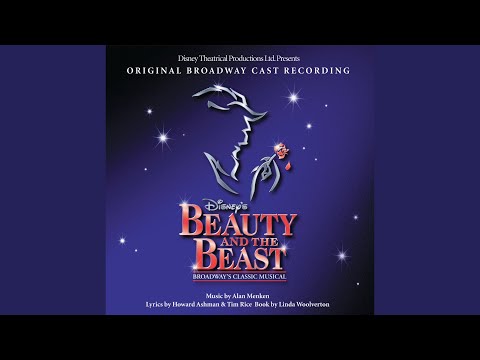
There are villain songs that wink at the audience, and then there is this one: a torchlit engine built to move bodies and beliefs in the same breath. In Beauty and the Beast, "Mob Song" is the moment the story stops debating and starts marching. It is written by composer Alan Menken with lyrics by Howard Ashman, and it exists in a few closely related shapes: the 1991 animated film sequence, the Broadway stage adaptation, and later revivals and anniversary productions that keep returning to its central chill - how fast a community can be taught to confuse fear with virtue.
What makes the number last is its craft. It is structured like a recruitment speech you can sing. Gaston frames a threat, the crowd repeats it, and the music tightens the screws until repetition becomes certainty. According to Billboard, the 2017 live-action soundtrack entered the Billboard 200 at No. 3, a reminder that this material still travels far beyond the stage.
Review and Highlights
Quick summary
- Function in the story: a public panic, organized into a hunt, that pushes the plot into its final confrontation.
- Main drivers: Gaston leads, the villagers echo, and Belle is positioned as the lone dissenting voice before the surge overwhelms her.
- Stage placement: Beauty and the Beast - The Broadway Musical (1994) - cast recording - diegetic. Sits late in Act 2, after "A Change in Me" and before "The Battle," bridging persuasion into action.
- Signature device: call-and-response rhetoric that turns a rumor into a marching order, with a literary sting in the Macbeth nod.
Beauty and the Beast (1994) - cast recording - diegetic. The villagers are whipped into a crusade as Gaston reframes private jealousy as public duty. The number is the hinge into the castle assault, and its final cadence practically hands the baton to the next cue.
Musically, Menken writes it like a ride you cannot step off. The pulse is brisk, the harmonies stay blunt, and the chorus is designed for massed voices, not delicate interpretation. The clever part is how the tune sells certainty while the text sells speculation. Each new claim is presented as obvious, then underlined by the crowd until it sounds like fact. The listener is meant to feel the seduction and the danger in the same bar.
Creation History
The song originates in the 1991 animated feature, then is carried into the stage adaptation where it can be staged with real bodies, real distance, and a director's sense of geometry. Menken has described it as a kind of muscular adventure underscore, and the lyric is packed with old-world pageantry that disguises something modern: propaganda set to a singable hook. One line is borrowed straight from Shakespeare's Macbeth, which is not subtle - a story about ambition and violence quoting another story about ambition and violence, with the audience invited to notice the inheritance.
Song Meaning and Annotations
Plot
Belle brings the truth to the village: the Beast is not a monster in the way they want him to be. Gaston replies by shifting the conversation from evidence to appetite. He paints the Beast as a threat to children, to homes, to order itself. The crowd, already primed by gossip and spectacle, accepts the framing because it gives them a role - defenders rather than bystanders.
Once the first chant lands, the rest is momentum. The mob becomes a character with one emotion and many mouths. Belle and Maurice try to move against the tide, but the number is written to show how quickly a public can be trained to hear compassion as weakness.
Song Meaning
At its core, the song is about social permission. It shows how fear can be curated, repeated, and dressed up as righteousness. Gaston does not simply lie - he narrates a crisis so the village can feel heroic while doing something ugly. The music makes that ugliness feel orderly, almost ceremonial, which is exactly the point.
Several critics have linked the lyric's obsession with scapegoats to the era in which Ashman was working; a Rolling Stone review of the Howard Ashman documentary discusses how the number can read as a portrait of panic and prejudice. Whether you hear it as a period snapshot or a permanent civic warning, the mechanism is the same: a community bonding through shared hostility.
Annotations
"We don't like what we don't understand"
This is the thesis stated without decoration. It is not the mob admitting a flaw so it can grow - it is the mob celebrating the flaw as policy. The line works because it sounds like plain talk, the kind people call "common sense" right before common sense becomes cruelty.
"Save your children and your wives"
A classic panic lever: protection language that narrows who counts as worth saving, then uses that narrowed circle to justify violence. It is also theatrical shorthand - the stakes are made domestic so the march feels personal.
"Screw your courage to the sticking place"
The Macbeth lift matters because it shows Gaston performing culture while emptying it. Shakespeare becomes a weaponized quote, a way to make brutality sound educated. Onstage, it can get a laugh; then the laugh catches in your throat as the torches rise.
Genre and rhythm
It sits in musical-theatre march territory with a chant-like chorus, but it borrows the thrill of an action cue. The groove is built for stomps, not swing: square phrasing, emphatic downbeats, and a steady push that makes the listener feel like the next step is already scheduled.
Emotional arc
The arc is less about changing feelings and more about narrowing them. The opening is agitation, the middle is excitement, and the end is certainty. That certainty is the scary part, because the number makes certainty feel like unity, and unity feel like virtue.
Symbols and staging logic
Torches, banners, blades - the imagery is medieval, but the psychology is modern. The song dramatizes how a crowd can outsource responsibility: each singer becomes a small part of a large act, and the size of the act becomes its own excuse.
Technical Information
- Artist: Original Broadway Cast of Beauty and the Beast
- Featured: Ensemble with principal lines (notably Gaston)
- Composer: Alan Menken
- Lyricist: Howard Ashman
- Producer: Alan Menken (album production credited alongside Howard Ashman and Tim Rice on the cast recording)
- Release Date: April 26, 1994
- Genre: Musical theatre, show tune
- Instruments: Orchestra, chorus, percussion
- Label: Walt Disney Records
- Mood: Martial, urgent
- Length: 3:02 (cast recording track)
- Track #: 20
- Language: English
- Album (if any): Beauty and the Beast - The Broadway Musical (Original Broadway Cast Recording)
- Music style: Chorus-driven march with call-and-response hooks
- Poetic meter: Mixed accentual lines optimized for chant and refrain
Questions and Answers
- Why does the song feel like it is accelerating even when the harmony stays simple?
- Because the arrangement prioritizes pulse and repetition. Each return of the refrain tightens the communal grip, so the listener registers motion as social momentum, not chord movement.
- What is the dramatic purpose of giving the crowd so many lines?
- It makes the village a single character. The story stops being Belle versus Gaston and becomes Belle versus a social machine that has decided it is right.
- Is this number more comedy or menace?
- It starts with theatrical bravado, but the joke curdles. The writing lets you enjoy the showmanship long enough to notice how easily showmanship becomes permission.
- Why include a Shakespeare reference?
- It signals that this is not random violence. It is staged violence, rehearsed violence, the kind that borrows cultural authority to sound inevitable.
- How does the Broadway version change the impact compared with the animated film?
- Onstage, the bodies are real and the distance is shared with the audience. The mob is not a painting on a screen, it is a physical mass that can spill down aisles if the staging wants that charge.
- What is the main musical trick that sells unity?
- Call-and-response. A leader line is immediately confirmed by a group echo, which teaches the ear to accept the leader as truth.
- Does the song belong to Gaston or to the villagers?
- It begins as Gaston’s speech, then the villagers own it by repeating it. Dramatically, that transfer is the point: leadership becomes consensus, and consensus becomes a weapon.
- Why does Belle’s resistance matter if the mob ignores her?
- Her objections establish the moral contrast and underline how persuasion works. The number is not about hearing the truth, it is about choosing the story that flatters the crowd.
- What makes the refrain so easy to remember?
- Short phrases, strong stresses, and a melodic contour that sits comfortably in a communal range. It is designed to be shouted as much as sung.
Awards and Chart Positions
"Mob Song" is typically not treated as a standalone pop single, but its parent releases have measurable industry footprints.
| Release | Type | Notable chart or certification note |
|---|---|---|
| Beauty and the Beast - The Broadway Musical (Original Broadway Cast Recording) | Cast album | RIAA Gold certification dated December 7, 2000. |
| Beauty and the Beast (2017 soundtrack) | Film soundtrack | Debuted at No. 3 on the Billboard 200 (as reported by Billboard and Disney Music Group press materials). |
How to Sing Mob Song
This is an ensemble-driven number, but the lead lines (often assigned to Gaston in stage productions) ask for stamina, clear diction, and a fearless belt that does not turn into shouting. Casting materials commonly place the functional range for the lead presence in the neighborhood of A3 to F5, while the broader ensemble writing sits where many voices can lock together without strain. Tempo varies by production, but common commercial recordings cluster in the mid-140s BPM range, which makes breath planning non-negotiable.
- Tempo first: Rehearse at a slower click until consonants line up. Then return to performance speed without sacrificing clarity.
- Diction as rhythm: Treat hard consonants as percussion. The crowd effect relies on clean attacks that land together.
- Breathing plan: Mark breath points in advance, especially before long leader phrases. If you wait until you are out of air, you will rush.
- Flow and grouping: Think in two-bar chunks. The song rewards forward motion, not individual line-by-line emphasis.
- Accents and chant: Keep vowels unified across the ensemble. The menace comes from unanimity, not personal flair.
- Blend vs. lead: If you have a lead assignment, keep the tone bright and authoritative. If you are in the mob, match vowel color and volume to your section leader.
- Mic and projection: Do not overpush. Use resonance and placement to cut through. The number is loud by design, but good technique keeps you fresh for the next scene.
- Pitfalls: The big ones are rushing, barking consonants, and turning belts into raw yelling. Record a rehearsal and listen for smear on group entrances.
Additional Info
Notable modern afterlives tend to lean into the song's built-in theatricality: metal and rock covers amplify the march into something headbanging, while concert presentations sharpen the crowd writing into a set-piece. A Disney anniversary special in 2022 revived the number again, proof that the song remains one of the property’s most stage-ready bursts of narrative propulsion.
One more small craft note I always admired: the lyric is not only about fear, it is about performance. The villagers do not just get scared - they get to act scared together, which feels like belonging. That is why the number can play as spectacle even when you know where it is going.
Key Contributors
| Entity | Type | Relationship (S-V-O) |
|---|---|---|
| Alan Menken | Person | Menken composed the music for "Mob Song". |
| Howard Ashman | Person | Ashman wrote the lyrics for "Mob Song". |
| Tim Rice | Person | Rice is credited as a lyricist on the Broadway cast recording project. |
| Burke Moses | Person | Moses performs principal lines on the Broadway cast recording. |
| Kenny Raskin | Person | Raskin performs principal lines on the Broadway cast recording. |
| Gordon Stanley | Person | Stanley performs principal lines on the Broadway cast recording. |
| Walt Disney Records | Organization | Walt Disney Records released the Broadway cast recording. |
| Music Theatre International | Organization | MTI licenses stage productions and publishes casting and range guidance. |
Sources: Billboard, Walt Disney Records release listings, Music Theatre International casting notes, Playbill, Discogs, Wikipedia, YouTube (DisneyMusicVEVO and auto-generated releases)