Once in the Highlands Lyrics — Brigadoon
Once in the Highlands Lyrics
Once in the Highlands, the Highlands of Scotland,
Deep in the night on a murky brae;
There in the Highlands, the Highlands of Scotland,
Two weary hunters lost their way.
TENOR:
And this is what happened,
The strange thing that happened,
CHORUS:
to two weary hunters who lost their way.
Song Overview
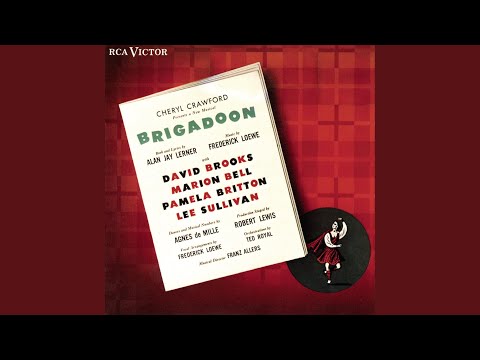
This opening triptych - overture into chorale into title refrain - is the front door to Lerner and Loewe’s Scottish fable. It sketches the mist, stakes the myth, and ushers us into a village out of time. The choral prologue plants the story seed: two hunters, lost on a murky brae, stumble upon Brigadoon. The title motif answers like a lantern raised in fog. Even before dialogue begins, Ted Royal’s orchestrations paint a Highlands silhouette with pipes-in-the-orchestra colors and drum tattoos that feel like footsteps on wet heather.
Review and Highlights
Quick summary
- A stitched opening number that moves from instrumental overture to choral legend to the first statement of the title tune.
- Introduces the spellbound village premise and the show’s core mood - wonder shaded with foreboding.
- First recorded by the 1947 Original Broadway Cast; later adapted in the 1954 MGM film and various studio/cast recordings.
- Royal’s orchestrations blend Broadway pit forces with folk inflections that evoke pipes and field drums.
- This medley is the dramaturgical hinge: it does the world-building so later ballads can carry the romance.
Creation History
Alan Jay Lerner’s book and lyrics and Frederick Loewe’s music arrived just as Broadway was refining the integrated musical. Their producer was Cheryl Crawford; Agnes de Mille staged the movement with a dramatist’s eye; Ted Royal’s orchestrations cast the Highlands in American theater colors. The original production opened at the Ziegfeld Theatre in March 1947 and ran for well over a year; Franz Allers was the musical director, shaping the tempo map that most later productions inherited. The original cast album - issued as a set of 78 rpm discs by RCA Victor - captured a condensed but vivid version of what audiences heard in the house. Later reissues and studio sets (including a 1957 stereo studio recording) broadened the soundstage while keeping this opening’s arc intact.
On screen, Vincente Minnelli’s 1954 film reshapes the prelude as a compact medley that still carries the key lore. The 1966 television film trims some numbers elsewhere in the score but preserves the narrative function of the prologue. Across these versions, the same DNA remains: a legend sung into being, then answered by that warm, rising title refrain.
Highlights in the music
The overture sets the palette: muted brass announcing ceremony, high strings laying mist, a snare-like drum suggesting procession. When the chorus enters for the “Once in the Highlands” narrative, note how the prosody sits heavy on first syllables - trochaic falls that feel like boots on turf. The title tune arrives in a major-key bloom that refuses sentimentality; there’s lift, yes, but it’s grounded by pedal tones, as if the valley itself is singing back. Royal’s writing often tucks faux-bagpipe drones into clarinets and oboes; percussion taps frame the choral lines with march-like poise. The dramatic trick is simple: the music makes you believe a place can be sung into existence.
Key takeaways
- Form - Overture to chorale to refrain - mirrors myth, witness, and naming.
- Orchestration borrows Scottish color without pastiche overload.
- Prosody and meter hammer the lore into memory before the plot moves.
- Sets up the score’s opposites: wild landscape vs. civilized dance, stasis vs. yearning.
Song Meaning and Annotations
Plot
Two Americans - city-bred, practical - get lost on a hunt and wander into a Highlands valley that appears for only one day each hundred years. That first sight is the title village. The opening number narrates this premise before we meet the leads. It functions as a prologue and a naming ceremony: we learn the rules, the risk, and the tone. The chorus witnesses, then the valley answers with its name, as if the land can hear.
Song Meaning
The opening is a manifesto for the musical’s cosmology. It tells us that love and faith - held stubbornly enough - can bend time. The mixed mood is the point: night, mist, and wary footsteps; then a sudden clearing as the title melody lifts. This is how Brigadoon works as theater: it starts with unease, then hands you hope. The ritual feel comes from rhythm and diction as much as from harmony. It’s not just a curtain-raiser; it’s a spell.
Annotations
“Once in the Highlands, the Highlands of Scotland / Deep in the night on a murky brae…”
Trochaic stress on “Once,” “High-,” “Deep,” “mur-” gives the lines a heavy tread. The scansion supports the image of trudging hunters. In staging, directors often keep bodies still through this, letting the choir’s weight do the work while light and smoke build the geography.
“And this is what happened - the strange thing that happened…”
The aside by a single male voice breaks the chorus’s omniscience. It’s a storyteller stepping forward, cuing the shift from legend to event. That device lets the show pivot from fable to plot without a hard cut.
“Brigadoon, Brigadoon… in thy valley there’ll be love.”
The refrain is more than a place name; it’s a vow. On the original cast album, the choir’s attack is not operatic-big; it’s warm and inside the beat, which keeps the magic close. Later studio and film versions play with tempo and space, but the harmonic cadence - moving to bright major with an anchoring bass - keeps the promise feeling solid.
Genre and rhythm
This is Broadway craft with folk seasoning. There’s no full-on bagpipe band, yet Royal’s doublings make wind lines behave like reeds and drones. The drum writing nods to march patterns without turning into parade. The overture’s cadence and the choral entrance feel ritualistic - think church introit more than pub song - which suits a village bound by a sacred bargain.
Emotional arc
Start - wary and nocturnal. Middle - communal witness. Finish - naming and lift. The curve quietly previews the show’s larger journey from skepticism to belief. If you’re listening for the first time, you can almost feel the air change when the title line lands; that’s the musical telling you how to hope.
Cultural touchpoints
The lore borrows from old-world myths about cursed or protected towns that fall out of time, filtered through mid-century American romanticism. The title’s nod toward the Brig o’ Doon in Ayrshire plants the name in Scottish soil while the story’s miracle reframes it for Broadway. In later decades, pop listeners met the show through “Almost Like Being in Love,” but the reason that standard hits so hard is that this opener builds the world with ritual clarity first.
Key Facts
- Artist: Original Broadway Cast of Brigadoon
- Featured: Ensemble, male soloist
- Composer: Frederick Loewe
- Producer: Stage production by Cheryl Crawford; album supervised by RCA Victor staff; musical direction by Franz Allers
- Release Date: April 1947 (original 78 rpm album issue)
- Genre: Broadway musical, prologue-chorale
- Instruments: Theater orchestra with winds, brass, strings, percussion; orchestrations emulate pipes and field drum colors
- Label: RCA Victor (original 78 rpm set); later reissues via BMG and Masterworks Broadway
- Mood: Misty, ceremonial, then luminous
- Track #: 1 on Brigadoon (Original 1947 Broadway Cast)
- Language: English
- Album: Brigadoon (Original 1947 Broadway Cast)
- Music style: American show tune with Scottish folk inflection
- Poetic meter: Predominantly trochaic in the chorale text
Canonical Entities & Relations
- Alan Jay Lerner - wrote book and lyrics - for Brigadoon.
- Frederick Loewe - composed score - for Brigadoon.
- Cheryl Crawford - produced - the original Broadway production.
- Agnes de Mille - choreographed - the original Broadway production.
- Ted Royal - orchestrated - the original Broadway production.
- Franz Allers - musical director and conductor - for the 1947 production and cast album sessions.
- Vincente Minnelli - directed - the 1954 MGM film adaptation.
- Gene Kelly, Cyd Charisse, Van Johnson - starred - in the 1954 film version.
- Robert Goulet, Sally Ann Howes - starred - in the 1966 television adaptation.
- Masterworks Broadway - reissued - archival recordings of the score.
Questions and Answers
- What does the opening medley need to accomplish before the story starts?
- It must world-build in three minutes: define a rules-based myth, plant the show’s tonal center, and make the village feel inevitable when the curtain rises on the square.
- Why the trochaic thump in the choral text?
- The falling stress pattern mimics footfall and lends the narration weight, turning hearsay into lore. It fits the “witness” function of a prologue chorus.
- How do the orchestrations suggest Scotland without literal bagpipes?
- By framing drones in clarinets/low strings and using snare patterns and modal touches; it’s Broadway grammar dressed in Highland colors.
- Is the title refrain meant to sound like a hymn or a love song?
- Both. Harmonically it sits like a congregational tune, but the lift on “Brigadoon” and the tender cadence read as a promise. That duality is the score’s secret sauce.
- What changes in the 1954 film prelude?
- It compresses the materials and threads them into a medley that fits Minnelli’s pacing. The lore is intact, but the studio sound softens the rougher stage edges.
- Did this opening number ever chart as a single?
- No. Cast and soundtrack releases feature it, but singles attention in 1947 went to “Almost Like Being in Love,” which spun into a standard through pop covers.
- Who shaped the musical pulse of the original?
- Franz Allers on the podium and Ted Royal in the pit books. Allers set the performance contour; Royal built the sonic Highlands.
- How does the opener foreshadow the show’s central choice?
- Dark into light, fear into vow. That arc prefigures Tommy’s leap from skepticism to trust.
- Why does a chorus tell the story before the leads appear?
- It grants the village a communal voice. The place, not the couple, owns the first word - fitting for a town guarded by a covenant.
- What later recording best expands the stereo image of this opener?
- The 1957 studio cast set offers wider sonics and a clean choral blend; it shows how the prelude breathes in a studio without stage acoustics.
Awards and Chart Positions
While this specific opening medley did not chart as a single, the show around it racked up major recognition in 1947 and beyond. Agnes de Mille received the inaugural Tony Award for Best Choreography, and the production won the New York Drama Critics’ Circle Award for Best Musical for the 1946-47 season. In the popular sphere, “Almost Like Being in Love” became the breakout standard, generating multiple charting versions in 1947 and again in later decades. According to Playbill summaries of award histories and Tony records, de Mille’s win set a template for choreography as a central, credited engine of Golden Age storytelling.
| Year | Honor | Recipient/Work | Note |
|---|---|---|---|
| 1947 | Tony Award - Best Choreography | Agnes de Mille | Original Broadway production |
| 1946-47 | New York Drama Critics’ Circle - Best Musical | Brigadoon | First musical to receive that season’s top critics’ prize |
| 1947 | Singles charts context | “Almost Like Being in Love” | Hit versions by Frank Sinatra and others carried the show into pop rotation |
Additional Info
The original cast album is a milestone in Broadway discography: a five-disc 78 rpm set from RCA Victor that condensed the in-theater experience into record sides while preserving the essential arc of the opener. Later, stereo-era studio sets (most famously the 1957 Shirley Jones and Jack Cassidy album) reframed the sound without abandoning the prologue’s storytelling geometry. Masterworks Broadway’s archival pages underline how Franz Allers’ baton and Royal’s atmospheric voicings made this material feel both folkloric and metropolitan.
On film, Vincente Minnelli’s CinemaScope Highlands favor painted stages over location shoots, but the opening medley still does its job, announcing a world with rules and a name. The official soundtrack track lists show the prelude collapsed into a tidy cue that moves briskly from lore to bustle. And when television revisited the story in 1966 with Robert Goulet and Sally Ann Howes, the adaptation trimmed or reshuffled certain numbers elsewhere, yet kept the myth-front-loading intact. As a ritual, this opener is hard to break.
If you listen across versions, one small pleasure is rhythmic placement: the chorus often lands slightly inside the beat, which keeps the narration communal rather than declarative. In a time when Broadway overtures could be grab-bags, this one behaves like a liturgy with a hook. According to the New Yorker’s capsule on early Tonys, de Mille’s recognition alongside Michael Kidd set choreography on equal footing with words and tunes - a useful lens for hearing how movement and meter already animate this opening before any dancing begins.
Sources: Wikipedia; Playbill; Masterworks Broadway; Legacy Recordings; Apple Music; IBDB; Ovrtur; SoundtrackCollector; JazzStandards.com; The New Yorker.
Music video
Brigadoon Lyrics: Song List
- Act 1
- Overture
- Once in the Highlands
- Brigadoon
- Vendor's Calls / Down on MacConnachy Square
- Waintin' for My Dearie
- I'll Go Home With Bonnie Jean
- The Heather on the Hill
- Love of My Life
- Jeannie's Packin' Up
- Come to Me, Bend to Me
- Almost Like Being in Love
- Act 2
- Chase
- There But for You Go I
- My Mother's Wedding Day
- From This Day On
- Finale