Love of My Life Lyrics — Brigadoon
Love of My Life Lyrics
At sixteen years I was blue ans sad.
then father said I should find a lad.
So I set out to become a wife,
An' found the real love of my life.
His name it was Chris, and the last was MacGill.
I met him one night pickin' flowers on the hill.
He had lots of charm an' a certain kind o' touch,
An a certain kind of eagerness that pleased me very much.
so there 'neath the moon where romance often springs,
I gave him my heart--an' a few other things.
I don't know how long that I stayed up on the hill,
But the moon had disappeared, and so had Christopher MacGill.
So I went home an' I thought I'd die,
Till Father said, make another try.
So out I went to become a wife,
An' found the real love of my lfe.
He came from the lowlands, the lowlands said he.
I saw him an' knew he was perfect for me.
Jus' one thing that puzzled me an' it always will,
Was he told me he had heard about me from his friend MacGill.
We quick fell in love an' went down by the creek.
The next day he said he'd be back in a week,
An' I thought he would, for now how was I to know
That of all the lowland laddies, there was never one as low!
I told my father the awful truth.
He said, "What difference? Ye've got your youth."
So out I went mad to be a wife,
An' found the real love of my life.
Oh, he was a poet, a rhymer was he.
He read me some verse he had written for me.
He said they would move me, these poems from his pen,
An' how right he was, because they moved me right into the glen.
We stayed till the dawn came an' lighted the sky,
Then I shook his hand an' I bid him good-bye.
I never went back, for what I had heard was true:
That a poet only writes about the things he cannot do.
My pa said, "Look out for men who think.
Ye'll be more certain with men who drink."
So out I went to become a wife,
An' found the real love of my life.
Oh, he was a solier, a fine Highland son.
He told me about all the battle he'd won.
He wasted his time tellin' me about his might,
For one look at him decided me to not put up a fight.
We skirmished for hours that night in the glen,
an' I found the sword has more might than the pen,
But when I was drowsin' I snored to my dismay,
An' he thought it was a bugle an' got up an' marched away.
Now Pa said, "Daughter, there must be one,
Someone who's true, or too old to run."
So I'm still lookin' to be a wife,
An' find the real love of my life.
Song Overview
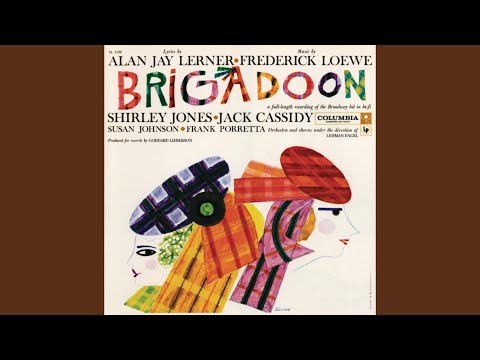
Slip into Brigadoon and you meet Meg Brockie - the tart-tongued dairymaid with a soft spot for tall Americans and a shrewd sense of the world. “The Love of My Life,” recorded radiantly by Susan Johnson for the 1957 studio cast album shepherded by Columbia Records chief Goddard Lieberson, is Meg’s comic calling card. It is a wink and a confession: a brisk catalog of beaux, bad timing, and lessons learned, all wrapped in Frederick Loewe’s nimble tune and Alan Jay Lerner’s quick-footed patter. The number first belonged to the original stage score, but it dodged mid-century squeamishness elsewhere, which is part of why this studio recording matters - it preserves Meg’s voice at full strength.
Review and Highlights
Quick summary
- Function: Meg’s standalone patter song that sketches her romantic history and comic worldview, typically placed mid-show as she shadows Jeff.
- Forces: Solo mezzo-soprano with orchestral oomph; brisk woodwinds and light brass chatter under lyric punchlines.
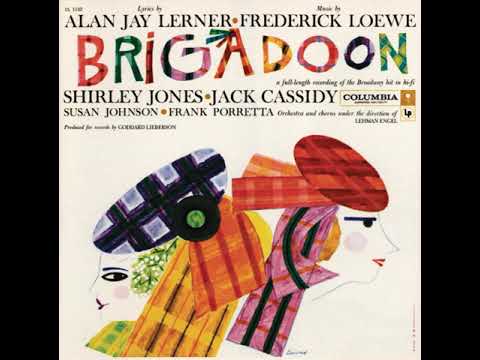
- Version: The 1957 studio cast is not a straight stage recording - it is a purpose-made album curated by producer Goddard Lieberson and conducted by Lehman Engel, with Susan Johnson featured as Meg.
- Preservation role: The track documents a song that the 1954 film omitted; later concert revivals reinstated it, including the 2017 City Center album where Stephanie J. Block takes the number.
- Character payoff: Establishes Meg as lusty, self-aware, and unembarrassed - a comic foil who keeps the show grounded in human appetites.
Creation History
Lerner and Loewe wrote “The Love of My Life” for Act I as Meg’s frank chronicle of past flings that didn’t take. On Broadway in 1947, Pamela Britton originated Meg; the number sat alongside her other showpiece, “My Mother’s Wedding Day.” For the big-screen adaptation in 1954, the studio trimmed Meg’s naughty sparkle. The Production Code office balked at lyrics hinting openly at premarital escapades, and both of Meg’s numbers were sidelined. That is why the 1957 studio cast album is essential: Lieberson assigned Susan Johnson - a singer with gleam, bite, and comic timing - and immortalized a song that Hollywood declined to carry over.
Johnson’s take is brisk and bright. Lehman Engel’s pit band keeps it in motion, winds clipping along under her rhyme schemes while the rhythm section accents punchlines like rimshots. The arrangement respects the stage grammar - you can all but see the diagonal cross, the conspiratorial glances to the audience - yet the audio mix is built for home listening. It is theatre music that plays like a perfect three-and-a-half-minute short story.
Highlights and takeaways
- Comic patter with a heart: Every stanza ends not in scandal but in self-possession; Meg files experience under wisdom, not shame.
- Street-song ancestry: Vendor-call rhythms meet music hall snap - the lyric scampers, the tune smiles, the cadences land clean.
- Johnson’s grain: A throaty, sun-warmed mezzo rides the consonants without hardening them. The voice can tease and still glow.
- Album craft: Lieberson’s studio projects were curated to showcase great writing with modern sound; this track is textbook curation.
- Continuity across eras: When Stephanie J. Block tackled it in 2017, the comic motor still purred. The song’s chassis is sturdy.
Song Meaning and Annotations
Plot
“The Love of My Life” usually arrives after Meg has sized up Jeff and decided he’s her next project. Rather than woo him gently, she declares open season on her own history: the hilltop tryst with Christopher MacGill, the Lowlander who ghosted, the poet whose pen outpaced his practice, the Highland soldier who marched off at a snore. It is a comic aria that telescopes years into minutes, proving Meg prefers stories with fingerprints on them.
Song Meaning
Under the jokes, the number is about agency. Meg isn’t apologizing for desire; she is reading it back to the town with a grin. In a show thick with fate and miracle, hers is a bracing human counterpoint - appetite, choice, consequence. Even the recurring refrain - a fresh push to “become a wife” - plays like a societal nudge Meg hears and then interprets on her own terms. The comedy works because she keeps the pen.
Annotations
“I gave him my heart - and a few other things”
A clean Lernerism: the dash leaves the laugh to the listener. The orchestra’s tiny lift underneath treats the joke like a raised eyebrow, not a cymbal crash.
“He’d heard about me from his friend MacGill”
A miniature social map. In six words we see the gossip chain, the village male network, and Meg’s good humor about both. It also sets up the second-verse reversal when the Lowlander never returns.
“A poet only writes about the things he cannot do”
The most pointed gag. It reveals Meg’s working definition of romance: action over abstractions. The rhyme lands because Johnson lets the sting stay playful.
“We skirmished for hours that night in the glen”
Wartime metaphor, bedroom scene. Loewe’s melody toggles from lilting to martial accents as if the pit were mimicking a drum-and-fife band for one bar, then slipping back into flirtation.
Rhythm and style
The engine is bright duple with patter swing. Woodwinds chatter eighth-note figures between vocal lines while pizzicato strings keep the bustle. The tune sits mostly stepwise, saving little leaps for punchlines and rhyme snaps. Think comic operetta trimmed for Broadway - quick setups, quicker payoffs.
The emotional arc
The shape is outward: confession to celebration. Meg starts with the rueful Chris MacGill memory and ends by doubling down - still looking, still game. By keeping the stakes low and the stance confident, the number lends balance to the show’s more mystical threads. We need one character, at least, whose heartbeat runs on appetite and curiosity.
Cultural touchpoints
Vendor cries and naughty-story songs go back to music hall and operetta, but “The Love of My Life” threads that lineage through mid-century Broadway. According to Masterworks Broadway’s archival notes, Johnson’s studio performance preserves a comic flavor the film refused to touch. And in the City Center recording, Stephanie J. Block points the same barbs and proves the humor has modern legs. In short: a classic stage joke survives because it is well made and well aimed.
Key Facts
- Artist: Susan Johnson (featured performer on the 1957 studio cast album); project produced by Goddard Lieberson
- Composer: Frederick Loewe
- Lyricist: Alan Jay Lerner
- Conductor: Lehman Engel
- Release date (studio cast LP): 1957 - first issue Columbia CL 1132
- Primary genre: Broadway musical theatre
- Music style: Comic patter song with music hall inflection; lively duple meter
- Instruments: Strings, woodwinds foregrounded, light brass, percussion
- Label: Columbia Masterworks
- Mood: Saucy, self-possessed, quick-witted
- Length (1957 studio cast): approximately 3:26
- Track # on 1957 studio cast: 6
- Language: English
- Album: Brigadoon (1957 Studio Cast Recording)
- Poetic meter: Mixed - conversational iambs with anapestic lifts that accelerate punchlines
Canonical Entities & Relations
- Susan Johnson - recorded - “The Love of My Life” for the 1957 studio cast.
- Goddard Lieberson - produced - Columbia’s 1957 Brigadoon studio cast album.
- Lehman Engel - conducted - the 1957 session ensemble.
- Alan Jay Lerner - wrote lyrics - for “The Love of My Life.”
- Frederick Loewe - composed music - for “The Love of My Life.”
- Stephanie J. Block - performed - the number as Meg on the 2017 City Center recording.
- Production Code Administration (Breen Office) - objected to - Meg’s songs for the 1954 film adaptation, leading to their omission.
Questions and Answers
- Where does the song sit in the stage score?
- Act I. Meg addresses Jeff and, by extension, the audience, narrating the string of romances that shaped her outlook.
- Why is the 1957 studio cast version such a reference?
- Because it preserves a fully featured Meg number that the 1954 film cut under censorship pressure. The studio set gave the song a high-fidelity document and a star performance.
- Who produced the 1957 album and who conducted?
- Columbia Records head Goddard Lieberson produced; Lehman Engel conducted the session.
- Is the number in the film?
- No. Both of Meg’s showpieces - this one and “My Mother’s Wedding Day” - were dropped from the 1954 movie.
- Has the song been revived on modern recordings?
- Yes. The 2017 New York City Center album restores it, with Stephanie J. Block as Meg.
- How long is the 1957 studio track?
- About three and a half minutes; most listings clock it at 3:26.
- What makes the lyric land with audiences?
- It’s frank without cruelty, and the jokes serve character. Meg laughs at circumstance and keeps her dignity intact.
- What vocal type suits it?
- A flexible mezzo or contralto comfortable with patter, crisp diction, and sly storytelling. Belt is seasoning, not the main dish.
- Does the song alter the show’s balance?
- It does - on purpose. Amid legends and miracles, Meg’s earthiness gives the story traction. She reminds everyone that human desire is its own kind of magic.
Awards and Chart Positions
Awards context: While the track itself was not a chart single, the larger world around it matters. Brigadoon won acclaim on stage, and the 1954 film adaptation - which omitted this song - drew major awards attention in technical categories, including Academy Award nominations and a Golden Globe for color cinematography. That awards halo has kept the score in circulation even when specific numbers were trimmed or shifted across mediums.
How to Sing The Love of My Life
Tempo & feel: Keep it quick but conversational - a nimble two-in-the-bar that lets consonants pop and story beats breathe. This is comic patter, not a race.
Key & transposition: Editions vary; choose a key that sits in the middle voice with room to speak on pitch. The joke dies if the singer fights the staff.
Vocal range & placement: Low-to-middle mezzo works best, with agile top access for short bursts. Resonance focus should be forward for diction and then released into legato at the end of each anecdote.
Common issues: Over-belting the innuendo, which muddies text; losing rhythmic lift on long rhymes; flattening punchlines by lingering. The fix is clean breath planning and a metronomic sense of subdivisions.
Step-by-step
- Tempo placement: Set a rehearsal tempo that lets you land every consonant. Add two clicks once text remains crystal clear.
- Diction first: Treat each verse as a monologue set to rhythm. Shape vowels, but let final consonants release the joke - no swallowed endings.
- Breathing: Mark silent sniffs before punchlines so the payoff rides fresh air. Plan a deeper refill before the soldier verse.
- Flow and rhythm: Sit slightly ahead of the beat on setups, then on top of the beat for the rimshot lines. If the conductor smiles, you’re in the pocket.
- Accents: Highlight meaning words - names, places, punch nouns like “poet,” “Lowlands,” “soldier.” Keep the stress musical, not slammed.
- Ensemble handoffs: If staging uses dance or chorus echoes, rehearse cue pickups so the patter does not collide with movement business.
- Mic craft: For amplified runs, ride the mic closer on story setups and ease off on laughs to prevent clipping. Dialogue-intimate, chorus-safe.
- Pitfalls: Dialect caricature. Keep Scots coloring light and legible; clarity beats over-spice every time.
Practice material: Alternate spoken patter with sung patter at half speed, then full speed. Drill tongue twisters on the rhyme tails. For stamina, run the song twice with a 30-second breath in between - it builds the comic engine you will need onstage.
Additional Info
Studio-cast angle: Lieberson’s mid-century studio cast projects were less about duplicating a single night onstage and more about building the “ideal listening version.” Pairing Shirley Jones and Jack Cassidy for the romantic leads, with Frank Porretta and Susan Johnson in character slots and Lehman Engel in the pit, the 1957 Brigadoon album helped canonize numbers that producers, censors, or camera logic had trimmed. This track is exhibit A.
Revival energy: In 2017 at New York City Center, Stephanie J. Block returned Meg to her rightful terrain. The Ghostlight release from that engagement puts “The Love of My Life” right where it belongs - alongside “My Mother’s Weddin’ Day” - and reminds listeners how the comic numbers balance the score’s romance. As stated in NME magazine’s capsule histories of Broadway-to-pop crossovers, the Lerner and Loewe partnership favored character honesty over pyrotechnics; Meg’s song is a case study in that bias paying off decades later.
Sources: Masterworks Broadway; CastAlbums; Ghostlight Records; Discogs; Oxford Academic - musical theatre screen adaptation studies; Playbill; IMDb; Spotify.
Music video
Brigadoon Lyrics: Song List
- Act 1
- Overture
- Once in the Highlands
- Brigadoon
- Vendor's Calls / Down on MacConnachy Square
- Waintin' for My Dearie
- I'll Go Home With Bonnie Jean
- The Heather on the Hill
- Love of My Life
- Jeannie's Packin' Up
- Come to Me, Bend to Me
- Almost Like Being in Love
- Act 2
- Chase
- There But for You Go I
- My Mother's Wedding Day
- From This Day On
- Finale