Words Are Not Enough Lyrics
Words Are Not Enough
[CAIT]Near every night this week
The same vivid dream
I'm stood here starin
Bouncin aff every wa'
A hert-stoppin scream
I'm just stood starin
It's fell an hurt itself
Lyin helpless
It's fell an hurt itself
I just turn awa
I dinna feel sorry
I dinna feel sympathy
I dinna feel onythin
(Spoken) Ye think I'm wicked
[JAMIE, spoken]
It's just bad dreams. Too many o thae sinister sangs
[CAIT, spoken]
I dinna feel like a mither, Jamie
[JAMIE, spoken]
I doubt any wumman does until-
[CAIT, spoken]
I mean I dinna think I'm meant to be a mither-
[JAMIE, spoken]
Stop. Ye'll be perfect, Cait. And we've got God on our side
(Sung)
Yours are the ey?s I see
When ma ain eyelids clos?
[CAIT]
I hear it
[CAIT, JAMIE]
As I hit the pillow
[JAMIE]
Yours is the face I want
[CAIT]
My skin crawls
[JAMIE]
To face day after day
[CAIT]
Day after day
[JAMIE]
As we strip the willow
Cait, I'm right here with you
I'm ready to conquer this fear with you
[CAIT]
It's aye been you, but this -
[JAMIE]
Is just a bad dream
[CAIT]
It feels real in me
[JAMIE]
Cait, keep yer heid
[CAIT]
I'm tryin to
[JAMIE]
Just breathe
[CAIT]
I -
[JAMIE]
Cait -
[CAIT]
Canna, I -
[JAMIE]
Try -
[CAIT]
Words are not enough
Words are not enough
Words are not enough
Words are not enough
Words are not enough
Words are not enough
Words are not enough
Words are not enough
[JAMIE]
Aw that I hae to gie
I hae gied it to you
[CAIT]
Every day
[JAMIE]
Has it no been enough for ye?
[CAIT]
The future I want to see
It is here, it is true
[JAMIE]
So you say
But it seems ma love for ye
Just leaves ye cold inside
[CAIT]
No, you're ma flame, Jamie
[JAMIE]
This terror ye hold inside
Am I to blame?
[CAIT]
Jamie, listen
[JAMIE]
Yer words are like puzzles to me
And I see ye recoil as I reach out to touch ye
[CAIT, with JAMIE]
Words are not enough
Words are not enough
Words are not enough
Words are not enough
Words are not enough
Words are not enough
Words are not enough
Words are not enough
[CAIT]
How dae ye tell a man
Wi the gold light o God on his shoulders
You're holdin a bit of his gold inside ye
A bit that ye want to rip oot
Can ye aye love that man
When whit grows fae his love maks ye
Shudder an scunner an scared
I want a life wi you
Just no the life ye've set yer hert on
[ANCESTORS]
Oh, women of earth, wind and flame
Born under changin' skies
Oh, common in blood and in name
The future and past in their eyes
Song Overview
"Words Are Not Enough" is one of the score's hardest turns - a first-act breaking point where Cait realises that love, duty, and faith cannot fix what is happening inside her body. In Ballad Lines, the song is written as a confrontation duet, with Cait and Jamie trapped in the same room but speaking past each other. Finn Anderson gives the number the weight of a folk lament and the pressure of a domestic argument. That mix is what makes it sting. This is not a song about a couple failing to communicate in some vague way. It is about pregnancy, fear, and the terrible gap between what one partner wants and what the other can bear.
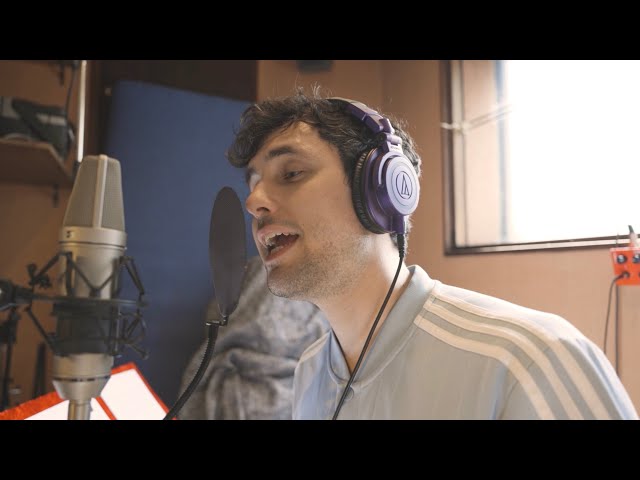
Review and Highlights
This is one of the songs that reveals what Ballad Lines is really willing to tackle. Cait is married, settled, and outwardly secure, yet she is desperate not to become a mother. Jamie cannot understand why his love and certainty do not soothe her. According to BroadwayWorld, the number stands opposite "Unexpected Visitor" in the score's wider argument about motherhood, with Cait fighting to remain child-free while Jean, in another timeline, wants to keep her baby. That contrast gives "Words Are Not Enough" its dramatic heat.
The best thing about the song is how little comfort it offers. Anderson does not write Jamie as a cartoon villain, and he does not let Cait become a tidy emblem either. The pain comes from mismatch. One person speaks in reassurance, faith, and future plans. The other hears pressure, danger, and a life closing in. That is why the title lands so well. Language is present all through the scene, but language cannot bridge the bodily reality at its center.
Critics kept singling the number out. The Indiependent called it Cait's affecting first-act showcase, Secret Stage Reviews said Kirsty Findlay filled the room with real ache in the number, and All That Dazzles praised it as one of her standout moments. According to theartsdesk, it is also one of the original songs that helps connect historical reproductive conflict to the show's contemporary debates.
Key Takeaways:
- It is a confrontation duet about pregnancy and failed mutual understanding.
- The title phrase captures the scene's core idea - speech cannot solve everything.
- Kirsty Findlay's Cait sits at the center of the track, with Dylan Wood as Jamie.
- The song is one of the clearest statements of the musical's focus on choice and cost.
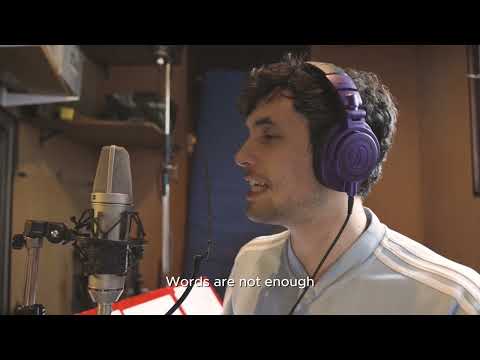
Ballad Lines (2026) - act-one confrontation duet - diegetic. In the stage story, the song belongs to Cait and Jamie as they collide over Cait's pregnancy and the future he imagines for them. Reviews place it near the end of Act One, where it lands as one of Cait's major revelations. In public release form, the number appears as a studio-cast track upload rather than a staged scene clip. It matters because it turns the show's discussion of motherhood into a private crisis with no easy language for escape.
Creation History
Ballad Lines was created by Finn Anderson and Tania Azevedo as a folk musical spanning Scotland, Ireland, Appalachia, and present-day New York. Official production material describes the work as a blend of original songs and traditional ballads, and "Words Are Not Enough" sits firmly among the original numbers written to dramatise the family line. Streaming listings credit the track to Finn Anderson and Ballad Lines featuring Dylan Wood, Kirsty Findlay, and Ballad Lines Studio Cast. It was released on Ballad Lines (Studio Cast Recording) on September 12, 2025, with a runtime of about 3:26. By the time the London run opened at Southwark Playhouse Elephant in January 2026, multiple reviews were already highlighting the song as one of Cait's defining moments in the first act.
Lyricist Analysis
The writing here is less ceremonial than some of the show's folk-rooted material and more like a knot pulled tighter and tighter. Anderson uses repetition as pressure. The title phrase keeps returning because the scene itself cannot move on. Cait and Jamie are not solving anything. They are circling the same wound from opposite sides.
Meter-wise, the lyric alternates between clipped, stress-heavy bursts and longer lines that sag under the weight of explanation. Cait's material feels tighter, more bodily, more cornered. Jamie's sounds more declarative, more future-facing. That difference matters. The song is not just two people singing different notes. They are living in different rhythms.
Rhyme is handled loosely and in service of natural speech. The lyric cares more about argument flow than polish. That suits the number. Too much finish would have made the scene feel literary instead of urgent. There is also smart use of recurring sound clusters around hard consonants and Scots-inflected vowels, which keeps the language rooted in character and place.
Prosodically, the phrase at the center of the song is strong because it falls naturally in the mouth. It sounds like an exhausted admission, not a crafted slogan. Then the lyric sharpens when Cait tries to describe the terror of carrying a future she does not want. Jamie speaks in the language of meaning and promise. Cait speaks from inside recoil. That split gives the duet its real shape.
Structurally, the song behaves like a door slamming inside Act One. It does not reconcile the couple. It exposes the limits of tenderness when the central question is bodily autonomy.
Song Meaning and Annotations
Plot
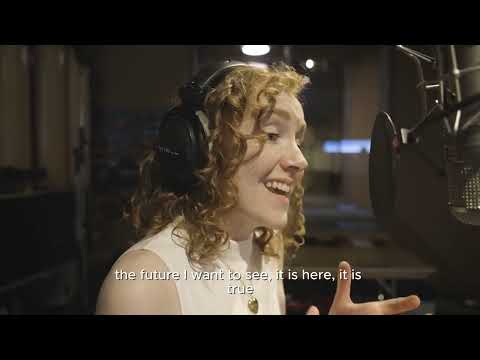
Cait tries to make Jamie understand that her fear is not abstract and not negotiable. He reaches for affection, belief, and the future he thinks is already taking shape. She cannot meet him there. Instead, the scene becomes a painful translation failure: he keeps speaking as if reassurance should carry the day, while she struggles to articulate revulsion, dread, and the sense that her own body is no longer safe territory. In the show's wider structure, the number deepens Cait's historical thread while echoing the reproductive choices facing Jean and Sarah in different centuries.
Song Meaning
The meaning of "Words Are Not Enough" is plain and brutal. Some experiences cannot be talked into acceptability. Cait's body is telling her one truth, while Jamie's hopes are built on another. Love may still be present. But love is not the same thing as permission, and tenderness is not the same thing as consent.
Inside Ballad Lines, that matters because the show keeps returning to the question of choice. According to BroadwayWorld, the score deliberately sets songs like this against numbers such as "Unexpected Visitor" to show that pregnancy can be experienced as hope, terror, burden, longing, or all of them at once depending on the woman and the context. This song is the version where language breaks down first and the body keeps speaking anyway.
Annotations
Words are not enough.
The title phrase is the whole thesis. Communication is happening, but it is not enough to bridge the gulf between bodily fear and romantic certainty. It lands like surrender and accusation at the same time.
Gift o the greatest kind.
That small phrase captures the trap Cait is in. The pregnancy is framed by others as blessing and destiny, while she experiences it as threat. One line holds the clash between religious language and lived reality.
Lyrical themes and message
The themes are bodily autonomy, marriage, religion, fear, reproductive pressure, and the failure of loving language when it tries to override lived experience. There is also a deeper theme of female testimony. Cait is not simply saying she is scared. She is trying to get her own account of reality heard in a world that keeps translating it into something more acceptable.
Emotional arc
The song moves from strained appeal into sharper rupture. It begins with the hope that explanation might still work. It ends in the knowledge that it does not. That is why the number lands so hard in performance. It closes down easy sympathy and leaves the audience inside a conflict no phrase can soften.
Production and instrumentation
The studio-cast version stays voice-first, with the folk-theatre frame supporting rather than swallowing the argument. Reviews of the production consistently describe Ballad Lines as fiddle-heavy and rhythm-driven, but this number gains its force from the intimacy of the duet and the pressure of repeated phrases. The accompaniment is there to hold the argument in place while the singers tear at it.
Idioms, symbols, and historical touchpoints
The key symbol is language itself. Words become tools that fail under pressure. The song also sits in a historically specific setting - Cait is a minister's wife in 17th-century Scotland - which gives Jamie's faith-colored certainty a sharper edge. According to the official show page, Cait is wrestling with the constraints of her role, and this number makes those constraints painfully concrete.
Technical Information (Quick Facts)
- Song: Words Are Not Enough
- Artist: Finn Anderson and Ballad Lines
- Featured: Dylan Wood, Kirsty Findlay, and Ballad Lines Studio Cast
- Composer: Finn Anderson
- Producer: David Macfarlane, co-producer; release by Finn Anderson and KT Producing
- Release Date: September 12, 2025
- Genre: Folk musical, soundtrack, contemporary folk theatre
- Instruments: Duet vocals, ensemble support, folk accompaniment
- Label: Finn Anderson and KT Producing
- Mood: Strained, intimate, conflicted, aching
- Length: 3:26
- Track #: 7
- Language: English with Scots-inflected diction
- Album: Ballad Lines (Studio Cast Recording)
- Music style: Original folk-theatre confrontation duet
- Poetic meter: Stress-led conversational phrasing with refrain repetition
Frequently Asked Questions
- Who sings "Words Are Not Enough" on the studio recording?
- The track is credited to Finn Anderson and Ballad Lines featuring Dylan Wood, Kirsty Findlay, and Ballad Lines Studio Cast.
- What is the song about?
- It is about Cait and Jamie confronting her pregnancy from utterly different positions. He reaches for reassurance and future promise, while she is trapped in fear and recoil.
- Is this an original song or a traditional adaptation?
- It is an original Finn Anderson song written for the musical, not one of the traditional ballad adaptations in the score.
- Why is the title so strong?
- Because it states the scene's central truth with brutal clarity: explanation, affection, and argument all fail when the underlying conflict is bodily and irreversible.
- Where does the number fit in the show?
- Reviews place it near the end of Act One, where it functions as one of Cait's major revelations and one of the score's turning points.
- How does it connect to "Unexpected Visitor"?
- According to BroadwayWorld, the two songs approach motherhood from contrasting perspectives, with Cait trying to remain child-free while Jean elsewhere in the story wants to keep her baby.
- Why do reviewers keep singling it out?
- Because it gives Kirsty Findlay one of the production's strongest showcases and crystallises the show's argument about choice in one tightly focused duet.
- Was the track released as a standalone single?
- I could verify it on the full Ballad Lines (Studio Cast Recording) album released September 12, 2025, but not as a separate standalone single.
- Are there chart positions, certifications, or awards for this track?
- No reliable public chart entry, certification, or individual award listing for the song could be verified through March 13, 2026.
- What makes the song different from the score's traditional ballads?
- Its language is more direct, more argumentative, and more scene-driven. It still sits inside the folk soundworld, but its energy comes from conflict rather than inherited narrative.
Additional Info
- The official show page describes Cait as a minister's wife in 17th-century Scotland, which sharpens the pressure around faith, marriage, and pregnancy inside the duet.
- According to theartsdesk, songs such as "Words Are Not Enough" help link the dilemmas of women in the past to debates that still feel fiercely current.
- WhatOnStage included the Ballad Lines album in its 2025 round-up of favorite musical theatre concept albums, which helped keep tracks like this visible outside the stage run.
- The official YouTube upload is a studio-track video rather than a performance clip, so the public version leans almost entirely on the singers and the force of the writing.
Key Contributors
| Entity | Type | Relationship |
|---|---|---|
| Finn Anderson | Person | Wrote and composed "Words Are Not Enough" and co-created Ballad Lines. |
| Tania Azevedo | Person | Co-created and directed Ballad Lines. |
| Kirsty Findlay | Person | Performs Cait's part on the studio recording and in the stage production context. |
| Dylan Wood | Person | Performs Jamie's part on the studio recording. |
| Ballad Lines Studio Cast | Organization | Provides ensemble support on the released track. |
| David Macfarlane | Person | Credited as co-producer on the recording. |
| KT Producing | Organization | Release partner for the studio-cast album. |
| Cait and Jamie | Characters | The married couple whose conflict drives the number. |
Sources
Data verified via Finn Anderson's official Ballad Lines page, Apple Music, Spotify, Shazam, the official YouTube upload, and stage coverage from BroadwayWorld, theartsdesk, The Indiependent, Secret Stage Reviews, and All That Dazzles.