Ballad Lines Lyrics: Song List
- Prologue
- Secondhand Shame
- The Four Marys
- Unexpected Visitor
- Handsome Molly
- Back In The Box
- Words Are Not Enough
- The Water Deep (Part 1)
- The Water Deep (Part 2)
- Queen Among the Heather
- Change of Plan
- Early Early in the Spring
- Red Red River
- I Wish My Baby Was Born
- Out Of The Dark
- Sarah's Song
- Epilogue
About the "Ballad Lines" Stage Show
Release date of the musical: 2025
"Ballad Lines" – The Musical Guide & Song Meanings
Review: what the lyrics are really doing
“Ballad Lines” sells you a mystery box and then dares you to open it. The contemporary couple, Sarah and Alix, are meant to be our entry point. The real voltage comes from the older voices, where the language is tighter, older, sharper, and sometimes brutal. That imbalance is the show’s creative risk: the present-day scenes can feel like connective tissue, while the past is the muscle.
Lyrically, Finn Anderson writes with a folklorist’s ear and a dramatist’s impatience. He lets traditional ballads sit beside new lines without apologising for the seam. That matters because the plot is basically about seams: Scotland to Ireland to Appalachia, story to story, body to body. When “Ballad Lines” is working, the text doesn’t “comment on” folk tradition. It uses it as a delivery system for messy decisions about motherhood, autonomy, and the afterlife of family shame.
Musically, the score leans into folk propulsion and vocal blend rather than big-theatre belt gymnastics. It’s closer to a roomful of musicians proving a point than an orchestra painting a mood. The result: characters don’t “arrive” in song. They confess, argue, remember, and occasionally indict you for listening.
How it was made
The project has a long runway. The show began life under the title “A Mother’s Song,” with early commissioning roots that go back to the mid-2010s, then development through workshops and showcases, a 2023 production at Macrobert Arts Centre, and a later re-emergence as “Ballad Lines.” The London premiere at Southwark Playhouse Elephant arrives with a studio cast album that functions like a map of the piece, not merely a souvenir.
One detail I like, because it tells you how the writers think: Anderson and director-co-creator Tania Azevedo have spoken about starting their collaboration from a simple impulse to make something together, then chasing two parallel lines of exploration, with folk tradition and contemporary identity pulling against each other. That push-pull is audible in the writing. The old songs aren’t treated as museum glass. They’re treated as living material, which means they can bruise the characters holding them.
Production-wise, the staging has leaned into objects that feel like archive: cassette tapes and recorded voice, plus design choices that evoke crossings and lineage. Even the marketing imagery keeps returning to threads, ribbon, and tape, as if ancestry is something you can literally snag your sleeve on.
Key tracks & scenes
"Prologue" (Betty and Company)
- The Scene:
- Lights up on Betty’s voice as a kind of living tape recorder. The sound feels gathered, not produced: ancestors in close harmony, like a room you’ve walked into mid-song. The staging language around this show often returns to haze and focused light, and “Prologue” plays well with that: a circle of memory carved out of darkness.
- Lyrical Meaning:
- It establishes the thesis: “ballad singin’s in my blood,” and blood is a carrier for both music and consequence. The refrain is part invocation, part warning. It isn’t asking for nostalgia. It’s telling you inheritance has teeth.
"Secondhand Shame" (Sarah)
- The Scene:
- Sarah, in a present-day apartment, staring down a box that arrived like a dare. The lyric is written as breathless argument, the kind you have alone because you can’t afford witnesses. Even on the page, it has the pace of someone circling a trapdoor.
- Lyrical Meaning:
- This is the show’s modern dialect: guilt as an invasive species. “Secondhand” is the key word. Sarah didn’t commit the original sins, yet she’s living with the residue. The song makes “moving on” sound like a bodily negotiation, not a pep talk.
"The Four Marys" (Cait)
- The Scene:
- A traditional ballad drops us into Cait’s world with the plain force of a verdict. The best stagings of this kind of number don’t over-direct it: a single figure, a band that listens, and the room changing temperature.
- Lyrical Meaning:
- By placing a known folk text inside a character’s private crisis, the musical makes tradition feel personal again. The lyric’s fatalism becomes Cait’s borrowed language for fear. Folk song, here, is less “heritage” and more survival shorthand.
"Unexpected Visitor" (Cait, Jean, and echoes)
- The Scene:
- A split-world sequence: Cait holding a secret, Jean flirting with danger and consequence, the ocean acting like a conveyor belt between centuries. The lyric page itself frames the number with narration about the song travelling and reappearing. Onstage, this tends to land as overlapping spaces, with the past and present briefly sharing air.
- Lyrical Meaning:
- The genius of the writing is that pregnancy is described with opposing metaphors at once: gift, threat, visitor, fire. Cait’s fear and Jean’s defiance don’t cancel each other out. They argue across time, which is the whole show in miniature.
"Handsome Molly" (Ensemble or featured voices)
- The Scene:
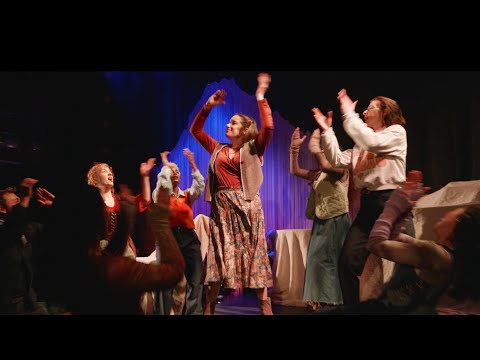
- This is where the production’s “full-throated” identity tends to show itself: rhythm-forward, communal, built for bodies to move. In reviews, the vocal energy around the traditional material is consistently singled out, and “Handsome Molly” is a likely beneficiary.
- Lyrical Meaning:
- Placed well, the song becomes a pressure-release valve that still carries story. It reminds you that folk repertoire is not always mournful. It can flirt, taunt, and kick up dust, even when the plot is heavy.
"Queen Among The Heather" (Featured vocalists)
- The Scene:
- More formal in shape, with a title that feels like legend. In album flow, it plays like a banner lifted above the family line, a reminder that identity can be claimed with poetry when life refuses to cooperate.
- Lyrical Meaning:
- It’s about naming yourself. The lyric’s power comes from its refusal to be small. In a show preoccupied with women being told to shrink, a song that crowns someone in the heather reads as political, even before you parse the plot mechanics.
"Epilogue" (Sarah and Company)
- The Scene:
- Everything converges: the apartment, the older worlds, the voices that have been “recorded” into the family. If “Prologue” is the spell, “Epilogue” is the cost of casting it.
- Lyrical Meaning:
- The ending wants resolution, but it also wants to admit that inheritance doesn’t end neatly. The best readings of the album treat the final pages as Sarah learning how to hold history without letting it steer the wheel.
Live updates (2025–2026)
Status (current as of 4 March 2026): “Ballad Lines” is running at Southwark Playhouse Elephant in London, with performances advertised from late January through March 2026. The venue has published ticket pricing bands and a rush-ticket policy, and it has also promoted the cast recording for pre-show listening. The studio cast recording release is tied to 2025 streaming-platform listings, and the show has continued to generate new coverage through early 2026.
Streaming culture has also started to treat the piece as a “listen-first” musical: the album is easy to find on major platforms, and mainstream press has framed it as a production you can sample at home before buying a ticket. That’s useful because the show’s structure is time-hopping and lyric-dense. Hearing the album once makes the onstage narrative easier to track, especially when the production pivots between centuries fast.
If you’re attending live: sit where you can read faces during the quieter confessionals. The folk numbers can carry to the back of the room. The real heartbreak lives in small reactions, the moment a character realises she’s been repeating a story that never served her.
Notes & trivia
- The official album listings show a 2025 studio cast release, with a separate shorter EP released earlier in 2025.
- The London production marketing and programme copy emphasise three women across three centuries, with Sarah in New York and ancestral stories rooted in Scotland and Ireland, then carried to Appalachia.
- The lyrics page is unusually transparent for a new musical: it includes narrative bridges explaining how songs travel, who sings them, and why they matter in-story.
- The Southwark Playhouse listing has published concrete audience guidance (haze and flashing lights) and content warnings, which is a practical signal of how physically direct the staging can get.
- Reviews repeatedly single out the traditional material (“The Four Marys,” “Handsome Molly”) as performance peaks, suggesting the show’s most persuasive storytelling sometimes arrives via older words.
- The show’s earlier title, “A Mother’s Song,” still shadows the piece thematically: the central question keeps returning to what motherhood costs, and who gets to choose it.
Reception
Critically, the response has split along a familiar line for ambitious new musicals: admiration for the craft and the score, debate about whether the contemporary framing story is as compelling as the historical threads. The consistent praise is for the vocal work and the folk-musical fusion. The consistent reservation is about narrative balance, with some critics feeling the show tries to hold too many timelines in one hand.
“Heartbreaking, full-throated folk music for the ages.” The Guardian (review)
“Heartwarming, poignant and deeply human.” WhatsOnStage (review)
“I appreciated the show because it’s a really fine musical, but I didn’t really feel it.” The Arts Desk (review)
My take: the album is the show’s best sales pitch because it foregrounds the strongest element: how Anderson sets language in the mouth. Even when the plot is knotty, the musical line tends to know exactly what it wants. If you’re a lyrics person, start with “Secondhand Shame” and “Unexpected Visitor.” They’re the load-bearing beams.
Awards
- No major awards have been broadly cited yet for the London production run itself (as of early March 2026). The creative team and principal cast, however, are frequently described in coverage using prior accolades (including Olivier recognition for performers), and Anderson’s earlier work “Islander” is regularly referenced as an award-winning calling card.
Quick facts
- Title: Ballad Lines (Studio Cast Recording)
- Year: 2025
- Type: Studio cast soundtrack album (folk musical)
- Music & lyrics: Finn Anderson (co-created with director Tania Azevedo)
- Label / rights line (platform listing): ? 2025 Finn Anderson & KT Producing
- Album length (platform listing): 17 tracks, about 61 minutes
- Related releases: Studio Cast EP released earlier in 2025
- Selected notable placements (story): “Prologue” as lineage statement; “Secondhand Shame” as Sarah’s confrontation; “Unexpected Visitor” as the cross-century hinge
- 2026 staging context: London run at Southwark Playhouse Elephant with published ticket bands and rush-ticket policy
- Availability: Major streaming platforms (Spotify, Apple Music, YouTube Music)
Frequently asked questions
- Is “Ballad Lines” an original score or a folk-song adaptation?
- Both. It blends original writing with traditional Scottish, Irish, and Appalachian ballads, using the older material as part of the plot’s bloodstream.
- Do I need to know folk music to follow it?
- No. The show frames the ballads with narration and character context, and the album sequence makes the lineage idea clear even for first-time listeners.
- Who are the main characters?
- Sarah (present-day New York), her partner Alix, and ancestral figures including Cait (17th-century Scotland) and Jean (18th-century Ireland), with Betty acting as a narrative anchor across generations.
- Is the album the same as the stage show?
- It’s designed to function as a story companion, but stage pacing, transitions, and spoken scenes can reshape emphasis. If you want maximum clarity, listen once before attending, then let the live performance surprise you.
- Where is it playing now?
- As of early March 2026, the London production has been running at Southwark Playhouse Elephant with a published schedule through March.
- Is there a trailer or performance footage?
- Yes. Southwark Playhouse and the show’s official YouTube presence have released an official trailer and additional video material (including rehearsal-room clips and song features).
Key contributors
| Name | Role | Contribution |
|---|---|---|
| Finn Anderson | Composer-lyricist; co-creator | Wrote the score and lyrics; leads the project’s folk-to-contemporary musical language. |
| Tania Azevedo | Director; co-creator | Co-shaped the narrative approach and staging concept across timelines. |
| Frances McNamee | Studio cast; stage cast | Featured voice associated with Sarah in London casting coverage and venue listings. |
| Rebecca Trehearn | Studio cast; stage cast | Featured voice associated with Betty; highlighted in production listings and press coverage. |
| Kirsty Findlay | Studio cast; stage cast | Featured voice associated with Cait; frequently singled out in reviews. |
| Southwark Playhouse Elephant | Venue (London premiere run) | Hosted the 2026 London production; published schedule, ticketing policy, and album promotion. |
References & Verification: Southwark Playhouse production listing and ticketing details; official “Ballad Lines” website and lyrics page; platform listings on Apple Music and Spotify; reviews and features from The Guardian, WhatsOnStage, LondonTheatre.co.uk, The Arts Desk, MusicalTheatreReview, and additional theatre press coverage; trailer and video materials published via YouTube channels for Southwark Playhouse and the production.