Unexpected Visitor Lyrics
Unexpected Visitor
[CAIT]Oh, happy, happy is the maid
Who's born of beauty free
For it is ma rosy dimpled cheeks
That's been the devil to me
[BETTY, spoken]
Cait sang this ballad to console herself, as she held on tight to a secret
[CAIT]
Here in ma body
I feel in ma body
An unwelcome change
An unwelcome visitor
Fear in ma body
I dinna want it here in ma body
This unwelcome change
This unwelcome visitor
How do ye cast away
What is a gift fae God?
With every new moon ye pray
Tae the heavens "No"
Oh, but the walls hae eyes
Oh, an th? walls hae ears
So wher? are yer darkest fears
Tae go?
Oh, no place I can turn
Tak this from me
Oh, fires in me burn
An I canna sleep at night
And as Mary rode into Edinburgh Town
The city for to see
The bailiff's wife an the provost's wife
Said, "Ach, an alas for thee."
"Ye need not weep for me," she cried
"Ye need not weep for me;
For had I not slain ma ain wee babe
This death I would not dee."
[BETTY, spoken]
Where Cait learned this song 'The Four Marys' I couldn't tell ya. But what I do know is that three generations later, that same song had travelled to the Irish province of Ulster. And it was there that Cait's great granddaughter Jean sang it to a passin sailor boy
[JEAN]
Last nicht there were four Marys
This nicht there'll be but three
There was Mary Seaton and Mary Beaton
Mary Carmichael and me
[SHONA, spoken]
Canna believe ye sung him The Four Marys. It's no exactly love sang o the year Jean
[JEAN, spoken]
He liked the sang
[SHONA, spoken]
Goin wi a man who's in and oot like the tide. If yer no careful ye'll wind up wi a bairn in yer belly and naeb'dy on land to pay for it. And whit then, eh?
Jean?
[JEAN]
Here in ma body
I feel in ma body
An unexpected change
An unexpected visitor
[SHONA, spoken]
Jean, don't kid me on
[JEAN]
Here in ma body
Lik the watter, clear in ma body
This unexpected change
This unexpected visitor
[SHONA, spoken]
So when's he back?
[JEAN, spoken]
He's no comin back. It was a guid night aye, but he's no fit tae be a faither
[SHONA, spoken]
We have tae tell Ma
[JEAN, spoken]
No
[SHONA, spoken]
She'll talk to Murray's maw, he's aye fancied ye
[JEAN, spoken]
I'm no marryin Murray McQueelan
[SHONA, spoken]
Then she'll haund it oer tae somebody who can keep it
[JEAN]
How could I cast away
A gift o the greatest kind?
Sent wi a sang on the tide
It's meant tae be
Under divided skies
Where hunger and hatred thrives
Somethin pure is growin
In me
Oh, in this world o rage
I need one thing to cling to
Oh, one thing I can change
One thing to give me hope at night
[SHONA, spoken]
Ma an Da willna keep it in the hoose
[JEAN, spoken]
Then I'll leave
[SHONA, spoken]
An stay in a haystack? Nae work, nae sheep, nae silver. And naebody'll take ye in wi'oot a man, Jean. The hale toon'll shun ye. Shame on the hale femly
[JEAN, spoken]
See if I care!
[SHONA, spoken]
Ye're on yer ain then
[JEAN]
Hullo
Hullo there
Hullo
Hullo ye wee rascal
[CAIT]
Here in ma body
[JEAN]
Here in ma body
[CAIT]
Under ma skin
[JEAN]
I feel you
[CAIT]
I feel in ma body
[JEAN]
Hello
[CAIT]
An unwelcome change
[JEAN]
Who are you?
[CAIT]
An unwelcome visitor
[JEAN]
I'll be here to welcome you wi open arms
[CAIT]
Fear in ma body
[JEAN]
Here in ma body
[CAIT, JEAN]
It is here so
Clear in ma body
[CAIT]
This unwelcome change
[JEAN]
Soft an sweet an strange
[CAIT]
This unwelcome
[CAIT, JEAN]
Visitor
Oh
[CAIT]
No place I can turn
[JEAN]
The ocean, she sent you to me
[CAIT, JEAN]
Oh
[CAIT]
Fires in me burn
[JEAN]
Ocean can you
[CAIT, JEAN]
Hear me
[JEAN]
Oh, let us both be free
No one will
[CAIT, JEAN]
Tak this God-send
Oh
[CAIT]
Kill this flame in me
[CAIT, JEAN]
Or I will never sleep at night
[BETTY, spoken]
Two young women. Over a hundred years apart, in different countries but linked by bloodline. And linked by the words of this old ballad 'The Four Marys'
[CAIT, JEAN]
Oh happy happy is the lass
Who's born of beauty free
Oh, it is ma rosy dimpled cheeks
That's been the ruin of me
Song Overview
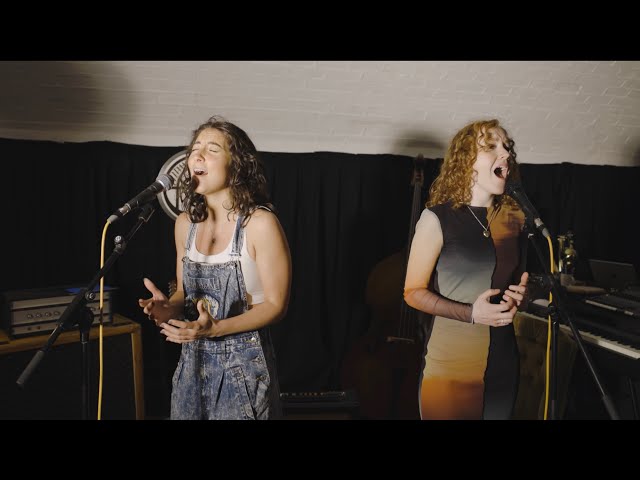
"Unexpected Visitor" is one of the key turning points in Ballad Lines - a folk-theatre duet about pregnancy, fear, and the split between dread and desire. In the musical's historical strands, the song binds Cait in 17th-century Scotland to Jean in 18th-century Ulster, letting two women from different centuries sing through the same bodily shock. Finn Anderson writes it with the pull of a traditional lament but the dramatic shape of a modern scene song. That blend is what makes it hit so hard. One woman hears the child as threat. Another hears it as hope. The number lives in that dangerous gap.
Review and Highlights
This is one of the songs that explains why Ballad Lines works. The writing is not content to say motherhood is complicated and leave it there. It stages contradiction. Cait sings from panic, exhaustion, and entrapment. Jean answers from hunger, longing, and the need to believe that one fragile thing might still mean grace. According to BroadwayWorld, "Unexpected Visitor" and "Words Are Not Enough" approach motherhood from opposing directions, with Cait desperate to avoid pregnancy while Jean wants to keep the baby she carries. That dramatic mirroring gives the number its charge.
The lyric also benefits from how physical it is. "Here in ma body." "Under ma skin." "Fires in me burn." No airy abstraction. The body is the battlefield and the evidence. The official lyrics page frames the song first as Cait trying to console herself while clinging to a secret, then later as Jean singing her own version when she realizes she is pregnant. That relay turns the piece into more than a duet. It becomes a bloodline echo.
According to the Guardian, the number stands out in a score already rich with traditional and adapted folk material. That rings true. "Unexpected Visitor" feels rooted in older ballad language, but its scene logic is fiercely theatrical. It moves plot, sharpens character, and keeps the show's central question in full view: what does it mean to become a mother, and who gets to choose?
Key Takeaways:
- It is a cross-century duet built on opposing responses to pregnancy.
- The song turns bodily experience into the main dramatic language.
- Its folk diction keeps the historical worlds distinct without freezing them in glass.
- The number is central to the musical's argument about choice, inheritance, and survival.
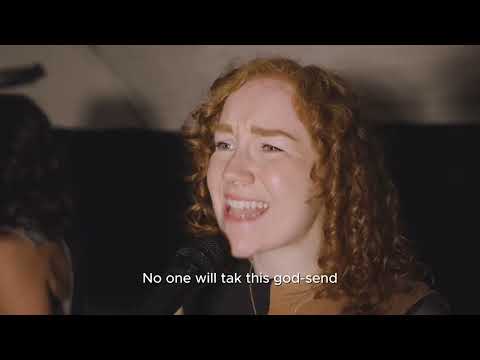
Ballad Lines (2026) - historical duet - diegetic. In the stage narrative, the song belongs to Cait and Jean, two women separated by time but linked by ancestry, each confronting pregnancy under pressure. Cait hears the life inside her as an unwelcome change. Jean, after an initial shock, begins to treat the same event as something she might choose to welcome. In public release form, the number appears as a studio-cast track and in short rehearsal and press-preview clips online. It matters because it puts the show's theme of reproductive choice into direct musical contrast rather than tidy argument.
Creation History
Ballad Lines was created by Finn Anderson and Tania Azevedo as a folk musical tracing one family across Scotland, Ireland, Appalachia, and modern New York. Official production pages describe the work as a blend of Scottish, Irish, and Appalachian ballads with a contemporary score, and "Unexpected Visitor" sits right in the middle of that design. The track first appeared on the Ballad Lines (Studio Cast EP) on July 18, 2025, then on the full Ballad Lines (Studio Cast Recording) album released September 12, 2025. Platform listings credit the studio version to Finn Anderson and Ballad Lines featuring Kirsty Findlay, Parisa Shahmir, and either Rebecca Trehearn or Ballad Lines Studio Cast depending on the service. By the time the London run opened at Southwark Playhouse Elephant in January 2026, reviews were already highlighting the song as one of the clearest expressions of the show's focus on motherhood and autonomy.
Lyricist Analysis
The lyric is built around repetition, but not the lazy kind. Anderson uses repeated phrases to show thought hardening into instinct. "Here in ma body" lands like a pulse check at first, then becomes a kind of verdict. The body keeps reporting the truth even when the mind wants to refuse it. That is good scene writing. Repetition here is not decoration. It is pressure.
Meter-wise, the song leans into short, stress-led units that feel natural in the mouth. "Fear in ma body." "I dinna want it." "Take this from me." These lines are tight, almost percussive. Then the song opens into longer phrases when Jean begins imagining the child as possibility rather than threat. That contrast helps the number breathe dramatically. Cait contracts. Jean expands.
The rhyme is simple and flexible. "God" and "no" are close enough to pull against each other. "Ears" and "fears" lock in cleanly. "Turn" and "burn" arrive with a harder closure. The lyric is more interested in recurring sounds than in a neatly ornamental scheme. That suits the folk frame. A polished literary finish would have dulled the urgency.
Phonetically, the Scots-inflected diction matters. "Ma," "hae," "fae," "dinna," "guid," "wi." These are not gimmicks. They place the song in specific mouths and specific histories. At the same time, the central image is universal enough to travel. An unexpected visitor. An unwelcome change. The phrase sounds domestic, then quietly devastating.
Structurally, the duet gains force from counterpoint. Cait and Jean do not just share a melody. They share a condition and split the interpretation. One line can mean panic in one century and hope in another. That is clever theatre craft, and it gives the song a larger dramatic reach than a single-character solo would have managed.
Song Meaning and Annotations
Plot
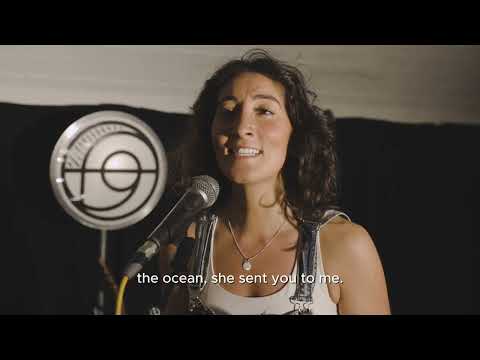
Cait realizes she is pregnant and sings from dread, secrecy, and bodily alarm. Generations later, Jean faces the same fact in Ulster after a brief affair with a sailor. Her sister Shona pushes practical fear - shame, poverty, social exclusion, marriage pressure. Jean resists and slowly shifts toward claiming the pregnancy as her own choice. As the song deepens, Cait and Jean begin to overlap musically, turning two separate crises into one inherited chorus of female experience.
Song Meaning
The meaning of "Unexpected Visitor" lies in contrast. The same event can arrive as curse, miracle, burden, anchor, terror, or chance, depending on who lives it and under what conditions. Ballad Lines is interested in motherhood, but not in any flattened version of it. This song makes that clear. For Cait, pregnancy is something imposed on her body and future. For Jean, it begins as danger but becomes one thing she can choose in a world where very little belongs to her.
That tension is why the number matters so much in the musical. According to the Southwark Playhouse production page, the show asks what it means to become a mother and at what cost. "Unexpected Visitor" is one of the places where that question stops sounding thematic and starts sounding personal, immediate, and bruisingly human.
Annotations
Here in ma body, I feel in ma body, an unwelcome change, an unwelcome visitor.
This is the core image. Pregnancy is not introduced as blessing, not at first. It is framed as intrusion. The language is domestic and intimate - a visitor comes into your house - but the body is the house. That makes the line more unsettling than a blunt medical description would have been.
How do ye cast away what is a gift fae God? With every new moon ye pray tae the heavens "no".
The lyric catches the trap in one move. The pregnancy is culturally named a gift, yet the person carrying it is praying against it. Religion and bodily autonomy collide without the song needing to lecture about either. In a folk setting shaped by church power and village scrutiny, that conflict cuts deep.
Oh, but the walls hae eyes. Oh, an the walls hae ears. So where are yer darkest fears tae go?
This is social pressure turned into architecture. Privacy barely exists. The walls themselves become witnesses. In practical terms, the line tells you why Cait and Jean cannot simply confide safely. In dramatic terms, it creates a whole village with almost no exposition.
Oh, no place I can turn, tak this from me. Oh, fires in me burn, an I canna sleep at night.
Cait's section is a portrait of panic. The body is not glowing or blooming. It is burning. That matters because the musical refuses to romanticise every pregnancy it stages. There is pain here, fear here, a plea for reversal.
How could I cast away a gift o the greatest kind? Sent wi a sang on the tide, it's meant tae be.
Jean answers the same situation from a different emotional ground. The phrase "sent wi a sang on the tide" turns conception into fate, almost into folklore. The sailor is gone, the future is unstable, but Jean reaches for meaning anyway. She needs the child to signify something larger than abandonment.
Under divided skies where hunger and hatred thrives, somethin pure is growin in me.
This is one of the song's strongest turns. The social world around Jean is split by scarcity and hostility, yet she imagines the child as a source of purity. That can sound naive, but that is exactly why it hurts. Hope is often the least practical thing in the room.
Hello there. Hello ye wee rascal.
After all the dread and argument, this tiny greeting lands like a cracked smile in the dark. The child becomes person rather than condition. It is a tonal pivot, and a brave one. The song lets tenderness enter without pretending the danger has gone away.
Lyrical themes and message
The themes are motherhood, autonomy, secrecy, religion, class pressure, and the unequal conditions under which women make choices. The song also folds in the wider theme of inheritance. Cait and Jean are not just rhyming dramatically. They are part of the same line, carrying related burdens through different centuries.
Emotional arc
The arc starts in fear, moves through social pressure, and then splits. Cait stays close to panic. Jean edges toward hope. When the two voices overlap, the result is not neat resolution but a double truth. One body can reject what another body longs to hold. The song is strong because it lets both realities stand.
Production and instrumentation
Reviews describe the score as fiddle-heavy, rhythm-driven, and rich with ensemble textures, and this number benefits from that folk foundation. Even on the studio recording, the arrangement feels shaped to support voices first. That is the right instinct. The dramatic power lives in the contrast between the singers and in the repeated bodily phrases that cut through the accompaniment.
Idioms, symbols, and historical touchpoints
The title phrase is the main symbol. It lets pregnancy be talked about in indirect, socially legible language, which fits communities where direct speech can be dangerous. The song's historical touchpoints are equally important. Cait is a minister's wife in 17th-century Scotland. Jean is a teenager in 18th-century Ulster. Both live in worlds where public shame, economic pressure, and family control shape the future as much as private feeling does.
Technical Information (Quick Facts)
- Song: Unexpected Visitor
- Artist: Finn Anderson and Ballad Lines
- Featured: Kirsty Findlay, Parisa Shahmir, and Rebecca Trehearn or Ballad Lines Studio Cast depending on platform credits
- Composer: Finn Anderson
- Producer: Finn Anderson and KT Producing
- Release Date: July 18, 2025 on Ballad Lines (Studio Cast EP); September 12, 2025 on Ballad Lines (Studio Cast Recording)
- Genre: Folk musical, soundtrack, contemporary folk theatre
- Instruments: Lead vocals, duet vocals, folk accompaniment, rhythm-led ensemble textures
- Label: Finn Anderson and KT Producing
- Mood: Tense, conflicted, intimate, searching
- Length: about 3:03 on the studio-cast recording
- Track #: 4 on the full studio-cast recording
- Language: English with Scots and Ulster-inflected diction
- Album: Ballad Lines (Studio Cast Recording)
- Music style: Original folk-theatre duet shaped by traditional ballad texture
- Poetic meter: Stress-led, repetition-based phrasing with loose ballad influence
Frequently Asked Questions
- Who sings "Unexpected Visitor" on the studio recording?
- The track is credited to Finn Anderson and Ballad Lines, with featured performers including Kirsty Findlay and Parisa Shahmir. Some platform listings also include Rebecca Trehearn, while others list Ballad Lines Studio Cast.
- What is the song about?
- It is about pregnancy and the conflicting meanings it can carry. Cait experiences it as fear and intrusion, while Jean gradually reads it as hope and chosen purpose.
- Is this an original song or an adaptation of a traditional ballad?
- It is an original Finn Anderson song, though it is shaped by folk idiom and sits beside adapted traditional material in the score.
- Where does the number fit in the story?
- It belongs to the historical strands of Ballad Lines, linking Cait in 17th-century Scotland with Jean in 18th-century Ulster through a shared bodily crisis.
- Why is the phrase "unexpected visitor" so effective?
- Because it lets the lyric speak indirectly about pregnancy while keeping the feeling intimate and unsettling. The body becomes a room, and the change inside it becomes someone who has arrived without permission.
- Does the song take a side on motherhood?
- No. That is one reason it works. It lets two women hold opposite truths at once and refuses to flatten either response into a slogan.
- Was the song released before the full album?
- Yes. It appeared on the Ballad Lines (Studio Cast EP) on July 18, 2025 before the full studio-cast recording was released on September 12, 2025.
- Did reviewers single it out?
- Yes. The Guardian called it a standout, and BroadwayWorld highlighted it as one of the songs that most clearly explores motherhood from a specific character angle.
- Is there verified chart, certification, or award data for the track?
- I could not verify any public chart entry, certification, or individual award listing for the song through March 13, 2026.
- What makes the lyric feel rooted in folk tradition?
- The repeated phrasing, the stress-led lines, and the Scots-inflected diction all give it the shape of something inherited, even though it is an original theatre song.
Additional Info
- The official lyrics page presents the song in stages, first through Cait and then through Jean, which makes the text itself read like a handed-down form being revised by experience.
- Southwark Playhouse billed Ballad Lines as a story about what each generation breaks, reshapes, or carries forward, and this song is one of the clearest examples of that idea in action.
- Short promotional clips online feature live snippets of the number, including cast performances shared during the London run, which helped position it as one of the production's signature scenes.
- WhatOnStage included the album in its year-end round-up of favourite musical theatre concept albums, showing that the recording had visibility beyond the stage run itself.
Key Contributors
| Entity | Type | Relationship |
|---|---|---|
| Finn Anderson | Person | Wrote and composed "Unexpected Visitor"; co-created Ballad Lines. |
| Tania Azevedo | Person | Co-created and directed Ballad Lines. |
| Kirsty Findlay | Person | Performs Cait on stage and on the released track. |
| Parisa Shahmir | Person | Featured performer on the studio-cast track. |
| Rebecca Trehearn | Person | Listed as a featured performer on some platform credits for the track. |
| KT Producing | Organization | Release partner for the studio-cast EP and album. |
| Southwark Playhouse Elephant | Venue | Hosted the London production in 2026. |
| Cait and Jean | Characters | Historical women whose contrasting responses drive the song. |
Sources
Data verified via the official Ballad Lines lyrics page, Finn Anderson's official Ballad Lines page, Southwark Playhouse production material, Apple Music, Spotify, YouTube track uploads and promo clips, plus stage coverage from The Guardian, BroadwayWorld, London Theatre, and 1883 Magazine.