

Must It Be Love? Lyrics
Must It Be Love?
Just because I found his kiss appealing, doesn't mean I care for him...It was just a temporary feeling, flying on a fleeting whim.
Just because I'm restless as a kitten and floating in a trance,
doesn't have to mean that now I'm smitten and bitten by romance.
My heart's a quiver, but must it be love?
Sure, I shiver, but must it be love?
Here in the stillness, I was chilled tonight.
Still, chill or illness, can't explain my plight.
My thoughts assemble, then fly like a dove.
True, I tremble, but must it be love?
This feeling frightens me yet I adore it...
Should I trust it? Why must it be love?
Any other feeling, I could take in stride.
Any other feeling, I could cast aside.
But this... emotion just pulls me along.
Like an ocean, its tide is so strong.
If this is love, then am I ready for it?
No... that's just it..
Oh must it be love?
I just mustn't let it be love.
[Thanks to N.C. for corrections]
Song Overview
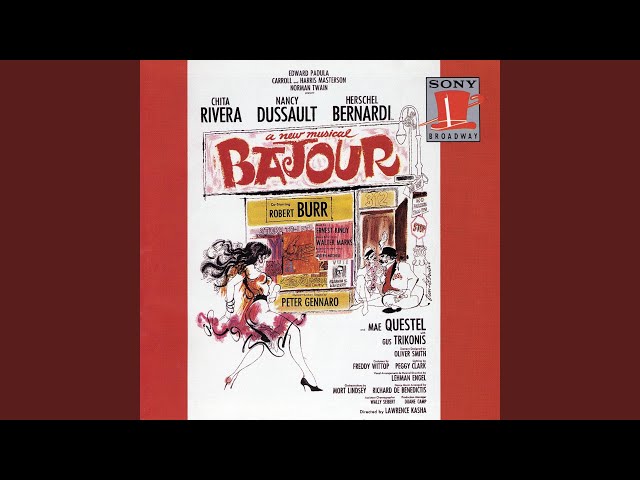
Written as Bajour's key romantic turn, Nancy Dussault's "Must It Be Love?" lyrics present Emily Kirsten at the moment when scholarship gives way to feeling. It is a Broadway ballad, but not a syrupy one. The scene arrives after Lou kisses her, so the song works as a pause, a self-check, and a quiet panic attack in three neat minutes. The writing is gentler than Emily's earlier comic material, yet Walter Marks still keeps the thought process alive inside the melody. That is what makes the number stick - it sounds dreamy, but the mind inside it is still racing.
Review and Highlights
"Must It Be Love?" is the song in Bajour where the show lets Emily stop explaining herself and simply feel. Well, almost. Marks writes it as a romantic ballad, but the best thing about it is that it never loses her intelligence. She does not melt. She studies her own reaction. Peter Filichia, writing for Masterworks Broadway, described it as the show's big romantic ballad, while in another Masterworks essay he called Dussault's music here "plaintive." Both labels fit. The song is soft around the edges, yet it keeps one foot in uncertainty. That hesitation gives it character.
Key takeaways:
- It is Emily Kirsten's central love song in the original Broadway score.
- The number follows Lou's impulsive kiss and turns plot movement into interior reflection.
- Nancy Dussault's performance relies on restraint, clean phrasing, and a slightly questioning tone.
- The song balances classic Broadway romance with a self-aware, analytical heroine.
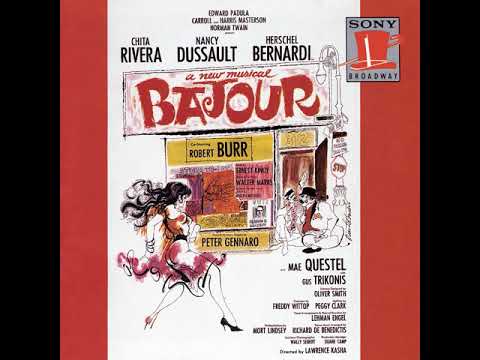
Bajour (1964) - stage musical number - diegetic within the world of the show. It appears in Act I after Lou begins to worry about Emily and kisses her, leaving her to wonder whether the shift she feels is real love or simply the shock of being seen differently. Dramatically, the number matters because it pulls Emily away from pure research logic and toward the human mess she has been trying to observe from a safe distance.
Creation History
Bajour opened on Broadway on November 23, 1964, with a book by Ernest Kinoy and music and lyrics by Walter Marks, based on Joseph Mitchell stories first published in The New Yorker. The original company included Nancy Dussault as Emily, Chita Rivera as Anyanka, Herschel Bernardi as Cockeye Johnny Dembo, and Robert Burr as Lou MacNiall. "Must It Be Love?" was recorded for the Columbia Masterworks cast album, first released on December 4, 1964. Digital editions usually list the track at 2:42, track 9, with Thomas Z. Shepard credited as producer and Lehman Engel as conductor. There is also a nice bit of cast-album lore attached to it: according to Peter Filichia's report of a lunch with Shepard, Dussault did not sing the final phrase on the original recording, another singer taking over at the very end.
Lyricist Analysis
Walter Marks shifts gears here. After Emily's more crowded, comic writing elsewhere in the score, this lyric opens out into a more legato speech-rhythm, though it still does not lock into a rigid poetic foot for long. The dominant movement feels conversational with a lyrical lift - closer to natural speech stretched onto melody than to a strict iambic or trochaic frame. That looseness matters. Emily is trying to name a feeling she does not quite trust, so the line lengths and stresses sound exploratory rather than settled.
The rhyme scheme seems built for smoothness, with Broadway-friendly perfect rhymes anchoring the thought, but Marks avoids making the song too tidy. The phrases often land with a slight delay, as though Emily is revising herself while singing. That produces a mild syncopated uncertainty. Breath economy does a lot of the acting. Longer phrases suggest she is allowing herself to drift, while shorter checks in the line act like little jolts of caution.
Phonetically, the number softens compared with the sharper consonant clusters of her comic songs. You hear fewer hard plosives driving the text and more open vowels that let the melody bloom. Still, the title phrase has enough bite in it to keep the emotional question active. Structurally, the song works because it does not answer itself too early. The central hook keeps returning as a real question, not decorative repetition. That restraint gives the ballad its pulse.
Song Meaning and Annotations
Plot
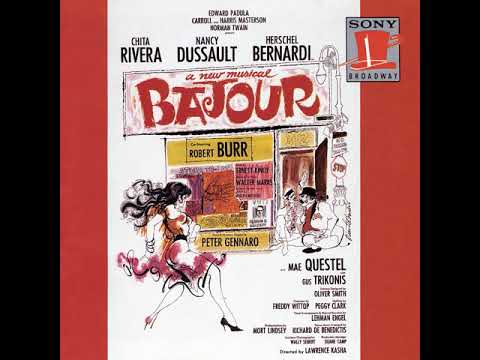
Emily Kirsten begins Bajour as an anthropology student eager to classify, decode, and control the world around her. By the time "Must It Be Love?" arrives, that neat frame is cracking. Lou's impulsive kiss leaves her off balance. Instead of processing a culture, she has to process herself. The song captures that shift in real time. She is not declaring devotion. She is circling the possibility and trying not to sound foolish while doing it.
Song Meaning
The song's meaning sits in hesitation. Emily is not asking whether romance exists in the abstract. She is asking whether this specific, inconvenient feeling now taking hold in her has crossed the line into love. Because she is Emily, the question comes dressed in caution. The mood is tender, but there is a scientist's curiosity still hanging around the edges. She wants evidence. She wants certainty. Love, of course, refuses to supply either one.
That tension is what gives the ballad its shape. It is about surrender, yes, but only partial surrender. The song shows a woman discovering that emotion cannot be held at arm's length forever. In a show full of hustles, masks, and performance, that small private doubt feels refreshingly plainspoken.
Annotations
Must it be love?
The title line is not rhetorical. That is the whole point. Emily does not sing it like someone already gone. She sings it like someone staring at a result she did not expect from the experiment.
After he impulsively kisses her, she wonders, "Must It Be Love?"
Masterworks Broadway's synopsis gives the song its clean dramatic trigger. No fog here. The number is tied directly to Lou's kiss, which means the ballad is less a free-floating mood piece and more a plotted emotional reaction.
the show's big romantic ballad
That detail from Peter Filichia matters because it places the song in the score's architecture. This is Emily's major lyrical release point, the place where the show makes room for warmth after a lot of clever movement and comic friction.
Theme and message
The main theme is reluctant recognition. Emily has spent much of the show trying to be an observer. Here she becomes the observed subject, at least to herself. The message is not that love solves everything. It is that love interrupts systems, and sometimes that interruption tells the truth better than analysis does.
Mood and dramatic arc
The emotional arc is quiet but clear. The song starts in uncertainty, warms into possibility, then lands without full resolution. Good choice. A tidy answer would have made the number less human. Instead, it keeps a suspended feeling, as if Emily is stepping onto thin ice and listening for the crack.
Style, rhythm, and instrumentation
Musically, it is a Broadway ballad with a soft center and careful pacing. Filichia noted Mort Lindsey's orchestrations on the score, praising the use of flute, piccolo, and bongos across the album. In this number, the orchestral support feels designed to cushion the vocal line rather than push it. The rhythm is gentler than Emily's earlier pieces, but the pulse still moves. Nothing is allowed to sag.
Cultural and historical touchpoints
As a 1964 musical-theater love song, "Must It Be Love?" belongs to a Broadway tradition where a heroine pauses to measure a feeling before yielding to it. But Emily is not built like the standard ingenue. She is academic, modern, verbal. That makes the song feel slightly off-center in a good way. It borrows the romantic frame and then slips a skeptical brain inside it.
Metaphors and key phrases
The most important phrase is the title itself because of that verb, "must." It sounds logical, almost forced, as if emotion has become a proposition to be tested. Love is framed not as fantasy but as a conclusion she may be compelled to accept. Funny, really. Emily turns the heart into homework.
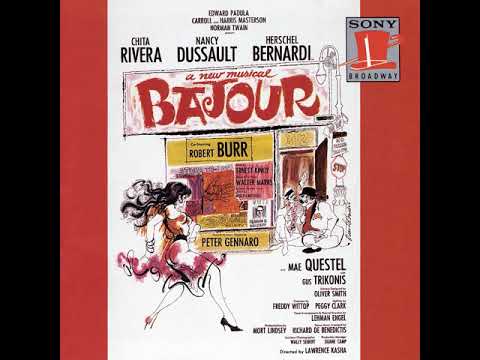
The song also gains weight from where it sits in the score. Emily had already been drawn into the Dembeschti world through study and fascination. Here the pull becomes personal. That does not erase the show's comic machinery, but it changes the temperature. For a moment, the anthropology student stops taking notes and starts listening to her own pulse.
Technical Information (Quick Facts)
- Song: Must It Be Love?
- Artist: Nancy Dussault with the Bajour Original Broadway Cast
- Featured: Bajour Orchestra
- Composer: Walter Marks
- Producer: Thomas Z. Shepard
- Release Date: December 4, 1964 for the LP; many digital services list January 1, 1964
- Genre: Show tune, musical theater, romantic ballad
- Instruments: Orchestra
- Label: Columbia Masterworks; digital reissue via Masterworks Broadway
- Mood: Tender, reflective, uncertain
- Length: 2:42
- Track #: 9
- Language: English
- Album: Bajour (Original Broadway Cast Recording)
- Music style: Broadway romantic ballad
- Poetic meter: Conversational speech-rhythm with lyrical expansion
Frequently Asked Questions
- Who sings "Must It Be Love?" in the original cast recording?
- Nancy Dussault sings the song as Emily Kirsten on the 1964 original Broadway cast album.
- Who wrote "Must It Be Love?"
- Walter Marks wrote both the music and lyrics for the number as part of his score for Bajour.
- Where does the song appear in the musical?
- It appears in Act I after Lou kisses Emily, prompting her to question whether her changing feelings have become love.
- What kind of song is it?
- It is a Broadway romantic ballad, though the lyric keeps a questioning edge rather than settling into easy certainty.
- Why is the song important to Emily's character?
- Because it marks the point where Emily stops functioning only as an observer and starts admitting that she is emotionally involved in the story.
- Is this one of the major songs in Bajour?
- Yes. Masterworks commentary identifies it as the show's big romantic ballad, which makes it one of Emily's most important solo moments.
- Did anything unusual happen during the cast-album recording?
- Yes. Peter Filichia reported Thomas Z. Shepard's recollection that Nancy Dussault did not sing the final phrase on the original recording and another singer completed it.
- Was the song revived later?
- Bajour returned in York Theatre Company's Musicals in Mufti series in 2007, with Angel Desai playing Emily and singing the number in that production.
- Did the song chart as a single?
- No reliable single-chart run turned up in the available sources. The documented chart activity belongs to the cast album rather than this track by itself.
- Is there an official YouTube upload?
- Yes. A Masterworks Broadway topic-channel upload of the original cast recording track is available on YouTube.
Awards and Chart Positions
The song itself did not surface as a separate chart hit in the sources checked, but the show and cast album did attract awards attention. Bajour earned Tony nominations for Nancy Dussault and choreographer Peter Gennaro, while Walter Marks received a Grammy nomination for the cast album score category. The original cast album also reached the Billboard album chart.
| Type | Year | Recognition | Result |
|---|---|---|---|
| Tony Awards | 1965 | Nancy Dussault - Best Performance by a Leading Actress in a Musical | Nominated |
| Tony Awards | 1965 | Peter Gennaro - Best Choreography | Nominated |
| Grammy Awards | 1966 | Walter Marks - Best Score From An Original Cast Show Album for Bajour | Nominated |
| Billboard album chart | 1965 | Bajour original cast album | Peak No. 144 |
Additional Info
- Masterworks Broadway's plot synopsis places the song with unusual clarity: Lou kisses Emily, and the ballad begins as her immediate response to that action.
- The 2007 York Theatre Company presentation kept the song alive in performance history, with Angel Desai singing Emily's material in the Mufti staging.
- The original cast album first LP release was dated December 4, 1964, a useful detail because many digital platforms flatten everything to January 1, 1964.
- According to Peter Filichia's Masterworks essay, the cast-album take preserved a small hidden handoff at the end of the song - a bit of recording-room trivia that most listeners would never notice.
Key Contributors
| Entity | Type | Relationship |
|---|---|---|
| Walter Marks | Person | Wrote music and lyrics for Bajour and "Must It Be Love?" |
| Ernest Kinoy | Person | Wrote the book for Bajour |
| Nancy Dussault | Person | Originated Emily Kirsten and sang the song on the cast album |
| Robert Burr | Person | Played Lou MacNiall, whose kiss triggers the song |
| Lehman Engel | Person | Conducted the cast recording |
| Thomas Z. Shepard | Person | Produced the original cast album |
| Columbia Masterworks | Organization | Issued the original cast album |
| Masterworks Broadway | Organization | Maintains the digital reissue and editorial archive |
| Sam S. Shubert Theatre | Venue | Hosted the Broadway opening of Bajour |
| York Theatre Company | Organization | Presented the 2007 Musicals in Mufti revival |
Sources
Data verified via Masterworks Broadway album and editorial pages, IBDB production records, Playbill's Mufti casting report, Grammy artist and awards pages, Billboard archive references, and track metadata from Apple Music, Amazon Music, Shazam, Spotify, Muziekweb, and Ovrtur.