Love Never Dies Lyrics – All Songs from the Musical
Love Never Dies Lyrics: Song List
- Act 1
- Prologue
- The Coney Island Waltz
- That's the place you ruined, you fool
- Heaven By The Sea
- Only For Him / Only For You
- The Aerie
- Til I Hear You Sing
- Giry Confronts The Phantom / Are you Ready to Begin
- Christine Disembarks
- Arrival of the Trio / Are You Ready to Begin
- What A Dreadful Town
- Look With Your Heart
- Beneath A Moonless Sky
- Once Upon Another Time
- Mother Please, I'm scared
- Dear Old Friend
- Beautiful
- The Beauty Underneath
- The Phantom Confronts Christine
- Act 2
- Entr'acte
- Why Does She Love Me
- Devil Take The Hindmost
- Heaven By The Sea (Reprise)
- Ladies... / The Coney Island Waltz (Reprise)
- Bathing Beauty
- Mother, did you watch?
- Before The Performance
- Devil Take The Hindmost (Quartet)
- Love Never Dies
- Ah, Christine!
- Gustave! Gustave!
- Please, Miss Giry, I want to go back...
About the "Love Never Dies" Stage Show
This work is a continuation of the famous musical ‘The Phantom of the Opera’. Lyrics were written by C. Hart & G. Slater. Screenplay – Lloyd Webber, B. Elton, G. Slater, F. Forsyth. Composer – A. L. Webber. The first show of the musical took place in March 2010 at the Adelphi Theatre in the West End. Director is J. O'Brien. The choreography was created by J. Mitchell. Starring: R. Karimli & S. Boges. In December, the show has been suspended for four days – Webber reworked it, taking into account the critical remarks. At the end of August 2011, the play was ended.Planned premiere in Shanghai was moved to Melbourne. Showing of musical lasted for seven months in 2011. Then the theatrical moved to Sydney, where stayed on the scene for another three months. The performance completed in Australia. Actors: B. Lewis & A. O'Byrne. This histrionics was found to be more successful than in the West End. The show visited several countries: Denmark (2012-2013), Austria (2013), Japan (2014) & Germany (2015). Planned premiere on Broadway in 2015 did not take place. In 2017, it is planned to tour the performance in North America.
In 2010-2011, the British version of the musical was nominated for the Broadway World UK Award (8 pieces), WhatsOnStage.com (2 awards) and Laurence Olivier (1 piece). Australian performance in 2011 was highly appreciated by critics. The performance received Helpmann Award in 3 categories. Reviews about the new variant of musical were different. Some critics felt that it loses its history, while others have given positive reviews, appreciating the skill of the composer.
Release date: 2010
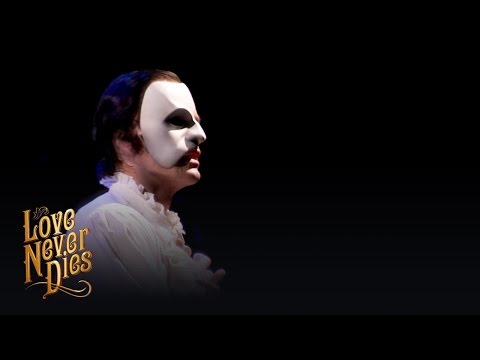
"Love Never Dies" – The Musical Guide & Song Meanings
Review: the problem the lyrics are hired to solve
“Love Never Dies” is a sequel that insists it is a reunion. That distinction is the show’s whole gambit. The lyrics have to persuade you that time passed, people hardened, and the Phantom’s obsession didn’t mature so much as metastasize. If you buy the premise, the score can do what Andrew Lloyd Webber does best: yearning as architecture.
Glenn Slater’s lyric-writing, with later assist work by Charles Hart in the post-opening revisions, tends to favor declarative emotional signage over mystery. That is not inherently a flaw. This plot needs signposts. We are in a carnival world where everyone is lying to themselves, and the lyric often functions like a flashlight pointed at the lie.
Where the writing really lands is in its recurring vocabulary: voice, debt, ownership, performance, “proof.” Characters keep trying to convert feeling into transaction. That’s the show’s sharpest idea, and it’s why the best numbers are the ones that weaponize intimacy. The Phantom doesn’t just want Christine. He wants her to validate the story he wrote about himself ten years ago.
Listener tip: if you’re new, start with the 2012 filmed Australian staging for clarity, then return to the 2010 cast album for vocal emphasis. The show exists in multiple versions, and the meaning of a lyric can shift depending on what the staging is willing to admit.
How it was made: rewrites, repairs, and why the show kept changing
The musical is loosely adapted from Frederick Forsyth’s novel “The Phantom of Manhattan,” with book credit shared by Andrew Lloyd Webber and Ben Elton alongside additional material credits. From the beginning, it carried a peculiar burden: it had to extend a finished myth without making the original feel smaller.
In London, the production opened at the Adelphi Theatre in March 2010, and then did something that still reads like a confession. It shut down briefly in November 2010 for substantial rewrites, and returned with producer Bill Kenwright overseeing changes, plus a lyric-polish pass credited to Charles Hart. That is the show telling you, in plain industrial terms, that the first draft was not landing as intended.
The Australian production that followed (Melbourne 2011) did not just “revive” the piece. It recalibrated it. New staging and design choices made the story play more like a heightened backstage melodrama than a gothic aftermath, and that version became the template for many later productions. That’s also the version preserved in the filmed release, which has quietly become the way most people actually meet the show.
The recordings reflect the same instability. The 2010 cast album arrived in deluxe and standard editions, and the surrounding publicity leaned hard on archival Coney Island imagery, interviews, and “behind the scenes” framing, as if the album itself needed to contextualize what you were about to hear.
Key tracks & scenes: 8 lyrical pressure points
"’Til I Hear You Sing" (The Phantom)
- The Scene:
- Act I, early. The Phantom in his private aerie, separated from the boardwalk bustle below. The staging usually treats his space as a controlled void: dim, clinical, and built around the idea of listening.
- Lyrical Meaning:
- This is obsession described as artistic necessity. The lyric tries to make fixation sound like vocation. It also sets the show’s recurring claim that Christine’s voice is not just beauty, it’s proof that his life still matters.
"The Coney Island Waltz" (Company)
- The Scene:
- Act I, opening movement into Phantasma. Billboards, performers, and a crowd that behaves like a tide. It’s the show’s first big act of seduction: look, don’t think yet.
- Lyrical Meaning:
- Even when the lyric content is light, the subtext is predatory. Coney Island is framed as a place where appetite runs the schedule, which makes it the perfect setting for the Phantom’s new brand of control.
"Beneath a Moonless Sky" (Christine, The Phantom)
- The Scene:
- Act I, after Christine has arrived and the past starts pressing through the walls. A late-night encounter, often staged with narrowed light and a sense of time slipping, as if the theatre itself is remembering for them.
- Lyrical Meaning:
- The lyric reframes the original story by insisting on a consummation. It’s not coy. It’s consequential. If you accept this number, the rest of the plot stops being “impossible” and becomes “reckless.”
"Once Upon Another Time" (Christine, The Phantom)
- The Scene:
- Act I, in the emotional hangover after “Moonless Sky.” The show slows down on purpose. The music turns memory into an active force rather than a scrapbook.
- Lyrical Meaning:
- This is the score’s best trick: nostalgia as threat. The lyric isn’t just longing. It’s a recruitment pitch, persuading Christine to mistake intensity for fate.
"The Beauty Underneath" (The Phantom, Gustave)
- The Scene:
- Act I, when the Phantom meets Gustave and decides to mold him. It’s staged like a dangerous masterclass, brightening as the boy is drawn in, then snapping back into shadow when adults intrude.
- Lyrical Meaning:
- The lyric sells a cruel philosophy: beauty excuses damage. For the Phantom, it’s self-justification. For Gustave, it’s the first taste of a worldview that prizes talent over safety.
"Why Does She Love Me?" (Raoul)
- The Scene:
- Act II begins in a bar. Raoul is alone, sour, and very aware that he is losing the narrative of his own marriage. The lighting in most productions pins him down like an exhibit.
- Lyrical Meaning:
- This is the show turning Raoul into a self-interrogation. The lyric makes him admit insecurity without redeeming it. It’s the musical’s bluntest portrait of entitlement curdling into despair.
"Devil Take the Hindmost" (Raoul, The Phantom)
- The Scene:
- Act II, the bet. It’s usually staged as a duel without swords: the Phantom engineers the terms, Raoul pretends he’s choosing them. The energy is tight, almost athletic.
- Lyrical Meaning:
- The lyric is about masculinity as gambling addiction. Both men treat Christine as prize, not person. The show doesn’t excuse that. It weaponizes it.
"Love Never Dies" (Christine)
- The Scene:
- Act II, the performance centerpiece. Christine sings the Phantom’s written aria under stage lights that make the theatre within the theatre feel like a trap snapping shut.
- Lyrical Meaning:
- It’s a love song that doubles as legal document. The lyric keeps using certainty to mask coercion. The Phantom wants her voice to say “yes” so he can stop hearing “no.”
Live updates (2025–2026)
Information current as of January 28, 2026.
The show is still moving, mostly outside the English-language mainstream. Andrew Lloyd Webber’s official news feed flagged a Tokyo run at Nissay Theatre at the start of 2025, and listings show performances spanning January 17 to February 24, 2025. If you’re tracking the piece for 2026 planning, that Japan activity is the most concrete recent anchor.
In London, the revised Australian version received a high-profile West End concert presentation at Theatre Royal Drury Lane in August 2023, with casting announcements and coverage confirming its status as an event run rather than a full sit-down return.
Internationally, the show’s official social channels have also posted end-of-run messaging for a China tour, signaling at least one recent touring cycle has wrapped.
For at-home viewing, the 2011 Melbourne staging was filmed and released on DVD and Blu-ray (widely circulated from 2012 onward). It remains the easiest way to see the story mechanics cleanly, especially if you only know the 2010 album.
Notes & trivia
- The London production closed for several days in November 2010 for rewrites, then returned with creative changes associated with Bill Kenwright and new lyric work credited to Charles Hart.
- Official Charts records the cast album’s UK Albums Chart peak at No. 10, with first chart date 20 March 2010.
- Decca’s 2010 release plan included a deluxe edition with bonus DVD material and a booklet, leaning into “context” as part of the product.
- The show exists in a “London original” and a heavily revised “Australian template” that many later productions follow, including the filmed version.
- The Phantom’s Coney Island world borrows from older theatrical burlesque traditions rather than the faux-operas of “Phantom,” which changes how lyrics sit inside the show’s performance-within-performance scenes.
- In 2025, Andrew Lloyd Webber’s own site spotlighted the show’s arrival in Japan, a reminder that the piece has had a long second life in translation.
Reception: what critics hit, and what they couldn’t deny
The critical story has been remarkably consistent: many reviewers admired the production surface and questioned the underlying drama and language. Even sympathetic takes often separate the score’s pull from the book’s credibility. That split is practically the show’s brand now, and the revisions can be read as an attempt to make the emotional contracts feel less arbitrary.
“The score is one of the composer's most seductive.”
“Earnestness is the keynote, Slater’s lyrics are prosaic.”
“a rollercoaster ride of obsession and intrigue.”
Quick facts: show + album metadata
- Title: Love Never Dies
- Year: 2010 (West End premiere; original cast recording release)
- Music: Andrew Lloyd Webber
- Lyrics: Glenn Slater (additional lyric work credited to Charles Hart in revised versions)
- Book credits: Andrew Lloyd Webber, Ben Elton, with additional material credits associated with Frederick Forsyth and Glenn Slater
- Basis: “The Phantom of Manhattan” by Frederick Forsyth (with characters originating from Gaston Leroux)
- Original West End venue: Adelphi Theatre (London)
- Recorded template version: Australian staging filmed in Melbourne (Regent Theatre), released on home video from 2012
- Original cast recording: Released March 8, 2010 (UK) and March 9, 2010 (North America) in standard and deluxe editions
- UK chart note: Cast album peaked at No. 10 on the Official Albums Chart
- Recent verified production activity: Tokyo (Nissay Theatre) Jan 17 to Feb 24, 2025; West End concert event (Drury Lane) Aug 2023
Frequently asked questions
- Can you provide the full lyrics here?
- No. Full lyric text is copyrighted. This guide focuses on meaning, placement, and how the lyric-writing functions in the drama.
- Which recording should I start with?
- If you want story clarity, start with the filmed Australian staging (released from 2012). If you want the original launch sound, use the 2010 cast album.
- Why are there “different versions” of the show?
- Because the London production was revised after opening, and the later Australian staging made further substantial changes. Many later productions follow that revised template.
- Is the 2010 cast album a complete document of the score?
- It’s comprehensive for the recording’s chosen structure, but it’s still an album, not a full archival capture of every staging moment across versions.
- Is it playing anywhere now?
- Recent confirmed activity includes Tokyo in early 2025 and a West End concert event in 2023. For 2026, check local presenters, since the official site marketing can be date-light.
Key contributors
| Name | Role | Contribution |
|---|---|---|
| Andrew Lloyd Webber | Composer; book credit | Built a score engineered for romantic pressure and spectacle, then oversaw major revisions after opening. |
| Glenn Slater | Lyricist | Wrote lyrics that translate obsession into direct emotional argument, prioritizing clarity over ambiguity. |
| Charles Hart | Additional lyrics | Credited with lyric adjustments during the post-opening rework period. |
| Ben Elton | Book credit | Helped shape the sequel’s dramatic frame, including the Coney Island relocation. |
| Frederick Forsyth | Source author; additional material credit | Wrote the novel “The Phantom of Manhattan,” which the musical draws from loosely. |
| Jack O’Brien | Original director (London) | Led the initial London staging, widely praised for production fluidity even by skeptical reviewers. |
| Bill Kenwright | Producer associated with London revamp | Oversaw the retooled return after the 2010 shutdown for revisions. |
| Simon Phillips | Director (Australia template; later international use) | Directed the revised Australian staging that became the most widely seen version via filming. |
Sources: Andrew Lloyd Webber Musicals (official site), Official Charts Company, Playbill, The Guardian, Evening Standard (review reprint), Operabase, LoveNeverDies.com (official), Wikipedia.