
Li'l Abner Lyrics: Song List
- Act 1
- Overture
- It's A Typical Day
- If I Had My Druthers
- Jubilation T. Cornpone
- Rag Offen The Bush
- Namely You
- Unnecessary Town
- What's Good For General Bullmoose
- The Country's In The Very Best Of Hands
- Sadie Hawkins Day (Ballet)
- Act 2
- Oh, Happy Day
- I'm Past My Prime
- Love In A Home
- Progress Is The Root Of All Evil
- Put 'Em Back
- The Matrimonial Stomp
About the "Li'l Abner" Stage Show
Li'l Abner is an original musical of the end of 60s, which became an instant classic of the genre of satirical comedy. The project is based on the comic book series of the same name by Alfred Caplin. The American society has not developed a consensus on the mentioned issue: some favor open derision of incompetence of the US government (of those times), while others strongly protest against the too critical position of the author on the basic ideas of American society. The same fate was waiting for directors of this musical, when they have decided to create it. Nevertheless, it was worth it and the play paid off. Lyrics were written by Norman Panama & Melvin Frank. The lyrics belong to J. Mercer. Music’s author is Gene de Paul.
The first Broadway’s show was on November 1956. Since then, New Yorkers were able to visit 693 performances. Such an impressive number of productions was due to extraordinary interest from viewers. Some of them have visited dozens of it in order to enjoy once again the satirical comedy of Alfred Caplin in the performance of the country's best artists.
The production has received positive reviews from critics. The only remark, which was unanimously voiced by the majority of spectators, that the theatrical adaptation was not able to transfer flawlessly the spirit of the comic book. Artistic performance was marked by high ratings. In particular, Michael Kidd, performing the title role, won the Tony Award. Brooks Atkinson from the New York Times praised the choreographic talent of the artist, saying that if everyone were able to move the same as Michael, in professional ballet there would be no room left for other talented guys.
Release date of the musical: 1956
"Li'l Abner" – The Musical Guide & Song Meanings
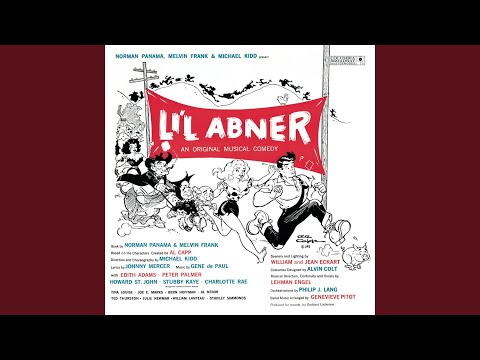
Review: Mercer’s lyrics, Kidd’s choreography, and the show’s satirical aim
Li'l Abner (1956) is a musical comedy that behaves like a comic strip with a megaphone. It wants to charm you with hillbilly nonsense, then slip a political lecture into your back pocket. Sometimes the lecture lands. Sometimes it lands like a pie in the face, which may be the point. The show’s real success is that it commits to its own logic: Dogpatch is absurd, and Washington is even worse.
Johnny Mercer’s lyrics are the sly engine here. He writes in bright American vernacular, with punchy internal turns that make satire sound like party music. The best numbers feel like fake folk songs with a sharp modern edge. “The Country’s in the Very Best of Hands” is the show’s cynical anthem, a chorus of cheerful surrender. “Progress Is the Root of All Evil” is nastier, more specific, and funnier because it lets power brag out loud.
Gene de Paul’s score does not pretend it is “important.” It aims for momentum, clarity, and melody you can whistle while you pretend you did not just hear a song about government incompetence. And then there is Michael Kidd’s contribution: the movement is not decoration. It is storytelling. When the words risk turning Dogpatch into a one-joke postcard, the dancing gives the characters a pulse. The show’s signature “Sadie Hawkins Day Ballet” is proof that this material can communicate best when it stops talking and starts sprinting.
How it was made: Al Capp’s deal, Paramount’s plan, and a dance that stole the spotlight
Getting Al Capp’s Dogpatch to Broadway took time and negotiation. Accounts of the production history describe multiple suitors before Capp struck a deal in 1955 with the eventual stage team, with Paramount Pictures financing and eyeing a follow-up film. That business DNA matters: Li'l Abner is built like a mass-audience event, with broad character types and set-piece numbers designed to read fast from the back row.
On the creative side, the show’s identity is unusually clear: Panama and Frank’s book provides the gag framework, Mercer and de Paul supply tuneful satire, and Kidd delivers the show’s most durable theatrical “memory,” the extended comic chase/dance sequence around Sadie Hawkins Day. Scholarly writing on postwar musical theatre points to that lengthy “Sadie Hawkins Day Ballet” as a highlight of Kidd’s work, and modern reissues underline the dance’s importance by including rehearsal material as bonus audio.
The recorded afterlife is also telling. The original cast recording was made in November 1956 under conductor Lehman Engel, and later label releases expanded the package with extras, including an unheard rehearsal tape of the “Sadie Hawkins Day Ballet” and additional material not on the first issue. That is a strong hint about where the show’s true prestige sits: in craft, not plot.
Key tracks & scenes: 8 lyrical moments that carry the story
"It’s a Typical Day" (Company)
- The Scene:
- Dogpatch wakes up in a bustle of chores and goofy routine. The stage picture often plays like a moving cartoon panel, with townspeople popping in and out of focus.
- Lyrical Meaning:
- A mission statement: this town is ordinary, and that “ordinary” is its camouflage. The lyric sets up the show’s satirical trick. The sillier Dogpatch looks, the easier it is to sell serious commentary later.
"If I Had My Druthers" (Li'l Abner)
- The Scene:
- Abner drifts by the fishing hole with his pals, blissfully unambitious, allergic to romance, and proud of it.
- Lyrical Meaning:
- This is a character song built on refusal. The lyric romanticizes “doing nothing,” which is funny until you realize the show is about what happens when the outside world forces Dogpatch to make choices.
"Jubilation T. Cornpone" (Marryin’ Sam, Dogpatchers)
- The Scene:
- The Cornpone Meetin’ becomes a civic ritual. The ensemble turns nostalgia into a pep rally, celebrating a general whose incompetence is treated as local folklore.
- Lyrical Meaning:
- Mercer’s lyric makes failure sound patriotic. It is a joke about American mythmaking, and it doubles as a warning about how easily crowds turn incompetence into tradition.
"Namely You" (Abner, Daisy Mae)
- The Scene:
- A rare pocket of sincerity amid the noise. Daisy Mae corners Abner emotionally, and Dogpatch briefly stops mugging for the audience.
- Lyrical Meaning:
- The lyric’s charm is its directness. “Namely You” is not a poetic maze. It is Daisy insisting that desire can be specific, not just hormonal chaos.
"The Country’s in the Very Best of Hands" (Dogpatchers)
- The Scene:
- Washington’s influence seeps in, and the town sings with cheerful confidence that feels a little too rehearsed.
- Lyrical Meaning:
- Satire by false reassurance. The lyric is patriotic on the surface and bleak underneath, a sing-along version of “please do not look too closely.”
"Progress Is the Root of All Evil" (General Bullmoose)
- The Scene:
- Bullmoose reveals his plan with the delighted arrogance of a man who has never had consequences. Staging often leans into office-pageantry: flags, staffers, and a sense of official menace played as comedy.
- Lyrical Meaning:
- A villain song that mocks corporate and governmental doublespeak. The lyric is funny because it is too honest. It makes exploitation sound like policy, which is exactly the satire.
"Sadie Hawkins Day Ballet" (Orchestra / Ensemble)
- The Scene:
- Sadie Hawkins Day detonates into chase choreography. Women pursue men, couples collide, and the town becomes a kinetic maze.
- Lyrical Meaning:
- No lyric needed, and that is the point. This dance is the show admitting that bodies can tell the joke and the story faster than words, especially when the premise is a social rule flipped upside down.
"Put ’Em Back" (Wives)
- The Scene:
- After “progress” transforms husbands into handsome strangers, the wives revolt. It is a farce setup that plays like domestic horror disguised as vaudeville.
- Lyrical Meaning:
- The lyric is about control: who gets to define what a “better” man looks like, and what happens when improvement destroys affection instead of helping it.
Live updates 2025-2026: licensing, recordings, and where “Li'l Abner” lives now
Current as of January 28, 2026. Li'l Abner is not an active Broadway or West End title right now, but it is very much alive as a licensable property. Concord Theatricals continues to represent the show for secondary-stage productions, with a current licensing page and synopsis aimed at schools, regional theatres, and community companies.
The other “now” story is audio access. The Original Broadway Cast Recording remains available on major streaming services, and the label’s YouTube topic uploads show the album circulating as an official digital catalog item, with a playlist dated September 2025 and individual tracks delivered “Provided to YouTube by Masterworks Broadway.” For a 1956 comedy, that is the modern version of a revival: the cast album stays in the feed, ready for rediscovery.
If you are tracking the piece for programming or SEO intent, these are the durable hooks for 2026 audiences: the famous “Sadie Hawkins Day” cultural reference, Kidd’s dance reputation, and Mercer’s sharp political jokes, which directors keep updating in local productions even when the basic Dogpatch engine stays the same.
Notes & trivia
- Li'l Abner opened on Broadway November 15, 1956 at the St. James Theatre and ran 693 performances.
- The show won Tony Awards for Michael Kidd (Choreography) and Edie (Edith) Adams (Featured Actress in a Musical).
- IBDB’s song list credits Lehman Engel’s musical direction and includes the “Sadie Hawkins Day” sequence as a distinct centerpiece.
- The commercial recording session date is documented as November 18, 1956, with Engel as conductor.
- Masterworks Broadway’s expanded CD edition describes bonus audio including a rehearsal tape of the “Sadie Hawkins Day Ballet” and the song “What’s Good for General Bullmoose.”
- The show had a high-profile concert revival at New York City Center Encores! in 1998, a sign of its “score-first” reputation.
- Concord’s licensing copy highlights the satirical numbers most often cited by fans and directors: “If I Had My Druthers,” “Jubilation T. Cornpone,” “Namely You,” “Progress Is the Root of All Evil,” and “The Country’s in the Very Best of Hands.”
Reception: praise for the score and the movement, doubts about the adaptation
Historically, Li'l Abner gets its flowers for movement and musical craft, and gets side-eye for how it translates Al Capp’s strip. That split opinion is almost flattering. It implies the show did not settle for “cute.” It tried to be satire, and satire invites disagreement.
Later revivals often repeat the same critique in new language: the score and choreography can still entertain, while the book can feel like it is trying to do too many political jokes at once. A 1991 Los Angeles Times review of a revival framed the show as holding up better than expected decades later, while a Variety assessment of a 2006 revival praised the tunefulness but pushed back on heavy-handed exaggeration. Put those together and you get the consistent truth: Li'l Abner works best when it plays the joke cleanly and lets Mercer’s lyric barbs do the dirty work.
Musical based on the comic strip “holds up well” more than three decades after the original production.
A “musical comedy” drawn from Al Capp’s hillbilly comic strip, judged by Variety through the lens of tone and respect for the source.
“Mercer contributed some of the sharper theatre lyrics of the decade,” in Masterworks Broadway’s album notes.
Quick facts
- Title: Li'l Abner
- Year: 1956
- Type: Musical comedy / satire
- Book: Norman Panama, Melvin Frank
- Based on characters created by: Al Capp
- Music: Gene de Paul
- Lyrics: Johnny Mercer
- Original director & choreographer: Michael Kidd
- Broadway theatre: St. James Theatre
- Opening: November 15, 1956
- Performances: 693
- Key musical set-pieces: “Sadie Hawkins Day Ballet” (extended dance sequence); “Progress Is the Root of All Evil” (Bullmoose’s policy-as-villainy song)
- Cast album: Original Broadway Cast Recording, recorded November 18, 1956 (Lehman Engel conducting); widely available on streaming, plus expanded CD notes describing bonus material
- 2026 availability: Licensed for secondary-stage production via Concord Theatricals
Frequently asked questions
- Who wrote the lyrics for Li'l Abner?
- Johnny Mercer wrote the lyrics, with music by Gene de Paul and a book by Norman Panama and Melvin Frank.
- What is “Sadie Hawkins Day” in the show?
- It’s Dogpatch’s social-rule flip: women chase and propose to men, staged in the musical as a major comic dance centerpiece, the “Sadie Hawkins Day Ballet.”
- Is the show political, or just hillbilly farce?
- Both. It plays broad comedy while aiming satirical shots at government, corporate power, and the language of “progress,” especially in numbers like “The Country’s in the Very Best of Hands” and “Progress Is the Root of All Evil.”
- Is there an original cast recording?
- Yes. The Original Broadway Cast Recording was recorded in November 1956 and has been reissued, with label notes describing expanded bonus material on later editions.
- Is Li'l Abner still produced in 2026?
- Not on Broadway, but it remains available for licensing through Concord Theatricals, and it turns up regularly in regional, educational, and community productions.
- Where should I start if I only want two tracks?
- Start with “Jubilation T. Cornpone” for Mercer’s comic bravado, then “Progress Is the Root of All Evil” for the show’s sharpest satirical bite.
Key contributors
| Name | Role | Contribution |
|---|---|---|
| Johnny Mercer | Lyricist | Wrote satirical lyrics blending American vernacular with Broadway punch. |
| Gene de Paul | Composer | Composed a tuneful score built for comedy momentum and dance-driven staging. |
| Norman Panama | Book | Co-wrote the book adapting Al Capp’s Dogpatch into stage farce and political parody. |
| Melvin Frank | Book | Co-wrote the book with a comedy-engine structure designed for set-piece numbers. |
| Al Capp | Creator of characters | Created the original comic strip world and characters used in the musical. |
| Michael Kidd | Director & Choreographer | Defined the show’s theatrical identity through large-scale comic movement, especially the “Sadie Hawkins Day Ballet.” |
| Lehman Engel | Conductor / Musical director (recording) | Conducted the 1956 commercial recording session and appears on catalog credits. |
| Concord Theatricals | Licensing | Represents the show for secondary-stage licensing in 2026. |
Sources: IBDB; Concord Theatricals; Oxford Academic; Masterworks Broadway; Ovrtur; Playbill; Los Angeles Times; Variety; Spotify; YouTube (Masterworks Broadway topic uploads); StageAgent; Cambridge Core.