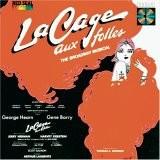
La Cage Aux Folles Lyrics: Song List
About the "La Cage Aux Folles" Stage Show
Release date of the musical: 1983
"La Cage aux Folles" – The Musical Guide & Song Meanings
Review: what the lyrics are really arguing
Why does a musical built on feathers, false lashes, and farce keep sneaking up on people in the final thirty seconds of a ballad? Because La Cage aux Folles (1983) is a show where the jokes are the camouflage and the lyrics are the oath. Jerry Herman writes in crisp declaratives, the sort that sound like party chatter until you realize they are also survival instructions. Harvey Fierstein’s book sets up a comedy of manners, then lets Herman’s lines do the emotional accounting.
The central lyrical idea is not “be yourself” in the bumper-sticker sense. It’s “be yourself even when love requires negotiation.” Every major number is a pressure test: performance versus privacy, parenthood versus public respectability, romance versus the son who wants you to be “normal” for one dinner. Herman’s strongest lyric habit here is reframing: he takes the language of disguise and turns it into a philosophy. When the show says “illusion,” it is not apologizing for drag. It’s accusing the straight world of its own costumes.
Musically, Herman keeps his Broadway craft intact: bright patter for chaos, big belt lines for self-definition, and a handful of melodies that return like a familiar hand on the shoulder. The score’s style matters because the characters use it differently. Georges sings like a master of ceremonies who has learned to narrate his feelings so he can survive them. Albin sings like someone who cannot afford distance; he experiences the lyric in real time. That tension is the show’s engine, and the soundtrack album captures how quickly comedy can flip into something raw.
Listener tip: play the cast recording in order at least once. The track list is basically the show’s emotional map. If you skip to the “anthem,” you miss the quiet setup that makes it feel earned, and you also miss how often Herman makes love sound like logistics.
How it was made: Herman, Fierstein, and the big Act I swing
The origin story is unusually clean in one sense: composer-lyricist Jerry Herman and playwright Harvey Fierstein are adapting Jean Poiret’s play into a Broadway musical comedy with an openly gay couple at its center. The mess, naturally, is in the tone. Multiple accounts describe a key creative disagreement: whether the show would become overt advocacy or stay inside a classic musical-comedy frame. Herman publicly stressed that he wrote “I Am What I Am” for a character in a specific moment, not as a manifesto, and that shift helped the piece expand beyond “limited appeal” assumptions.
There are also competing accounts of how the Act I finale crystallized. One version places the spark in a directorial framing of the moment; another credits Fierstein arriving with a scene that practically demanded Herman’s five words and Herman turning it into a song overnight. Either way, the end result is a structural flex: Act I ends with a declaration that feels like a showstopper, yet it also functions as a plot point, forcing the family to confront what they are asking Albin to erase.
If you want the most “in the room” evidence, look at how later productions talk about preserving the score’s original orchestrations and rhythmic shape. That is not nostalgia. It is a practical acknowledgement that Herman’s writing, at its best, is a delivery system: the jokes glide because the musical phrasing keeps them airborne, and the sincerity hits because the melody refuses to wink.
Viewer tip: in a live performance, sit close enough to see the makeup line work if you can, especially in the club numbers. Half the show’s theme is visible in the labor of transformation, and it changes how you hear the lyrics about “illusion.”
Key tracks & scenes: 8 lyrical turning points
"We Are What We Are" (Georges, Les Cagelles)
- The Scene:
- House lights fade into nightclub glare. The stage becomes a runway and a welcome mat at the same time, as Georges introduces the world of La Cage with practiced charm.
- Lyrical Meaning:
- Herman opens with a thesis: identity is partly constructed, and that construction is not a lie. The lyric makes drag a metaphor for everyone’s social performance, while still celebrating the specific courage of the people doing it out loud.
"(A Little More) Mascara" (Albin, Les Cagelles)
- The Scene:
- Backstage. A dressing-room ritual. Albin builds Zaza piece by piece, the room tightening around his private panic as the show demands sparkle on schedule.
- Lyrical Meaning:
- This is not vanity, it’s self-defense. The lyric argues that glamour is an optical device: when Albin feels “beautiful,” the world becomes bearable. Herman turns makeup into an emotional prosthetic, then makes you feel the ache underneath.
"With Anne on My Arm" (Jean-Michel, Georges)
- The Scene:
- Domestic sunlight replaces nightclub neon. Jean-Michel arrives with engagement news and a plan that will require his fathers to shrink themselves for political approval.
- Lyrical Meaning:
- On the surface, it’s youthful romance. Underneath, it’s the first time the show uses polite lyric language to smuggle in a threat: love comes with conditions, and the conditions are about optics.
"Song on the Sand" (Georges)
- The Scene:
- Late-night quiet. Georges is alone with memory, the kind that arrives when the club noise stops and you can finally hear what you have been avoiding.
- Lyrical Meaning:
- Herman gives Georges the show’s most romantic metaphor: love as something written where the tide can erase it. It’s tender, but it is also anxious, a portrait of a man who knows happiness can be overwritten by public pressure.
"I Am What I Am" (Albin)
- The Scene:
- Act I fracture. The apartment feels too small. Albin’s restraint breaks, and the staging often lets the club persona and the private partner collide in one spotlight.
- Lyrical Meaning:
- The lyric’s power is its specificity: it refuses “praise” and “pity,” and it rejects the idea that dignity is something granted by outsiders. It is also heartbreakingly relational; Albin is not performing for the crowd, he is fighting to stay visible to the people who love him.
"Masculinity" (Georges, Albin, The Dindons, Renauds, Tabarro)
- The Scene:
- A crash course in “acting like a man,” played like an etiquette lesson from hell. The comedy is choreographed control: posture, gestures, voice, all policed in real time.
- Lyrical Meaning:
- Herman skewers gender as a checklist, then exposes the cruelty of forcing someone to pass. The lyric is funny because it’s precise, and unsettling because the precision resembles actual social rules.
"Look Over There" (Georges)
- The Scene:
- Georges tries to steady the room. He addresses pain indirectly, pointing away from it, like a parent guiding a child’s gaze past something too sharp to name.
- Lyrical Meaning:
- This is the show’s emotional engineering. Georges asks for perspective, but the lyric also reveals his coping strategy: he survives by narrating. It is love as management, and it cuts because it is honest.
"The Best of Times" (Albin, Jacqueline, Company)
- The Scene:
- A restaurant erupts into communal sing-along energy. The room becomes a protective chorus, until the situation collapses under its own exuberance.
- Lyrical Meaning:
- Herman writes celebration as resistance. The lyric insists that joy is not frivolous. It is a tactic, a way of claiming space. When it tips into chaos, the show underlines the risk: visibility invites consequences.
Live updates 2025-2026: where it’s playing now
Information current as of January 2026. La Cage aux Folles is in an active revival cycle, mostly via high-profile limited engagements and major regional houses. In the U.S., The Muny mounted a summer 2025 production led by Norm Lewis (Georges) and Michael James Scott (Albin), with the venue highlighting the material through rehearsal features and promotional videos. Paris has also made a conspicuous statement: Théâtre du Châtelet programmed a large-scale French production in its 2025-2026 season, featuring Laurent Lafitte as Albin/Zaza and a full ensemble of “Cagelles,” positioning the show inside a broader Paris musical-theatre surge.
The biggest North American headline is New York City Center Encores! announcing La Cage aux Folles for June 17-28, 2026, directed by Robert O’Hara, with Billy Porter as Albin, and additional casting reported by major theatre outlets. Encores! programming language has emphasized honoring original orchestrations, which is catnip for listeners who care about how Herman’s melodies actually sit in the air.
Ticket behavior varies by market, but the trend line is clear: La Cage is being framed as both repertory comfort and a live argument about acceptance that reads differently in 2026 than it did in 1983. If you are tracking cast recordings alongside productions, the show is also unusually well served by major-reissue infrastructure: the original cast album remains widely available, and later recordings keep circulating on streaming platforms.
Notes & trivia: details worth knowing
- Broadway opening: August 21, 1983 at the Palace Theatre, running 1,761 performances through November 15, 1987.
- The show won the 1984 Tony Award for Best Musical, plus major wins for book and score.
- “I Am What I Am” is explicitly placed as the Act I finale in the stage work, which explains why it lands like a curtain and not just a pop single.
- Later commentary and scholarship often debates whether the show reads as assimilationist, liberationist, or a deliberately commercial blend that smuggles its politics in melody.
- The original cast recording track list is essentially the show’s plot spine: the emotional curve is baked into the album order.
- Modern productions frequently highlight the “Masculinity” sequence as choreography of social policing, because the joke depends on physical specificity.
Reception: then, now, and the anthem problem
In 1983, La Cage aux Folles arrived as a mainstream musical comedy with a gay couple at the center, and that fact alone shaped the critical lens. One recurring critical tension was whether the show was “political” or “just entertainment.” That binary misses how Herman and Fierstein operate: their argument is embedded in form. They use a familiar Broadway vocabulary so the audience can’t claim the message is “too niche” to understand.
Over time, the song most often extracted from the show, “I Am What I Am,” created an interpretive trap. Once a number becomes an anthem outside the theatre, listeners forget it is also a fight inside a family. That matters because the song’s dramatic function is not simply pride. It’s refusal of erasure as a condition of love.
“The minute I wrote ‘I Am What I Am’ changed all that... I wrote it for a character at a specific moment.”
“Ingratiating lyrics by Jerry Herman to his customarily seductive tunes... a universal story.”
A cry “from the heart,” asking for “neither praise nor pity.”
Quick facts: album and production metadata
- Title: La Cage aux Folles
- Broadway year: 1983
- Type: Musical comedy
- Music & lyrics: Jerry Herman
- Book: Harvey Fierstein
- Based on: Jean Poiret’s play La Cage aux Folles
- Original Broadway venue: Palace Theatre
- Original Broadway run: 1,761 performances
- Selected notable placements: “We Are What We Are” (opening nightclub number), “I Am What I Am” (Act I finale)
- Key album reference: Original Broadway Cast Recording track list widely distributed via major catalog services
- Recent major presenting contexts: The Muny (2025), Théâtre du Châtelet Paris (2025-2026 season), NYC Center Encores! (June 2026)
Frequently asked questions
- Who wrote the lyrics to La Cage aux Folles?
- Jerry Herman wrote both the music and lyrics, with Harvey Fierstein writing the book.
- Is “I Am What I Am” meant as a general anthem or a plot moment?
- Both, but it is written as a specific Act I turning point for Albin, where he refuses to be edited out of his own family.
- Which recording should I start with if I care most about lyrics?
- Start with the Original Broadway Cast Recording to hear how the lyric pacing matches the show’s original dramatic structure, then sample later recordings to compare vocal characterization.
- Is there a movie of the musical?
- There is a famous film lineage from the original play, but the Broadway musical itself is primarily experienced through stage productions and cast recordings.
- What is the show’s core theme in one sentence?
- Love is real, family is chosen and defended, and “respectability” is often just someone else’s costume.
Key contributors
| Name | Role | Contribution |
|---|---|---|
| Jerry Herman | Composer-Lyricist | Wrote the score and lyrics, including the Act I finale “I Am What I Am.” |
| Harvey Fierstein | Book writer | Adapted the story into a Broadway-ready book with sharp comic mechanics and emotional clarity. |
| Jean Poiret | Playwright | Wrote the source play that established the central premise and characters. |
| Arthur Laurents | Director (original Broadway) | Staged the original Broadway production, shaping its tonal balance of farce and sincerity. |
Sources: IBDB; Playbill; The Muny; Théâtre du Châtelet; What’s On Stage; New York Magazine; Masterworks Broadway; Broadway.com; Le Monde; Concord Theatricals.