
Kismet Lyrics: Song List
- Act 1
- Overture, Sands Of Time
- Rhymes Have I
- Fate
- Bazaar of The Caravans
- Not Since Nineveh
- Baubles, Bangles And Beads
- Stranger In Paradise
- He's In Love!
- Gesticulate
- Act 2
- Night Of My Nights
- Was I Wazir?
- Rahadlakum
- And This Is My Beloved
- The Olive Tree
- Zubbediya, Samahris' Dance
- Finale: Sands Of Time
- Was I Wazir?
About the "Kismet" Stage Show
Release date of the musical: 1953
"Kismet" – The Musical Guide & Song Meanings
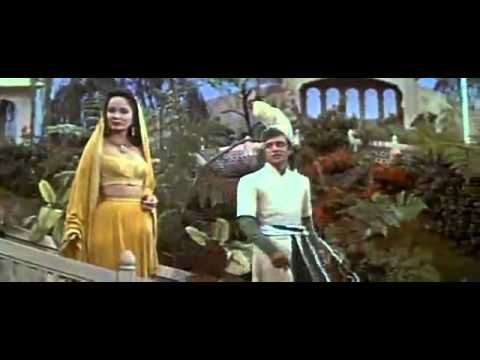
Review: the lyric problem Kismet can’t stop solving
Kismet is a hit machine built out of borrowed parts, and it knows it. The central trick is not the “Arabian Nights” window dressing. It’s the lyric engineering: Robert Wright and George Forrest take pre-existing melodies (mostly Borodin), then write English lines that behave like they belong on those contours. When the show feels irresistible, it’s because the lyrics don’t fight the music’s long, aristocratic breath. When it feels dated, it’s because the book and the period comedy often lean on stereotypes that modern ears won’t politely ignore.
For lyric readers, Kismet is a workshop in how to “Americanize” classical themes without breaking them. “Baubles, Bangles and Beads” turns a string-quartet melody into marketplace flirtation, and it works because the consonants are bright and percussive. “Stranger in Paradise” goes the opposite direction: vowels, glide, moonlight, a duet that tries to make the audience forget they’re hearing an opera tune with new paperwork. Even the comic material is craft-forward. “Not Since Nineveh” is essentially a sales pitch in couplets, a character persuading by rhyming faster than the room can object.
The score’s style matters because it changes the power dynamics. Borodin’s themes arrive with built-in grandeur, so the lyricists often compensate by writing characters who hustle. Hajj (the Poet) talks his way into safety. Lalume talk-sings her way into influence. The Caliph literally goes incognito, which is the plot admitting that romance requires camouflage. In good stagings, the lighting usually underlines this: the bazaar is blinding and public, the garden is hush and shadow, the palace is gold that still reads as a trap.
Listener tip: start with the 1953 Original Broadway Cast recording for text clarity, then sample the 1955 film versions for how Hollywood sweetens the same lyric moments into pure romance. You’ll hear how a “classic” gets re-edited by performance style.
How it was made: a commission, a composer, a newspaper strike
Kismet began as a commission from Edwin Lester, the Los Angeles Civic Light Opera impresario who had already backed Wright and Forrest on Song of Norway, another classical-to-Broadway adaptation. For Kismet, the team seized on Borodin for what they perceived as “exotic” flavor, then built a new musical on top of Edward Knoblock’s 1911 play. That origin story matters because the show’s identity is structural: it is collage by design, not accident.
Here’s the production-era curveball that shaped its launch: the show opened during a newspaper strike, so reviews weren’t arriving in the usual rhythm. The producers leaned into television advertising, and the score’s hit songs did the rest, blasting out beyond the theatre. It’s a very 1953 kind of irony. A musical marketed as old-world fantasy finds its audience through modern media.
One more behind-the-scenes detail that helps the lyric analysis: numbers written for the film did not stay in the film. “Bored,” created for the screen, became a common inclusion in later stage versions. That tells you the piece is still, quietly, in rewrite culture. Not the plot, mostly. The tonal balance.
Key tracks & scenes
"Rhymes Have I" (Hajj & Marsinah)
- The Scene:
- Sunrise outside the mosque. The stage is spare, dusty, public. Beggars guard their turf. Hajj and his daughter pitch poems like street food.
- Lyrical Meaning:
- The lyric establishes the show’s worldview: language is currency. Hajj is charming because he is desperate, and the rhymes are bargaining chips.
"Fate" (Hajj)
- The Scene:
- Still in the city, now with pressure. Hajj is challenged, threatened, and then given an opening to perform mysticism as survival. Lighting often tightens to a single, “listen to me” spotlight.
- Lyrical Meaning:
- “Fate” is a con man’s prayer. The lyric is deliberately grand because Hajj is inventing authority in real time.
"Not Since Nineveh" (Lalume, Wazir, Princesses, Ensemble)
- The Scene:
- The bazaar explodes with color and bodies. A trumpet cuts through. The Wazir’s police clear space, and Lalume arrives like perfume with a sharp edge. The Princesses want to go home. Lalume sells Baghdad.
- Lyrical Meaning:
- This is persuasion as spectacle. The lyric is built to overwhelm objections: geography jokes, ancient-city references, and a chorus that turns propaganda into party.
"Baubles, Bangles and Beads" (Marsinah)
- The Scene:
- Merchants lay out silks and jewelry in the marketplace. Marsinah becomes the center of a moving storefront display. Bright, glittering light; public attention; her delight edging into danger.
- Lyrical Meaning:
- The lyric is materialism with a wink, but it also frames Marsinah as desired object in a culture that treats her as tradable. The charm is the hook. The hook has a barb.
"Stranger in Paradise" (Marsinah & the Caliph)
- The Scene:
- A garden at moonrise. The city noise disappears. The Caliph, in disguise, meets Marsinah in the most romantic lighting the stage can afford: silver, soft, private.
- Lyrical Meaning:
- The lyric’s job is to make borrowed melody feel like original confession. “Stranger” is the key word: love is framed as sudden exile from normal life, and the garden becomes a temporary homeland.
"Gesticulate" (Hajj & Council)
- The Scene:
- Inside power. The council is rigid; Hajj is improvising. Dancers and movement often interrupt the political order, making the scene feel like a controlled riot.
- Lyrical Meaning:
- The lyric mocks bureaucracy by turning it into choreography. It’s also the show’s clearest admission that governance and performance are cousins.
"Bored" (Lalume)
- The Scene:
- Lalume alone, finally, with no audience to seduce. The palette often cools. Comedy drains into something sharper: ambition with nowhere to put it.
- Lyrical Meaning:
- “Bored” turns the seductress stereotype inward. The lyric argues that boredom is political, a symptom of being ornamental in a room run by men.
"And This Is My Beloved" (Marsinah, Caliph, Hajj, Wazir)
- The Scene:
- Late-act stakes, high ceremony. The stage picture often layers lovers and manipulators in the same frame, like a romantic painting with a knife hidden behind it.
- Lyrical Meaning:
- The lyric is pure elevation, but its dramatic function is strategic: it is love declared in public, making it harder for power to quietly erase.
"The Olive Tree" (Hajj)
- The Scene:
- Near the end, after the plotting has cost blood. Hajj turns reflective. Lighting narrows again, returning to the show’s opening simplicity.
- Lyrical Meaning:
- This is Kismet trying to moralize its own mischief. The lyric feels like a fable, and it’s meant to: Hajj becomes narrator, not just survivor.
Live updates: 2025–2026
Information current as of January 2026. There is no confirmed Broadway or West End revival of Kismet publicly announced for 2025–2026. The title’s most reliable “live” presence is licensing, where it continues to circulate in regional, amateur, and educational ecosystems through Music Theatre International.
That matters for the lyrics because Kismet is a show that gets “handled” in performance. Some productions lean into the operetta gloss and play the language as formal. Others sand down the datedness, often by tightening comedy bits and framing the setting more as storybook than “real” Middle East. If you are seeing it locally, ask which version they’re using, and whether “Bored” is included, because that choice tells you what tone the evening is aiming for.
Streaming and clip culture keep the big songs active even when the show itself is not in a major commercial run. “Stranger in Paradise” in particular has a long afterlife outside the theatre, and recordings keep pulling it back into circulation as a standalone standard.
Notes & trivia
- Kismet won the Tony Award for Best Musical (1954).
- The score is largely adapted from Alexander Borodin, including themes from Prince Igor and Borodin’s String Quartet No. 2.
- The show opened during a newspaper strike; producers leaned on television advertising while reviews were delayed.
- “Bored” was written for the film adaptation and later became common in stage versions.
- “Stranger in Paradise” is staged as a lovers’ duet and commonly placed in a moonlit garden rendezvous.
- The Original Broadway Cast recording’s track notes explicitly tie several hits to plot beats in the bazaar sequence, making the album unusually useful as a story guide.
- Myth-check: the “Kismet” you’ll see listed as touring on some concert sites is often a different entity (bands named Kismet). For the musical, check licensing houses and theatre calendars instead.
Reception: then vs. now
Even in 1953, critics clocked the oddity: a Broadway book leaning on corn, with first-class melodies doing the heavy lifting. One Time writer’s barb became immortal because it was accurate enough to sting for decades. Later criticism has shifted from “is it original?” to “is it tasteful?” and the Baghdad setting makes that question unavoidable in the 2020s. Opera houses and concert versions have sometimes tried to justify it on musical grounds alone, which is where the debates get loudest.
“a borrowed din from Borodin”
“music consisting of borrowed, bowdlerised, Broadwayised Borodin”
“sell its soul for a joke, and the jokes should be better”
Quick facts
- Title: Kismet
- Broadway year: 1953
- Type: Musical (book musical), adapted from a 1911 play
- Book: Charles Lederer & Luther Davis
- Music source: themes primarily by Alexander Borodin, adapted by Robert Wright & George Forrest
- Lyrics: Robert Wright & George Forrest
- Signature songs: “Stranger in Paradise,” “Baubles, Bangles and Beads,” “Not Since Nineveh”
- Selected notable placements: Bazaar sequence (“Not Since Nineveh,” “Baubles, Bangles and Beads”); moonlit garden duet (“Stranger in Paradise”)
- Album focus: 1953 Original Broadway Cast recording (Masterworks Broadway listing includes plot-linked track notes)
- Film: MGM adaptation released 1955
- Licensing: available via MTI (Music Theatre International)
Frequently asked questions
- Who wrote the lyrics to Kismet?
- Robert Wright and George Forrest wrote the lyrics and created the musical adaptation, largely using themes by Alexander Borodin.
- Is Kismet an original score?
- Not in the usual sense. Most melodies are adapted from Borodin, then re-texted and reshaped for Broadway, with some additional original connecting material credited to Wright and Forrest.
- Where does “Stranger in Paradise” happen in the story?
- It is staged as a lovers’ duet between Marsinah and the Caliph (in disguise), typically in a garden at moonrise.
- Why is “Not Since Nineveh” so important?
- It’s the show’s big “Baghdad sales pitch,” revealing Lalume’s power: she convinces by turning propaganda into entertainment.
- Is Kismet running or touring in 2025–2026?
- No major Broadway or West End revival is publicly confirmed for 2025–2026. The piece remains active primarily through licensed productions.
- Which recording should I start with for the lyrics?
- Try the 1953 Original Broadway Cast recording first for verbal clarity and pacing, then compare film-era versions to hear how performance style changes the same text.
Key contributors
| Name | Role | Contribution |
|---|---|---|
| Robert Wright | Lyricist / musical adapter | Re-texted Borodin themes into Broadway song forms; helped shape the show’s hit singles language. |
| George Forrest | Lyricist / musical adapter | Co-created the adaptation approach; key voice in turning classical melodies into popular standards. |
| Alexander Borodin | Composer (source music) | Primary musical source, especially themes from Prince Igor and String Quartet No. 2. |
| Charles Lederer | Book writer | Co-wrote the musical’s dialogue structure and comic mechanics based on Knoblock. |
| Luther Davis | Book writer | Co-wrote the book, shaping the plot’s con-man momentum and palace intrigue. |
| Edwin Lester | Commissioning producer (origin) | Commissioned the project for Civic Light Opera and assembled the adaptation team. |
Sources: IBDB, MTI (Music Theatre International), Masterworks Broadway, Wikipedia, Stranger in Paradise (song) reference, The Guardian, The Independent, Oxford Academic (Coming up Roses), YouTube (MGM trailer and OBC clip).