
Hello, Dolly Lyrics: Song List
About the "Hello, Dolly" Stage Show
The musical opened on Broadway on January 1964. It was hosted on the stage of St. James Theatre, where stood for more than two and a half thousand exhibitions (2844 exactly) for almost five years. Closure of the performance was in the last days of December 1970. Musical was constantly sold out, and the box office totaled about USD 27 million.
Musical has been revived thrice on Broadway, including a production, filled completely with African American actors, as well as four times in the West End. October 2009 musical visited Moscow State Academic Operetta Theater. Broadway still has plans to show it in 2017. A producer will be Scott Rudin (South Park, and one from the list of owners of all 4 major awards in Showbiz, EGOT. The Addams Family, Marvin's Room, Twilight, The Truman Show, Sleepy Hollow, Rules of Engagement, School of Rock, Lemony Snicket's A Series of Unfortunate Events, Revolutionary Road, The Social Network, True Grit, The Girl with the Dragon Tattoo, The Dictator, Ex Machina, While We're Young and Steve Jobs – these are the most remarkable among his works in filming and The Book Of Mormon – in the theater). Director was Jerry Zaks, a choreographer – Warren Carlyle. The prime is planned on April 2017. Incredible is also the fact that in 1964, the musical Hello, Dolly! took 10 out of 11 Tonies, rightly being recognized as one of the best musicals.
Release date of the musical: 1964
"Hello, Dolly!" – The Musical Guide & Song Meanings
Review: why these lyrics still land
“Hello, Dolly!” opens like a romp, but the lyric core is surprisingly sharp: money is a language, romance is negotiation, and confidence is a tool you can pick up again after grief. Dolly Gallagher Levi is introduced as “a woman who arranges things,” and the score treats arranging as an ethic. She intervenes. She edits other people’s stories. She also rewrites her own, which is the real trick.
Jerry Herman’s writing is direct and rhythmic, built for clarity in a big room. He likes bright verbs and clean punchlines. Even his sentiment leans practical. “Before the Parade Passes By” is not a vague yearning ballad. It is a plan. The lyric frames “joining the human race again” as a decision you can make on a specific afternoon, not a feeling that might arrive someday.
Musically, the show sits in the classic Broadway comedy line, but it keeps brushing against something more adult. “Ribbons Down My Back” and “It Only Takes a Moment” are not jokes, and the show is smart enough to place them after stretches of bustle. That contrast gives the fun its voltage. Dolly’s optimism is never naive. It is a chosen posture in a city that charges rent for everything, including loneliness.
Listener tip: if you want to hear the narrative spine, queue the 1964 cast recording and focus on the run from “Ribbons Down My Back” into “Before the Parade Passes By.” That is the point where the show stops being a farce and starts being a comeback story.
How it was made
The show is based on Thornton Wilder’s “The Matchmaker,” a farce with a surprisingly humane view of second chances. Producer David Merrick put the team together, with Michael Stewart on book and Jerry Herman writing both music and lyrics. Early on, the title was not “Hello, Dolly!” at all. It floated through variants including “Dolly: A Damned Exasperating Woman,” a phrase that captures the character’s engine but not her charm.
The development was famously rocky in tryouts. One fix became the key. In a PBS interview, Herman describes realizing the Act One closer needed to be about Dolly’s internal turn, then writing “Before the Parade Passes By” in a burst because the story’s “decision to come back to life” was what had been missing. That song does not just decorate the plot. It corrects it.
Another piece of behind-the-scenes history is how the title song jumped beyond Broadway. Louis Armstrong recorded “Hello, Dolly!” initially as a demonstration to help promote the Broadway show, then it was released commercially and became a major pop event in 1964, even interrupting the Beatles’ run at No. 1 on the Hot 100. That crossover success helped cement the song as a standard, not only a theatre number.
Myth-checking, because this gets muddled online: Armstrong did not “commission” the song as a personal single in a vacuum. The song was written for the musical, then his demo and release amplified it into a national anthem of welcome-back swagger.
Key tracks & scenes
"I Put My Hand In" (Dolly)
- The Scene:
- Early in Act I, Dolly crosses through Grand Central Station. The space reads as a city-sized crossroads, commuters and vendors streaming past. Lighting tends to feel public, bright, exposed. Dolly moves like she owns the timetable.
- Lyrical Meaning:
- The lyric announces Dolly’s method. She interferes, yes, but with intention. “Hand in” is both matchmaking and business strategy, which is why the song lands as character biography in two minutes.
"It Takes a Woman" (Horace Vandergelder)
- The Scene:
- At Vandergelder’s hay and feed store in Yonkers, Horace presents himself as the unbending center of the local economy. The scene plays in practical light, wooden counters, ledgers, and the feeling of a man who confuses routine with virtue.
- Lyrical Meaning:
- It is a self-flattering argument masquerading as folk wisdom. The lyric tells you exactly what Horace fears: unpredictability, mess, desire. It sets up why Dolly is dangerous to him.
"Put on Your Sunday Clothes" (Cornelius, Barnaby, Dolly, Ambrose, Ermengarde, and Company)
- The Scene:
- Act I explodes outward from Yonkers into the promise of New York City. The staging is built for motion: a crowd chorus, a sense of “let’s go” that feels like the street itself joining in. The lighting shifts from shop-floor realism to a more theatrical glow.
- Lyrical Meaning:
- The lyric is social aspiration with a grin. Everyone is dressing for the life they want. Even the comedy is a form of hunger, which is why the number reads as plot propulsion, not decoration.
"Ribbons Down My Back" (Irene Molloy)
- The Scene:
- Inside the hat shop, Irene is briefly alone in her own thoughts. The stage narrows. The light softens. The city noise feels farther away, like it has been pushed outside the door.
- Lyrical Meaning:
- The lyric is about visibility and permission. Irene is not pleading for romance. She is rehearsing the courage to be seen as someone worth choosing, including by herself.
"Before the Parade Passes By" (Dolly and Company)
- The Scene:
- Act I builds to a public rallying cry, often staged like a civic surge. Dolly is surrounded, but she is not swallowed. The lighting turns into momentum, brighter as her decision hardens.
- Lyrical Meaning:
- This is the show’s thesis in lyric form. The parade is time, opportunity, life itself. Dolly refuses to watch it from the curb. The song makes “rejoining” active, almost athletic.
"Elegance" (Irene, Cornelius, Minnie, Barnaby)
- The Scene:
- Act II begins with the young quartet trying on a new identity near the Hoffman House Hotel. The staging tends to lean into playful posing and self-invention, with a polished, showroom kind of light.
- Lyrical Meaning:
- The lyric is comedic, but it is also about class performance. They want to look like they belong. The joke is that “belonging” is mostly posture and vocabulary.
"Hello, Dolly!" (Dolly, Rudolph, Waiters, Cooks, and Company)
- The Scene:
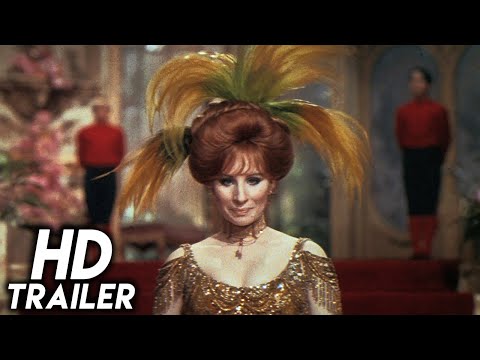
- Inside the Harmonia Gardens Restaurant, the room turns ceremonial. Critics regularly single out this sequence as the production’s visual feast, when the show leans fully into glamour. Spotlights and warm golds tend to make Dolly’s entrance feel like a coronation.
- Lyrical Meaning:
- The lyric is a welcome-back ritual. It is also a narrative hinge: Dolly’s past and present meet in public. She is not hiding behind matchmaking anymore. She is stepping into the center of the room.
"So Long Dearie" (Dolly)
- The Scene:
- Late Act II, after consequences and a courtroom detour, Dolly gets the last word with a smile sharp enough to cut glass. The lighting tightens again, focusing the audience on her control of tone and timing.
- Lyrical Meaning:
- It is a comic dismissal that doubles as empowerment. Dolly’s farewell is not bitterness. It is proof she can choose her exits, which is the show’s deeper promise.
Live updates for 2025/2026
Information current as of January 27, 2026. “Hello, Dolly!” is not currently running on Broadway. The most recent Broadway revival ended on August 25, 2018, and it remains a frequent title in regional and repertory seasons through licensing.
The biggest recent headline production was the West End revival at the London Palladium, which ran from July 6 to September 14, 2024, starring Imelda Staunton as Dolly Levi, with Andy Nyman as Horace Vandergelder and Jenna Russell as Irene Molloy. Reviews repeatedly praised the scale of the staging and the emotional shading Staunton brought to a role often played purely for brass.
Internationally, a high-profile Paris production opened at Lido 2 Paris on December 6, 2024, and was extended to run through February 4, 2025, with Caroline O’Connor as Dolly. That run kept the title visible in the European market after the London engagement ended.
Practical viewing tip for future revivals: the Harmonia Gardens sequence rewards a sightline that can take in the full width of the room. The scene is written as a social machine, and it reads best when you can see the whole mechanism move.
Notes & trivia
- The original Broadway production opened January 16, 1964 at the St. James Theatre and ran 2,844 performances, closing December 27, 1970.
- Playbill history credits the show with a then-record 10 Tony Awards, including Best Musical, and notes it was conceived with Ethel Merman in mind before Carol Channing originated the role.
- Herman has said “Before the Parade Passes By” was the song he felt the show needed, written when the team realized the Act I closer had to be Dolly’s turning point.
- The 1964 Original Broadway Cast Recording’s first LP release date is widely cited as February 1, 1964.
- The cast album hit No. 1 on the Billboard Top LPs chart the week of June 6, 1964, and is often credited as the best-selling album of 1964 in the US.
- Louis Armstrong’s “Hello, Dolly!” recording became a pop phenomenon in 1964, including a Hot 100 moment that ended a dominant Beatles run at No. 1.
- Scene placement is unusually clean for a classic comedy score: “Ribbons Down My Back” is staged inside the hat shop, and the title number lands in Act II inside the Harmonia Gardens Restaurant.
Reception
In 1964, critics and audiences embraced “Hello, Dolly!” as big-hearted musical comedy at full volume, and the Tony haul turned it into an instant institution. Later decades have argued about whether the plot is “thin.” The more useful question is what the plot is for. It is a delivery system for a worldview: you can grieve, you can laugh, and you can still return to the party without apologizing.
Recent critics tend to praise the score’s durability while judging each revival on one main factor: does the star make Dolly’s optimism feel earned? When the answer is yes, the lyric “it’s so nice to have you back where you belong” stops being a catchphrase and becomes a story beat.
“Staunton brings understated power and warmth to the role.”
“A lavish and heartfelt revival.”
“Mediocre comedies can make good musicals.”
Quick facts
- Title: Hello, Dolly!
- Year: 1964 (Broadway opening)
- Type: musical comedy
- Based on: “The Matchmaker” by Thornton Wilder
- Book: Michael Stewart
- Music & lyrics: Jerry Herman
- Original Broadway producer: David Merrick
- Original Broadway director/choreographer: Gower Champion
- Original Broadway venue: St. James Theatre
- Selected notable placements (scene mapping): “Ribbons Down My Back” (inside Mrs. Molloy’s hat shop); “Before the Parade Passes By” (Act I closer on 14th Street); “Hello, Dolly!” (inside Harmonia Gardens Restaurant, Act II)
- Cast album: Hello, Dolly!: The Original Broadway Cast Recording (RCA Victor); first LP release widely cited as February 1, 1964
- Chart note: cast album hit No. 1 on Billboard Top LPs the week of June 6, 1964
- Modern revival note: West End London Palladium revival ran July 6 to September 14, 2024 (Imelda Staunton)
Frequently asked questions
- Who wrote the lyrics for “Hello, Dolly!”?
- Jerry Herman wrote both music and lyrics, with a book by Michael Stewart.
- Where does “Put on Your Sunday Clothes” happen in the story?
- It appears in Act I as the characters launch themselves from Yonkers toward New York City, with a choral reprise at the Yonkers Depot.
- What is the emotional turning point song?
- “Before the Parade Passes By.” Herman described writing it when the team realized the Act I closer needed to be Dolly’s personal decision to rejoin life.
- Is there a movie version?
- Yes. The best-known film adaptation is the 1969 movie directed by Gene Kelly, starring Barbra Streisand as Dolly.
- Which cast recording should I start with?
- For original lyric intent, start with the 1964 Original Broadway Cast Recording (Carol Channing). For a modern Broadway sound, the 2017 New Broadway Cast Recording documents the most recent major revival.
- Is “Hello, Dolly!” running anywhere now?
- As of January 27, 2026, it is not running on Broadway. The most prominent recent engagement was the London Palladium revival in 2024, and the title continues to appear frequently in licensed regional productions.
Key contributors
| Name | Role | Contribution |
|---|---|---|
| Jerry Herman | Composer & lyricist | Wrote a lyric voice that balances brassy comedy with a clear, adult thesis about choosing life again. |
| Michael Stewart | Book writer | Shaped Wilder’s farce into a musical engine built around Dolly’s interventions and reversals. |
| Thornton Wilder | Source author | Created “The Matchmaker,” the narrative chassis that makes Dolly’s philosophy playable as comedy. |
| David Merrick | Producer | Steered the show through tryout changes and positioned it for a major Broadway launch. |
| Gower Champion | Original director/choreographer | Built the show’s kinetic staging language, with crowd movement that matches Herman’s rhythmic text. |
| Carol Channing | Original Broadway Dolly | Originated the role and set the template for Dolly’s vocal wit and theatrical command. |
| Imelda Staunton | West End Dolly (2024) | Headlined the London Palladium revival, praised for giving Dolly emotional depth alongside comedy. |
Sources: IBDB, Playbill, PBS American Masters (Jerry Herman interview), Masterworks Broadway, Billboard, The Guardian, Financial Times, The New Yorker, London Palladium official site, LondonTheatre.co.uk, Le Monde, Broadway.com.