
Godspell Lyrics: Song List
- Act 1
- Prologue / Tower of Babble
- Prepare Ye the Way of the Lord
- Save the People
- Day by Day
- Learn Your Lessons Well
- Bless the Lord
- All for the Best
- All Good Gifts
- Light of the World
- Act 2
- Turn Back, O Man
- Alas for You
- By My Side
- We Beseech Thee
- Beautiful City
- Day by Day (Reprise)
- On the Willows
- Finale
About the "Godspell" Stage Show
Release date of the musical: 1971
"Godspell" – The Musical Guide & Song Meanings
Review
What makes “Godspell” risky is not the theology. It is the tone control. The show asks an audience to accept a community of players who clown, tease, improvise, then suddenly ask for moral clarity with no warning. Stephen Schwartz’s lyrics win that gamble by treating belief as speech, not doctrine. A lot of the text is borrowed or adapted from scripture and hymnody, yet it rarely sounds like museum language. It sounds like people trying to make sense of each other in public.
The musical style is a collage that knows exactly why it is a collage. Folk-rock, gospel lift, vaudeville bounce, and pop hooks rotate like different ways of persuading a room. When a number is playful, the lyric often hides the knife in the punchline. When a number is plain, it lands harder because the show has earned the right to stop joking. “Day by Day” is the cleanest example. Its simplicity is structural. It is how the show teaches an audience to sing along before it asks them to grieve.
How it was made
“Godspell” began as a student work. John-Michael Tebelak first built it as a master’s thesis at Carnegie Mellon, then took an early version to La MaMa in New York. Producers saw commercial potential, but the score needed a unifying musical mind. Stephen Schwartz joined and re-scored the piece fast, pulling much of the lyric material from biblical text and the Episcopal hymnal, and keeping one key song, “By My Side,” from the student-written material. The Off-Broadway musical opened May 17, 1971 at the Cherry Lane Theatre, moved to the Promenade, and kept going for years.
The best origin detail is emotional, not logistical. Schwartz has recalled that Tebelak was jolted by an Easter service that felt like it missed the joy and urgency of Jesus’s teaching, so he tried to put that energy back onstage. That intention explains the show’s signature device: the audience is not just watching parables, they are being recruited into a temporary community. Schwartz later formalized that in notes for directors. The intermission wine is not a cute extra. It is the show’s social contract in liquid form.
Key tracks & scenes
"Prepare Ye (The Way of the Lord)" (John the Baptist)
- The Scene:
- A bare stage becomes a street-corner rally. John arrives like a siren. Lighting is often bright and open, as if the show refuses secrecy from the first beat. The ensemble gathers, curious, then complicit.
- Lyrical Meaning:
- The lyric functions as invitation and warning. “Prepare” is action, not mood. It sets the show’s ethic: participate or stay outside the circle.
"Day by Day" (A follower)
- The Scene:
- The first true commitment moment. A single voice steps forward, then the company builds harmony around it. Many productions soften the light here, less rally, more vow, like a candle finally lit.
- Lyrical Meaning:
- The text is a daily practice: see, hear, love. The genius is the repetition. It turns faith into routine, then turns routine into melody you cannot shake.
"All for the Best" (Jesus and Judas)
- The Scene:
- A show-within-the-show. Jesus and Judas play the banter like a vaudeville double act, often with props pulled from whatever the ensemble has been carrying. The lighting can feel like a cabaret special, warm and performative.
- Lyrical Meaning:
- The lyric is reassurance that starts to sound like denial. It is optimism with grit under the fingernails. The duet structure matters: comfort comes from community, not from certainty.
"Turn Back, O Man" (Company feature)
- The Scene:
- The second act cracks open with a burst of theatricality. Choreography often leans toward burlesque parody, then snaps into something sharper. Lighting can flash, then narrow, as if the party is being audited.
- Lyrical Meaning:
- Repentance becomes an address to the body. The lyric is blunt about appetite and distraction. It is the show saying: we formed the community, now we test it.
"Alas for You" (Jesus)
- The Scene:
- Jesus confronts hypocrisy. The ensemble often becomes a wall of observers, and the light shifts cooler, less playful. The scene feels like the first time the show stops trying to charm anyone.
- Lyrical Meaning:
- The lyric is accusation as rhythm. It names performative goodness and calls it empty. It is also a warning to the audience: you can enjoy the games and still miss the point.
"By My Side" (A follower)
- The Scene:
- A plea in the dark. The stage often empties, or the ensemble retreats to the edges. Lighting becomes intimate, almost private, like the show has stepped behind the curtain of its own joy.
- Lyrical Meaning:
- This is dependence stated without embarrassment. The lyric is not argument, it is need. That nakedness is why the song survives every staging concept.
"On the Willows" (Band / Company)
- The Scene:
- After the Last Supper and betrayal, the atmosphere changes shape. Musicians come forward. The sound itself becomes the grief. Light is often low and still, like breath held too long.
- Lyrical Meaning:
- The lyric is borrowed lament. It frames mourning as exile, and music as the thing you cannot bear to do, yet cannot stop doing.
"Beautiful City" (Company or Jesus, depending on version)
- The Scene:
- In many modern productions, this arrives as a pause before the Passion sequence, a glimpse of what the community could build if it survives the trauma. Lighting often lifts from shadow toward dawn, without becoming sentimental.
- Lyrical Meaning:
- The lyric is aspiration with bruises. It is civic, not abstract. It asks for repair and responsibility, which is why it feels current in every decade.
Notes & trivia
- The earliest “Godspell” was Tebelak’s master’s thesis at Carnegie Mellon, staged before it had a unified commercial score.
- The Off-Broadway musical opened May 17, 1971 at the Cherry Lane Theatre, transferred to the Promenade, and ran 2,124 performances before closing June 13, 1976.
- “By My Side” predates Schwartz’s re-score. Its music and lyrics came from the student team and were retained in the final show.
- The original production treated intermission as community-building. Cast served wine and mingled with the audience, often onstage.
- The 1971 Off-Broadway cast recording was released in July 1971 on Bell Records, with Schwartz as producer, and “Day by Day” later became a radio hit.
- Schwartz’s director notes emphasize that the intermission invitation is dramaturgy, not decoration, and that Act II shifts from play to consequence.
- The 2025 to 2026 Spanish revival directed by Antonio Banderas pushes a darker frame and foregrounds the Jesus-Judas conflict.
Reception
Critics and audiences have always fought over the same question: is “Godspell” theatre-kid sweetness, or a serious attempt to stage ethics without preaching? When a production finds the right edge, the lyrics sound disarmingly modern. When it does not, the jokes can feel like insulation. The 2011 Broadway revival reviews captured that tension, praising the energy while questioning the impact of the concept work.
“This scattershot approach adds laughs but diminishes what could be the power of ‘Godspell.’”
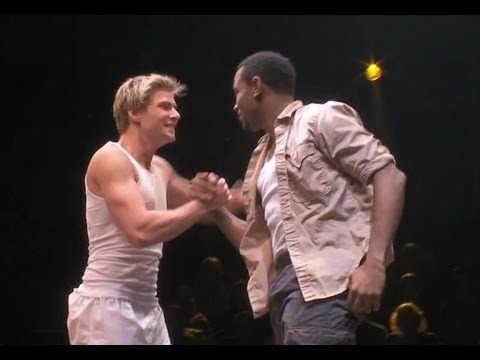
“The revival … finds ‘Weeds’ star Hunter Parrish playing a buff Jesus.”
“We opened at the tiny Cherry Lane theatre off-Broadway in May 1971. It was like kids putting on a show in a barn.”
Live updates (2025/2026)
Information current as of January 24, 2026. “Godspell” is not in a single, centralized commercial tour cycle right now. Its real present tense is regional production and licensing volume, plus one major European revival. Music Theatre International’s live production map shows a steady stream of booked “Godspell” runs into March to May 2026 across the U.S. and abroad, which is the clearest indicator of ongoing demand.
The most visible large-scale activity is in Spain. Antonio Banderas’s production is playing Málaga at Teatro del Soho CaixaBank through January 11, 2026, then transfers to Madrid’s Gran Teatro Pavón beginning January 21, 2026, with the Madrid engagement listed through March 1. Reported ticket pricing for Málaga has ranged from 25 to 59 euros, and the creative messaging has stressed a darker tone and a sharpened Jesus-Judas dynamic.
In the U.S., one notable example is Music Theater Works (Skokie, Illinois), scheduled October 23 to November 16, 2025, with published ticket ranges from $19.50 to $106. This is how “Godspell” tends to thrive now: a flexible piece that can be playful, civic, and contemporary without requiring spectacle to justify its existence.
Quick facts
- Title: Godspell
- Year: 1971 (Off-Broadway musical opening)
- Type: Musical parable; ensemble-driven series of parables (primarily Matthew)
- Music & new lyrics: Stephen Schwartz
- Book / original concept: John-Michael Tebelak
- Special songwriting credit: “By My Side” (music by Peggy Gordon; lyrics by Jay Hamburger)
- Original Off-Broadway opening: May 17, 1971 (Cherry Lane Theatre); transfer to Promenade; closed June 13, 1976 (2,124 performances)
- First Broadway production: 1976 (IBDB documents the Broadway engagement across multiple theatres)
- 2011 Broadway revival: Opened Nov 7, 2011; closed Jun 24, 2012; Circle in the Square
- 1971 cast album: “Godspell (1971 Off-Broadway Cast)” released July 1971; Bell Records; producer Stephen Schwartz
- 2011 cast album: “Godspell (The New Broadway Cast Recording)” released digitally Dec 20, 2011 via Ghostlight Records
- Selected notable placements: “Prepare Ye” as the ignition; “Day by Day” as first commitment; “All for the Best” as gospel-vaudeville argument; “On the Willows” as the quiet hinge into grief; “Beautiful City” as modern-vision bridge (often placed near the Passion sequence)
- Licensing: Available through Music Theatre International (MTI)
Frequently asked questions
- Is “Godspell” a rock musical?
- It borrows rock and folk-rock language, but it is broader than that. The score rotates through pop, gospel, and vaudeville to match the parable structure.
- Who actually wrote the lyrics?
- Stephen Schwartz wrote the music and the new lyrics for the show, drawing heavily from biblical text and hymn sources. “By My Side” is the key exception, retained from the student-written material.
- Why do some versions include “Beautiful City”?
- It was written for the film and later adopted by many stage versions. Modern productions often use it as a bridge from playfulness toward the Passion material.
- What happens at intermission in the original concept?
- The show traditionally invites the audience into community, with the cast mingling and sharing wine or grape juice. Schwartz’s director notes frame this as a core storytelling device.
- Is the show appropriate for schools?
- It is widely licensed and frequently produced by schools and youth groups, with versions like “Godspell Jr.” designed for younger performers. Content suitability still depends on a specific staging’s tone and local standards.
- Where can I start if I only know “Day by Day”?
- Try “Prepare Ye,” then “All for the Best,” then “On the Willows.” That sequence shows the full emotional contour: invitation, persuasion, consequence.
Key contributors
| Name | Role | Contribution |
|---|---|---|
| Stephen Schwartz | Composer, Lyricist, Producer (1971 cast album) | Unified the score and lyric voice, blending scripture, hymnal language, and pop instincts; documented staging intent in director notes. |
| John-Michael Tebelak | Book, original concept | Created the piece as a student work, building the parable framework and the communal performance style. |
| Peggy Gordon | Composer (special credit) | Wrote the music for “By My Side,” retained from the early student material. |
| Jay Hamburger | Lyricist (special credit) | Wrote the lyrics for “By My Side,” preserved in the final score as a tonal pivot toward intimacy. |
| Edgar Lansbury, Joseph Beruh, Stuart Duncan | Producers (early commercial life) | Backed the move from fringe play-with-songs into an Off-Broadway musical with a cohesive score. |
| Daniel Goldstein | Director (2011 Broadway revival) | Reframed the piece for contemporary Broadway, emphasizing street-theatre play and modern staging vocabulary. |
| Antonio Banderas | Director / producer (Spain revival, 2025-2026) | Led a darker Spanish revival, foregrounding the Jesus-Judas conflict and touring the production to Málaga and Madrid. |
| Music Theatre International (MTI) | Licensing | Current licensing home; maintains materials and a live map of scheduled productions. |
Sources: IBDB, Music Theatre International (MTI), StephenSchwartz.com, Playbill, Variety, The Hollywood Reporter, The Guardian, Teatro del Soho CaixaBank, Turismo Madrid, BroadwayWorld.