
Curtains Lyrics: Song List
- Act 1
- Overture
- Wide Open Spaces
- What Kind of Man?
- Thinking of Him
- The Woman's Dead
- Show People
- Coffee Shop Nights
- In the Same Boat 1
- I Miss the Music
- Thataway!
- Act 2
- The Man Is Dead
- He Did it
- In the Same Boat 2
- It's a Business
- Kansasland
- Thinking Of Him / I Miss The Music (Reprise)
- A Tough Act to Follow
- In The Same Boat 3
- Show People (Reprise)
- Wide Open Spaces Finale
- A Tough Act to Follow (Reprise)
About the "Curtains" Stage Show
Fred Ebb wrote the lyrics, R. Holmes performed the libretto (based on the unfinished book by Peter Stone), J. Kander was responsible for the music. Some may think that this musical, in which the death described with an excess, had some mystically negative aura, because Fred Ebb also died in the process of its creation before the premiere. In 2006, Los Angeles hosted the pre-Broadway production of the play. This "pre-running" allowed polishing musical based on the comments received and to move it to Broadway, as feedback about it was generally positive. Scott Ellis was the director and R. Ashford was responsible for the choreography. After less than a year, in March 2007, the musical opened on Broadway and stayed there for regular 511 hits and 23 of pre-ones that can be considered a moderate success. The actors were as follows: D. H. Pierce (starred as police detective who saved the whole show), J. Paice, E. Sabella, D. Monk, J. Bolton, K. Ziemba, M. McCormick, M. X. Martin, E. Hibbert, J. Danieley, M. Sikora & N. Racey.
Closing of the musical took place only 16 months later, in 2008. US tour began in 2010, with very limited visiting of cities and Avid Touring Group was the producing company. In the same year, a new opening in Canada, Quebec, was held for limited 5 shows, in the Haskell Opera House. Before that, a year earlier, it was on an international show, in Sweden, where the actors were: V. Blomgren, F. Wahlgren, I. Zerpe & C. Strauch. Australia saw a production in 2010 in the Spotlight Theatre, where the show was running for a month. After a couple of months, the show moved to another Australian Theatre, Arts Theatre, and was there until January of the next year.
Release date of the musical: 2007
"Curtains" – The Musical Guide & Song Meanings
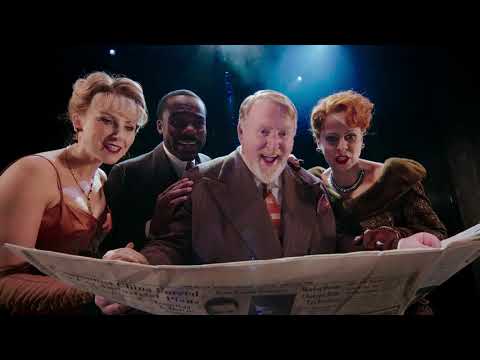
Review
What if the murder mystery is the easy part, and the real crime is opening a musical that is not ready? Curtains understands that panic. It writes it into the score. The lyrics keep pointing at the same fragile thing: ego, ambition, money, love, and the public humiliation of trying anyway.
Fred Ebb’s voice is still recognizable here, even when the show steps into the complicated territory of “additional lyrics.” The writing likes a punchline, but it loves a diagnosis. Everyone in this theater has a story about who they are, and the lyric keeps catching them in the lie. The detective, Frank Cioffi, is a musical-theatre romantic trapped in a police procedural. The cast are performers trapped in an out-of-town tryout. The score sits right on that hinge, with Kander’s bright, Golden Age-flavored surfaces and a nervous undertow that never fully relaxes.
That’s the trick: the show sounds like a love letter to old Broadway, then the words start sharpening. “Show People” is an anthem with a smirk. “What Kind of Man?” aims straight at the critics. “It’s a Business” tells the truth most characters pretend not to know. Even the repeated rewrites of “In the Same Boat” become a lyrical theme about control: fix the number, fix the show, fix the mess, fix the body count.
How It Was Made
The creation story is stitched with absence. Peter Stone originated the book and concept, then died before the musical was finished. Fred Ebb died in 2004, before completion, leaving John Kander to carry the score across the finish line with Rupert Holmes stepping in for book duties and additional lyric work. The piece has the energy of artists trying to honor a partnership while admitting, quietly, that the partnership has changed.
That context makes “I Miss the Music” feel personal, even when it is “about” fictional collaborators. Playbill noted the song’s special poignancy because it was written after Ebb’s death, and later coverage framed it as a kind of tribute from Kander to his late partner. The lyric is heartbreak disguised as craft, which is very much on-brand for this creative lineage.
Production history matters, too. The show played an Ahmanson Theatre premiere in Los Angeles in 2006, then opened on Broadway at the Al Hirschfeld Theatre on March 22, 2007. It closed June 29, 2008 after 511 performances. It is a show about a tryout that went wrong, built through a real-world development process where the stakes kept changing.
Key Tracks & Scenes
"Wide Open Spaces" (Company, show-within-the-show)
- The Scene:
- The Colonial Theatre stage becomes a frontier postcard. Bright footlights, big chorus smiles, and a nervous sense that the machinery is louder than the acting. You can feel the tryout audience watching for trouble.
- Lyrical Meaning:
- This is “Robbin’ Hood” selling itself too hard. The lyric sets up the central joke: the musical inside the musical is a mess, and everyone knows it.
"What Kind of Man?" (Company)
- The Scene:
- Backstage, after the show’s bruising reception. Fluorescent work lights. Papers, notes, muttered blame. The air feels like cold coffee.
- Lyrical Meaning:
- The lyric is a pressure valve. It mocks critics while confessing how much their words matter. It also starts the show’s recurring motif: theatre people pretending they do not care.
"The Woman’s Dead" (Company)
- The Scene:
- Curtain call chaos turns into a crime scene. The lighting hardens. The orchestra doesn’t soothe, it drives. Performers freeze mid-instinct, unsure whether to emote or to run.
- Lyrical Meaning:
- It is the show’s tonal handshake: comedy that snaps into urgency. The lyric treats death as both horror and logistical disaster, which is exactly how a backstage culture can sound in crisis.
"Show People" (Company)
- The Scene:
- A rallying burst in the rehearsal room. Warm stage wash, bodies moving again, a company deciding to survive on adrenaline. The number plays like morale management.
- Lyrical Meaning:
- It is pride and self-mythology. The lyric says “we can take it,” then quietly reveals how much the taking costs.
"Coffee Shop Nights" (Cioffi, Niki)
- The Scene:
- Late-night Boston. Two people in a small pool of light, away from the clatter of the theatre. The romance is gentle, and that gentleness feels suspicious in a locked-building mystery.
- Lyrical Meaning:
- The lyric lets Cioffi’s obsession read as tenderness, not just fandom. It also gives Niki a calm interior, the kind of calm that makes you wonder what she is hiding.
"In the Same Boat" (Trio, multiple versions)
- The Scene:
- Rehearsal, rewrite, rehearse again. Same bodies, different emphasis. Lighting that suggests “work,” not “performance.” The joke is repetition, but the tension is control.
- Lyrical Meaning:
- The show turns revision into narrative. The lyric’s shifting targets expose hierarchy: whose idea wins, whose voice gets cut, who gets blamed when the number still does not land.
"I Miss the Music" (Aaron)
- The Scene:
- A quiet pocket inside a loud show. One performer, one thought, a softer orchestral bed. It plays like an honest confession accidentally left onstage.
- Lyrical Meaning:
- It’s a breakup song and a work song at the same time. The lyric turns collaboration into intimacy, then admits how lonely composition can feel when the partnership breaks.
"It’s a Business" (Carmen)
- The Scene:
- The producer takes the floor, owning the space with brassy certainty. The lighting feels like a boardroom disguised as a footlight moment.
- Lyrical Meaning:
- The lyric says the quiet part out loud. Art is the dream. Cash is the timer. The number makes the show’s real villain feel less like a murderer and more like economics.
"A Tough Act to Follow" (Cioffi, Niki)
- The Scene:
- A romantic dance that looks like old Hollywood, staged inside a building that is still under quarantine. Soft spotlight, bodies gliding, danger kept politely off-camera.
- Lyrical Meaning:
- The lyric frames love as risk management. Cioffi wants the happy ending, then remembers the corpse. The song lives in that uneasy gap.
Live Updates
2025-2026 stage life: Curtains is firmly in its licensing era, and it plays well there. Theatrical Rights Worldwide lists a steady pipeline of upcoming productions in 2026 across the U.S. and beyond, from civic theatres to high schools to community and college stages. The show’s design is friendly to that ecosystem: a big ensemble, clear comedy engines, and set-piece numbers that reward strong choreographic instincts.
Concrete 2026 example: Lighthouse Festival’s Community Show in Port Dover, Ontario announced a full production scheduled for April 10 to 26, 2026, releasing casting details in December 2025. That kind of public-facing announcement is a useful signal: the title remains in circulation, and companies still market it as a crowd-pleaser with a built-in hook.
Broadway and major-revival status (as of January 23, 2026): No new Broadway revival is broadly established in the major trade record within the sources cited here. The momentum is regional, educational, and community-based, where the show’s theatre-insider jokes and tidy mystery structure tend to read cleanly.
Notes & Trivia
- The Broadway run opened March 22, 2007 and closed June 29, 2008, after 26 previews and 511 performances at the Al Hirschfeld Theatre.
- The setting is Boston’s Colonial Theatre in 1959, during an out-of-town tryout of a new musical called Robbin’ Hood.
- Playbill reported that the cast recorded the album on March 26, 2007 for a June 5 release, preserving a 22-track score.
- Playbill also highlighted the “special poignancy” of “I Miss the Music,” noting it was written after Fred Ebb’s death.
- The score openly turns rewrites into plot, repeating and reshaping “In the Same Boat” as the team tries to “fix” the show.
- The Guardian’s West End review pointed to “The Woman’s Dead” as a major standout, praising its formal intensity inside a comic framework.
- Theatrical Rights Worldwide’s upcoming list for 2026 shows how consistently the title is being programmed in licensed markets.
Reception
On Broadway, reviews often admired the professionalism while questioning whether the piece found a true spark. Over time, the conversation has shifted. A later London critical framing treated the show as a “missing link” in the Kander and Ebb canon, partly because it wears its craftsmanship on the outside and its grief on the inside.
“There’s plenty of razzle dazzle … but not enough inspiration.”
“One of the best-ever Kander and Ebb numbers, The Woman’s Dead … triggers a sung-and-danced whodunnit.”
“The score’s most beautiful offering … may be ‘I Miss the Music,’ … a tribute from Kander to his late lyricist Ebb.”
Listen for the lyric strategy when you revisit it. The funniest lines are often doing plot work. The warmest melodies are often carrying dread. The show keeps smiling, then it asks who benefits from the smile.
Quick Facts
- Title: Curtains
- Year: Broadway opening 2007
- Type: Backstage musical murder mystery comedy with Golden Age styling
- Music: John Kander
- Lyrics: Fred Ebb (with additional lyrics credited to John Kander and Rupert Holmes)
- Book: Rupert Holmes (based on original book and concept by Peter Stone)
- Setting: Boston’s Colonial Theatre, 1959
- Broadway theatre: Al Hirschfeld Theatre
- Broadway run: Mar 22, 2007 to Jun 29, 2008 (26 previews; 511 performances)
- Cast album: Recorded Mar 26, 2007; released Jun 5, 2007; 22 tracks
- Label: Broadway Angel/Manhattan Records (as reported by Playbill)
- Selected notable placements: “Wide Open Spaces” (show-within-show opener), “The Woman’s Dead” (opening-night shock), “In the Same Boat” (rewrite motif), “I Miss the Music” (collaboration elegy), “It’s a Business” (producer manifesto)
Frequently Asked Questions
- Is there an official cast recording?
- Yes. Playbill reported the cast recorded the album March 26, 2007 for a June 5, 2007 release, and the finished album preserves a 22-track score.
- Who wrote the lyrics?
- Fred Ebb is the credited lyricist, with additional lyric contributions credited to John Kander and Rupert Holmes.
- Why does “In the Same Boat” appear multiple times?
- Because the show turns the rewrite process into story. Each version reflects new pressure, new politics, and a new attempt to make the tryout work.
- Where does “I Miss the Music” sit emotionally in the show?
- It’s the score’s quiet center. It frames collaboration as intimacy and absence as creative paralysis, which echoes the show’s real-world history.
- Is there a pro-shot or official filmed stage version?
- No widely distributed pro-shot is established in the sources cited here as of early 2026. Most audiences experience the piece via live licensed productions and the cast recording.
- Is the show still being produced in 2025-2026?
- Yes. Theatrical Rights Worldwide lists multiple upcoming 2026 productions, and organizations continue to announce full runs and casting for that period.
Key Contributors
| Name | Role | Contribution |
|---|---|---|
| John Kander | Composer (and additional lyrics) | Golden Age-inflected score with sharper undertones; completed the work with added writing after Ebb’s death. |
| Fred Ebb | Lyricist | Core lyrical voice and theatrical point of view, credited as primary lyricist. |
| Rupert Holmes | Book writer (and additional lyrics) | Reworked the book and strengthened the mystery mechanics; added lyric contributions. |
| Peter Stone | Original book and concept | Created the initial structure and concept of a backstage whodunnit musical. |
| Scott Ellis | Director (Broadway) | Shaped the Broadway staging and tone, balancing comedy beats with procedural momentum. |
| Rob Ashford | Choreographer | Built period dance language for both the backstage world and the “Robbin’ Hood” show-within-the-show. |
| Jay David Saks | Cast recording producer | Produced the original Broadway cast recording session reported by Playbill. |
| Theatrical Rights Worldwide | Licensing representative | Handles licensing and lists ongoing upcoming productions in 2026. |
Sources: Theatrical Rights Worldwide, Playbill, IBDB, The Guardian, Musical Cyberspace, TheaterMania, Lighthouse Festival Theatre.