
Copacabana Lyrics: Song List
- Overture
- Copacabana [Opening Sequence]
- Just Arrived
- Dancin' Fool
- Night on the Town
- Man Wanted
- Lola
- Who Needs to Dream?
- Ay Caramba
- Bolero de Amor
- Sweet Heaven
- Who Am I Kidding?
- Who Am I Kidding? (Reprise)
- This Can't Be Real
- Welcome to Havana
- Mermaid's Tale
- Bravo
- Who Needs to Dream? (Reprise)
- Copacabana (At the Copa)
About the "Copacabana" Stage Show
History of Creation: Barry Manilow's Copacabana.
From Chart-Topping Song to Television Musical.
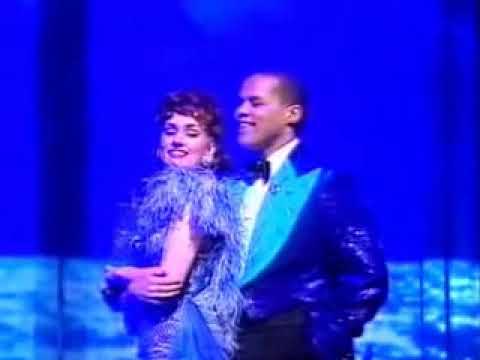
Barry Manilow's 1978 hit "Copacabana (At the Copa)" laid the foundation for a musical journey that would span decades. The song's vivid storytelling inspired a 1985 made-for-television musical film, directed by Waris Hussein and written by James Lipton. Manilow starred as Tony Starr, with Annette O'Toole portraying Lola Lamarr. The film expanded the song's narrative, introducing new characters and songs, and won an Emmy for Outstanding Directing in a Variety or Music Program.
Atlantic City Stage Show (1990–1991).
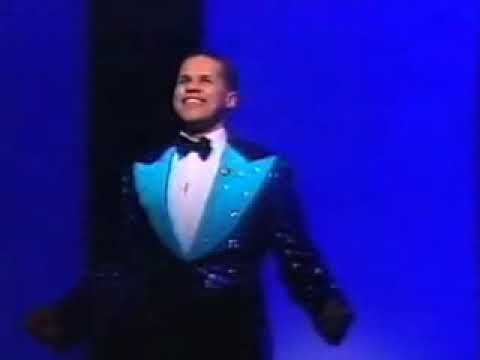
Building on the television film's success, a one-hour stage adaptation premiered at Caesars Circus Maximus Theatre in Atlantic City in 1990. This production, featuring over 20 performers, ran until June 1991 and retained much of the film's soundtrack. Barry Manilow collaborated with Bruce Sussman and Jack Feldman on this endeavor, which attracted over 100,000 attendees and received enthusiastic reviews.
West End Production (1994–1996).
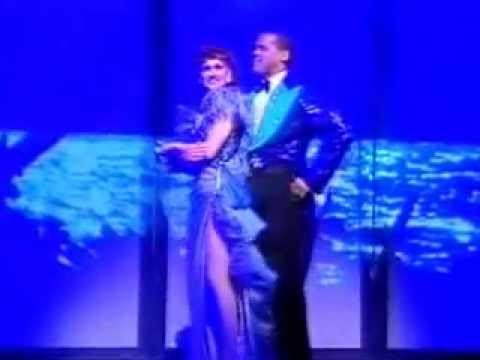
In 1994, "Copacabana" was transformed into a full-length musical, premiering at Theatre Royal in Plymouth before moving to Manchester and then London's Prince of Wales Theatre. The West End run lasted from June 23, 1994, to September 9, 1996, totaling over 800 performances. Gary Wilmot starred as Tony/Stephen, with Nicola Dawn as Lola. The production featured elaborate sets and costumes, capturing the glamour of 1940s nightclubs.
U.S. National Tour (2000–2001).
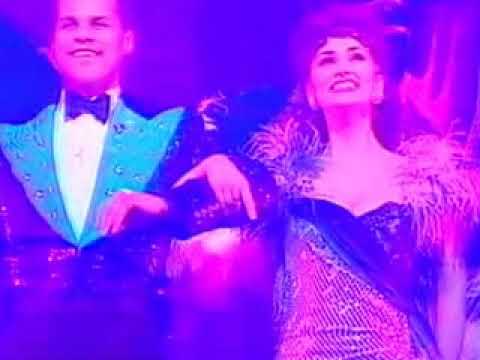
The musical returned to the U.S. in 2000, premiering at Pittsburgh Civic Light Opera. This adaptation, titled "Barry Manilow's Copacabana: A New Musical Comedy," featured Franc D'Ambrosio as Tony and Darcie Roberts as Lola. The production toured nationally until 2001, bringing the vibrant story to audiences across the country.
International Productions and Legacy.
Beyond the U.S. and U.K., "Copacabana" saw international adaptations, including a Swedish production in 2005. The musical's enduring appeal lies in its blend of romance, drama, and catchy tunes, making it a favorite for regional and amateur theater groups worldwide.
Release date of the musical: 1985
"Copacabana" (1985) – The Musical Guide & Song Meanings
Review
How do you stretch a four-minute tragedy into a full evening without losing its sting. “Copacabana” (the 1985 CBS musical film) answers by turning the narrator into the camera itself. The story moves through time, from a late-night 1978 disco glow back to the 1940s, then returns to the wreckage. That structure matters because the lyrics keep insisting on performance as survival: Lola sings to be seen, Tony writes to be heard, and both end up negotiating with men who treat applause like ownership.
Manilow’s score is shameless about period pleasure. It wants swing brass, nightclub patter, Latin pastiche, and big romantic lift, often in the same reel. The tonal mix is the point. The Copacabana is painted as a dream factory that runs on desire and denial, and the words by Bruce Sussman and Jack Feldman keep nudging characters to admit what the music is already confessing. Even when a number looks like pure sparkle, the lyric logic is transactional: what do you want, what will you trade, and who is watching.
How It Was Made
The origin starts with a question that sounds like a dare. Manilow and Bruce Sussman were at the Copacabana Hotel in Rio and wondered if there had ever been a song called “Copacabana.” They went home, asked Jack Feldman to build a story-lyric around a nightclub, and Manilow set it to a rhythm that feels like a smile with teeth. Years later, producer Dick Clark pushed the team to expand that story into a television musical. James Lipton wrote the teleplay, Waris Hussein directed, and the pop single’s characters grew into full roles with new songs written for the film.
What is impressive is how the writers keep the original song’s moral geometry. The club is still “the hottest spot” in the imagination, but it is also a trap. The new numbers give Tony and Lola internal monologues the radio edit never had time for. That is the real expansion. Plot fills in around them, but the score keeps returning to the same thesis: glamour can be a costume you cannot take off.
Key Tracks & Scenes
"Overture" (Orchestra)
- The Scene:
- Lights rise like a marquee warming up. Brass flickers, percussion snaps, and the camera feels eager to flirt. It is an invitation into a world where everything is staged, including regret.
- Lyrical Meaning:
- No words, but a mission statement: this is a constructed memory, polished until it shines, then held up for inspection.
"Copacabana (At the Copa)" (Tony)
- The Scene:
- The club arrives in layers: door staff, dancers, tables, mirrors, sweat. The lighting is warm gold at first, then sharper, as if the room is deciding what it will demand from you.
- Lyrical Meaning:
- The lyric sells the room as paradise, but it is already planting its warning. Names become brands. Lola becomes a headline. The chorus is a chant that turns a place into a myth people die for.
"Let's Go Steppin'" (Chorus)
- The Scene:
- A precision number in nightclub light. Feet hit in unison. Smiles lock on. The choreography is the language of employment.
- Lyrical Meaning:
- Community, on the clock. The lyric frames belonging as motion: keep up, keep bright, keep moving, do not ask what happens when the music stops.
"Changing My Tune" (Tony)
- The Scene:
- Tony finds a quieter pocket of the story. The band thins out. A single spotlight makes the room feel suddenly honest.
- Lyrical Meaning:
- This is the songwriter’s confession: ambition is flexible until love makes it specific. The phrase “changing my tune” becomes a self-diagnosis, not a cute hook.
"Who Needs to Dream" (Tony)
- The Scene:
- Late-night reflection after the hustle. The camera lingers. Neon bleeds into shadow. The city looks expensive and lonely at the same time.
- Lyrical Meaning:
- The lyric argues with itself. Dreaming is framed as risk, but also as the only humane response to a world that keeps asking you to settle. The melody’s operatic echo makes the longing feel oversized on purpose.
"Man Wanted" (Lola)
- The Scene:
- Lola performs a want-ad fantasy under stage light that flatters and exposes. The number plays like comedy until you notice how carefully she is bargaining for safety.
- Lyrical Meaning:
- On paper, she is listing preferences. Underneath, she is outlining terms for dignity. The lyric is a defense mechanism dressed as flirtation.
"Sweet Heaven (I'm in Love Again)" (Tony)
- The Scene:
- A romantic high in the middle of the grind. The arrangement sparkles. The lighting softens into something like forgiveness.
- Lyrical Meaning:
- The lyric is almost suspiciously bright, which is why it works. It sounds like a vow made too soon, the kind of certainty the plot will later punish.
"El Bravo" (Lola and Chorus)
- The Scene:
- Havana showbiz spectacle. Big costumes, harder edges. The stage is loud, the shadows behind it louder. The number pushes toward a flashpoint.
- Lyrical Meaning:
- Performance becomes camouflage. The lyric leans into bravado while the story tightens the trap. It is a showstopper that doubles as a warning flare.
"Copacabana (At the Copa) 1985" (Tony)
- The Scene:
- A return to the signature song with the weight of what we now know. The room is still pulsing, but the color palette feels colder, like memory under fluorescent light.
- Lyrical Meaning:
- The song becomes its own ghost story. The lyric’s nightclub hype is no longer innocent because the narrative has taught you what the hype costs.
Live Updates
On the stage side, “Barry Manilow’s Copacabana” remains active mainly through licensing. Music Theatre International lists materials for the show, signaling its ongoing availability for theatres planning revivals and new productions. That is where the title lives most consistently now: in community and regional companies that can build a nightclub world on a budget and still make the emotions land.
On the artist side, Manilow is still treating “Copacabana” as a calling card in his live set. His 2026 concert listings and Vegas dates remain prominent through major ticketing platforms, even as recent health news forced schedule adjustments after an early-stage lung cancer diagnosis disclosed in December 2025. The practical takeaway for fans is simple: check the latest tour calendars before you book travel.
The soundtrack album is the steadiest way to revisit the score. It is widely available on major streaming services, and its track order preserves the TV musical’s mood swings: overture to showroom sparkle to Havana spectacle, then back to the familiar hook with bruises underneath.
Notes & Trivia
- The TV musical premiered on CBS on December 3, 1985.
- Director Waris Hussein won the Primetime Emmy for Outstanding Directing in a Variety or Music Program for “Copacabana.”
- Nine songs were written specifically for the 1985 film, expanding the world beyond the original 1978 single.
- The soundtrack album was released by RCA and runs as a compact 16-track narrative with reprises.
- The original 1978 “Copacabana” was inspired by a conversation at the Copacabana Hotel in Rio, then shaped into a story song by Sussman and Feldman with music by Manilow.
- “Who Needs to Dream?” is widely noted for its operatic borrowing, a wink toward Puccini’s “Nessun dorma,” which helps explain its theatrical scale.
- One deep-cut production detail: the 1985 soundtrack’s music production has been credited to a rare pairing of Manilow and Bob Gaudio.
Reception
“Barry Manilow’s TV-movie musical, ‘Copacabana,’ is like Barry Manilow’s music: engaging and mushily romantic, conventional and predictable.”
“But one song doth not a musical make, so Manilow teamed with lyricists Bruce Sussman and Jack Feldman to create a full score.”
“Copacabana… started life as a 1985 TV movie. It became a casino show, then opened in London as a full-fledged musical in 1994.”
What time has been kindest to is the writing craft. Critics can argue about camp value, but the lyric architecture is sturdy. The songs keep returning to the same three pressures: the hunger to be seen, the fear of being used, and the fantasy that a hit chorus can rewrite your life.
Quick Facts
- Title: Copacabana: The Original Motion Picture Soundtrack Album
- Year: 1985
- Format: TV-musical soundtrack album
- Music: Barry Manilow
- Lyrics: Bruce Sussman, Jack Feldman
- Teleplay: James Lipton
- Director: Waris Hussein
- Label: RCA (original release)
- Track highlights: “Who Needs to Dream,” “Man Wanted,” “Sweet Heaven (I’m in Love Again),” “El Bravo,” “Copacabana (At the Copa) 1985”
- Availability: Streaming on major platforms (album pages active)
- Related stage life: Later expanded into a West End stage musical (1994) and remains licensable for theatre companies
Frequently Asked Questions
- Is “Copacabana” (1985) a stage musical or a movie musical?
- It began as a CBS made-for-television musical film in 1985, then later grew into a full stage musical version in the 1990s.
- Who wrote the lyrics for the 1985 songs?
- Bruce Sussman and Jack Feldman wrote the lyrics, with Barry Manilow composing the music.
- Is there an official soundtrack album?
- Yes. “Copacabana: The Original Motion Picture Soundtrack Album” was released in 1985 and is available through major streaming services.
- Where does “El Bravo” happen in the story?
- It functions as the Havana showcase sequence, where glamour turns aggressive and the plot tightens toward confrontation.
- Can theatres still license “Barry Manilow’s Copacabana” today?
- Yes. Licensing and production materials are listed through Music Theatre International.
- Does the 1985 film have awards recognition?
- Yes. Waris Hussein won the Primetime Emmy for directing in a variety or music program for “Copacabana.”
Key Contributors
| Name | Role | Contribution |
|---|---|---|
| Barry Manilow | Composer / Performer | Composed the score and performs key tracks as Tony; expanded the 1978 hit into a full TV musical. |
| Bruce Sussman | Lyricist | Co-wrote lyrics for the original song and the 1985 TV score expansion. |
| Jack Feldman | Lyricist | Co-wrote lyrics; helped shape the story-song sensibility into musical scenes. |
| James Lipton | Teleplay | Wrote the television script that frames the love story and its time shifts. |
| Waris Hussein | Director | Directed the TV musical and won the Primetime Emmy for Outstanding Directing in a Variety or Music Program. |
| Dick Clark | Executive Producer | Helped initiate the TV expansion from the hit single into a film musical. |
| Annette O'Toole | Performer | Plays Lola; anchors the score’s ambition numbers, including “Man Wanted.” |
| Joseph Bologna | Performer | Plays Rico; the story’s glamour-and-threat catalyst. |
Sources: Wikipedia (film, song, soundtrack), The Los Angeles Times, Television Academy (Emmys), IMDb, Music Theatre International, Apple Music, Spotify, The Second Disc, Pittsburgh City Paper, Ticketmaster, People, The Guardian, YouTube (CBS promo clip).