
Cinderella: Songs from the Classic Fairy Tale Lyrics: Song List
- Overture
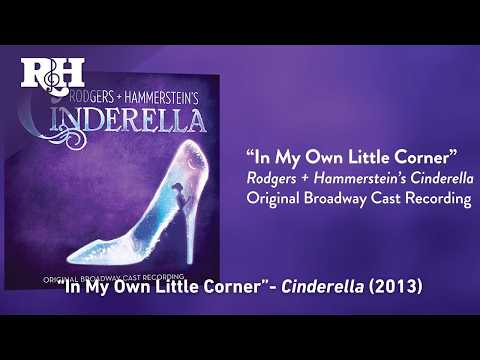
- In My Own Little Corner
- Spread A Little Happiness
- A Dream Is A Wish Your Heart Makes
- Raise A Ruckus
- Impossible
- The Ball
- What Has Love got To Do With Getting Married
- A Lovely Night (Ten Minutes Ago)
- Do I Love You Because You're Beautiful?
- Midnight
- On the Steps Of The Palace
- Once I Was Loved
- If The Shoe Fits
- Tell Hm Anything
- The Stepsisters' Lament
- Finale
About the "Cinderella: Songs from the Classic Fairy Tale" Stage Show
Well-known producers of the public entertainment Richard Rodgers and Oscar Hammerstein II, came to one of the bosses of CBS production company in 1955 to create a musical. During the 1950s, adaptation of musicals was quite a popular trend. For example, as many as 4 were filmed in the period between 1950 – 1960. The Cinderella musical was a new piece written from the scratch following the story of Cinderella, which is divided into 6 parts, for the sake of commercial breaks in a 90-minute story. Julie Endrews was then popular actress, who now does much broader range of things than just an acting. She is also the director and the producer.
Written in the 7 month, a new story about the well-known Cinderella has been focused exclusively on family audience and children. At the same time, all actors have been given more traits that make the characters of the picture look like people more than persons from a fairy tale. Work on the filming began in 1957. The creators made it closer to the French version of Cinderella, Cendrillon by Charles Perrault. It is no different in the main brushstrokes from the main story, which is known all over the world, but with, of course, specialties in the course of the plot.
In addition to this 1998th version, the history knows many different versions, from the musicals of 1957 & 2013 till transfers of adaptations on the screen. There are even such options as pantomimic – exotic and unusual.
It is notably that creation was performed on the first color studio in New York (they were all black and white before), which was also terribly small, where all the performers were placed with cameras, props and clothing. The orchestra played in a tiny room with special equipment, which suppressed the negative effect of the sound in the cramped space.
Release date of the musical: 1998
"Cinderella: Songs From The Classic Fairy Tale" (1998) – The Musical Guide & Song Meanings
Review: what this album is really doing
Is this a “Cinderella” cast album? Sort of. It is closer to a scrapbook, stitched from stage, screen, and ballet, with one job: show how the same story keeps rewriting itself through lyrics. The tracklist jumps decades and genres, but it keeps circling the same pressure point: a young woman negotiating fantasy, status, and choice while the world demands gratitude and speed.
The dominant language here is Broadway clarity. Rodgers & Hammerstein numbers treat desire as a sentence you can diagram: imagined life becomes a concrete plan, then a social test, then a vow that tries to sound calm. Sondheim arrives like a cold splash. His Cinderella talks in spirals, weighing options, trying to outthink the fairy tale’s machinery. Disney’s “A Dream Is a Wish Your Heart Makes” softens the edges and sells longing as a lullaby that still has bite, because it teaches endurance as virtue. Meanwhile, Prokofiev’s ballet selections remind you what happens when words disappear: the clock still strikes, the body still runs, and meaning becomes tempo.
How it was made
This 1998 release was built as a “Various Artists” concept album: not one production, but a curated listening arc. In later metadata and reissue history, it is associated with catalog activity that kept older theatre recordings in circulation, including re-releases under Concord Theatricals’ recording arm. The album has also been documented with studio locations in both New York and Los Angeles, which fits its “assembled” identity: an album that behaves like a studio revue rather than a theatre night captured live.
What matters artistically is the casting logic. The compilation leans on performers with crisp text delivery, because the point is the words: the way a single lyric can turn a servant’s daydream into a strategy, or turn a ballroom into a courtroom. And in the wider Cinderella ecosystem, the story’s modern longevity keeps being renewed through licensing and revivals: the material survives because it is easy to mount, hard to sing well, and emotionally direct when the language lands.
One useful lens comes from a different Cinderella score entirely: the Sherman Brothers, writing for “The Slipper and the Rose,” were known to “preview” songs in informal, performance-first settings. That anecdotal history captures the larger truth behind every Cinderella songbook project: you can debate the concept, but the songs live or die in the room, on a breath, in front of someone who has to believe the wish.
Key tracks & scenes
"In My Own Little Corner" (Cinderella)
- The Scene:
- A kitchen corner, a small chair, a day that repeats. The light feels domestic and low, like late afternoon through a window that never opens wide enough. She works, then freezes, then escapes without moving.
- Lyrical Meaning:
- The lyric is an early manifesto for private autonomy. It does not fight the world head-on. It builds an interior country with its own laws, then quietly implies that imagination is rehearsal for action.
"A Dream Is a Wish Your Heart Makes" (Cinderella)
- The Scene:
- Morning softness. She sings close to the animals and close to her own reflection, as if the room itself can keep a secret. The melody moves like rocking, a promise repeated until it feels true.
- Lyrical Meaning:
- Dreaming is framed as discipline. The lyric teaches patience and steadiness, which can read as comfort or confinement depending on how you hear it. Either way, the song sets the fairy tale’s moral contract: keep wishing, keep going.
"Impossible / Suddenly It Happens" (Cinderella; then the moment the world flips)
- The Scene:
- First, resistance. Then a visitor who changes the air in the room. The staging traditionally turns magical at the practical level: props, fabric, and bodies transformed under brighter, cleaner light. The second half lands like a door opening mid-sentence.
- Lyrical Meaning:
- These lyrics argue with despair in real time. The punch is not naïve optimism. It is the insistence that the word “impossible” is a habit that can be broken, and that joy can arrive with the shock of a new rule.
"On The Steps Of The Palace" (Cinderella, thinking at high speed)
- The Scene:
- Outside, on stone, with the party behind her and a decision in front of her. The lighting often sharpens into moon and shadow, because the song is an argument with herself, not a romance duet.
- Lyrical Meaning:
- Sondheim makes indecision sound like intelligence. The lyric keeps revising its own logic, then reveals the emotional truth underneath: choosing a new life can feel like erasing the old self, even when the old self hurts.
"A Lovely Night / Ten Minutes Ago" (Cinderella and the Prince)
- The Scene:
- Two people circling each other in a ballroom that suddenly feels private. The waltz rhythm is social performance, but the vocal writing tries to slip into confession. The room glitters; the stakes are personal.
- Lyrical Meaning:
- The lyric does something sly: it sells love as both instant and earned. “Ten minutes” becomes a unit of fate. The language romanticizes speed while still sounding like a mature person trying to be responsible about a crush.
"Do I Love You Because You're Beautiful?" (Cinderella and the Prince)
- The Scene:
- After the dance, when the noise drops out and the mind starts auditing what just happened. The staging often narrows into a warmer spotlight, as if the palace is listening.
- Lyrical Meaning:
- It is a philosophical love song that hides a fear: what if desire is just projection? The lyric’s question keeps turning until it becomes a confession that beauty and love are tangled, and that certainty is a luxury.
"The Stepsister Lament" (Stepsisters)
- The Scene:
- Comic fury in formalwear. The usual staging gives them space to stomp, point, and tantrum, under bright light that refuses to flatter them. The joke is physical, but the anger is sincere.
- Lyrical Meaning:
- The song is envy given perfect diction. It shows how the fairy tale looks from the losing side, where romantic destiny resembles unfair hiring practices. The lyric is funny, then suddenly a little sharp.
Live updates (2025/2026)
As of the most recent catalog signals, this compilation remains present in the modern pipeline through Concord Theatricals’ recordings brand activity and digital availability, even though it was originally a 1998 concept release. That matters for searchers and listeners because “Cinderella” music consumption now happens via playlists and reissues, not only via physical cast albums.
On the stage side, Cinderella remains a high-frequency licensing title, with multiple authorized versions in circulation through Concord Theatricals. That means the Rodgers & Hammerstein core of this compilation stays “current” even without a single headline Broadway run attached to it.
On the Sondheim side, “Into the Woods” continues to be treated as a living repertory piece, with major revivals and commercial runs feeding renewed attention to Cinderella’s Act I decision song. The London market, for example, has hosted a high-profile run in late 2025 into 2026, with critics again emphasizing how precisely the score works when performed cleanly.
Notes & trivia
- The album’s core idea is cross-medium: it includes Broadway, animated film, a Sondheim fairy tale mash-up, and ballet excerpts, all under one Cinderella umbrella.
- Release metadata commonly cites 17 tracks and a total runtime in the mid-54 minute range.
- The Rodgers & Hammerstein material anchors the narrative arc: imagination, transformation, romance, and the social comedy of the stepsisters.
- “Spread a Little Happiness” originates from the West End musical “Mr. Cinders,” a Cinderella inversion that predates most modern screen versions.
- The ballet selections connect the compilation to Sergei Prokofiev’s “Cinderella” (premiered in 1945), where the clock and the chase become orchestral storytelling.
- “The Slipper and the Rose” numbers point to the Sherman Brothers’ Cinderella scorewriting outside Disney animation, expanding the lyric palette toward courtly satire and romantic candor.
- Several tracks on streaming services identify specific featured vocalists per cut, reinforcing that this is a studio compilation with role-forward casting rather than a single cast captured live.
Reception: then vs. now
In 1998, this kind of themed compilation was a physical-media solution: a way to package a concept and sell it to listeners who wanted theatre songs without committing to one show. In the streaming era, the same tracklist reads differently. It looks like a pre-built playlist with an editorial thesis: Cinderella is not one heroine, she is a recurring debate about agency. What has changed is distribution, not usefulness.
“... allowing Sondheim’s intricate score to shine through precise performances.”
“Hesitating on the steps of the palace, she can’t choose whether to run home or embrace the unknown ...”
“... the standout duet ‘Impossible’ ...”
Quick facts
- Title: Cinderella: Songs From The Classic Fairy Tale
- Year: 1998 (original release metadata); later reissue metadata also appears
- Type: Various Artists themed compilation (stage, screen, and ballet)
- Primary songwriters represented: Richard Rodgers & Oscar Hammerstein II; Stephen Sondheim; Richard M. Sherman & Robert B. Sherman; Mack David, Al Hoffman & Jerry Livingston; Vivian Ellis & Clifford Grey; Sergei Prokofiev
- Music supervision / production signals: Producer credit commonly appears for Bruce Kimmel in track-level metadata
- Selected notable placements: Rodgers & Hammerstein’s Cinderella dream songs and love waltz; Disney’s 1950 “wish” song; Sondheim’s palace-steps soliloquy; Prokofiev ballet cues
- Release context: A concept compilation designed to map Cinderella across adaptations
- Label / album status: Catalog activity and distribution currently associated with Concord Theatricals; earlier releases and reissues circulate under prior catalog labels
- Availability: Streaming platforms list the album with 17 tracks and mid-54 minute runtime
Frequently asked questions
- Is this the cast recording of one “Cinderella” musical?
- No. It is a themed compilation. It pulls Cinderella-related songs from multiple sources, including Rodgers & Hammerstein, Disney animation, Sondheim, a Sherman Brothers film musical, and Prokofiev ballet excerpts.
- Can you provide the full lyrics for every song?
- I can’t reproduce full copyrighted lyrics. I can, however, guide you through what each song is doing, summarize scenes, and point you to official publishers and licensed sheet music sources.
- What is the most “character-revealing” lyric moment on the album?
- Sondheim’s “On the Steps of the Palace” is the sharpest psychological writing here. It turns Cinderella into someone who knows desire is risky and still wants it.
- Why include ballet tracks on a vocal compilation?
- Because Cinderella is a rhythm story as much as a lyric story. Prokofiev’s cues make the clock, the ball, and the escape legible without any words.
- Where should I start if I only know the Disney film?
- Start with “In My Own Little Corner,” then follow the album toward “Impossible” and the ballroom waltz material. You will hear how theatre writing makes the same wish more argumentative and more social.
- Is Rodgers & Hammerstein’s “Cinderella” still performed today?
- Yes. Multiple authorized versions remain available for licensing, which keeps those songs in active circulation in schools, community theatres, and professional regional seasons.
Key contributors
| Name | Role | Contribution |
|---|---|---|
| Richard Rodgers | Composer | Core musical language for multiple Rodgers & Hammerstein “Cinderella” tracks. |
| Oscar Hammerstein II | Lyricist / bookwriter | Lyrical architecture for Cinderella’s interior life, romance, and social comedy. |
| Stephen Sondheim | Composer-lyricist | “On the Steps of the Palace” from “Into the Woods,” reframing Cinderella as a decision-maker under pressure. |
| Richard M. Sherman & Robert B. Sherman | Songwriters | “The Slipper and the Rose” material, expanding Cinderella into court satire and romantic confession. |
| Mack David, Al Hoffman & Jerry Livingston | Songwriters | Disney’s “A Dream Is a Wish Your Heart Makes,” defining the story’s pop-cultural wish language. |
| Vivian Ellis & Clifford Grey | Composer / lyricist | “Spread a Little Happiness” from “Mr. Cinders,” a West End Cinderella inversion. |
| Sergei Prokofiev | Composer | Ballet “Cinderella” source material for orchestral cues on the album. |
| Bruce Kimmel | Producer (metadata credit) | Producer credit appears in track-level metadata for at least some streaming listings of the album. |
| Concord Theatricals | Rights holder / distributor (current catalog association) | Licensing and catalog ecosystem tied to Rodgers & Hammerstein titles and later recording re-release activity. |
Sources: Amazon Music, Apple Music, AllMusic, Concord Theatricals (official site), Rodgers & Hammerstein (official site), Music Theatre International, Financial Times, The New Yorker, Vogue, Disney+ Press, Wikipedia.