Can-Can Lyrics – All Songs from the Musical
Can-Can Lyrics: Song List
- Act 1
- Introduction & Maidens Typical Of France
- Never Give Anything Away
- C'est Magnifique
- Quadrille
- Come Along With Me
- Live And Let Love
- I Am In I Love
- If You Loved Me Truly
- Allez-Vous En, Go Away
- Montmartre
- Act 2
- Never, Never Be An Artist
- It's All Right With Me
- Every Man Is A Stupid Man
- The Apaches
- I Love Paris
- Can-Can
- Finale
- Other Songs:
- The Law
- I Shall Positively Pay You Next Monday
- A Man Must His Honor Defend
About the "Can-Can" Stage Show
Shubert Theatre, which is in Broadway, took a musical originally in 1963, and it lasted for 892 performances due not so much to a story as to a passionate and even while slightly exotic dance – "Can-Can", performed by charming and fascinating members of the musical. Actors were: E. Rhodes, Lilo, P. Leeds, H. Conried, D. D. Wood, P. Cookson, D. Krupska & G. Verdon. Choreographer was Michael Kidd.After success on Broadway, the musical moved to the Coliseum Theatre in 1954 and went there for another 394 shows. Jerome Whyte was a director. The actors were as follows: W. Mitchell, I. Hilda, G. Lynne, E. Hockridge & A. Marks. Resuming on Broadway at the Minskoff Theatre took place 18 years later, in 1981, but it was not a success and closed after only five performances and 16 previews. Choreographer this time was Roland Petit. Critics vilified it as a second-rate material and humiliated otherwise.
Another attempt was in 1983 at St. Louis, with the actors: B. Leavel, J. Kaye, L. Yarnell, J. Reardon, L. Leritz & J. Schuck. It was a great success, where critics praised everything from excellent performance of dances to the brightness of the characters and to the grandeur of their play. London took the resurrection of it in 1988, for one season until the 1989’s beginning. The distinguishing feature of this production is that it was completely redesigned, starting from songs and selection of actors, to their costumes and choreography. The libretto was rewritten as well.
Further performances were as follows: in 2004, in a City Center; 2007 in California, Pasadena Playhouse. Since then, new shows not yet have been released, despite their success and new re-thinking.
Release date: 1953
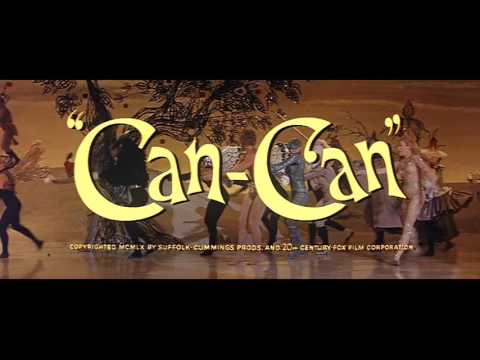
"Can-Can" – The Musical Guide & Song Meanings
Review: what the lyrics are really arguing about
Why does “Can-Can” feel both fearless and carefully fenced in? Because the show’s central conflict is not only legal. It is linguistic. Porter keeps asking who gets to name “obscenity,” who profits from the label, and who gets punished when desire becomes public. The book plants a morality crusade in Montmartre. The score replies with flirtation that keeps slipping into philosophy, then back into jokes.
The lyrical engine is surveillance. A judge shows up to inspect a dance hall. A photographer turns intimacy into scandal. A chorus sells Paris as a brand, then watches authority try to regulate the body in motion. Porter’s best trick here is that he does not sermonize. He weaponizes charm. When Pistache sings about rules, she does it like a nightclub owner balancing receipts. When Aristide sings about love, he does it like a man shocked by his own pulse.
Musically, “Can-Can” lives in Porter’s late-career blend: bright comic patter, ballroom shapes, and romantic songs with a slightly worn elegance. It is not the airtight integration of his peak book musicals. It is a score that behaves like a city at night: pockets of glitter, sudden soft corners, and the occasional hard edge that reminds you power is always nearby.
How it was made: Porter, Burrows, and the problem of “naughty”
“Can-Can” opened on Broadway on May 7, 1953 at the Shubert Theatre, with music and lyrics by Cole Porter and a book by Abe Burrows. It ran 892 performances. Michael Kidd staged the dances. Jo Mielziner handled settings and lighting. Motley designed costumes. Philip J. Lang orchestrated. The credits read like a production built to move fast and look expensive, because it was. The show’s selling point was kinetic pleasure under legal threat, a premise that needs velocity to stay funny.
Porter wrote the score while his health was deteriorating across the 1950s, and later accounts of his work emphasize the tension between his relentless professionalism and chronic pain. That tension matters to the lyrics. They keep choosing sparkle. They keep refusing to stop. It is a late-Porter reflex: wit as posture, romance as escape hatch, and a flash of sadness that never stays long enough to slow the dance.
Later producers learned a hard truth: “Can-Can” is often revived with heavy adjustment. The 1981 Broadway return was described by its own producers as a “brand new production” with revised elements rather than a straightforward restoration. That public framing tells you what artists keep wrestling with: the songs are famous, the story is fragile, and the show needs a strong concept to keep its Paris from turning into postcards.
Key tracks & scenes: 8 lyrical pressure points
"Never Give Anything Away" (La Môme Pistache)
- The Scene:
- Montmartre, early in the night. The Bal du Paradis is awake: lantern light, busy tables, a sense that money is moving hand to hand. Pistache controls the room the way a conductor controls tempo.
- Lyrical Meaning:
- This is Pistache’s constitution. The lyric sells toughness as self-defense and as business plan. In a show about policing bodies, she starts by policing her own vulnerability.
"C’est Magnifique" (Pistache, Judge Aristide)
- The Scene:
- The judge arrives to inspect. The lighting often tightens, as if the room has been subpoenaed. Then the music warms it again. Their flirtation is the first crack in his public persona.
- Lyrical Meaning:
- Porter makes attraction sound like a legal brief that keeps dissolving into laughter. The French phrase becomes a mask both of them can hide behind while they admit what they want.
"I Am in Love" (Judge Aristide)
- The Scene:
- After-hours, when the crowd thins and the judge is alone with the evidence of his own appetite. A single pool of light can make this land as confession rather than comedy.
- Lyrical Meaning:
- Aristide’s lyric is not just romance. It is identity crisis. He is a man trained to prosecute. Now his body is testifying against him, and he cannot cross-examine it into silence.
"If You Loved Me Truly" (Claudine, Boris)
- The Scene:
- In the bohemian subplot, the studio or a side street becomes a pressure cooker. Claudine wants proof. Boris offers excuses, art-talk, and panic.
- Lyrical Meaning:
- This is “Can-Can” shrinking from civic scandal down to private bargaining. The lyric treats love as labor: if you mean it, show it. Porter makes sincerity sound almost like a dare.
"Montmart’" (Company)
- The Scene:
- A communal rush number. The set becomes a map of the neighborhood: café energy, police whistles, dancers slicing through traffic like they own the street.
- Lyrical Meaning:
- It is brand-building, yes, but it is also a defense of a community that refuses to be shamed out of existence. The lyric frames pleasure as local culture, not contraband.
"Garden of Eden Ballet" (Dance sequence)
- The Scene:
- A show-within-the-show that turns the stage into a parable. Bodies become symbols: temptation, innocence, punishment. The lighting often shifts toward theatrical “myth” rather than nightclub realism.
- Lyrical Meaning:
- There is no lyric, and that is the point. The show stops arguing with words and argues with movement. If the law wants to regulate what is seen, dance becomes a direct form of protest.
"Allez-Vous-En" (Pistache)
- The Scene:
- Late Act I, when bravado finally thins. A quieter room, a softer tempo. Pistache sends someone away, but the staging often reads like she is sending her own hope out the door.
- Lyrical Meaning:
- Porter writes a goodbye that is both romantic and managerial. The lyric sounds polite, even graceful, yet it carries the chill of a woman who knows attachment can be used as leverage.
"Can-Can" (Company)
- The Scene:
- The finale is a public trial disguised as a party. Bright lights, bodies in formation, skirts like punctuation marks. The room dares authority to look away.
- Lyrical Meaning:
- The title number makes its argument through repetition: if others can do the respectable version of pleasure, then the scandal is selective. The lyric turns permission into a chant.
Live updates 2025/2026: where the show lives now
In 2025, “Can-Can” showed up where Porter often survives best now: regional companies that can sell the standards and let the book be a little odd. One example is Sullivan Rep’s production in Dedham, Massachusetts, which ran September 26 to October 11, 2025, a reminder that the title still works as an event when choreography and star turns are front and center.
For producers and schools, the rights pipeline is clear. Concord Theatricals licenses “Can-Can” and positions it as a full-length period romantic comedy with a dance-forward identity, highlighting the “Garden of Eden Ballet” and the best-known standards. That framing matches how the show is marketed in 2026: not as a museum piece, but as a vehicle for movement plus evergreen Porter.
On the listening side, the cast recording remains easy to find. Spotify currently carries an “Original Broadway Cast of Can-Can” album, keeping the show alive in playlist culture, where “I Love Paris” and “C’est Magnifique” can travel without the plot.
Notes & trivia
- The original Broadway run opened May 7, 1953 and closed June 25, 1955, totaling 892 performances.
- “Can-Can” won two 1954 Tony Awards: Best Featured Actress (Gwen Verdon) and Best Choreography (Michael Kidd).
- The 2004 New York City Center Encores! staging featured Patti LuPone (Pistache) and Charlotte d’Amboise (Claudine), which became a modern reference point for how to sell the score.
- Design history matters here: Jo Mielziner’s settings and lighting are repeatedly cited in accounts of the original production’s appeal.
- The show’s song list is unusually split between hard-sell comedy songs (business, rules, hustle) and sudden romantic sincerity, which is why directors often lean into contrast in the staging.
- Discography details vary by edition and country, but multiple disc references document an Original Broadway Cast recording date in mid-May 1953.
Reception: critics, then and later
“Can-Can” has always carried a split reputation: hit songs, shaky spine. Modern criticism tends to say the quiet part out loud. When it works, it is because performers supply the psychological glue the book does not always provide. When it fails, you hear the show’s seams.
“Do the Cole Porter songs save the show? Non.”
“It has Porter’s unmistakable stamp of sophisticated lunacy.”
“This is a brand new production with a new concept.”
Quick facts: score, album, availability
- Title: Can-Can
- Year: 1953 (Broadway premiere)
- Type: Musical comedy, two acts
- Music & Lyrics: Cole Porter
- Book: Abe Burrows
- Original Broadway venue: Shubert Theatre (New York)
- Run: 892 performances
- Signature musical moments: “Garden of Eden Ballet,” “C’est Magnifique,” “I Love Paris,” “It’s All Right with Me,” “Allez-Vous-En,” “Can-Can”
- Cast recording: Original Broadway Cast recording documented with a May 1953 recording date in discographic listings
- Streaming: Spotify hosts an “Original Broadway Cast Of Can-Can” album entry
- Rights: Licensed for performance through Concord Theatricals
Frequently asked questions
- Is “Can-Can” the same story as the 1960 film?
- They share the premise and many songs, but the 1960 film is its own adaptation with screen-scale revisions and a different dramatic emphasis.
- Who wrote the lyrics?
- Cole Porter wrote both music and lyrics, with Abe Burrows writing the book for the stage version.
- What is the “Garden of Eden Ballet” and why does it matter?
- It is the show’s major dance statement: an extended sequence that turns the moral argument into physical storytelling. It is one reason choreographers stay interested in the title.
- Where does “I Love Paris” appear in the stage show?
- It appears as a featured standard within the score’s portrait of Montmartre and is often staged as a public-facing number that sells the city’s romance while the plot’s legal pressure builds.
- Is the original cast recording available today?
- Yes. The Original Broadway Cast album is widely reissued and is also represented on streaming platforms such as Spotify.
- Why do revivals so often revise “Can-Can”?
- Because the score is famous and the book can feel episodic. Many productions try to tighten character arcs or reframe the comedy so the evening plays as a story, not only as a string of settings.
Key contributors
| Name | Role | Contribution |
|---|---|---|
| Cole Porter | Composer-Lyricist | Wrote the music and lyrics, including standards that outlived the original production. |
| Abe Burrows | Book writer, director (original) | Created the stage story and shaped the comic pace of the Broadway production. |
| Michael Kidd | Choreographer | Staged the dances; the movement vocabulary is central to the show’s identity. |
| Jo Mielziner | Settings and lighting | Built the visual world that helped audiences forgive narrative thinness. |
| Motley | Costume designer | Created the period costumes that support the show’s play between decorum and provocation. |
| Philip J. Lang | Orchestrator | Orchestrated Porter’s score for Broadway scale and dance propulsion. |
| Cy Feuer & Ernest Martin | Producers | Produced the original Broadway staging and its commercial presentation. |
Sources: Concord Theatricals, IBDB, Playbill, The New Yorker, TheaterMania, Los Angeles Times, StageAgent, Sullivan Rep (season listing), Spotify, Discogs, Sondheim Guide.