
Bandstand Lyrics: Song List
- Act 1
- Just Like It Was Before
- Donny Novitski
- I Know A Guy
- Ain't We Proud
- Proud Riff
- Who I Was
- Just Like It Was Before (reprise)
- First Steps First
- Breathe
- You Deserve It
- Dwight Anson & Jean Ann
- Love Will Come and Find Me Again Lyrics
- Right This Way Lyrics
- Act 2
- Entr'acte
- Nobody
- The Boys Are Back
- I Got a Theory
- Everything Happens
- Welcome Home 1
- A Band in New York City
- This is Life
- This is Life (Reprise)
- Welcome Home 2
- Welcome Home (Finale)
- Epilogue
About the "Bandstand " Stage Show
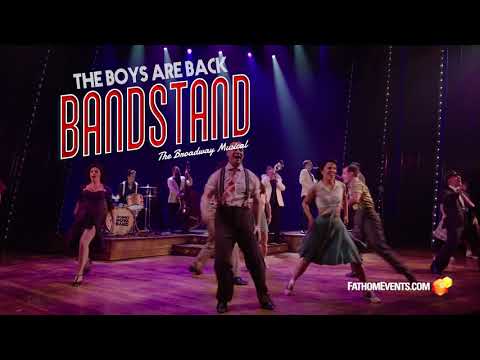
The musical tells the story of a group of veterans returning home to the United States after World War II. Struggling to fit into their old lives while dealing with the lingering effects of the war – including post-traumatic stress and survivor's guilt for friends who did not survive – they form a band composed solely of veterans to compete in a national radio contest in New York City. The prize will guarantee instant stardom to the winners, and by performing together they hope to help one another deal with their personal issues. But with complicated relationships, the demands of the competition and the challenging after-effects of war, going all the way for a win in the contest seems like a dream that may break these musicians.
Release date of the musical: 2017
"Bandstand" – The Musical Guide & Song Meanings
Review
What if the most crowd-pleasing sound onstage, a tight swing band, is also a symptom? That’s the central friction of “Bandstand,” a 1945 homecoming musical that refuses to let the brass section paper over what the war did to these men. The lyrics keep returning to performance itself: who gets thanked, who gets used, who gets paid, and who gets left with the bill in their body. Donny’s voice is urgent, salesy, hungry. Julia’s voice is private grief pushed into public melody. And when “Welcome Home” finally arrives in full, it lands like a document, not a greeting, because the show has spent two hours teaching you how easily a nation turns pain into entertainment.
Musically, it’s a deliberate argument with the MGM mythos. You hear period swing and radio-ready hooks, but the book keeps placing them against insomnia, alcohol, compulsions, and the quiet violence of reintegration. Oberacker and Taylor’s writing treats the “standard” as a mask the characters can hide behind, until the mask starts to suffocate. Even the score’s recurring rhythmic signatures behave like memory: they return whether you want them or not, and they change meaning depending on who’s forced to sing over them.
How It Was Made
“Bandstand” began as a conscious attempt to revive the architecture of mid-century movie musicals, then collide it with contemporary storytelling mechanics. In early development at Paper Mill Playhouse, Richard Oberacker framed the goal as restoring “ideas and traditions” that had slipped out of modern musical theatre, while still building a structure that felt current. He also tied the piece to personal geography: setting it in Cleveland, Ohio, as a tribute to his upbringing and to working-class people he felt musicals rarely centered.
The writers’ partnership predates the show by years. Oberacker and Robert Taylor met on the first national tour of “The Lion King,” where Oberacker conducted and Taylor played first violin. That shared pit discipline matters: “Bandstand” is obsessed with what it costs to play perfectly on cue, night after night, when your internal tempo is wrecked.
Andy Blankenbuehler’s contribution was to cut the nostalgia with visual pressure. He has described taking “huge clippers” to the piece during the process, gutting it from a more traditional approach into something more contemporary and impressionistic, especially in how the men’s memories and “ghosts” share the stage. That aesthetic choice also aligned with the production’s veteran-focused authenticity goals: “Bandstand” became the first stage show certified by Got Your 6, with the creative team emphasizing accuracy in military experience and its aftermath.
Key Tracks & Scenes
"Just Like It Was Before" (Company)
- The Scene:
- Ticker-tape energy, bright streetlight color, bodies moving like a single machine. The staging snaps between locations as if the city itself is cutting the film. The band sound is clean. Too clean.
- Lyrical Meaning:
- The title is a lie the whole show keeps testing. “Before” becomes a fantasy product. The lyrics sell normalcy with a smile, while the score plants a rhythmic memory underneath that won’t stop returning.
"Donny Novitski" (Donny)
- The Scene:
- A small room that feels both like a rehearsal space and a holding cell. Donny talks himself into a plan because silence would mean admitting he has no plan at all.
- Lyrical Meaning:
- It’s self-mythmaking as survival. Donny’s lyric wants a clean narrative arc: come home, form band, win contest, become someone. The desperation is in how hard he has to insist it will work.
"Who I Was" (Julia)
- The Scene:
- Warm domestic lighting that still feels chilly, because pity has filled the room. Julia’s posture is polite, but her voice isn’t.
- Lyrical Meaning:
- The lyric rejects the saintly “Gold Star Wife” frame. Julia names resentment and isolation without asking permission. In a show crowded with male banter, this is the first time the text turns the knife inward.
"Counterpoint / Pie Jesu" (Julia, The Band)
- The Scene:
- Night. Separate pools of light. Each musician rehearses alone, lines interlocking in the air, while Julia sings in church. Movement suggests weight, strain, and bodies remembered.
- Lyrical Meaning:
- This is “Bandstand” admitting that some of its most important storytelling is not spoken. The counterpoint becomes a map of disconnection: they’re together musically while psychologically stranded.
"You Deserve It" (Donny, Julia, The Band)
- The Scene:
- Act I’s club heat. The choreography bursts into individualized riffs, each man trying to look effortless while his nervous system refuses to cooperate.
- Lyrical Meaning:
- It’s the seductive trap of gratitude language. “Deserve” sounds like praise, but it can also be a leash. The song plays like celebration while setting up how easily celebration becomes a commodity.
"Love Will Come and Find Me Again" (Julia)
- The Scene:
- A quieter stage picture. The band’s presence is supportive but not intrusive, like friends holding the edge of a moment they can’t fix.
- Lyrical Meaning:
- Julia tries to give herself permission to live in the future tense. The lyric isn’t naive. It’s negotiated. Hope arrives as a decision, not a sunrise.
"This is Life" (Donny, Julia)
- The Scene:
- Outside a hotel door in New York. The light thins. The city glamour feels distant, like it belongs to someone else. Their voices get close, then pull back.
- Lyrical Meaning:
- The lyric names desire while admitting fear. The romance in “Bandstand” works best when it’s interrupted by what they can’t say about the war, because intimacy here is not a cure. It’s a risk.
"Welcome Home (Finale)" (Julia, The Band)
- The Scene:
- Broadcast night. Deco shine and hard shadows at once. The band is on display, but the atmosphere reads like a trial. When Julia sings the original poem on air, the space turns stark, almost documentary.
- Lyrical Meaning:
- This is the show’s main thesis: the “palatable” version of veteran gratitude is a rewrite, and the rewrite is violence. The lyric refuses euphemism, reclaiming authorship and refusing the propaganda finish.
Live Updates
In 2025 and heading into 2026, “Bandstand” is not a Broadway title you can buy a ticket for on 45th Street. Its life is in licensing and in filmed distribution. Concord Theatricals continues to offer performance rights, including a UK-facing Concord site for the title, which has made the show easier to mount outside the U.S.
Regionally, the musical is still turning up in season programming rather than nostalgia-only tributes. One example: The Western Stage (Hartnell College, Salinas, CA) has listed “Bandstand” as part of its Season 2025 programming, with a full artistic team credited on the production page. That matters because this show is unusually dependent on movement language and on musicianship, and it tends to attract companies that want to prove they can handle both.
For viewers who came to “Bandstand” late, the filmed capture has become a major entry point. The Broadway production was screened in cinemas in 2018 and has since circulated via streaming windows, with listings noting availability on Broadway on Demand. If you’re writing about the lyrics today, that shift is a real editorial fact: most readers now encounter “Welcome Home” first as a filmed close-up, not a back-row Broadway finale.
Notes & Trivia
- The score threads a recurring Gene Krupa drum pattern as a motif tied to Donny’s memory and forward drive.
- “Bandstand” became the first stage show certified by Got Your 6, a program focused on authenticity in military storytelling.
- The Broadway run closed September 17, 2017, after 24 previews and 166 regular performances.
- Blankenbuehler has described cutting the show back from a more traditional version during development, shifting it toward a more contemporary, impressionistic vocabulary of memory and “ghosts.”
- The filmed Broadway production screened in cinemas in June 2018 (with additional encore screenings later that year) and later appeared in limited-time streaming windows.
- Oberacker and Taylor’s partnership began on tour with “The Lion King,” long before “Bandstand” reached Paper Mill and Broadway.
- The Broadway production’s setting is Cleveland, Ohio and New York City in 1945, framing the contest plot inside a specific postwar calendar.
Reception
Critics largely agreed on the craft: the dancing, the live-playing band, and the period skill. The split came on story and framing. Some reviews wanted the book to bite harder, while others appreciated the show’s insistence on matching entertainment to damage rather than treating trauma as a tasteful subplot.
“Bandstand dances a delicate line between nostalgia and disillusion.”
“It is really about what it’s really about, which broadly speaking is the damage war does to combatants.”
“We spend the evening showing you piece by piece what the song is made of: who it’s about and why.”
Technical Info
- Title: Bandstand
- Broadway opening: April 26, 2017
- Setting: Cleveland, Ohio and New York City; 1945
- Type: Full-length musical (period drama with swing score)
- Music: Richard Oberacker
- Book & Lyrics: Robert Taylor and Richard Oberacker
- Director/Choreographer (Broadway): Andy Blankenbuehler
- Orchestrations: Greg Anthony Rassen and Bill Elliott
- Vocal arrangements: David Kreppel
- Selected notable placements (story): “Counterpoint / Pie Jesu” interlocks late-night rehearsal with church; “Welcome Home (Finale)” is sung live on a national broadcast as the poem’s original lyric is restored.
- Original Broadway Cast Recording: Released June 23, 2017
- Label: Broadway Records
- Filmed version: Screened in cinemas June 25 and 28, 2018; later distributed via streaming windows (availability varies by platform/region).
- Licensing: Available through Concord Theatricals (including UK portal).
FAQ
- Who wrote the lyrics for “Bandstand”?
- The lyrics are co-written by Robert Taylor and composer Richard Oberacker, who also co-wrote the book.
- Is “Welcome Home” a love song or a protest song?
- That tension is the point. Within the story, the lyric is revised to be publicly acceptable, then reclaimed in its original, brutally honest form on air. The finale frames authorship as power.
- Is there a cast album?
- Yes. The Original Broadway Cast Recording was released June 23, 2017, via Broadway Records.
- Can I watch a filmed version?
- A filmed capture of the Broadway production was screened in cinemas in 2018 and has since appeared via streaming distribution, including listings that note Broadway on Demand availability.
- Is “Bandstand” touring in 2025/2026?
- There is no current Broadway engagement; the show’s active life is in licensed productions and occasional filmed/streaming availability. Individual theatres announce regional runs as part of their seasons.
Key Contributors
| Name | Role | Contribution |
|---|---|---|
| Richard Oberacker | Composer, Co-Lyricist, Co-Book Writer | Period swing score with recurring rhythmic motifs; co-authored lyric framework and plot engine. |
| Robert Taylor | Co-Lyricist, Co-Book Writer | Lyric voice that contrasts public gratitude language with private grief and anger. |
| Andy Blankenbuehler | Director, Choreographer | Split-level storytelling: authentic swing vocabulary versus fractured, memory-driven movement. |
| Greg Anthony Rassen | Orchestrator | Orchestral/swing blend that supports radio-era polish while permitting modern dramatic escalation. |
| Bill Elliott | Orchestrator | Co-shaped the score’s big-band color and its cinematic transitions. |
| David Kreppel | Vocal Arrangements | Counterpoint writing and ensemble textures that underline the show’s “broadcast” world. |
Sources: Concord Theatricals, Playbill, Vulture (New York Magazine), Time Out New York, Discover Jersey Arts, KMUW (NPR affiliate), Broadway.com, IBDB, Wikipedia, The Western Stage.