Vanities Lyrics – All Songs from the Musical
Vanities Lyrics: Song List
-
Setting Your Sights (Reflections)
- I Don't Wanna Miss A Thing
- An Organized Life
- I Can't Imagine
-
Setting Your Sights (City Limits)
-
An Organized Life (1968)
-
Fly Into the Future
- Cute Boys With Short Haircuts
-
Let Life Happen
-
Setting Your Sights (What You Wanted)
-
The Same Old Music
-
An Organized Life (1974)
-
The Argument
- Friendship Isn't What It Used To Be
-
Looking Good
About the "Vanities" Stage Show
"Vanities" album contains all the songs from the spectacular of the same name. It was produced by Joel Moss, whose work was awarded with Grammy. The album, which includes 15 tracks, was digitally recorded in December 2009. In fact, this disc appeared on shelves of music stores in February 2010. Libretto & music belong to D. Kirshenbaum. The album has been recorded after the off-Broadway theatrical’s premiere happened. Songs performed by S. Stiles, L. Kennedy & A. van der Pol.They launched the eponymous theatrical in 2008 in the sunny California. J. Heifner was the author of the novel. The spectacular was produced by J. Ivey (nominated for Tony Award). Starring: S. Stiles, L. Kennedy, & A. Pol.
The premiere has been postponed due to rearrangement of a troupe’s structure. One of the actresses was awarded as the Best Actress in a play.
Release date: 2009
"Vanities: A New Musical" – The Musical Guide & Song Meanings
Review
Can a musical about female friendship survive without turning friendship into a greeting card? “Vanities” tries. Sometimes it lands with clean, period-specific wit. Sometimes it reaches for uplift and grabs a handful of familiar self-help phrases. That tension is the whole show: three friends growing up in an America that keeps selling them new versions of who they are supposed to be, then acting surprised when the pitch changes.
The lyric engine is repetition with consequences. David Kirshenbaum’s writing returns to the same ideas, beauty, ambition, control, and then changes the pressure around them as the timeline moves from 1963 to 1968 to 1974, with a later coda added in the musical version. One motif in particular does the heavy lifting: “Mystery,” a running commentary on looking good, reappears before each time jump with updated lyrics. It is a smart structural joke that becomes a quiet gut-punch once age enters the room.
Musically, Concord’s own licensing notes call it pop/rock, and the orchestration options can be as lean as piano only. That matters. The score plays best when the arrangement leaves air for text and acting, because this is a three-hander that lives on calibration: harmonies that once sounded like pep-rally unity start to sound like negotiation.
Listening tip: do not start with the “biggest” number. Start with “Mystery” and then jump to “An Organized Life (1974).” You will hear the thesis in stereo: the body changes, the coping mechanisms change, and the friendship has to decide whether it is still a home or just a habit.
Seat tip for live viewing: choose a section where you can see faces in profile. This show often stages emotional pivots in the mirror, and the story is in what a character rehearses privately versus what she performs for her friends.
How It Was Made
“Vanities” began as Jack Heifner’s 1970s play, then took its long route to becoming a musical. In 2005, Playbill reported that Heifner and Kirshenbaum were developing the adaptation, introduced by director Gordon Greenberg, with plans for readings and a first draft on the way. Kirshenbaum also talked about staying in the original period and flirting with pop sounds that evoke girl-groups and singer-songwriter textures, which is exactly the sandbox the final score likes to play in.
The musical’s Off-Broadway run arrived at Second Stage in summer 2009, directed by Judith Ivey, with Lauren Kennedy, Sarah Stiles, and Anneliese van der Pol as the trio. A cast recording followed quickly, produced by Joel Moss, and Playbill noted that the album’s package included Kirshenbaum’s full lyrics and production photos, a very composer-forward move that makes the recording unusually useful for lyric-driven listeners.
Heifner has been candid about the deeper rewrite: in a 2023 interview, he said he originally resisted musicalizing the piece because the play already worked, then changed his mind after hearing what Kirshenbaum wrote. He also explained why the musical adds a fourth scene. With age, the ending shifted toward forgiveness, moving on, and the unpleasant clarity that comes with hindsight. That late-scene reframing is not a minor tweak. It changes what the earlier lyrics mean, because it suggests the show is less interested in who “wins” adulthood and more interested in who learns to stop auditioning for it.
Key Tracks & Scenes
"Mystery" (Kathy, Mary, Joanne)
- The Scene:
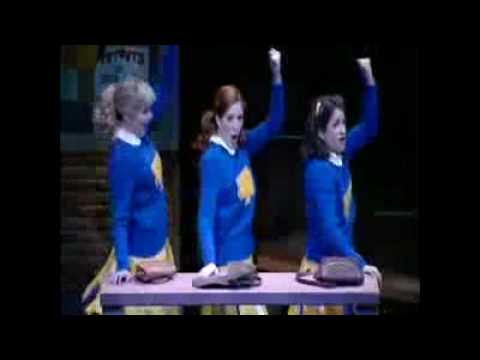
- Before each time jump, the three women step into a ritual at the vanity. The lighting tends to be cool and direct, like a dressing room that refuses to flatter. Cosmetics appear, then later, products meant to hold time in place.
- Lyrical Meaning:
- This is the show’s running thesis, updated for each era. A York Theatre review notes that the lyrics shift each time to reflect changing ideas of beauty, from teen products to disguise-the-years tactics. The repetition is the point: the culture keeps changing the rules, and the characters keep paying the fee.
"Setting Your Sights (Reflections / City Limits / What You Wanted)" (Kathy, Mary, Joanne)
- The Scene:
- A series of transitions that feel like photo albums turning pages. One version plays like a prologue. Another has the bite of post-graduation reality, when the girls start realizing the world does not care about their pep-rally plans.
- Lyrical Meaning:
- These lyrics work as a measuring tape. Each iteration checks the distance between teenage certainty and adult compromise. The hook is optimism; the subtext is bargaining.
"An Organized Life" (Kathy, Mary, Joanne)
- The Scene:
- In high school, it plays like a chore chart with harmony. In college, it becomes sorority structure, rules with better fonts. By 1974, the song’s energy curdles into a desire for simplicity after life has gotten loud.
- Lyrical Meaning:
- Theaterscene highlights the song’s three-scene recurrence and the shift in what “organized” means over time. Early on, organization is control and pride. Later, it is a plea for relief, a character trying to calm her own nervous system with rhythm and rhyme.
"Fly Into the Future" (Mary)
- The Scene:
- College years. The room tends to open up visually, less gymnasium, more possibility. Mary imagines life beyond the approved script, and the staging often lets her step out of the trio’s tight symmetry.
- Lyrical Meaning:
- This is the show’s most direct case for self-invention. The lyric is aspirational, but it also sets up the later question: what happens when reinvention becomes another performance you are expected to maintain?
"Cute Boys with Short Haircuts" (Kathy)
- The Scene:
- A bright, fast character moment that plays like a private confession made in public. The humor usually comes from precision: a list, a type, a fantasy with boundaries.
- Lyrical Meaning:
- The lyric reads as comedy, but it exposes Kathy’s relationship to control. Desire is allowed, but it has to be orderly. Later, when life stops cooperating, this kind of neatness becomes both her strength and her trap.
"The Same Old Music" (Joanne)
- The Scene:
- Midlife reunion energy, often staged with a little social gloss and a lot of tension under it. Joanne holds onto familiar tunes and familiar morals like they are handrails.
- Lyrical Meaning:
- Joanne’s lyric stance is preservation. The song becomes an argument for stability, and also a quiet admission that stability can be fear wearing pearls.
"Friendship Isn't What it Used to Be" (Kathy, Mary, Joanne)
- The Scene:
- 1974, New York. The room is nicer, the friendship is rougher. Many productions stage this as a confrontation that keeps trying to return to harmony, then failing.
- Lyrical Meaning:
- This is the lyric moment where nostalgia stops being cute. The rhyme schemes often feel tight, but the emotional logic is messy. That mismatch is the point: they can still sing together, but they cannot agree on what the song means.
"Letting Go" (Kathy, Mary, Joanne)
- The Scene:
- The added final chapter. The lighting usually softens, not as sentimentality, but as perspective. The trio stands together again, older, with fewer poses to maintain.
- Lyrical Meaning:
- Heifner has said the musical’s last scene emerged from a later-life belief in forgiveness. The lyric therefore reframes the entire show: growing up is not only becoming different people, it is deciding what you will stop punishing yourself for.
Live Updates
Information current as of February 2, 2026. “Vanities: The Musical” remains a steady regional and educational title, helped by its practical shape: three women, no chorus, and flexible orchestration options, including piano-only. Concord continues to license the show, and the title’s longevity is reflected in the way it pops up across wildly different producing contexts.
Recent examples: Meadow Brook Theatre ran the show March 19 to April 13, 2025, marketed as a Michigan premiere. The University of Arizona’s Arizona Arts calendar listed performances from late September through mid-October 2025. In the UK, an amateur engagement was advertised for March 19 to 21, 2026 at The George Harrison Workshop Studio in Liverpool, explicitly noting it was presented by arrangement with Concord Theatricals.
What has changed in how people stage it: there is a growing preference for minimal scenic clutter, letting the vanity framing device do the work. When directors trust the mirrors, the lyrics land harder. When they over-decorate the decades, the show can start feeling like a costume parade. If you are seeing a new production, check whether the marketing mentions the later, forgiveness-forward ending. That coda affects the entire arc.
Notes & Trivia
- The show is a three-hander: three women, no chorus, and an intimate running time often listed around 90 minutes by the licensor.
- Concord’s materials tag the musical style as pop/rock and note orchestration can be as lean as piano only.
- “Mystery” is designed to recur with new lyrics before each time period, a structural device critics have singled out as a clean way to show change over decades.
- Development of the musical adaptation was reported in 2005, with Heifner and Kirshenbaum introduced by director Gordon Greenberg and early readings planned.
- A Broadway plan was announced in 2008, then the production ultimately arrived Off-Broadway at Second Stage in summer 2009.
- The cast recording followed quickly: digital release was reported in December 2009, with a wider physical and retail rollout in early 2010.
- Heifner has said the musical’s added final scene came from a later-life interest in forgiveness, changing the story’s emotional destination.
Reception
The 2009 response was mixed, and the critiques are revealing: not of the premise, but of how the songs define character. Some reviewers wanted sharper lyric specificity, less generalized encouragement. Others praised the performers and the easy-to-listen pop vocabulary. Years later, the West End run in 2016 drew a familiar verdict: strong trio, pleasant score, and a book that can feel lighter than the acting around it. In other words, the show often plays better in the room than it reads in a synopsis.
“Too often it reverts to the same musical moods and self-actualization clichés.” Los Angeles Times (quoting The New York Times)
“Powerful performances and an eclectic pop score are the high points.” TheaterMania
“Cheesier than a block of Emmental.” The Stage
Quick Facts
- Title: Vanities: A New Musical
- Year: 2009 (Off-Broadway premiere)
- Type: Chamber musical, three-hander
- Book: Jack Heifner
- Music & Lyrics: David Kirshenbaum
- Based on: Heifner’s play “Vanities”
- Premiere (NYC): Second Stage Theatre, officially opened July 16, 2009; played through August 9, 2009
- Director (2009 NYC): Judith Ivey
- Musical staging / choreography (2009 NYC): Dan Knechtges
- Scenic design (noted in 2009 review): Anna Louizos
- Cast recording: 15 tracks; produced by Joel Moss; digital release reported December 2009; retail release early 2010
- Label / imprint notes: Reported via Ghostlight Records for the initial digital release; commonly associated with Sh-K-Boom/Ghostlight catalog listings
- Licensing: Concord Theatricals
- Musical style and band size (licensing notes): Pop/rock; options include piano-only
- Availability: Album is listed on major streaming services and digital retailers.
Frequently Asked Questions
- Who wrote the lyrics for “Vanities”?
- David Kirshenbaum wrote the music and lyrics, with the book by Jack Heifner.
- What time periods does the musical cover?
- The story tracks the trio across multiple eras: high school in the early 1960s, college later in the decade, a mid-1970s reunion, plus a later coda that pushes the ending toward forgiveness and perspective.
- Is “Mystery” the same song each time?
- Musically, it is a recurring motif. Lyrically, it changes to match the era, which is how the show turns beauty standards into a timeline you can hear.
- Is there a cast album?
- Yes. The original Off-Broadway cast recording was released digitally in December 2009 and had a wider retail rollout in early 2010.
- Is the show still being produced in 2025 and 2026?
- Yes. Recent listings include professional and educational productions in 2025, and at least one advertised UK amateur production in March 2026, reflecting its ongoing licensed life.
- What is the best song to start with if I want the lyric “hook”?
- Start with “Mystery,” then listen to “An Organized Life (1974).” The contrast tells you what the show thinks adulthood does to a person.
Key Contributors
| Name | Role | Contribution |
|---|---|---|
| David Kirshenbaum | Composer, Lyricist | Wrote pop/rock songs and recurring motifs (“Mystery,” “An Organized Life”) that chart time through changing lyric detail. |
| Jack Heifner | Book writer | Adapted his play and helped reshape the musical’s later ending toward forgiveness, adding a fourth scene. |
| Judith Ivey | Director (2009 NYC) | Helmed the Second Stage premiere, balancing comedy timing with midlife realism. |
| Dan Knechtges | Musical staging / choreography (2009 NYC) | Built movement vocabulary that could shift decades without needing a crowd of dancers. |
| Anna Louizos | Scenic designer (credited in 2009 review) | Created elegant environments that support quick jumps between gymnasium, sorority life, and New York adulthood. |
| Joel Moss | Cast album producer | Produced the 15-track recording, preserving lyric clarity and trio blend. |
| Bryan Perri | Musical director / conductor (album notes) | Led music for the recording associated with the Off-Broadway cast album release. |
| Concord Theatricals | Licensing | Licenses “Vanities: The Musical” and publishes official song list, style notes, and orchestration options. |
Sources: Concord Theatricals; Playbill; TheaterMania; Theaterscene.net; Los Angeles Times; The Stage; WhatsOnStage; Arizona Arts (University of Arizona); Meadow Brook Theatre; TicketSource.