
Unsinkable Molly Brown, The Lyrics: Song List
- Act 1
- Overture
- I Ain't Down Yet
- Belly Up To The Bar, Boys
-
I've A'Ready Started In

- I'll Never Say No
- My Own Brass Bed
-
The Denver Police
-
Beautiful People Of Denver
- Are You Sure?
-
I Ain't Down Yet (Reprise)
- Act 2
-
Happy Birthday, Mrs. J.J. Brown
-
Bon Jour (The Language Song)
-
If I Knew
- Chick-A-Pen
- Keep-A-Hoppin'
- Up Where The People Are
-
Dolce Far Niente
-
Colorado, My Home
About the "Unsinkable Molly Brown, The" Stage Show
Initially, the foundation of the theatrical’s story was a journalistic legend of the rough woman, who knew several European languages, could swear as a miner, and spend many hours in the lifeboat of ‘Titanic’. Were created various newspaper stories about Margaret Brown.
Later, writer Carolyn Bancroft, based on these journalists’ materials wrote the brochure ‘The unsinkable Molly Brown’. In fact, it was the description of real life of Margaret, thickly overgrown with fictional stories. Then there was a radio show based on this book, and as a result, the Broadway musical was created.
Composer and lyricist R. Meredith Willson managed to give playful music notes to many parties and make this epic story funny and comical. It took only 1 preview to show was approved. It successfully launched in November 1960 on the stage of Broadway’s Winter Garden Theatre to be shown to the general public with T. Grimes, H. Presnell & J. Harrold in the lead roles. Giving altogether 532 presentations, T. Grimes earned Tony Award in the category of best actress in a musical, and in 1962, the show was closed.
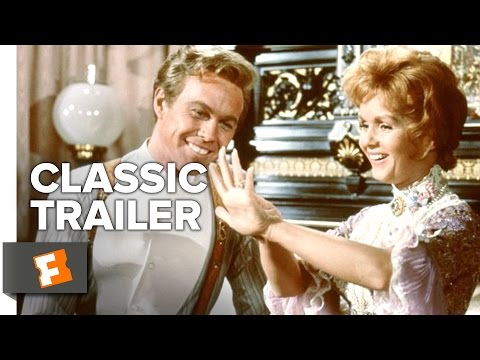
However, shortly afterwards, in 1964, came out the eponymous film in the genre of musical comedy, but with Debbie Reynolds in the title role. The film was nominated for Oscar and Golden Globe Awards. In 1989-90, the play took part in the national tours. In London’s West End, it again saw the light in 2009 with A. Finley in the title role.
Release date of the musical: 1960
"The Unsinkable Molly Brown" – The Musical Guide & Song Meanings
Review
What do you do when your heroine’s signature line is basically a clenched fist? You build a whole score that marches. Meredith Willson’s 1960 follow-up to “The Music Man” runs on muscular rhythms and blunt, forward-driving language: verbs first, emotions second. That sounds like a limitation. In “The Unsinkable Molly Brown,” it becomes the point. Molly’s personality is not a secret to be uncovered, it is a public act, repeated until the world finally believes her.
The lyrics are often plainspoken on purpose, the way a good political speech is plainspoken. Molly’s ambition is not delivered as poetic confession; it’s delivered as work. When the show is at its best, that plainness turns into propulsion. When it’s not, the same lyric directness can feel like character notes written in permanent marker. The later revised edition (more on that below) tries to solve this by giving Molly sharper context and more overtly civic stakes, but the DNA remains: a score that moves like a parade and argues like a town-hall meeting.
Musically, Willson stays in the realm of American popular theater idioms, brassy, march-adjacent, and built for clear diction. That matters because this is a lyric-driven engine: the text does plot labor. The love story is advanced through bargaining songs, class conflict through satirical society material, and the Europe sequence through language and manners games. The famous disaster near the end is less about spectacle than about what Molly’s words have trained the audience to expect: she will keep talking, and by talking, she will keep people alive.
Listener tip: if you’re coming cold, start with the opening number and then jump to the Denver society sequence before you go to the later Europe material. The show’s lyric thesis becomes obvious once you hear how Willson writes “belonging” as something you can hustle for, then reject.
How It Was Made
On paper, the creative assignment sounded like a victory lap: Willson writing both music and lyrics again, with a book by Richard Morris, and a real-life folk heroine as the hook. The 1960 Broadway production landed at the Winter Garden and ran long enough to prove the concept had audience appeal, even if the piece was never treated as a seamless machine.
Decades later, the show’s afterlife became its own subplot. The revised Off-Broadway edition reframed the story closer to Margaret Brown’s public activism and made class politics a front-burner issue, with Dick Scanlan supplying new book material and additional lyrics. The most revealing behind-the-scenes detail is how openly the revision process treated Willson’s catalog like a trunk of spare parts: songs were retained, reshaped, reassigned, and supplemented, with Scanlan documenting which numbers were original to “Molly Brown,” which came from the film, and which were repurposed from elsewhere in the Willson universe.
That revision history matters for lyric analysis because it tells you what the caretakers believed the core identity was. They did not discard Molly’s famous refrain. They built around it. The show survives in the repertoire because the lyric idea survives: resilience as a repeated public statement, not a private epiphany.
Key Tracks & Scenes
"I Ain’t Down Yet" (Molly)
- The Scene:
- Early 1900s, outside the Tobin shack in Hannibal, Missouri. The staging is usually bare and practical, an honest yard, a few props, morning light, and siblings who feel like a small, unruly chorus at her feet.
- Lyrical Meaning:
- This is Molly’s manifesto in plain language. The lyric doesn’t ask for sympathy. It declares stamina. Willson writes her willpower as a repeated slogan, the sort of phrase that can survive plot detours because it’s built to be reusable.
"Belly Up to the Bar, Boys" (Molly, ensemble)
- The Scene:
- Leadville, Colorado: first outside the Saddle Rock Saloon, then inside it weeks later. Think lamplight, a crowded room, and a heroine who wins space by taking it. The number plays like community initiation with a raised glass.
- Lyrical Meaning:
- It’s a drinking song, yes, but it’s also Molly learning the local grammar of belonging. The lyric is invitation as power. She can’t buy status yet, so she manufactures it through social momentum.
"I’ve A’ready Started In" (J.J. and friends)
- The Scene:
- On the street in front of the Saddle Rock, a Sunday night three weeks later. It often lands as a kinetic crowd piece, with the rhythm doing as much narrative work as the dialogue.
- Lyrical Meaning:
- Willson gives the men a “work ethic” lyric that sounds like romance and hustle at the same time. J.J.’s vocabulary is forward motion. Molly hears a partner. The audience hears a warning label.
"My Own Brass Bed" (Molly)
- The Scene:
- Johnny’s log cabin, a month later. Directors typically isolate Molly in a pool of warm light here, letting the object of desire feel tangible, not metaphorical.
- Lyrical Meaning:
- The lyric is about ownership, but not greed. It’s about dignity that can be touched. The phrase-making is classic Willson: a specific object stands in for an entire class trajectory.
"Beautiful People of Denver" (Molly)
- The Scene:
- On the terrace of a Denver mansion, immediately after a comic police interlude on Pennsylvania Avenue. Bright party lighting, social choreography, and Molly trying to pass as a natural in a room designed to reject her.
- Lyrical Meaning:
- This is satire with a smile that’s slightly too wide. The lyric catalogs status behavior like an anthropologist with a grudge. Molly wants entry, but the words already show she sees the absurdity.
"Are You Sure?" (Molly, guests)
- The Scene:
- Same Denver mansion terrace sequence. It often plays under glittering surfaces, with a quiet dread underneath the jokes, a question asked too many times to be casual.
- Lyrical Meaning:
- The lyric is a pressure test. When Molly asks for certainty, she’s really asking whether love can survive social translation. Willson’s genius here is making anxiety sound like polite conversation.
"Bon Jour (The Language Song)" (Molly and the International set)
- The Scene:
- Paris salon, years later, in the swirl of cosmopolitan guests. Staging usually becomes more formal, lines are cleaner, and Molly’s energy is the disruption in a room trained to stay composed.
- Lyrical Meaning:
- Language becomes class. The lyric treats pronunciation and manners as a gatekeeping system, and Molly attacks it the only way she knows: head-on, with humor and refusal to be embarrassed.
"Dolce Far Niente / I May Never Fall in Love with You" (Prince DeLong and Molly)
- The Scene:
- A club off the casino at Monte Carlo, early spring 1912. Soft night lighting, velvet atmosphere, and the sense that Molly has stepped into a painting that wants to keep her as decoration.
- Lyrical Meaning:
- Here the lyric goes sly. Pleasure is offered as a philosophy. Molly’s reply is not just romantic, it’s ideological: she resists becoming someone else’s souvenir.
"Mid-Atlantic sequence" (late Act II, Titanic night)
- The Scene:
- Shortly after 2:30 A.M., April 15, 1912, in the mid-Atlantic. Productions tend to drain the stage into cold tones and hard angles. The chatter stops, and the show’s earlier bravado is forced to prove itself.
- Lyrical Meaning:
- The shipwreck is the ultimate audit of Molly’s rhetoric. The score’s insistence on resilience stops being a catchphrase and becomes a job description: leadership through voice.
Live Updates
Information current as of February 2026. There is no new Broadway engagement announced, but the musical is visibly alive in licensing and regional programming. Music Theatre International continues to license the revised Off-Broadway edition, which positions Molly as explicitly progressive and emphasizes her labor and immigration advocacy alongside the famous Titanic episode. Recent and upcoming examples include a 2025 regional run at Hillbarn Theatre, and a scheduled May 2026 production at Northfield Arts Guild in Minnesota.
On the recording side, the most recent major release is the “New Off-Broadway Cast Recording,” tied to Transport Group’s revised edition and released in 2022. That album is notable for how it treats Willson’s legacy: it preserves signature numbers while adding lesser-known songs and newly tailored material, making it a practical listening gateway for modern audiences who want more plot clarity than the 1960 structure always provides.
If you are buying tickets for a licensed production, check which version is being produced. The revised script and song list can change character emphasis and political framing, which in turn changes how the lyrics read. Molly’s refrain means one thing as personal grit and something sharper when it’s connected to public activism.
Notes & Trivia
- The original Broadway production opened in 1960 and ran 532 performances at the Winter Garden.
- Tammy Grimes won the 1961 Tony Award for Featured Actress in a Musical for playing Molly.
- A detailed scene-by-scene outline places the Titanic night sequence shortly after 2:30 A.M. on April 15, 1912, in the mid-Atlantic.
- "Belly Up to the Bar, Boys" is often discussed as a march-inflected ensemble engine, consistent with Willson’s Sousa-band background and brassy rhythmic profile.
- The revised edition explicitly identifies which numbers are retained from the 1960 show, which were borrowed from the film, and which were repurposed from other Willson material.
- The 2022 “New Off-Broadway Cast Recording” was recorded in December 2021 and credits Michael Rafter, Dick Scanlan, and Michael Croiter among the producers, with new orchestrations by Larry Hochman.
- The original cast recording is widely cataloged under Capitol Records, and remains available on major streaming platforms.
Reception
In 1960, critics tended to split their verdict: they could admire Willson’s rhythmic savvy and the show’s charm while side-eyeing the book’s rough transitions. Later responses often treat the material as a fixer-upper with a diamond of a role at the center, hence the appeal of the revised edition.
“The lines he has invented… are simple, amiable, occasionally witty.” John McCarten, The New Yorker (1960)
“An old musical gets a much-needed facelift.” TheaterMania (2020)
“A rowdy and sometimes rousing blend of song and sentiment.” Variety (reviewing the screen adaptation)
Quick Facts
- Title: The Unsinkable Molly Brown
- Year: 1960 (original Broadway production)
- Type: Musical comedy, book musical
- Music & Lyrics: Meredith Willson
- Book (original): Richard Morris
- Revised edition (book/additional lyrics): Dick Scanlan (licensed edition)
- Selected notable placements (original structure): Tobin shack opener; Saddle Rock Saloon ensemble drinking song; Denver society terrace sequence; Paris salon language number; Monte Carlo club duet; mid-Atlantic Titanic night sequence
- Original Broadway run: Opened 1960 at the Winter Garden, 532 performances
- Cast albums: 1960 Original Broadway Cast Recording (Capitol); 2022 New Off-Broadway Cast Recording (revised edition)
- Availability: Both recordings are broadly available on major streaming services, with the newer album offering the clearest map of the revised narrative.
Frequently Asked Questions
- Who wrote the lyrics to “The Unsinkable Molly Brown”?
- Meredith Willson wrote both the music and lyrics for the 1960 score. The licensed revised edition includes additional lyrics by Dick Scanlan.
- Is “I Ain’t Down Yet” the main message of the show?
- Yes, and it works because it is not treated as a single “big moment.” The refrain functions like a thesis statement the plot keeps stress-testing, from poverty to society snubs to the ocean liner crisis.
- Where do the biggest songs sit in the story?
- The major early numbers live in Hannibal and Leadville, with the social satire cresting in Denver. Act II pivots to Paris and Monte Carlo, then lands on the mid-Atlantic sequence tied to the Titanic night.
- Which version am I likely to see today, the 1960 original or the revised edition?
- Most licensed productions now point to the revised Off-Broadway edition, which reframes Molly’s public activism and adjusts the material around her. Always confirm the edition in the theater’s production notes.
- Is there a film version?
- Yes. The 1964 film adaptation helped keep the title and the central songs in circulation, even when the stage piece was less frequently produced.
- What should I listen for in the lyrics?
- Listen for how often the lyric chooses action words over reflection. Willson writes Molly as a person who talks herself into motion, and that habit becomes the story’s engine.
Key Contributors
| Name | Role | Contribution |
|---|---|---|
| Meredith Willson | Composer & Lyricist | Wrote the score’s brassy, lyric-forward numbers and Molly’s central resilience refrain. |
| Richard Morris | Book writer (original) | Built the original narrative frame that carries Molly from Missouri to Colorado to Europe and the Titanic night. |
| Dick Scanlan | Book & additional lyrics (revised edition) | Reworked the story toward Brown’s activism and documented the origins and sourcing of songs used in the revision. |
| Kathleen Marshall | Director/Choreographer (revised Off-Broadway edition) | Led the modern staging approach that reintroduced the title to New York audiences in 2020. |
| Michael Rafter | Music adaptation (revised edition) | Helped reshape the musical material for the revised book, including integration of lesser-known Willson songs. |
| Larry Hochman | Orchestrations (2022 recording) | Provided orchestrations for the New Off-Broadway Cast Recording, supporting a clearer modern sonic profile. |
Sources: IBDB; The New Yorker; Denver Center for the Performing Arts; Music Theatre International; TheaterMania; Hillbarn Theatre; Northfield Arts Guild; Playbill; Tony Awards site; BroadwayWorld; Kentwood Players program; Variety; YouTube.