

My Own Brass Bed Lyrics
My Own Brass Bed
Star shining on my own brass bedStar shining far over my head.
Oh, what a beautiful place to cry
I'd gladly sleep with one eye
Just to look at you.
I'm trembling just to look at you now.
All I can think of is "Whoa, Mr. Brown"
(Whoa, Mr. Brown)
You can ask me anytime you please,
for me to,
for me to marry you.
Oh, I'll blush,
Head to toe!
But I sure won't ever say "No!"
Song Overview
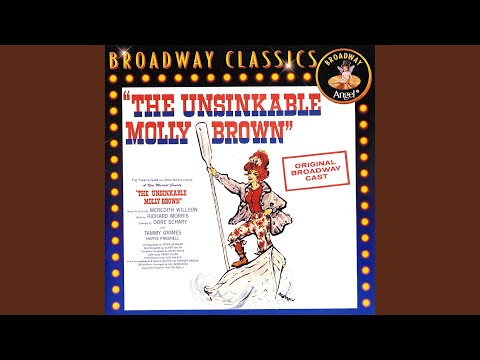
In a score famous for brass, bounce, and big-room bravado, this quiet ballad is the moment the door closes and the character finally listens to her own pulse. Written for The Unsinkable Molly Brown, the number sits in Act I as Molly realizes that a life she has been chasing in headlines and daydreams is suddenly standing right in front of her - with work boots on. Tammy Grimes introduced the song on Broadway, and her cast-album take still sounds like a confession captured before the world barges back in.
Review and Highlights
Quick summary
- Stage context: Act I, a private scene in Johnny Brown's cabin where Molly softens after seeing the brass bed.
- Original interpreter: Tammy Grimes (original Broadway Molly Tobin).
- Recording footprint: appears on the 1960 original Broadway cast album; later reshaped as a paired duet segment in the revised stage version.
- Adaptation note: the 1964 film uses only a small slice of the stage score, and this number is not among the listed film musical numbers.
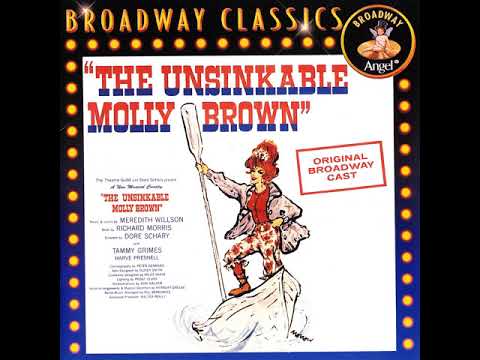
The Unsinkable Molly Brown (1960) - stage musical - not diegetic. Placed in Act I at Johnny's cabin, right after his vow that he will never refuse her wants. It is a bedroom soliloquy that plays like a hinge: the story stops selling Molly as a punchline and starts treating her as a person with a bruise under the bravado. The scene matters because it turns a symbol of status (the bed) into a symbol of care - and Molly notices the difference.
Musically, Meredith Willson writes this as the score's soft counterweight: the melodic line moves patiently, letting the performer color each thought rather than race to a punch. Grimes does not polish the edges; she lets the phrasing catch, which makes the tenderness feel earned. There is also craft in how the lyric sets up a future: the image of stars over a bed makes romance look grand, but the admission that it is also a place to cry keeps the fantasy honest.
Creation History
The musical was developed from Richard Morris's research into the Molly Brown legend and opened on Broadway at the Winter Garden Theatre on November 3, 1960. Willson supplied music and lyrics, with Don Walker credited for orchestrations and Herbert Greene for vocal arrangements and musical direction on the cast-album materials. The cast recording credits list producers Andy Wiswell and Dick Jones, and later revisions of the show retained this song while recontextualizing other parts of the score. As stated in the Denver Center for the Performing Arts feature on the revised version, the song remained one of the pieces carried over from the Broadway score without added new lyrics.
Song Meaning and Annotations
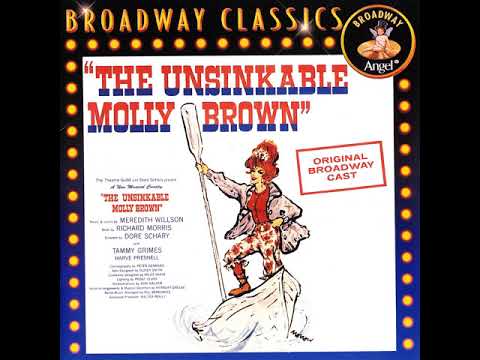
Plot
Molly has been clear about her ambition: she wants money, security, and a place in a world that has always treated her like a noisy intruder. Johnny Brown pursues her with stubborn affection, builds a cabin, makes promises, and then reveals the brass bed - a domestic dream made solid. The song is her internal shift from bargaining with fate to imagining a life with another person, even while she braces for the risk that comes with wanting something real.
Song Meaning
The meaning lives in the tension between display and intimacy. A brass bed is a public symbol (you can show it off), but the lyric keeps returning to what happens in private: looking, trembling, blushing, and admitting that love can be both a crown and a bruise. The stars in the lyric are not just romantic wallpaper - they make the bed feel cosmic, as if Molly is trying on a new identity under a huge sky. Yet the line about crying brings the fantasy back to earth: she understands that marriage is not a poster, it is a room.
Annotations
Star shining on my own brass bed
A single image does a lot of work here. The bed is a symbol of arrival - something sturdier than the saloon and grander than the cabin - but pairing it with starlight turns it into a private altar. Willson is good at giving characters objects that double as destiny, and this is one of his neatest.
what a beautiful place to cry
This is the lyric's most revealing turn. Molly is not pretending love is safe; she is choosing it anyway. That is the ballad's quiet rebellion: she is allowed to be tough and tender without the script winking at her.
- Driving contrast: the show surrounds this moment with louder, public-facing numbers; the ballad feels like the lights dim in the middle of a parade.
- Emotional arc: awe turns into self-protective caution, then into consent - not shouted, but decided.
- Cultural touchpoint: a brass bed reads as working-class aspiration in the early 1900s American West, a household marker that says: we have made it, or we are about to.
- Intertext note: later revisions pair the material alongside Johnny's promise song as a shared portrait of how two stubborn people negotiate love.
Style and storytelling
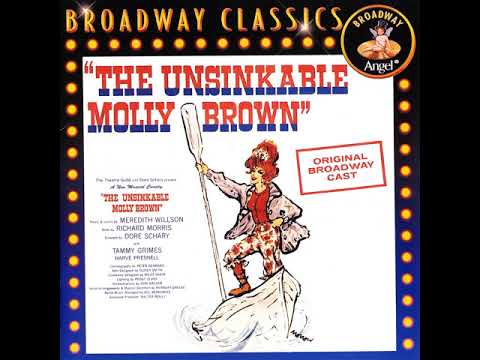
Willson writes ballads that behave like dialogue, and this one is built on plainspoken awe rather than ornate poetry. The lyric keeps the diction simple and lets the performer supply the subtext: she is watching herself fall in love, half thrilled, half suspicious. If you grew up on Broadway recordings where the big belt number gets all the souvenirs, this is the track that reminds you why albums mattered - they preserved the quiet acting, too. I still think of it as the show pausing to take a breath.
Technical Information
- Artist: Original Broadway Cast of "The Unsinkable Molly Brown" (featured voice: Tammy Grimes)
- Featured: None
- Composer: Meredith Willson
- Producer: Andy Wiswell; Dick Jones (cast recording)
- Release Date: November 21, 1960 (original cast album release)
- Genre: Musical theatre
- Instruments: Lead vocal; pit orchestra
- Label: Capitol Records
- Mood: Tender, watchful, hopeful
- Length: 2:18
- Track #: 6 (original Broadway cast album sequencing on major platforms)
- Language: English
- Album (if any): The Unsinkable Molly Brown (Original Broadway Cast Recording)
- Music style: Mid-century Broadway ballad with conversational phrasing
- Poetic meter: Mostly iambic-leaning lines with tight internal rhyme
Questions and Answers
- Where does the song land in the story?
- It sits in Act I, immediately after Johnny promises he will never refuse Molly's wishes. The bed reveal triggers her private rethink.
- Why is the brass bed such a loaded image?
- It is status you can touch: a household marker of stability. In the scene it also reads as care, because Johnny bought her the thing she never let herself fully expect.
- Is it a solo or a duet?
- In the 1960 stage version it is Molly's solo. In the revised version, the material is paired with Johnny's promise song as a shared sequence.
- Was it in the 1964 film adaptation?
- No. The film uses only a small set of songs from the stage score, and this title is not included in the film's listed musical numbers.
- Who first performed it on Broadway?
- Tammy Grimes originated Molly Tobin in the original Broadway production and is the voice most listeners associate with the cast-album track.
- What makes the lyric quietly daring for its era?
- It lets Molly admit vulnerability without turning her into a joke. The line about crying tells you she understands the cost of wanting love - and chooses it anyway.
- What is the vocal ask on the performer playing Molly?
- The licensed character listing places Molly's range from F3 to G5, which matches the role's need to move between conversational warmth and brighter climactic lines.
- What do we know about the original recording credits?
- The cast-album materials credit orchestrations to Don Walker, vocal arrangements and musical direction to Herbert Greene, and list Andy Wiswell and Dick Jones as producers.
- Are there notable modern recordings?
- Yes - the revised Off-Broadway version has an official cast recording released in 2022, and the number appears there as part of the paired sequence with Johnny's promise song.
Awards and Chart Positions
According to the Tony Awards official site, Tammy Grimes won in 1961 for her performance in The Unsinkable Molly Brown. The screen version became an awards player too: the Academy lists multiple nominations for the 37th ceremony, including Debbie Reynolds for Best Actress. On the charts, the film soundtrack reached a Billboard 200 peak of number 11 during its 1964 run, according to Billboard.
| Category | Work | Result | Date |
|---|---|---|---|
| Tony Awards | Tammy Grimes - Best Featured Actress in a Musical (role: Molly Tobin) | Won | April 16, 1961 |
| Academy Awards | The Unsinkable Molly Brown (film) - multiple nominations including Best Actress (Debbie Reynolds) | Nominated | 1965 ceremony |
| Billboard 200 | The Unsinkable Molly Brown (film soundtrack) | Peak: 11 | Week of November 7, 1964 |
Additional Info
One of the sneakiest pleasures in following this score across decades is hearing how directors and arrangers frame the same moment. The original staging treats the ballad as a private pause in a rough-and-tumble Act I. Later revisions tightened the story and, in performance practice, often slide the material alongside Johnny's promise song to underline that these two are negotiating the same dream from different angles.
The modern paper trail is strong. A revised Off-Broadway cast recording was released digitally on July 22, 2022, documenting the updated book and song order while keeping the core Willson material present. And critics still single out this number when performers lean into its soft power: a Los Angeles stage review of the 1989 tour noted Debbie Reynolds was at her best in the gentler ballads, naming this song as a standout.
Key Contributors
| Entity | Type | Relationship |
|---|---|---|
| Meredith Willson | Person | Wrote music and lyrics for The Unsinkable Molly Brown |
| Richard Morris | Person | Wrote the original book for the stage musical |
| Tammy Grimes | Person | Originated Molly Tobin and recorded the original cast-album performance |
| Harve Presnell | Person | Originated Johnny Brown on Broadway and later reprised the role in the film |
| Don Walker | Person | Provided orchestrations for the original production materials |
| Herbert Greene | Person | Handled vocal arrangements and musical direction (credited on cast-album materials) |
| Andy Wiswell and Dick Jones | People | Produced the original Broadway cast recording |
| Music Theatre International | Organization | Licenses the musical and publishes synopsis and role information |
| The Unsinkable Molly Brown (1964) | Work | Film adaptation that uses only a subset of stage numbers |
Sources: Music Theatre International show synopsis and character listing, Tony Awards official site, IBDB, Archive.org cast-album booklet PDF, Apple Music album page, Billboard 200 chart page, Oscars ceremony nominees page, Denver Center for the Performing Arts feature on song origins, BroadwayWorld cast recording announcement, Los Angeles Times stage review