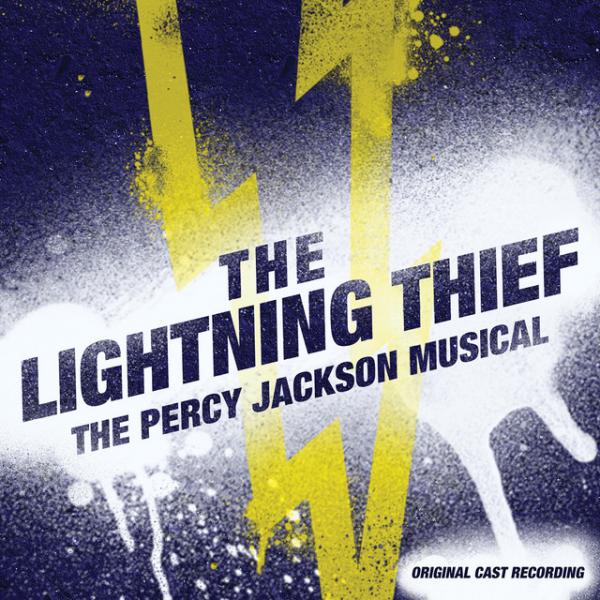
The Lightning Thief Lyrics: Song List
- Act I
- Prologue / The Day I Got Expelled
- Strong
- The Minotaur / The Weirdest Dream
- Another Terrible Day
- Their Sign
- Put You in Your Place
- The Campfire Song
- The Oracle
- Good Kid
- Killer Quest
- Act II
- Lost!
- My Grand Plan
- Drive
- The Weirdest Dream (Reprise)
- The Tree on the Hill
- D.O.A.
- Son of Poseidon
- The Last Day of Summer
- Bring on the Monsters
- Bonus Tracks (Deluxe Edition)
- Camp Half-Blood
- Pick a Side
- Try
- In the Same Boat
- The Wittlest Minotaur
About the "The Lightning Thief" Stage Show
Release date of the musical: 2017
"The Lightning Thief: The Percy Jackson Musical" – The Musical Guide & Song Meanings

Review
How do you stage a road-trip fantasy with gods, monsters, and a fanbase that can spot a wrong prophecy line from three rows back? “The Lightning Thief” answers with a scrappy rock band, fast scene changes, and lyrics that treat adolescent panic as a legitimate worldview. The show wants to translate a thick YA plot into something that moves like a concert and reads like a comic book, and its best moments come when it accepts that theatre cannot outgun cinema. It leans into invention, not scale.
Rob Rokicki’s lyric voice is conversational and wired. Percy doesn’t narrate in tidy “I want” statements; he spirals, jokes, protests, then lands on sincerity once the room is listening. The show’s recurring lyrical engine is misfit identity: kids who are told they are broken, then learn they are rare. That theme shows up as punchline and as punch, sometimes in the same verse. When it works, it feels like a teen’s internal monologue finally got a backing track. When it strains, the sheer amount of plot can push songs into informational speed-running.
Musically, the score is aggressively contemporary rock, with character-specific color choices that matter more than you’d expect in a “family show.” Rokicki has described assigning sonic signatures to characters, with Percy’s emotional spikes hitting as electric guitar power chords, Grover leaning acoustic with folk-ish textures, and Annabeth’s brainy self-audit getting a more “keyboard” sound-world in “My Grand Plan.” That is a smart map for listeners: you can hear who is driving the scene before you process the lyric.
Viewer tip for first-timers: if you are seeing a large house, do a quick pre-listen to “Prologue/The Day I Got Expelled,” “Good Kid,” and “My Grand Plan.” The show moves fast, and those three tracks establish the story’s rules, Percy’s tone, and Annabeth’s stakes early enough that Act II won’t feel like a mythology exam.
How it was made
The show’s origin is less “let’s build a franchise musical” and more “two theatre people trying to solve a puzzle.” Rokicki began working on the piece in 2013 and has said he came in cold on the source material, reading the novel only after being asked to adapt it, then leaning on Joe Tracz’s existing play treatment to shape the musical’s structure. That workflow explains why the score feels scene-driven: the songs tend to snap to specific story tasks rather than floating in generalized mood.
Collaboration mattered because the material is dense. Tracz has described living-room logistics, literally crashing on Rokicki’s couch to stay in the same space while they found the heart of scenes. In a genre that often separates book and score development, that closeness reads as a practical survival tactic: if you are going to sprint through gods and monsters, the emotional through-line has to stay pinned down.
The piece also has a built-in evolution story. It began as a one-hour Off-Broadway show in 2014, returned as an expanded production Off-Broadway in 2017, and later scaled up to a 2019 Broadway limited run. The licensing materials are candid that songs and details shifted between Off-Broadway, tour, and Broadway iterations, which is a polite way of saying: “Do not argue with your playlist as if it is scripture.”
Key tracks & scenes
"Prologue/The Day I Got Expelled" (Percy Jackson and Company)
- The Scene:
- Act I opener. A classroom becomes a battleground, then the world tilts into “something is wrong with me” territory. Lighting often flickers between school fluorescent and monster-movie shadow, because Percy’s reality is switching lanes mid-sentence.
- Lyrical Meaning:
- This is Percy’s voiceprint. The lyric sells his defensive humor as armor, then cracks it just enough to show fear underneath. It sets the show’s central argument: “troublemaker” can be a misdiagnosis.
"Another Terrible Day" (Mr. D)
- The Scene:
- Early Camp Half-Blood. A bored god in charge of children who worship him, resenting every minute of it. Staging tends to make Mr. D a stationary storm: minimal movement, maximum contempt.
- Lyrical Meaning:
- The lyric is comedy with teeth. It treats divine authority as petty bureaucracy, which reframes the whole myth world as a place where the kids will have to save themselves.
"Put You in Your Place" (Clarisse, Annabeth, and Company)
- The Scene:
- Act I, Camp Half-Blood hierarchy lesson. Clarisse arrives like a human thunderclap, and the choreography usually turns into controlled chaos: shoves, circles, and a sense that the camp is a training ground and a social prison.
- Lyrical Meaning:
- It is a status anthem. The lyric’s function is not subtle: Percy is being informed where he sits in the food chain. Annabeth’s presence in the number matters, because “place” is also the show’s identity obsession.
"Good Kid" (Percy Jackson and Company)
- The Scene:
- Act I, after Percy is handed a destiny he did not request. Often staged with Percy slightly separated from the campers, a single spot or side light isolating him while the ensemble behaves like an echo of judgment.
- Lyrical Meaning:
- “Good” becomes a contested word. Percy isn’t asking to be perfect; he’s asking to be seen accurately. The lyric lands because it frames frustration as grief, and grief as a refusal to accept the narrative adults wrote for him.
"My Grand Plan" (Annabeth)
- The Scene:
- Act II pivot point. Annabeth stops being “the smart one” and becomes a person with a private blueprint. Lighting often narrows here, letting her focus sharpen while the world quiets for once.
- Lyrical Meaning:
- The lyric is ambition with loneliness inside it. Annabeth is building a future to prove she belongs, and the metaphors are architectural because her dream is about constructing order out of chaos.
"Drive" (Percy Jackson, Annabeth, Grover, Ares, and Company)
- The Scene:
- Act II, the quest hits the highway. Ares enters with swagger, and the staging usually shifts into travel theatre: rolling units, quick prop swaps, and kinetic lighting that imitates motion more than literal vehicles.
- Lyrical Meaning:
- The number weaponizes momentum. Lyrically it is about being pushed forward by forces you do not trust, and it tees up the show’s broader critique of adult power that manipulates “heroism” for its own ends.
"D.O.A" (Charon and Company)
- The Scene:
- Act II, the Underworld as an overlit, overbranded waiting room. Many productions play it like nightclub satire: sharp beams, pulsing effects, and choreography that sells the joke that death has customer service.
- Lyrical Meaning:
- The lyric is dark comedy that keeps Percy’s fear from turning the show into pure dread. It also underlines the score’s habit of humanizing myth through modern institutions: tolls, queues, rules, and fees.
"Son of Poseidon" (Percy Jackson, Annabeth, Grover, Ares, and Company)
- The Scene:
- Late Act II, confrontation and self-recognition collide. The best stagings use water as suggestion, not literalism: blue-white light, fabric, or projection, with Percy finally occupying the center without apology.
- Lyrical Meaning:
- This is identity claim turned outward. Percy stops arguing with the label “demigod” and starts using it. The lyric’s emotional job is simple: convert confusion into agency.
Live updates
Information current as of February 2026.
In 2025 to 2026, “The Lightning Thief: The Percy Jackson Musical” is actively touring the UK. The official production site flags a “UK TOUR 2025 – 2026” with performances beginning 15 August. A separate UK theatre news report also listed early tour stops beginning at Theatre Royal Windsor (from 15 August 2025), followed by venues including Newcastle Theatre Royal, Milton Keynes Theatre, Liverpool Empire, Brighton Theatre Royal, the Regent Theatre (Stoke-on-Trent), Coventry Belgrade, Bradford Alhambra, and New Wimbledon Theatre.
UK casting announcements have been public, too. One UK theatre publication reported Vasco Emauz as Percy Jackson, with Kayna Montecillo as Annabeth and Cahir O’Neill as Grover for the tour. If you are tracking this show for “what’s different now,” note that recent London coverage also described Percy as 16 in that production context, a choice that nudges the lyric tone slightly older, with more teen bite than middle-school bafflement.
Licensing remains a major part of the title’s life. Concord Theatricals describes it as a full-length musical with expandable casting, and its published music notes discuss a five-piece, guitar-forward band setup and acknowledge meaningful changes across Off-Broadway, tour, and Broadway versions. Translation: local productions can make it work, but the sound and pacing choices are not optional if you want the piece to feel like itself.
Notes & trivia
- Concord’s official music list places “Good Kid” in Act I and “My Grand Plan,” “D.O.A,” “Son of Poseidon,” and the finale run (“The Last Day of Summer,” “Bring on the Monsters”) in Act II, offering a clean roadmap for where the lyrical peaks sit in the story.
- The licensing notes call the show “vocally demanding,” and they explicitly ask that off-stage singing be live rather than pre-recorded, which is unusual candor in published materials.
- Rokicki has described character-specific sound signatures: Percy hitting electric guitar power chords, Grover leaning acoustic with folk textures, and Annabeth getting a keyboard-forward sound in “My Grand Plan.”
- The score’s Broadway band setup was orchestrated for five players, with emphasis on lead guitar and keyboard programming, reinforcing the “scrappy rock” identity in the official materials.
- The Off-Broadway cast recording release date is listed as July 7, 2017, and Broadway Records credits the album’s production to Michael Croiter and Rob Rokicki, with Van Dean as executive producer.
- Tracz has described an unusually close writing process for the musical’s development, including living together temporarily so book and score could be shaped in tandem, scene by scene.
- The Guardian’s London review praised the production’s lo-fi spirit and pointed to “smart lyrics” in numbers including “Another Terrible Day” and “DOA,” while also noting the rock score’s relentlessness.
Reception
The show’s critical story is basically two different conversations. One is about craft: the lo-fi theatricality, the pace, and whether the score can give each emotional beat its own air. The other is about target audience: a faithful adaptation can be a gift to fans and still feel overstuffed to everyone else. That tension is not unique to Percy Jackson, but it is amplified here because the material is beloved and the plot is busy.
“Winningly lo-fi and brings out the directness and humour of Riordan’s novel.”
“The real stars of the show, though, are a pair of leaf blowers.”
“It is both overblown and underproduced, filled with sentiments it can't support and effects it can't pull off.”
Quick facts
- Title: The Lightning Thief: The Percy Jackson Musical
- Year (album milestone): 2017 (Off-Broadway Original Cast Recording release)
- Book: Joe Tracz
- Music & Lyrics: Rob Rokicki
- Based on: “The Lightning Thief” by Rick Riordan
- Musical style: Guitar-forward rock with pop ballad turns; character-specific instrumentation cues in the writing approach
- Selected notable placements (official song list): “Prologue/The Day I Got Expelled” (Act I opener); “Good Kid” (Act I identity ballad); “My Grand Plan” (Act II character thesis); “D.O.A” (Underworld sequence); “Son of Poseidon” (late Act II turning point); “Bring on the Monsters” (finale)
- Licensing snapshot: Full-length musical with expandable casting; published materials discuss live off-stage vocals and a five-piece band orientation
- Original Cast Recording: Released July 7, 2017; available on major streaming platforms
- Label (2017 cast recording): Broadway Records
- 2025–2026 status: UK tour announced and running, with publicly reported casting and venues
Frequently asked questions
- Is this show appropriate if you have not read the book?
- You can follow it, but it helps to know the story. Some critics argued the Broadway version moved so fast that non-fans could feel swamped by plot. A quick pre-listen to “Prologue/The Day I Got Expelled,” “Good Kid,” and “My Grand Plan” can make the pacing feel less frantic.
- Who wrote the lyrics, and what is distinctive about them?
- Rob Rokicki wrote both music and lyrics. His writing often sounds like modern teen speech sharpened into rhyme, with humor used as a defense mechanism before sincerity breaks through.
- What are the best songs to understand the characters quickly?
- “Good Kid” frames Percy’s moral frustration, “My Grand Plan” reveals Annabeth’s private ambition, and “D.O.A” shows how the show uses comedy to keep myth-world danger playful rather than grim.
- Why does the show feel “lo-fi” even when it is telling an epic story?
- It is a design choice and, frankly, a practical one. Reviews have praised the production’s “winningly lo-fi” approach, and even detractors point to moments where simple stagecraft is the most effective effect in the room.
- Is there a current tour in 2025–2026?
- Yes. The official production site advertises a UK tour beginning 15 August 2025, and UK theatre news has published an early venue route plus casting announcements.
Key contributors
| Name | Role | Contribution |
|---|---|---|
| Rob Rokicki | Composer & Lyricist | Wrote a rock-forward score with character-specific sonic signatures (electric vs acoustic vs keyboard textures) and lyric language calibrated to modern teen voice. |
| Joe Tracz | Book writer | Built a stageable route through a dense YA plot, with an adaptation approach shaped in close collaboration with the composer during development. |
| Rick Riordan | Original author | Created the source novel whose tone of humor-plus-stakes largely dictates the musical’s lyrical attitude. |
| Concord Theatricals | Licensing | Publishes official song list, music director notes, and production guidance including band orientation and live vocal expectations. |
| Broadway Records | Label | Released the 2017 Off-Broadway Original Cast Recording; credits list key production personnel for the album. |
| Bill Kenwright Ltd | UK production (tour) | UK tour producer presence on official tour infrastructure and ticketing ecosystem for 2025–2026. |
Sources: Concord Theatricals; Broadway Records; Playbill; DC Theater Arts; The Theatre Times; The Guardian; Time Out; New York Theatre Guide; official production site (percyjacksonmusical.com); What’s On Stage; Musical Theatre Review.