The Campfire Song Lyrics
Jonathan Raviv, The Lightning Thief Company & Rob RokickiThe Campfire Song
[LUKE], spokenCome on, grab some ambrosia, and let the nectar flow
[PERCY, spoken]
Why is everyone scraping part of their plate into the fire? Is the food here really that bad?
[LUKE, spoken]
Offering to the gods. It's not enough that they're omnipotent and all-powerful, they need to feel appreciated. To the gods!
[ENSEMBLE, spoken]
To the gods!
[LUKE]
Oh, things couldn't be worse
When your parents run the universe
[ALL]
Oh, things couldn't be worse
When your folks run the universe
[LUKE]
My dad is Hermes
He messengers things
You'll know his sign by his shoes with those wings
I'd wait by the phone, but the phone never rings
Oh no
[ENSEMBLE makes noises of agreement.]
When your dad's a god, life can be tough
I met the guy once, and once was enough
[LUKE, spoken]
Annabeth?
[ANNABETH]
My mom's Athena
She's smart and she's wise
She's sworn off gluten and she's sworn off guys
But if she came to camp, it'd be a surprise
Oh no
[LUKE & KATIE]
Oh, no
Oh, and my stepmom, she hates me, and my dad works all day
So I left Virginia and I ran away
[PERCY, spoken]
Wait, is that true?
[LUKE, spoken]
Everybody!
[ALL]
Oh, things couldn't be worse
When your parents run the universe
Oh, things couldn't be worse
When your folks run the universe
[LUKE, spoken]
Alright, who's next?
[KATIE, spoken]
Oh! Okay, let me see! Uh...
[KATIE]
My mom's Demeter
Goddess of grain
She gets excited when it starts to rain
But planting and planting and planting's a pain
Oh no
[ENSEMBLE]
Oh no
[KATIE, spoken]
Right?
[KATIE]
For their sixteenth birthday, my friends got a car
I got a fern in some dumb mason jar
[GROVER, spoken]
Ooh, ooh! My turn!
[GROVER]
I'm a child of Pan
God of the wild
For those who love nature, they're often beguiled
He's not really my dad, but I'm sort of his child...
Oh no...
[ENSEMBLE]
Oh, no
[GROVER]
He went for a hike to explore new frontiers
And no one has seen him for thousands of years
[ALL]
Oh, things couldn't be worse
When your parents run the universe
Oh, things couldn't be worse
When your folks run the universe
[PERCY, spoken]
Chiron! Who's your dad?
[CHIRON, spoken]
Oh, well...
[CHIRON]
My father is Kronos
Remember my lecture
He ate his children
[LUKE, spoken]
Chiron wins
[ENSEMBLE makes noises of agreement]
How about you Silena?
[SILENA]
The goddess of love
My mom's Aphrodite
She tries to be cool but mainly she's flighty
I'll bring home a boy, and she's there in her nightie
[ENSEMBLE]
Oh no!
[SILENA, spoken]
It's so embarrassing, guys!
[SILENA]
I tried to seek help from even the fates
Cause she steals my mascara and all of my dates
[LUKE, spoken]
Alright Percy, it's your turn
[PERCY, spoken]
If I tried to sing, it'll probably cause an avalanche
[LUKE, spoken]
Oh, we're all friends here. Come on, give it a shot
[PERCY]
My mom was named Sally
She loved scary movies
And food that was blue
And—
[KATIE, spoken]
He's doing it wrong
[SILENA, spoken]
Yeah, who's your godly parent?
[PERCY, spoken]
Oh... I don't know
[LUKE, spoken]
It's alright A lot of half-bloods never know their godly parent. Just give it a try
[PERCY]
So my dad is some god
That's great I guess
Did he not want me? Or not want the stress?
Too bad he's the worst, and my life is a mess
Oh no
[ENSEMBLE cheers]
I hope he shows even a trace
'Cause I got some choice words to throw in his face!
[ALL]
Oh, things couldn't be worse
When your parents run the universe
Oh, things couldn't be worse
[LUKE]
But I don't care where our parents may be
As long as you are here with me
[ALL]
We don't care where our parents may be
As long as you are here with me
As long as you are here with me!
Song Overview
Review and Highlights
Quick summary
- Where it lands: Act I, a communal campfire number that follows the cabin-intro chaos and sets the camp's social glue.
- Who drives it: Luke plays emcee, then passes the mic around the circle as the campers turn bitterness into a singalong.
- What it does: It frames divine neglect as a shared, almost normal rite of passage, then pivots into a found-family promise.
- Why it stings: The warmth is real, but it also doubles as a recruitment speech in plain sight.
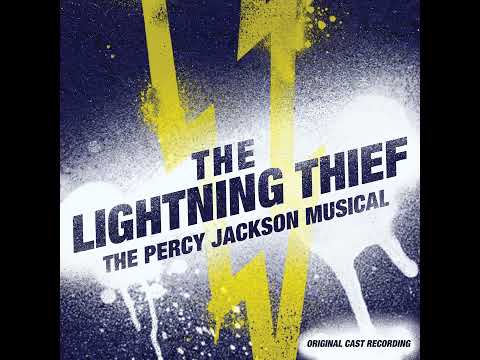
The Lightning Thief: The Percy Jackson Musical (2017) - cast recording track - diegetic. Act I campfire ritual where campers offer food to the flames, then trade verses about absentee godly parents, before Luke tilts the mood toward solidarity. It matters because it turns trauma into a chorus: complaint becomes community, and community becomes leverage.
This number is built like a folk circle that accidentally learned pop craft. The hook ("Oh, things couldn't be worse") works as a chant, so the room can join on instinct, but the verses are sharp little character postcards: Hermes as the messenger who never calls, Athena as the distant brainiac, Demeter as the parent who gifts plants instead of normal teen milestones. The writing keeps it comic, yet it keeps bumping into the same bruise - nobody picks up when these kids dial home.
The clever move is how it stages resentment as a party game. One by one, the campers confess, everybody laughs, and the laugh is a pressure valve. Then Percy steps in with the wrong story - he sings about his mortal mom - and the circle snaps him back to the rule: this is about godly silence, not human love. That social correction is funny in the moment, but it also shows the camp's hierarchy already forming around what can and cannot be said.
Creation History
Composer-lyricist Rob Rokicki and book writer Joe Tracz shaped the score to feel like a contemporary rock-pop musical, with songs that can land cleanly in a theater and on headphones. In a Playbill track-by-track feature, Rokicki notes that this campfire sequence was written late in the process, which tracks with how neatly it functions as a mid-Act I hinge: it recaps cabin identity, deepens Luke's worldview, and nudges Percy toward the question he cannot avoid - who is his father, and what does that absence mean.
Song Meaning and Annotations
Plot
The scene opens with a ritual: campers scrape part of their meal into the fire as an offering. Luke explains the custom with a smirk - the gods are all-powerful, yet still crave appreciation. Then the circle becomes a singalong confessional. Luke starts with Hermes, Annabeth follows with Athena, Katie and Grover add their own parent-shaped gaps, and even Chiron lands a grim punchline. Percy tries to participate by praising his mortal mom, gets corrected, then improvises a bitter verse about an unknown godly parent. The song ends by turning from complaint to closeness: if the gods are absent, the camp will try to be present for each other.
Song Meaning
At its core, this is a song about what neglect does to identity. These kids have cosmic family trees, but no family. The chorus is deliberately blunt, almost childish: if your parents run the universe, your problems do not get smaller - they get ignored on a grander scale. The campfire setting matters: a circle is supposed to be safe, and the writing lets that safety feel earned, even as it shows how easily safety can be steered by the loudest voice in the circle.
Musically, it plays like a hybrid: camp-sing folk cadence welded to pop-rock timing. That blend matches the story's engine - ancient myth dropped into modern teen life. The rhythm invites claps and call-and-response, so resentment becomes something you can keep time with. That is the trick: pain turns social.
Annotations
"Offering to the gods."
The line sounds like a throwaway joke, but it establishes a hierarchy in one breath: the campers give, the gods receive. The fire is a proxy mailbox, and the joke is that nobody expects a reply.
"He messengers things."
It is a smart little jab: Hermes is defined by communication, yet Luke's verse is about silence. The phrasing is deliberately awkward, as if Luke cannot even dignify his father with proper grammar.
"I'd wait by the phone, but the phone never rings."
This is the emotional payload wearing a grin. The image is modern and small - a phone that stays quiet - and it grounds all the Olympus talk in a teenage reality: abandonment that looks like ordinary waiting.
"So my dad is some god. That's great I guess."
Percy lands on sarcasm because it is safer than hope. He has barely arrived, but the camp's culture has already taught him the expected posture: if you admit you want your parent to show up, you are handing the universe a weapon.
Driving themes and touchpoints
Found family as survival tactic: The ending promises a substitute home. It is sincere, and it is also strategic: solidarity is how half-bloods stay alive.
Greek ritual re-skinned as teen comedy: Food offerings echo libations and sacrifice, but the scene plays like a summer-camp roast, which keeps mythology from turning museum-stiff.
Luke's long game: By making resentment singable, he gives the campers a shared language. Later betrayals do not start with villain speeches - they start with catchy refrains that feel true.
Technical Information
- Artist: Jonathan Raviv, The Lightning Thief Company, Rob Rokicki, Theatreworks USA
- Featured: Ensemble and character voices (campers and Chiron)
- Composer: Rob Rokicki
- Producer: Theatreworks USA
- Release Date: July 7, 2017
- Genre: Pop, musical theatre
- Instruments: Vocals, guitars, rhythm section (stage band typical of the score)
- Label: Broadway Records
- Mood: Comic bite, communal warmth, underlying bitterness
- Length: 2:12
- Track #: 7
- Language: English
- Album (if any): The Lightning Thief (Original Cast Recording)
- Music style: Folk-singalong structure inside a pop-rock musical frame
- Poetic meter: Accentual pop phrasing with flexible stress to fit character comedy
- Key: A major
- Tempo: 57 BPM
Questions and Answers
- What is the scene function of this campfire number?
- It turns Camp Half-Blood from a location into a culture: ritual, jokes, and a shared complaint that binds strangers into a unit.
- Why does Luke start the singaround?
- He is the most practiced at turning disappointment into charisma, and the song lets him set the emotional rules of the circle.
- What does the food offering symbolize in the story?
- It is a one-way relationship made literal: the kids give up something tangible for the chance of being noticed.
- Why is the Hermes verse such a telling detail?
- Hermes is the messenger, so a silent phone becomes a character diagnosis - neglect dressed as irony.
- What is Percy doing when he starts by singing about Sally?
- He is trying to join in using the only parent story he actually has. The camp corrects him because the ritual is about godly absence, not mortal love.
- Is the ending meant to be comforting or unsettling?
- Both. It is genuinely supportive, but it also shows how quickly group belonging can be shaped by whoever leads the song.
- How does the number blend myth with modern teen life?
- It keeps the myth in the nouns (gods, omens, offerings) and keeps the teen world in the verbs (waiting, running away, wanting a normal gift).
- What is the comedic engine of the verses?
- Specificity. Each camper's gripe is a small, vivid detail rather than a generic rant, so the laughs come from personality, not punchlines alone.
- Does Chiron's moment change the tone?
- Yes. His line lands like a myth lecture crashing the party, reminding everyone that the old stories are not cute when you live inside them.
- Why does this number stick with audiences?
- Because it is easy to sing along to, and because its central idea - wanting a parent to show up - is universal even without gods.
Awards and Chart Positions
The song itself is not typically tracked as a standalone chart single, but the show and its recordings have built a long afterlife in licensing and touring. Concord Theatricals lists the musical's development path from its 2014 debut through later expansions, and notes multiple Drama Desk nominations tied to the 2017 Off-Broadway era of the piece. In the trade press, a BroadwayWorld report on the 2025 Original London Cast Recording highlights updated ensemble writing for this campfire sequence, framing it as a fan-favorite that continued to evolve on stage.
| Milestone | What it signals for this song |
|---|---|
| July 7, 2017 cast album release | Locks the campfire moment into the canonical listening experience. |
| Ongoing licensing and touring ecosystem | Keeps the number in circulation for school and regional productions, where singalong scenes thrive. |
| 2025 London cast recording updates | Confirms the piece is treated as adaptable, with ensemble textures and details refreshed for new casts. |
Additional Info
One reason this track lasts is how performable it is. You can stage it big, with a whole camp ring, or do it spare, with a few stools and a single flame effect. Either way, the chorus does the heavy lifting: it invites the audience into the rhythm without begging for participation. As stated in Playbill, Rokicki described writing the number late, and that late-arriving clarity shows - it functions like a summary of the demigod condition, but it never feels like homework.
For performers and directors, the sheet-music ecosystem matters too. Hal Leonard distributes a piano-vocal edition, which is usually a sign that a number has legs outside the original production. And in the licensing materials, Concord explicitly places the song among the Act I musical numbers, which makes it easy for productions to map pacing around it.
Key Contributors
| Entity | Type | Relationship |
|---|---|---|
| Rob Rokicki | Person | Wrote music and lyrics for the musical, and is credited as writer on this song. |
| Joe Tracz | Person | Book writer and co-writer credit associated with the musical's songs and structure. |
| Theatreworks USA | Organization | Commissioned and produced the Off-Broadway origins and is credited in recording production. |
| Broadway Records | Organization | Released the original cast album that includes this track. |
| Concord Theatricals | Organization | Licenses the musical and publishes official show information and song placement. |
| Hal Leonard | Organization | Publishes the piano-vocal sheet music edition for this song. |
| Rick Riordan | Person | Authored the novel that the musical adapts. |
| The Lightning Thief: The Percy Jackson Musical | Work | Parent work where the song appears as an Act I campfire sequence. |
| Camp Half-Blood | Place (fictional) | Setting of the diegetic campfire ritual and singalong. |
| Luke Castellan | Character | Leads the singaround and frames the group's shared grievance. |
| Percy Jackson | Character | Newcomer who is pulled into the ritual and improvises his own verse about an unknown father. |
| Annabeth Chase | Character | Adds a verse that ties divine distance to her personal backstory. |
Sources: Playbill track-by-track interview with Rob Rokicki, Concord Theatricals show listing, Hal Leonard catalog, Tunebat key and BPM listing, BroadwayWorld London cast recording report