
Strange Loop Lyrics: Song List
- Intermission Song
- Today
- We Wanna Know
- Inner White Girl
- Didn't Want Nothin
- Exile in Gayville
- Second Wave
- Tyler Perry Writes Real Life
- Writing a Gospel Play
- A Sympathetic Ear
- Inwood Daddy
- Boundaries
- Periodically
- Didn't Want Nothin' Reprise
- Precious Little Dream / AIDS Is God's Punishment
- Memory Song
- A Strange Loop
About the "Strange Loop" Stage Show
Release date of the musical: 2019
"A Strange Loop" – The Musical Guide & Song Meanings
Review: What the lyrics are really doing
Can a musical be both a diary and a heckler? “A Strange Loop” bets yes, and then makes the heckler harmonize. Michael R. Jackson writes lyrics that behave like a browser with forty tabs open: horny, anxious, funny, cruel, and weirdly meticulous about the exact insult that will land. The show’s central invention is structural, not just thematic: Usher’s inner monologue becomes a six-voice Greek chorus that keeps interrupting him, correcting him, and occasionally selling him a narrative he does not want to buy.
The lyrical themes are not subtle, but they are sharp. Self-loathing is not presented as a vibe, it’s a workflow. Faith is not a comforting backdrop, it’s an algorithm that ranks shame above tenderness. Desire is a bargaining chip, until it becomes a weapon. And the meta-theatre jokes are not decoration: they are plot. The lyric writing keeps asking the same question in different outfits: what happens when your “authentic voice” is also the voice that calls you unlovable?
Musically, Jackson’s score moves like someone flipping radio presets while trying to write the “right” kind of theatre song. That instability is the point. When the sound shifts, it’s usually Usher trying on an identity: the classic “I want” posture, the diva fantasy, the moralizing family voicemail, the satirical pastiche. The album captures that whip-smart volatility, which is why the cast recording plays less like a souvenir and more like the show’s nervous system.
How it was made
The origin story is almost aggressively unromantic, which makes it more believable. Jackson has said the piece started as a personal monologue he wrote in his early 20s, called “Why I Can’t Get Work,” and only later grew songs once he gained confidence writing both lyrics and music. He also describes returning to the material over many years because there were “no stakes,” which is artist-speak for: the safest place to tell the truth is where you assume no one will ever produce it.
Two craft details matter for the lyric nerds. First: “Memory Song” began as a standalone writing assignment, then became the emotional hinge of the eventual musical. Second: the show’s title and some of its pop grammar trace back to Liz Phair. Jackson wanted to incorporate her songs early on, could not get permission, and that block forced him into writing his own score from scratch. It is the rare rights denial that improves American musical theatre.
Finally, the long development timeline is not just trivia. It’s audible. The lyrics have the density of someone rewriting arguments with himself for over a decade, polishing the punchlines, then leaving the bruise visible.
Key tracks & scenes
"Intermission Song" (Usher, Thoughts)
- The Scene:
- At his day job as an usher during “The Lion King” intermission, Usher’s smile is customer-service bright while the lighting feels like fluorescent reality. The Thoughts swarm in, calling his name, turning a public space into a private panic room.
- Lyrical Meaning:
- This is the show’s mission statement: the mind as a chorus line that will not stop tapping you on the shoulder. The lyrics parody musical-theatre momentum while confessing the fear underneath it: maybe the “big” opening number is just avoidance with better rhyme.
"Today" (Usher, Thoughts)
- The Scene:
- A day-in-the-life montage that refuses to stay a montage. Usher tries to narrate errands and routines; the Thoughts keep cutting in like an over-eager editor, tilting the light from ordinary to interrogative.
- Lyrical Meaning:
- The song turns minutiae into evidence. “Today” is not about productivity, it’s about the cruelty of constant self-evaluation, where even neutral facts become prosecution.
"Inner White Girl" (Usher, Thoughts)
- The Scene:
- Usher imagines a version of himself with effortless confidence, the kind that reads as “charming” instead of “too much.” The staging often plays like a spotlight test: can he stand in the light without immediately apologizing for existing?
- Lyrical Meaning:
- This is fantasy as survival tactic. The lyric lands because it is both satire and longing: he envies the permission structure more than the identity. The joke is funny, and then it isn’t.
"Exile in Gayville" (Usher, Thoughts)
- The Scene:
- Dating apps become a scrolling wall of micro-rejections. The lighting feels colder, more screen-lit, as the chorus needles him into saying the worst possible thing at the worst possible time.
- Lyrical Meaning:
- The lyric is a self-defense mechanism that keeps failing. It shows how a marketplace of desire can turn into a marketplace of self-contempt, where “type” becomes theology and bodies become résumé lines.
"Tyler Perry Writes Real Life" (Usher, Thoughts)
- The Scene:
- A phone call becomes a sales pitch. Usher’s agent pushes him toward ghostwriting, and the Thoughts pile on as historical figures and cultural stereotypes crowd the stage. The room starts to feel like a lecture hall and a boxing ring.
- Lyrical Meaning:
- It’s not just critique, it’s a map of artistic coercion. The lyric dramatizes how “representation” can be used as a cudgel: you owe the culture something, so swallow your taste and write the product.
"Inwood Daddy" (Usher, Thought 6, Thoughts)
- The Scene:
- A hookup curdles into performance, with power dynamics made explicit. The lighting tightens. The air gets smaller. The chorus becomes less comedic and more predatory in its precision.
- Lyrical Meaning:
- The lyric refuses to prettify humiliation. It shows how desire can slip into degradation, and how silence becomes a costume you cannot take off quickly enough.
"Boundaries" (Usher)
- The Scene:
- After the hookup, Usher is left alone with the aftertaste. The stage often clears, the sound thins, and what remains is a man trying to name what he allowed and what he was trained to accept.
- Lyrical Meaning:
- A boundary is a sentence you have to say out loud, not a feeling. The lyric’s power is its refusal to grant easy catharsis. It makes the cost of compromise legible.
"Memory Song" (Usher, Thoughts)
- The Scene:
- The show slows down and looks backward. The lighting shifts warmer, then dangerous, as childhood recollection meets adult diagnosis. The chorus, usually aggressive, turns into something like a witness.
- Lyrical Meaning:
- This is the core of the album, too: the lyric frames memory as both refuge and trap. It is where the musical admits the real antagonist is not the industry or the family, but the internal narrator that learned their language too well.
Live updates (2025/2026)
Information current as of February 2026. The Broadway run ended in early 2023, and the show’s afterlife has looked less like a single tour and more like a widening set of high-profile productions and reimaginings.
- Licensing: Concord Theatricals acquired exclusive worldwide stage licensing rights in 2023, with availability for professional theatres in North America noted in the announcement and on the title’s licensing page.
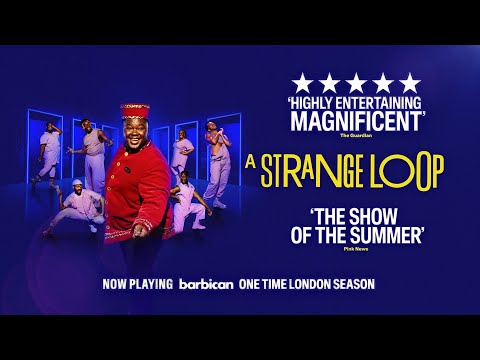
- London status: The West End transfer played a limited season at the Barbican (17 June to 9 September 2023) and is now marked as ended on the official site and Barbican materials.
- Accessibility-forward staging: A 2025 co-production in Washington, DC reimagined Usher as a Deaf character, blending ASL, spoken/sung English, and captions, with a parallel production planned for Austin, TX in the same summer season.
- Canada: A Canadian premiere in Toronto was mounted via a consortium of companies, a sign the piece is moving into a repertory life that suits its scale and provocation.
If you are tracking tickets in 2026, the practical advice is simple: look to major regional houses, international festivals, and Deaf-led or access-centered companies. “A Strange Loop” attracts producers who want the argument, not just the awards.
Notes & trivia
- The material began as a monologue written by Jackson in his early 20s, titled “Why I Can’t Get Work,” before it became a musical over many years.
- Jackson has described the full journey as roughly 16 years from monologue to Off-Broadway, and 18 years to Broadway.
- “Memory Song” started as a classroom assignment and later became a pivotal emotional keystone.
- The title nods to Liz Phair, and Jackson’s early attempt to use her songs failed, pushing him to write his own score.
- A Craigslist phrase about “Inwood Daddy” was a direct spark that made it into the show’s lyric universe.
- The original Off-Broadway cast recording was released September 27, 2019 on Yellow Sound Label, produced by Michael Croiter and Michael R. Jackson.
- Concord Theatricals’ 2023 deal secured exclusive worldwide stage licensing rights, accelerating the show’s professional-life footprint beyond New York.
Reception
In 2019, critics largely treated “A Strange Loop” as a thrilling provocation that might never survive the commercial air pressure of Broadway. By 2022, the conversation shifted: the Broadway transfer proved the show could hold a larger room without sanding down the lyrical specificity that makes it sting. Now, in the mid-2020s, it’s increasingly discussed as a form-breaker that unlocked permission for other writers to be messier, funnier, and more formally reckless.
“Its ambition is exhilarating and, most important, it’s wickedly funny right up until it’s very much not.”
“Playfully daring and furiously entertaining.”
“A full-on laparoscopy of the heart, soul and loins.”
Quick facts
- Title: A Strange Loop
- Year: 2019 (world premiere at Playwrights Horizons)
- Type: One-act musical
- Book, Music, Lyrics: Michael R. Jackson
- Original Cast Recording (focus of this guide): Released September 27, 2019 (Yellow Sound Label)
- Broadway cast album: Released June 10, 2022
- Selected notable placements inside the story: Usher’s day job as an usher at “The Lion King”; family voicemails; dating-app vignettes; ghostwriting satire
- London transfer: Barbican limited season (17 June to 9 September 2023)
- Licensing: Exclusive worldwide stage licensing via Concord Theatricals (professional theatres in North America noted as available)
- Album availability: Sold via Broadway Records (CD) and widely available on major streaming platforms (varies by region)
- Chart notes: Original cast recording reached the Billboard Cast Albums chart (top 10 reported)
Frequently asked questions
- Is “A Strange Loop” autobiographical?
- It is rooted in Jackson’s lived context and writing life, but it is not a literal memoir. The show weaponizes autobiography as a form, then critiques that weapon while it’s still in Usher’s hands.
- Who wrote the lyrics and music?
- Michael R. Jackson wrote the book, music, and lyrics. That triple-credit is part of why the lyric voice feels so unfiltered and idiosyncratic.
- Which cast recording should I start with: 2019 or 2022?
- If you want the piece closest to the Off-Broadway premiere, start with the 2019 original cast recording. If you want the Broadway polish and performance context, use the 2022 Broadway album as a companion listen.
- Why is “Intermission Song” called that if the show has no intermission?
- Because the scene happens during the intermission of “The Lion King,” where Usher is working. The title is a joke, and also a clue: Usher is always stuck between acts.
- Is the show currently touring in 2025/2026?
- Rather than a single continuous tour, the show’s recent life has been driven by major regional productions, international engagements, and specialty stagings. Check professional licensing and regional calendars for the most reliable leads.
- Is it appropriate for teens?
- Many presenters flag explicit language and adult themes, including sexual content and references to trauma. Always check a venue’s content advisories before buying tickets.
Key contributors
| Name | Role | Contribution |
|---|---|---|
| Michael R. Jackson | Book, music, lyrics | Created the show’s voice, structure, and score; wrote both the confession and the critique. |
| Stephen Brackett | Director | Staged the meta-theatre engine so the comedy reads, then the pain hits. |
| Rona Siddiqui | Music director (noted in production history) | Anchored the show’s rapid stylistic pivots so the lyric precision stays audible. |
| Charlie Rosen | Orchestrations (noted in production history) | Helped shape the score’s genre-hopping clarity across productions. |
| Michael Croiter | Album producer (2019 original cast recording) | Co-produced the 2019 recording that preserves the Off-Broadway vocal fingerprints. |
| Concord Theatricals | Licensing | Holds exclusive worldwide stage licensing rights, enabling the show’s professional spread. |
Sources: Official “A Strange Loop” site, Concord Theatricals, Playwrights Horizons, New York Theatre Guide, Broadway Records, Playbill, Barbican, Variety, Vulture, The New Yorker, HowlRound, TheatreWashington, DC Theater Arts.