
Snow White And The Seven Dwarfs Lyrics: Song List
- Overture
- Magic Mirror
- I'm Wishing/One Song
- Queen Theme
- Far Into the Forest
- Animal Friends/With a Smile and a Song
- Just Like a Doll's House
- Whistle While You Work
- Heigh Ho
- Let's See What's Upstairs
- There's Trouble A-Brewin'
- It's a Girl
- Hooray! She Stays
- Bluddle-Uddle-Um-Dum (The Washing Song)
- I've Been Tricked
- The Silly Song (The Dwarfs' Yodel Song)
- Someday My Prince Will Come
- Pleasant Dreams
- A Special Sort of Death
- Why Grumpy, You Do Care
- Makin' Pies
- Have A Bite
- Chorale For Snow White
- Love's First Kiss (Finale)
- Music in Your Soup
- You're Never Too Old To Be Young
About the "Snow White And The Seven Dwarfs" Stage Show
The music for the show has been created by F. Churchill & J. Blackton. Lyrics was composed by L. Morey & J. Cook. Screenplay was adapted by J. Cook. The first production was carried out in August 1969 in St. Louis Muny, where the musical stayed for 2 weeks. The main role performed by P. Wise. Also in the histrionics were involved: B. Barty, B. Alexander & C. Reis. In 1972, in Muny has been carried out repeated production of the revised show. In October 1979, Radio City Music Hall, located in Manhattan's Rockefeller Center, hosted the Broadway premiere of the theatricals. The spectaculars lasted for a month – until the mid of November 1979, with 38 performances. Since the end of November 1979 to the beginning of January 1980, play was showed within the frames of Radio City Christmas Spectacular. Since January 1980, the show again became a regular guest in Radio City Music Hall. The production was ended in March 1980 after 68 performances. Staging was done by director K. Browning and choreographer F. Wagner. Scenery developed by J. W. Keck. Costumes created by F. Spencer. In the main role has been involved M. J. Salerno with such other cast: D. Pursley, T. Ruisinger, A. Francine, C. Hall, Y. Bavan, H. Coe, R. Bowne, L. Lipson & B. Sherman. In 1980, the recording was made of live broadcast of the production. From April to May 2016, musical was in Portland.
Release date of the musical: 1937
"Snow White and the Seven Dwarfs" – The Musical Guide & Song Meanings
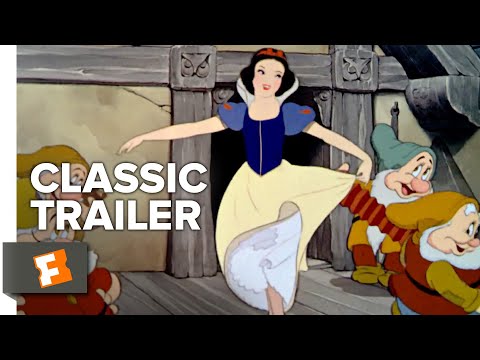
Review: The score that taught Disney how to breathe
The film’s trick is simple, almost rude: it uses songs to make animation feel lived-in. Not “animated,” lived-in. Every major number turns labor, longing, or fear into a rhythm the audience can predict, then trust. That trust is the real special effect. When Snow White sings, the movie is telling you the world has rules; when the dwarfs sing, it is telling you those rules can be communal; when the Queen’s music creeps in, it is telling you the rules were always fragile.
Larry Morey’s lyrics are direct, even blunt, but they are blunt on purpose. This is 1937. If you want the audience to believe a drawn girl at a well, you do not write cleverness. You write clarity. “I’m Wishing” is essentially a scene of vocal perspective: an echo that becomes a duet, then becomes a romance before you have time to ask who this prince is. “Whistle While You Work” frames domestic labor as tempo management, a tune that literally sets the pace of cleaning. “Heigh-Ho” turns work into identity, with a hook sturdy enough to carry a parade.
Musically, Frank Churchill’s melodies behave like folk songs that were always there. Leigh Harline and Paul J. Smith’s scoring knits scenes together with motifs that signal character shifts and looming danger. The result is a movie that can move from pastoral innocence to Gothic threat without changing its musical grammar. That is why these songs lasted: they are not decoration, they are infrastructure.
How it was made: why this soundtrack mattered before “soundtrack” was a normal word
Disney insisted the music match the scale of the experiment: a feature-length cartoon that needed to feel like a “real” film. The songwriting team delivered singable melodies with compact lyrical ideas, and the studio treated the recordings as a product, not a souvenir. The result is widely credited as the first commercially issued feature film soundtrack album, released in early 1938 on 78rpm sets. That is not just a fun fact. It explains why the songs are staged so cleanly: they were built to travel beyond the screen.
Two songs written for the film were cut. One, “Music in Your Soup,” had a fully animated sequence that was ultimately removed. Another, “You’re Never Too Old to Be Young,” was replaced in the finished film by “The Silly Song.” These changes reveal the movie’s musical priorities: keep the story moving, keep the tone buoyant, and save the most elaborate ensemble fun for moments that also deepen character bonds.
A useful way to watch the movie, if you care about lyrics, is to track how the songs “teach” behavior. Snow White’s numbers sell optimism as a method. The dwarfs’ numbers sell routine as safety. The Queen’s underscoring sells control as inevitability. The plot is famous. The lyrical craft is the part that still sneaks up on you.
Key tracks & scenes: 8 lyrical moments that carry the film
"I’m Wishing / One Song" (Snow White, The Prince)
- The Scene:
- Approx. 00:06 to 00:10 in most modern editions. Morning light at the castle well. Snow White sings into the stone, hears her echo, and the Prince slips in as if the echo conjured him. The staging is pure vertical space: well, wall, balcony, distance.
- Lyrical Meaning:
- The lyric sells romance as fate, but the mechanism is theatrical: call and response. The “wish” becomes a duet, and the duet becomes a promise before the film has asked the audience to do any homework.
"With a Smile and a Song" (Snow White)
- The Scene:
- Approx. 00:20 to 00:24. Deep forest, shadows, panic. Then the palette softens as animals gather. The song flips the lighting from threat to refuge, like a dimmer sliding up on hope.
- Lyrical Meaning:
- Optimism here is not a mood, it is a tactic. The lyric is teaching self-soothing through language: name the fear, then out-sing it with routine kindness.
"Whistle While You Work" (Snow White)
- The Scene:
- Approx. 00:27 to 00:31. Inside the dwarfs’ cottage: dusty, cluttered, dim. As the cleaning begins, the room brightens visually and rhythmically. Animals move like a chorus line. The joke is speed; the effect is transformation.
- Lyrical Meaning:
- A work song disguised as self-help. The lyric ties labor to tempo: if you can control the pace, you can control your mood. It is productivity as comfort, which also explains why the number is endlessly reusable in other Disney contexts.
"Heigh-Ho" (The Dwarfs)
- The Scene:
- Approx. 00:36 to 00:39. The mine: hard geometry, glittering gems, lantern glow. Later, the melody returns as the dwarfs march home through the twilight. The visual grammar is repetition: pick, swing, sparkle, step.
- Lyrical Meaning:
- The lyric turns labor into identity and camaraderie. The hook is a verbal hammer: simple enough to chant, strong enough to make the dwarfs feel like a society with rules.
"Bluddle-Uddle-Um-Dum (The Dwarfs’ Washing Song)" (The Dwarfs)
- The Scene:
- Approx. 00:44 to 00:48. The cottage becomes a washhouse. Soap, water, chaos. The lighting is warm, domestic, almost theatrical, as if the cottage is now a stage within the stage.
- Lyrical Meaning:
- A comedy number about discipline. The lyric is basically group behavior training: you will wash, you will scrub, you will do it together, and you will laugh while learning it.
"The Silly Song (The Dwarfs’ Yodel Song)" (The Dwarfs)
- The Scene:
- Approx. 00:52 to 00:56. Evening party. Fiddling energy, dancing bodies, candlelight. The film pauses plot to stage community as celebration, with Snow White as the emotional guest of honor.
- Lyrical Meaning:
- The lyric is almost secondary to the communal act of singing. That is the point: this is belonging performed out loud. It makes the later threat feel personal, not abstract.
"Someday My Prince Will Come" (Snow White)
- The Scene:
- Approx. 01:02 to 01:04. Snow White inside the cottage, softer light, dreamy stillness. The dwarfs listen like children who cannot decide if they believe her or want to protect her from believing.
- Lyrical Meaning:
- Desire framed as certainty. The lyric is not negotiating; it is forecasting. That makes the song haunting, because the audience knows how little time the film will allow for the forecast to come true.
"Love’s First Kiss (Finale)" (Orchestra, Company)
- The Scene:
- Final minutes. A coffin of glass, dawn tones, then the kiss. The music swells into ceremony, and the film ends in a procession upward, literally climbing into a storybook ending.
- Lyrical Meaning:
- There is no lyric to parse, which is telling. The score finishes the argument: what the characters cannot say anymore, the orchestra says for them.
Live updates (2025/2026)
Current through 2 February 2026. The original 1937 film remains in active circulation via Disney+, where it is listed with an approximately 1h 28m runtime and a family rating in many regions. The songs also remain “in service” across Disney Parks and compilation albums, which is why the work songs and the wishing songs keep resurfacing in new arrangements.
The big modern headline is the live-action remake. “Snow White” (released theatrically in the United States on March 21, 2025) added new songs by Benj Pasek and Justin Paul while also retaining several classics from the 1937 film. The remake’s soundtrack album released March 14, 2025, with a deluxe edition following March 20, 2025, and the film later arrived on Disney+ on June 11, 2025. Even if you do not love the remake, it has pushed the 1937 songs back into playlists, which tends to increase search demand for the originals.
One more practical note for listeners: streaming services often surface “original motion picture soundtrack” editions from different reissue eras (1938, 1980, 1997, later remasters). Track lists can include narrative interludes and underscore cues, so if you only want the core songs, check the track names and durations before assuming you grabbed the cleanest version.
Notes & trivia
- The film premiered at the Carthay Circle Theatre in Los Angeles on December 21, 1937, before its wider U.S. release on February 4, 1938.
- Modern reference sources credit it as the first film to have its own soundtrack album issued commercially.
- The soundtrack’s first commercial release in January 1938 was packaged as sets of 78rpm singles, effectively treating songs as hit records rather than film ephemera.
- Two recorded songs were cut from the final film: “Music in Your Soup” and “You’re Never Too Old to Be Young.”
- AFI notes that each dwarf had “his own little musical figurations” worked into the score when he took focus, a proto-leitmotif strategy for character comedy.
- On modern digital releases, the album often runs about 73 to 74 minutes and includes underscore cues such as “Magic Mirror” and “Queen Theme,” not only the eight vocal songs.
- The 2025 remake kept four of the original vocal numbers, including “Heigh-Ho” and “Whistle While You Work,” while swapping the film’s romantic framing toward new material.
Reception: the songs as craft, then as cultural inheritance
In 1937, critics did not have a ready template for judging a feature-length animated musical. Many reviews defaulted to awe at the form, which is fair: the movie had to invent the audience’s patience for an 80-plus-minute cartoon. Over time, the conversation shifted from “Can this work?” to “Why does this still work?” and the answer keeps landing on music. The songs structure attention. They pace emotion. They provide memory hooks that survive re-releases, home video, and now algorithmic streaming.
The 2025 remake debates have also sharpened what people appreciate about the original. When modern critics compare the new “I want” writing to the 1937 material, they often end up praising how little the older songs need to do to feel complete. Less text, more feeling. It is not nostalgia. It is efficiency.
“Snow White and the Seven Dwarfs was the first film to have its own soundtrack album.”
Each “dwarf had his own little musical figurations worked into the music.”
The Snow White of 1937 “leaned over a well and sang, ‘I’m wishing,’ with sublime, lilting simplicity.”
Quick facts
- Title: Snow White and the Seven Dwarfs
- Year: 1937 (premiere), 1938 (general U.S. release)
- Type: Animated musical fantasy film
- Director (credited): David Hand
- Primary songwriters: Frank Churchill (music), Larry Morey (lyrics)
- Score contributors commonly credited on modern releases: Leigh Harline, Paul J. Smith
- Selected notable placements: Wishing well courtship (“I’m Wishing / One Song”); forest reassurance (“With a Smile and a Song”); cottage work anthem (“Whistle While You Work”); mine march (“Heigh-Ho”); party sequence (“The Silly Song”); bedtime romance (“Someday My Prince Will Come”)
- Soundtrack album: First issued January 1938 on Victor 78rpm sets; expanded and reissued multiple times
- Streaming availability: Listed on Disney+ in many regions; soundtrack editions widely available on Apple Music and Spotify
- 2025/2026 context: Live-action remake released March 21, 2025 with a soundtrack release in March 2025 and Disney+ streaming date June 11, 2025
Frequently asked questions
- How many songs are in the film?
- The finished film uses eight vocal songs, though later soundtrack albums can include underscore cues and additional material depending on the reissue.
- Who wrote the lyrics for the main songs?
- Larry Morey is widely credited as the lyricist for the core vocal numbers, with Frank Churchill credited for the melodies.
- Were any songs cut from the movie?
- Yes. “Music in Your Soup” and “You’re Never Too Old to Be Young” were written and recorded but removed from the final cut.
- Is this really the first movie soundtrack album?
- Major reference sources and music histories frequently cite it as the first film to have a commercially issued soundtrack album.
- Where can I listen to the soundtrack legally?
- Several reissue editions stream on major platforms like Apple Music and Spotify. Track lists differ, so check whether you are getting songs only or songs plus underscore.
- What changed in the 2025 live-action remake musically?
- The remake added new songs by contemporary writers while keeping several classics from 1937, shifting the lyrical focus toward new character framing.
Key contributors
| Name | Role | Contribution |
|---|---|---|
| Walt Disney | Producer | Oversaw the feature experiment and pushed for commercially viable songs. |
| David Hand | Director (credited) | Directed the film’s overall staging, including musical set pieces. |
| Frank Churchill | Composer | Composed melodies for the signature songs, including “Heigh-Ho” and “I’m Wishing.” |
| Larry Morey | Lyricist | Wrote lyrics designed for clarity and singability in animation’s first feature era. |
| Leigh Harline | Composer (score) | Contributed to the film’s score and musical continuity across scenes. |
| Paul J. Smith | Composer (score) | Contributed scoring and scene-to-scene musical architecture on modern releases. |
| Adriana Caselotti | Voice performer | Performed Snow White’s vocal songs, shaping the film’s signature “innocence” sound. |
| Harry Stockwell | Voice performer | Performed the Prince’s vocal material in the “One Song” sequence. |
| Walt Disney Records / Victor Records | Label history | Issued early soundtrack releases (Victor 1938) and later official reissues (Disney). |
Sources: AFI Catalog, Disney+, Wikipedia (film and soundtrack pages), Movie Music UK, Apple Music, Spotify, Filmic Light (Snow White Archive), The New Yorker, Decider.