Ruthless! Lyrics – All Songs from the Musical
Ruthless! Lyrics: Song List
- Act I
- Overture/Prologue
- Tina’s Mother
- Born to Entertain
- Talent
- To Play This Part
- Teaching Third Grade
- Where Tina Gets It From
- The Pippi Song
- Kisses And Hugs
- Teaching Third Grade (Reprise)
- Talent (Reprise #1)
- I Hate Musicals
- Angel Mom
- Act II
- Entr'acte/Montage
- A Penthouse Apartment
- It Will Never Be That Way Again
- There's More To Life
- I Want the Girl
- Parents And Children
- Ruthless!
- Talent (Reprise #2)
- Curtain Call
About the "Ruthless!" Stage Show
Ruthless! The Musical is an all-female musical with music by Marvin Laird and book and lyrics by Joel Paley that spoofs Broadway musicals, like Gypsy and Mame, and movies such as The Bad Seed and All About Eve. The musical premiered Off-Broadway in 1992.Release date: 1994
"Ruthless!" – The Musical Guide & Song Meanings
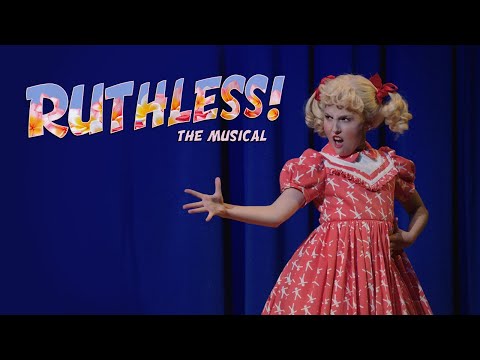
Review: the joke is the ambition, not the genre
Here’s the uncomfortable question “Ruthless!” keeps asking: do we hate the stage mother, or do we envy her. The show is built like a neat little musical comedy machine, but it runs on something darker than punchlines. It turns childhood stardom into a moral experiment where charm is strategy, applause is currency, and affection is a contract with fine print.
Joel Paley’s book and lyrics understand that parody dies the moment it winks too hard. So the writing does a smarter thing: it makes the characters play their stakes straight, then lets the audience do the laughing. Even the broadest gags arrive as “absolute truth” to the speaker, which is why the lyrics land. They are not decorative. They are weapons. Tina sings like a kid who has already read the reviews.
Marvin Laird’s score acts like a guided tour through musical-theatre DNA: big-brass confidence when Sylvia sells a fantasy, patter and precision when adults justify the indefensible, and a late-show pivot toward confession when the plot has to cash its checks. The result is a show that flatters musical-theatre obsessives with references, while still working for newcomers because the central motif is universal: ambition does not wait until you are grown.
How it was made: from “Bad Seed” parody to its own beast
The origin story is unusually specific. Paley first wrote a one-act parody built directly on the plot of the film “The Bad Seed.” Years later, while performing with Les Ballets Trockadero de Monte Carlo, he met Laird when the company worked on a Shirley MacLaine TV special. Laird read Paley’s script, wanted to write the score, and the two collaborated long distance between Los Angeles and New York, trying to secure rights to the source property.
They did not get them. The rights-holder refused. That could have been the end, but it pushed the show into the shape it still has: a parody that protects itself by widening its target. Their legal advice at the time was to shift details and layer in additional showbiz references, turning a single-property spoof into a broader satire of theatrical hunger. One key rewrite is almost comic in its simplicity: instead of murder over a school prize, the “child star” motive became the lead in the school show. The musical is basically built on that one sentence: “The lead. I’d kill for the lead.”
Decades later, Paley has said the script and lyrics were revised to make the characters and original story the main course, with the nods and winks treated as seasoning. That matters for today’s productions because the show is easier to stage cleanly: it reads less like an in-joke collage and more like a fast, nasty fable with its own internal rules.
Key tracks & scenes
"Born to Entertain" (Tina)
- The Scene:
- Judy’s home becomes an impromptu audition room. Tina bursts in mid-tap, tap shoes still being “broken in,” and performs right at the front door as if the household runs on cue lights. It is bright, presentational, and faintly terrifying because the child knows exactly where downstage center is.
- Lyrical Meaning:
- This is the show’s thesis in baby teeth. Tina’s language treats performance as identity, not activity. The jokes are sharp, but the subtext is sharper: she does not want a childhood, she wants a spotlight. Every line is a tiny contract demanding the audience’s attention.
"Teaching Third Grade" (Miss Thorn)
- The Scene:
- Miss Thorn, the school’s self-mythologizing actress-turned-teacher, counsels Judy after rehearsal drama. The setting is “school,” but the delivery belongs to a woman who still hears applause in the fluorescent hum. It plays best with a teacher’s smile that never reaches the eyes.
- Lyrical Meaning:
- Paley gives Miss Thorn a performer’s logic: everything is training, everyone is casting, and “children’s theatre” is a battlefield with smaller bodies. The number is comedy, yes, but it also sketches the adult ecosystem that feeds Tina’s obsession.
"The Pippi Song" (Louise)
- The Scene:
- Rehearsal for the school show turns into ritual humiliation. Miss Thorn stops and corrects Louise’s spelling in real time while Tina watches with the quiet satisfaction of a rival who never misses a cue. Keep the light harsh and the rhythm unforgiving.
- Lyrical Meaning:
- This is the show’s empathy test. Louise sings like a kid trying to keep adults happy, not like a kid chasing fame. The lyric is built to show how “theatre kids” are made: not always by desire, often by pressure.
"I Hate Musicals!" (Lita)
- The Scene:
- Lita Encore, critic and family detonator, holds court with a drink in hand and a disdain for song itself, even as she sings. It’s best staged like a cabaret rant that keeps accidentally turning into a showstopper. She refills, complains, and somehow wins the room.
- Lyrical Meaning:
- The number is the show’s meta-argument: a character declares hatred for the form while proving the form’s power. The lyric also sneaks in a critique of taste policing. Lita is funny, but she is also dangerous because she knows how to end careers with sentences.
"Angel Mom" (Sylvia / Judy / Tina)
- The Scene:
- Tina resists rehearsal, calls the song “lousy,” and Sylvia snaps into demonstration mode. Judy’s attention shifts, apron on, watching as if she’s seeing her own buried self. Then Judy removes the apron and sings, almost still, like a switch flipped in a kitchen that suddenly feels like a stage.
- Lyrical Meaning:
- The lyric is a story inside a story: motherhood framed as tragedy, then used as technique. The point is not sentiment. It’s instruction. “Angel Mom” shows how performance is taught in this universe: trauma becomes material, and sincerity becomes a tool you can deploy on command.
"Penthouse Apartment" (Eve)
- The Scene:
- Act II pivots into glossy mythmaking. A voice (and identity) sells a fantasy of wealth, Park views, and shopping as destiny. Staging wants champagne lighting and a slightly too-perfect stillness, like an expensive photo that won’t admit it’s staged.
- Lyrical Meaning:
- This is ambition after it “wins,” and it is intentionally hollow. The lyric lists possessions the way Act I listed dreams. That shift is the warning: the prize is not a feeling, it’s furniture.
"There's More to Life" (Tina)
- The Scene:
- Tina, of all people, gets a pastoral sermon about cows, grass, and the moon. It plays best as a performance of virtue rather than a conversion. Let the lighting soften, but keep a little edge in the tempo, as if the character is trying on innocence like a costume.
- Lyrical Meaning:
- The lyric is a strategic reversal: Tina argues against stardom to control the room. The show is telling you that moral language can be another kind of audition piece, especially when delivered by someone who lives for applause.
"Parents and Children" (Ginger & Tina)
- The Scene:
- The story snaps back into focus with a mother-daughter confrontation that feels like a duet and a custody hearing. They circle each other, competing for attention, each line a tug on the spotlight. It wants tight staging, close proximity, and no place to hide.
- Lyrical Meaning:
- This is the show’s emotional spine. The lyric names the competition most musicals avoid: parent and child as rivals. It’s also a structural hinge, pulling Act II out of “variety hour” and back into plot, exactly when the audience needs consequences.
Live updates: 2025–2026 status
Information current as of February 2026. “Ruthless!” remains a licensing-friendly staple because it is a “big” comedy in a small package: a compact cast, flexible orchestration, and a score that can read lavish even with minimal forces.
Recent and scheduled productions show the title’s regional durability. New Conservatory Theatre Center in San Francisco announced a run from December 5, 2025 through January 11, 2026, billed as a holiday-season “ultra-campy” return. In South Florida, Island City Stage scheduled the show for November through early December 2025. In the Midwest, Citadel Theatre’s 2025–2026 season includes “Ruthless!” with spring 2026 dates reported in season announcements and press coverage.
For audiences, the practical note is content: many current listings flag strobe effects and gunshot sounds. For staging watchers, the interesting trend is how often directors treat Act II as controlled cabaret, then tighten the screws for “Parents and Children.” That choice aligns with the creators’ own description of Act II’s architecture and tends to make the ending hit harder.
Notes & trivia
- The show first opened Off-Broadway at Players Theatre in 1992 and ran into early 1993, with later major productions including Los Angeles (1993), a streamlined Off-Broadway revival (2015), and a West End run (2018).
- The libretto’s original production history lists Britney Spears and Natalie Portman as understudies for Tina/Louise in the early Off-Broadway run.
- The 1994 Los Angeles cast recording was released March 29, 1994 on Varèse Sarabande (catalog VSD-5476), and library catalog notes list recording sessions at NRG Studios in North Hollywood in February 1994.
- Paley has framed later revisions as a re-balance: the characters and original story moved to the foreground, with references treated as “icing,” not structure.
- Laird has described specific intentional genre echoes: “I Want the Girl” as a “Rose’s Turn” analog, “Teaching Third Grade” with a Sondheim-like feel, and the title song as a Jerry Herman homage.
- The show’s instrumentation is famously adaptable: it began as a two-piano off-Broadway sound and has often expanded with small-band color depending on budget.
- The musical numbers list in the current licensing libretto includes “Born to Entertain,” “I Hate Musicals!,” “Penthouse Apartment,” “There’s More to Life,” and the plot-hinge duet “Parents and Children.”
Reception: critics then vs. now
Critical response has always split along a familiar fault line: how much does a reviewer enjoy being in on the joke. Supporters praise the show’s brazenness and pace. Skeptics argue the piece can end up admiring the showbiz mania it’s trying to mock. Both readings are defensible, and the best productions weaponize that tension.
“A spoof that has enough absurd plot twists and multiple identities to fill several old movies... The fun comes from the sheer brazenness.”
“Merry mayhem... Malicious, delicious and a total joy!”
“An over-the-top paean to stage ambition ends up in thrall to the world it tries to parody.”
What’s changed over time is less the joke and more the audience. The show reads differently in a fame economy where children can become brands before they become teenagers. The satire feels less like exaggeration, more like a neat summary with better rhymes.
Quick facts: show + soundtrack album
- Title: Ruthless! (also billed as Ruthless! The Musical)
- Premiere: Off-Broadway (Players Theatre, New York), 1992
- Year referenced here: 1994 (Los Angeles cast recording release)
- Type: Musical comedy / showbiz satire
- Book & Lyrics: Joel Paley
- Music: Marvin Laird
- Notable productions: Los Angeles (Canon Theatre, 1993), Off-Broadway revival (St. Luke’s Theatre, 2015), West End (Arts Theatre, 2018)
- Selected notable placements (2025–2026): New Conservatory Theatre Center (San Francisco, Dec 2025–Jan 2026), Island City Stage (Wilton Manors, Nov–Dec 2025), Citadel Theatre season listing (2025–2026)
- Album: Ruthless! The Musical (1994 Los Angeles Cast Recording), 22 tracks, released March 29, 1994
- Label/catalog: Varèse Sarabande (VSD-5476); widely available via major digital services
Frequently asked questions
- Is there a movie version of “Ruthless!”?
- No official feature film adaptation is currently established in the public record. The title’s life has been primarily stage productions plus cast recordings.
- Who wrote the lyrics and music?
- Joel Paley wrote the book and lyrics. Marvin Laird wrote the music.
- Why is it often described as “all-female” if productions sometimes cast across genders?
- The story’s original concept is an all-female character world, but the creators have emphasized that the roles can be played by any gender if the performances stay truthful to the characters.
- Is it appropriate for kids?
- It is centered on children, but it is not a children’s show. Many recent listings highlight mature humor, violence, and effects like strobe lights and gunshot sounds.
- What recording should I start with?
- If you want the 1990s sound and the Los Angeles production lineage, start with the 1994 Los Angeles cast recording. If you want the later revision era, look for recordings tied to the “Stage Mother of All Musicals” branding.
- What are the best seats or prep tips for first-timers?
- Pick seats close enough to read facial work, because the comedy is often in micro-reactions, not volume. Before you go, listen to “Born to Entertain” and “Parents and Children” so you can track how the show turns “cute” into “competitive.”
Key contributors
| Name | Role | Contribution |
|---|---|---|
| Joel Paley | Book & Lyrics | Wrote the satire’s voice, pacing, and lyric architecture; led later revisions. |
| Marvin Laird | Composer | Built a style-shifting score that supports parody while staying playable at small scale. |
| Ken Posner | Lighting (original Off-Broadway) | Credited in early production history for shaping the show’s stage clarity and punch. |
| Bob Mackie | Cover illustration (libretto) | Credited for cover illustration in the current licensing edition. |
| Richard Fitch | Director (West End) | Directed the 2018 Arts Theatre production in London. |
| Josh Iacovelli | Sets & lighting (2015 revival) | Credited for sets and lighting in the 2015 streamlined Off-Broadway revival. |
Sources: Concord Theatricals (US/UK), licensing libretto (Concord PDF), Breaking Character (Q&A with Paley and Laird), The Guardian, New Conservatory Theatre Center (SF), Citadel Theatre season listing, New York Public Library catalog, Apple Music / Spotify album listings.