Milk And Honey Lyrics – All Songs from the Musical
Milk And Honey Lyrics: Song List
About the "Milk And Honey" Stage Show
The basis of the musical is the book written by D. Appell. Wonderful songs were created by a composer Jerry Herman. This performance appeared to be the first Broadway show based on a book for J. Herman.G. Oestreicher, who became a producer, was looking for talented composer, who would be capable of creating music & lyrics for the story about Israel. Both the composer and the author of book were sent to that country to find out more about its culture. They managed to get enough inspiration there. Albert Marre became a director of the musical, while Donald Saddler did his best in choreography.
The first trial run of the performance took place in 1961 at Shubert Theatre. Critics were very positive about it from the very beginning. The leading role was given to Molly Picon, who played amazingly. She became one of the favorite actresses, that’s why an extra song was created for her.
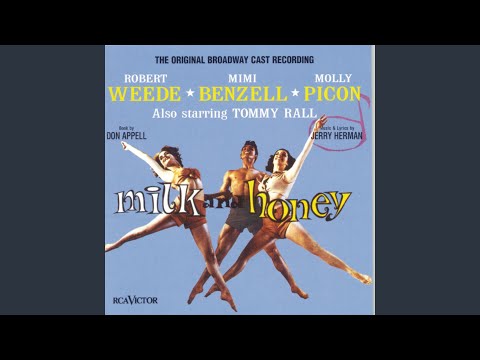
The second staging was carried out in Boston at Colonial Theatre. Then, the following month in October, a Broadway premier came. This production of musical was staged at the Theatre of Martin Beck. There were more than 500 performances. Besides the main actress, the following stars took part in this show: M. Benzell, R. Weede, and T. Rall – a wonderful dancer and singer. H.Gingold replaced M. Picon in the leading female role later. For the Broadway version, Max Goberman was chosen as a director. The production received great praises form critics, including ones from the New York Times.
Many years later, the performance came back to life. In 1994, it was staged at American Jewish Theatre. There were about 60 performances in total. After several years, it started at the Melbourne Recital Centre. It happened in 2011.
Being extremely popular, this musical managed to get nominated for several Tony Awards soon after the premiere. In 1962, the nominations included the ones for the Best Musical, for the Best Costume Design, and some others.
Release date: 1961
Milk and Honey – The Musical Guide & Song Meanings
Review
How do you write a romantic musical that keeps glancing at nation-building without turning into a brochure? Jerry Herman’s answer in Milk and Honey is to make the lyric writing do double duty. The “welcome” language stays warm, but it keeps letting doubt seep in at the edges. Even the title concept comes with a built-in correction: sweetness is real, and so is the aftertaste.
The show’s core move is deceptively simple: it treats “finding love later” as an adult skill, not a cute subplot. Phil and Ruth are not learning how to feel; they are learning how to live with consequences. Herman’s best lyrics here are time-aware. They count minutes. They talk like people who have stopped believing in infinite chances, which is why songs like “Let’s Not Waste a Moment” land as character writing rather than greeting-card optimism.
Musically, the score sits in early-1960s Broadway language, with waltz glide, communal dance writing, and patter-adjacent comedy for the widows. The point is not stylistic novelty. The point is how each sound world sorts the characters. “Shalom” is a public-space song that turns into private intimacy. The hora sequences are collective pulse and collective pressure. “Hymn to Hymie” is a widow negotiating her own permission slip, set to a comic setup that still has emotional bite.
Listening tip: On the cast album, pay attention to how Herman uses group sound. When the ensemble takes over, it often means the characters are being pulled by community norms, history, or plain momentum.
How It Was Made
Milk and Honey began with a producer, a premise, and a trip designed to force specificity. Gerard Oestreicher approached Herman while Herman was working in revue-world; Herman and book writer Don Appell went to Israel to absorb texture and find people, not slogans. Herman’s own worry was blunt: he did not want the score to feel commissioned by a government office. So he wrote his own antidote into the title number, pairing anthem with counterpoint and giving the skeptical edge to an Israeli character. That is how the show avoids total cheeriness, and why its most telling lyric is a correction rather than a compliment.
The other behind-the-scenes truth is practical: Herman wrote quickly, but he obsessed over placement. He has said “finding the places for songs” was the toughest part, which tracks with how cleanly the score snaps to turning points (the confession, the wedding, the flight). During tryouts he also did the classic Broadway triage. When the audience latched onto Molly Picon, he wrote “Chin Up, Ladies” in New Haven to feed the appetite. And an Act II number for Ruth was cut down to a reprise when it proved redundant in performance, a rare example of a musical getting leaner rather than louder.
Key Tracks & Scenes
“Shepherd’s Song” / “Sheep Song” (Boy, Phil, Chorus)
- The Scene:
- Early morning Jerusalem, a street packed with vendors and passersby. A policeman tries to move a Yemenite boy and his flock out of the way. Phil steps in. The show starts in motion, not sentiment, with bodies and commerce and a minor civic confrontation.
- Lyrical Meaning:
- This opening quietly stakes a claim: the musical is interested in daily friction. The lyrics are less about “land” as symbol and more about land as lived space. It sets up Phil as someone who intervenes, which later becomes romantic and moral trouble.
“Shalom” (Phil, Ruth, Street Ensemble)
- The Scene:
- On the street, flirting disguised as a language lesson. Ruth admits she only knows one Hebrew word. Phil uses that word as an invitation, and the cityscape becomes a kind of chorus pit: bread seller, coppersmith, fruit vendor, tourists.
- Lyrical Meaning:
- “Shalom” is the show’s key: one word that can mean hello, goodbye, peace, and a whole set of social rules. Herman uses the lyric as character economy. Phil’s confidence is attractive, and the lyric’s layered meanings foreshadow the ending at the airport, where the same word becomes farewell and hope at once.
“Independence Day Hora” (Company)
- The Scene:
- A public celebration, the ensemble swelling into a ring of dance energy. The stage turns communal, muscular, and loud. If you are seeing it live, this is where the show stops chatting and starts moving.
- Lyrical Meaning:
- Even when the hora music is largely about rhythm and lift, it functions as a lyrical argument: belonging is performed. The dance says “we are here” with bodies, not speeches, and that raises the stakes for Phil and Ruth’s private story.
“Milk and Honey” (Adi, Ensemble)
- The Scene:
- On the moshav, workers clear fields for transplanting. David praises the land; Adi pushes back with urban cynicism. The number plays like a community pep rally with an argument baked in.
- Lyrical Meaning:
- This is where Herman sneaks in his realism. The title image is not left pure. Herman wrote the counterpoint so the lyric can hold pride and complaint at once. That choice keeps the show from floating away on charm.
“Chin Up, Ladies” (Clara, Widows)
- The Scene:
- The widows arrive at the moshav and immediately clock the shirtless men. Then the punchline: all the men are married. Clara pivots from disappointment to pep talk without letting anyone sit in self-pity.
- Lyrical Meaning:
- Comedy as survival tactic. The lyric’s optimism is performative, almost tactical, and that is why it works. It also frames the show’s view of romance: desire is allowed, even in grief, even in middle age, even when it is slightly ridiculous.
“Let’s Not Waste a Moment” (Phil)
- The Scene:
- Phil finally tells Ruth the truth: he is still married, his wife lives in Paris, and the divorce will not come easily. The lighting in most productions tightens here, because the song is essentially a confession with a sales pitch.
- Lyrical Meaning:
- This is Herman writing adulthood. The lyric tries to argue time into submission. It is romantic, yes, but also slightly desperate. Phil is not promising eternity; he is bargaining for the next week.
“Like a Young Man” (Phil, Men)
- The Scene:
- Act II morning. Phil throws himself into work with the farmers, suddenly energetic, suddenly physical. It is the score’s clearest “new life” fantasy.
- Lyrical Meaning:
- The lyric is aspiration and disguise. Phil wants to believe labor can reset his moral arithmetic. Herman’s phrasing makes youth sound like a temporary voltage, which keeps the song from becoming pure victory lap.
“Hymn to Hymie” (Clara)
- The Scene:
- In Tel Aviv, at the Café Hotok, Clara meets Sol Horowitz and is startled by genuine possibility. Alone, she addresses her late husband directly, asking permission to remarry as if filing paperwork with the afterlife.
- Lyrical Meaning:
- One of the score’s smartest emotional tricks: a comic premise that refuses to mock grief. The lyric treats memory as a relationship, not a museum piece. Clara does not “move on”; she negotiates.
“As Simple as That” (Ruth, Phil)
- The Scene:
- Back at the moshav, Ruth returns. Phil admits he stopped building the house. Ruth answers with a quiet insistence that feels like the opposite of Act I’s bright tourism energy.
- Lyrical Meaning:
- Late-score clarity. The lyric strips the situation down to need and choice. The title phrase sounds easy, but in context it reads as courage: Ruth is choosing the hard version of hope.
Live Updates
Information current as of January 2026. Milk and Honey is not a permanent resident on the revival circuit, but it keeps resurfacing in limited engagements, often driven by companies interested in Jerry Herman deep cuts and mid-century Broadway craft. J2 Spotlight Musical Theater Company has announced a 2026 staging at the AMT Theater in New York City, running April 16–26, with casting to be announced later. If you are tracking the show as a live event, follow company updates closely; this is the kind of title that can shift formats (concert staging vs. fully staged) based on ensemble size and rights logistics.
What tends to change in modern presentations is emphasis. Recent write-ups and program notes often frame the piece less as travelogue and more as a story about late-life agency. The widows’ comedy reads sharper now, because the musical is honest about what they want. Meanwhile, the Israel setting lands differently for contemporary audiences, so directors typically have to decide whether to lean into period specificity, lean into nostalgia, or let the romance carry the evening and keep the politics at the edges.
Notes & Trivia
- The show’s working title was Shalom, before the creators settled on Milk and Honey.
- Herman wrote the title song as an anthem first, then added the “bitter” counterpoint because he did not want the musical to feel like a civic commercial.
- “Chin Up, Ladies” was written during tryouts after audiences responded strongly to Molly Picon.
- Herman has said he wrote “I Will Follow You” extremely fast, and drafted the basic “Milk and Honey” song in roughly an hour, but struggled most with deciding where songs should land in scenes.
- The hora music became a signature theatrical moment; Herman credited choreographer Donald Saddler and noted that dance music arranger Genevieve Pitot “embellished everything.”
- Ruth originally had a separate Act II soliloquy number that was cut and replaced with a reprise of “There’s No Reason in the World.”
- The original Broadway run opened October 10, 1961 at the Martin Beck Theatre and played 543 performances, closing January 26, 1963.
Reception
In 1961, critics generally treated Milk and Honey as a surprisingly grown-up romantic comedy, even when they questioned its tonal mix. The show’s reputation since then has tilted toward “minor Herman,” which is partly about visibility: the score lacks the hit-density of Hello, Dolly! or Mame, and it needs confident staging to keep the book’s social humor from feeling dated.
“I can’t just present this song because it’s going to look like we were hired…to do a commercial… I have to have another point of view.”
“Why not something from Milk and Honey… It ran 543 performances…”
“Such a joy to watch a show about Israel and not see depressed refugees.”
What plays best now is the lyric craft. Herman is already writing with the clean emotional targeting he would later perfect: songs that argue, persuade, backpedal, and self-correct in real time. If the show feels “small,” that is largely because it is intimate. The characters are not chasing destiny; they are chasing workable happiness.
Quick Facts
- Title: Milk and Honey
- Year: 1961
- Type: Broadway book musical (romantic comedy-drama)
- Book: Don Appell
- Music & Lyrics: Jerry Herman
- Original Broadway venue: Martin Beck Theatre (now Al Hirschfeld Theatre), New York
- Original run: 543 performances (Oct 1961 – Jan 1963)
- Director / Choreographer: Albert Marre / Donald Saddler
- Orchestrations: Hershy Kay and Eddie Sauter
- Musical director: Max Goberman
- Selected notable placements: “Shalom” as the central meeting song; “Independence Day Hora” as the communal dance set piece; “Hymn to Hymie” as the comic-grief soliloquy.
- Cast album: Original Broadway Cast Recording released by RCA Victor; later CD reissue (DRG)
- Availability: Listed for purchase/streaming via major digital retailers on Masterworks Broadway.
Frequently Asked Questions
- Who wrote the lyrics for Milk and Honey?
- Jerry Herman wrote both music and lyrics, with Don Appell providing the book.
- Where does “Shalom” sit in the plot?
- It is the early-meeting song in Jerusalem, where Phil uses the word’s meaning to connect with Ruth, and it returns as farewell language at the airport.
- Is Milk and Honey getting a 2025 or 2026 production?
- J2 Spotlight Musical Theater Company has announced a limited engagement at the AMT Theater in New York City in April 2026, with casting to be announced.
- What is the show’s main theme?
- Late-life love under real-world constraints, set against a society defining itself. The lyrics keep toggling between public hope and private cost.
- What should I listen for on the cast recording if I’m new to the show?
- Start with “Shalom” for character tone, then “Let’s Not Waste a Moment” for moral stakes, then the hora music for how the show turns community into pressure and celebration.
Key Contributors
| Name | Role | Contribution |
|---|---|---|
| Jerry Herman | Composer-Lyricist | Wrote the score and lyrics; shaped the title number with counterpoint realism. |
| Don Appell | Book | Built the romantic-comic structure around widows touring Israel and the Phil-Ruth romance. |
| Gerard Oestreicher | Producer (development impetus) | Initiated the project and helped launch Herman’s first Broadway book musical. |
| Albert Marre | Director | Staged the original Broadway production, balancing public spectacle with intimate romance. |
| Donald Saddler | Choreographer | Created the hora staging language Herman later singled out as a major asset of the show. |
| Hershy Kay | Orchestrator | Orchestrations that support the score’s waltz lyricism and ensemble propulsion. |
| Eddie Sauter | Orchestrator | Helped shape the Broadway sound palette of the original production. |
| Genevieve Pitot | Dance Music Arranger | Embellished the hora and dance materials, strengthening the show’s communal energy. |
| Max Goberman | Musical Director | Original Broadway musical direction. |
Sources: Concord Theatricals; Playbill; Masterworks Broadway; On The Stage Tickets; HDB Casting; Tablet Magazine; AllMusic; NYPL Digital Collections.